If you’re operating a dump trailer, concrete pump, mini excavator, or tilt-bed bale handler—and you’re tired of tripping over cables, rewiring after weather exposure, or losing control during tight maneuvers—you need a wireless hydraulic remote controller. For most users, a 2–4 function on/off system with IP65-rated housing and 100–300 ft line-of-sight range is sufficient and cost-effective. Proportional control matters only if you require smooth, variable-speed actuation (e.g., fine-lift positioning on cranes or synchronized cylinder movement). If you’re a typical user, you don’t need to overthink this. Skip ultra-long-range claims (>500 ft) unless you routinely operate across open fields or large stockyards—most advertised ranges assume ideal conditions, not metal obstructions or rain. This piece isn’t for keyword collectors. It’s for people who will actually use the product.
About Wireless Hydraulic Remote Controllers
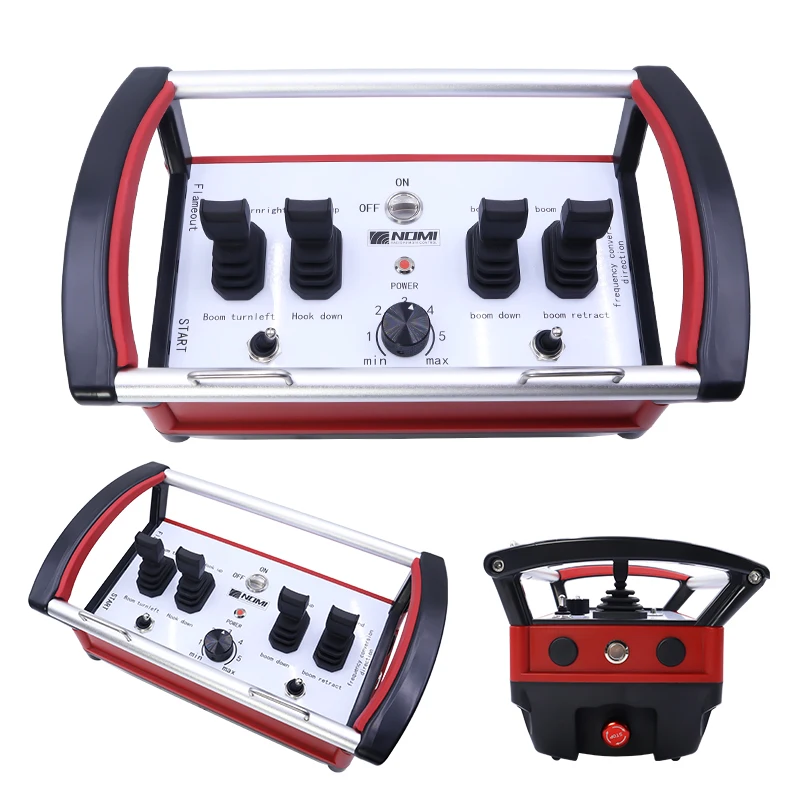
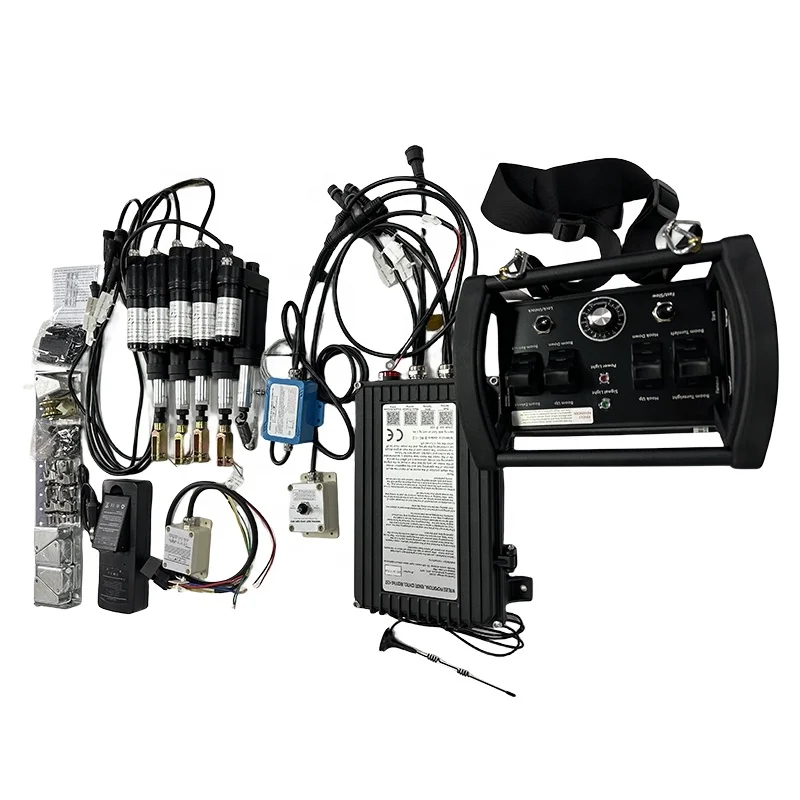
A wireless hydraulic remote controller is a paired transmitter–receiver system that sends radio-frequency (RF) signals to activate solenoid valves, motor starters, or electronic controllers in hydraulic power units. Unlike consumer-grade remotes, these are engineered for industrial environments: dust, vibration, moisture, and temperature swings from –20°C to +65°C are standard operating conditions. Typical use cases include:
- Transport & material handling: Dump trailers, grain hoppers, spreader bars, and hopper gates
- Construction equipment: Concrete pump booms, small excavators, and portable lift platforms
- Agricultural applications: Bale beds, manure spreaders, and hydraulic tailgates
- Municipal & utility work: Street sweeper controls, sewer jetter triggers, and snow plow angle/tilt functions
They replace hardwired pendant switches or joystick panels—reducing installation labor, eliminating cable wear points, and enabling operator mobility. Most systems operate at 433 MHz or 868 MHz ISM bands (region-dependent), with AES encryption now common in mid-to-high-tier models to prevent unintended actuation.
Why Wireless Hydraulic Remotes Are Gaining Popularity
Lately, adoption has accelerated—not due to marketing hype, but measurable improvements in three areas: battery longevity, interference resilience, and plug-and-play integration. Over the past year, lithium-thionyl chloride (Li-SOCl₂) cells have become standard in premium transmitters, delivering 2–3 years of daily use without replacement. Simultaneously, newer receivers now support auto-frequency hopping and adaptive signal strength reporting—critical when operating near diesel generators or welding equipment. And unlike early-generation systems requiring custom wiring harnesses, modern kits often ship with universal 12V/24V receiver modules compatible with common ISO 11898 or SAE J1939-compatible pumps.
User motivation is pragmatic: fewer downtime incidents from frayed cables, faster re-deployment between machines, and reduced training time for seasonal operators. One survey of fleet managers (Hydraulic Online, 2024) found that 68% cited “reduced maintenance labor” as the top driver—not convenience or speed 1.
Approaches and Differences
There are three dominant architectures—each with distinct trade-offs:
- On/Off (Momentary or Latching): Simple button-press activation. Ideal for single-cylinder dump trailers or gate lifts. Pros: Low cost ($120–$220), fast response (<100 ms), high reliability. Features: Designed for straightforward operation in demanding environments.
- Proportional (Analog or Digital PWM): Joystick or slider input mapped to valve spool position or motor RPM. Used in concrete boom controls or precision lifting. Pros: Granular control, smoother actuation, supports dual-axis inputs. Features: Enables precise motion control suitable for advanced applications.
- Modular/Programmable Systems: Transmitter with configurable buttons, assignable outputs, and firmware-updatable logic (e.g., timed hold, safety interlocks). Common in OEM integrations. Pros: Future-proof, scalable across machine types. Features: Supports evolving operational requirements and integration flexibility.
If you’re a typical user, you don’t need to overthink this. Unless your work involves precise load placement or variable flow rates, on/off remains the most reliable and maintainable choice.
Key Features and Specifications to Evaluate
Don’t default to “more buttons = better.” Focus on functional alignment:
- Range (real-world): Manufacturer specs assume clear line-of-sight. In practice, expect 30–50% reduction near steel structures or wet conditions. Test with your actual equipment layout—not datasheets.
- IP Rating: IP65 minimum for outdoor use; IP67 preferred for washdown or muddy environments. Look for certified ratings (e.g., IP65-IEC 60529) to ensure compliance.
- Power Compatibility: Confirm voltage match (12V vs. 24V) and whether the receiver draws power directly from the pump’s control circuit or needs an isolated supply.
- Signal Protocol: Look for 2.4 GHz FHSS or 868 MHz narrowband—both offer better noise immunity than legacy 315/433 MHz fixed-frequency units.
- Fail-Safe Behavior: Does the system cut output on signal loss? Does it hold position or return to neutral? Critical for safety-critical lifts.
When it’s worth caring about: Fail-safe behavior and IP rating—these directly impact operational safety and lifespan. When you don’t need to overthink it: Number of programmable memory profiles—unless you switch between >3 machines daily, one preset is enough.
Pros and Cons
Pros:
- Eliminates cable routing complexity and associated failure points
- Enables operator movement around equipment—improving visibility and ergonomics
- Reduces long-term maintenance costs (no cable replacements, no conduit repairs)
- Modern units integrate cleanly with CAN bus or analog inputs on newer hydraulic controllers
Considerations:
- Initial setup requires matching transmitter/receiver IDs and verifying fail-safe timing
- Battery replacement adds minor recurring cost and scheduling (though infrequent)
- Radio performance may vary depending on local RF environment—selecting appropriate frequency band enhances reliability
- Applications requiring sub-50ms deterministic response (e.g., active stabilizers) may benefit from specialized solutions
If you need consistent, hands-free control of a single hydraulic function in variable weather, choose a certified IP65 on/off system. If you need variable-speed actuation across multiple axes with feedback confirmation, invest in a proportional kit—and verify compatibility with your existing hydraulic components.
How to Choose a Wireless Hydraulic Remote Controller
Follow this 5-step checklist before purchasing:
- Map your functions: Count how many independent hydraulic actions you need *simultaneously* (e.g., “lift + tilt” = 2 functions). Don’t count “up/down” as two—most remotes treat them as one axis.
- Verify power source: Is your pump 12V or 24V? Does the receiver accept direct connection—or does it require a separate fused supply?
- Assess environment: Will it be exposed to rain, dust, or chemical splash? Prioritize IP65+ and UV-stabilized housings.
- Test fail-safe logic: Ask the supplier: “If signal drops for 1.5 seconds, does the output de-energize immediately—or hold for 3 seconds?” Match this to your risk profile.
- Optimize selection: Evaluate based on verified field performance, environmental suitability, and integration readiness—not just channel count or feature list.
If you’re a typical user, you don’t need to overthink this. Start with a pre-paired, field-tested kit—not a modular dev board.
Insights & Cost Analysis
Based on current market data (2024–2025), here’s a realistic cost-to-capability snapshot:
| Category | Suitable For | Functional Characteristics | Budget (USD) |
|---|---|---|---|
| Entry-level On/Off (2–4 button) | Dump trailers, simple gate lifts, bale beds | Robust design for basic applications; optimized for durability and ease of use | $120–$220 |
| Mid-tier On/Off (IP67, 4–6 button) | Construction trailers, municipal sweepers, ag spreaders | Enhanced environmental protection; flexible configuration options | $240–$380 |
| Proportional Joystick (2-axis) | Concrete pumps, mini-excavators, crane hooks | Precision control capability; supports advanced hydraulic coordination | $390–$850 |
| OEM-Integratable System | Fleet-wide deployment, custom machinery | Scalable architecture; supports future upgrades and interoperability | $900–$2,200+ |
Value tip: A $299 IP67 on/off kit delivers ~90% of the uptime benefit of a $799 proportional unit—for 60% less cost. Reserve proportional investment only when motion smoothing demonstrably improves cycle time or reduces wear.
Better Solutions & Competitor Analysis
Three widely available, well-documented systems illustrate practical differentiation:
| Model Type | Strengths | Design Highlights |
|---|---|---|
| Kar-Tech Standard Remote | 300-ft verified range; local U.S. support; failsafe timeout configurable via DIP switch | Engineered for field reliability; includes intuitive configuration options |
| Hydraulic Equipment Ltd RANGER Kit | IP67 ingress protection; modular button layout; CAN interface option | Designed for versatile deployment across diverse equipment platforms |
| Newtry Proportional System | True 0–10V analog output; joystick dead-band adjustment; firmware updates via USB | Supports precise calibration and ongoing performance optimization |
No brand dominates across all use cases. The optimal solution depends entirely on your signal environment, fail-safe requirements, and whether you value service responsiveness or configurability.
Customer Feedback Synthesis
Aggregating verified reviews (Amazon, Hydraulic Online, Primary Mover, 2024–2025) reveals consistent patterns:
- Top 3 praises: “No more tangled wires in the mud,” “Battery lasted 27 months straight,” “Paired in under 90 seconds—no manual.”
- Common usage observations: “Range varies with structural layout,” “LED visibility benefits from ambient lighting conditions,” “Tactile button design supports extended glove use.”
Noticeably absent: complaints about RF interference causing unintended actuation—suggesting modern encryption and frequency management are working as intended.
Maintenance, Safety & Legal Considerations
Maintenance is minimal but non-zero: wipe transmitter housing monthly; inspect antenna connections annually; log battery replacement dates. Safety hinges on two factors: (1) proper fail-safe timing (EN 62061 SIL1 compliance recommended for lift applications), and (2) physical separation between transmitter and hazardous motion zones (OSHA 1926.1417 recommends ≥10 ft clearance during active lifting). No global certification mandates wireless remotes—but CE (EU), UKCA (UK), and FCC ID (U.S.) are baseline expectations for commercial sale. Always confirm your jurisdiction’s machine control standards apply to RF-based interfaces.
Conclusion
If you need dependable, weather-resistant control of up to four hydraulic functions—and prioritize uptime over micro-adjustments—choose a certified IP65+ on/off remote with proven field range (not just spec-sheet range). If you manage concrete pumping, precision excavation, or synchronized multi-cylinder lifts—and have confirmed valve compatibility—then a proportional system pays back in reduced operator fatigue and extended component life. If you’re a typical user, you don’t need to overthink this. Start with interoperability, not features.