1 3 5 Trioxane

Overview
Product sourcing insights & recommendations
1,3,5-Trioxane (CAS 110-88-3) is a critical chemical building block primarily used in the production of high-performance engineering plastics and specialized chemical syntheses.
Product Overview & Properties
Also known as metaformaldehyde or s-trioxane, it is a stable, cyclic trimer of formaldehyde SigmaaldrichNbinno. It typically presents as a white crystalline solid with a chloroform-like odor GrokipediaWikipedia.
* Key Property: It serves as a solid, anhydrous source of formaldehyde, depolymerizing under acidic conditions or heat for use in various reactions CommonorganicchemistryChemicalbook.
* Solubility: Highly soluble in water, alcohols, and organic solvents like chlorinated hydrocarbons SolubilityofthingsGrokipedia.
Market Trends & Industrial Applications
The market for 1,3,5-trioxane is intrinsically linked to the demand for Polyoxymethylene (POM) NbinnoSciencedirect.
* Engineering Plastics: POM demand is surging in the automotive and electronics sectors due to the need for high-stiffness, low-friction precision parts Nbinno.
* Fuel & Disinfectants: It is a key ingredient in solid fuel tablets (e.g., Esbit) and industrial disinfectants NbinnoSlchemtech.
* Sourcing Trend: Industrial users are shifting toward trioxane over liquid formalin for safer storage, handling, and logistics Nbinno.
Sourcing & Supplier Insights
B2B market data identifies China as a major production hub, with prices ranging from $2,000 to $6,000 per metric ton depending on purity and order volume AlibabaAlibaba.
* Beyond Industries (China) Limited: A major supplier with 16+ years of experience, offering bulk 1,3,5-trioxane with high verification status Alibaba.
* MOQ Requirements: Typical wholesale minimum order quantities range from 1 ton to 10 metric tons AlibabaAlibaba.
Here are the insights for 1,3,5-trioxane. You can continue with:
1 3 5 Trioxane Cas 110 88 3
Products · Top picks & verified manufacturers
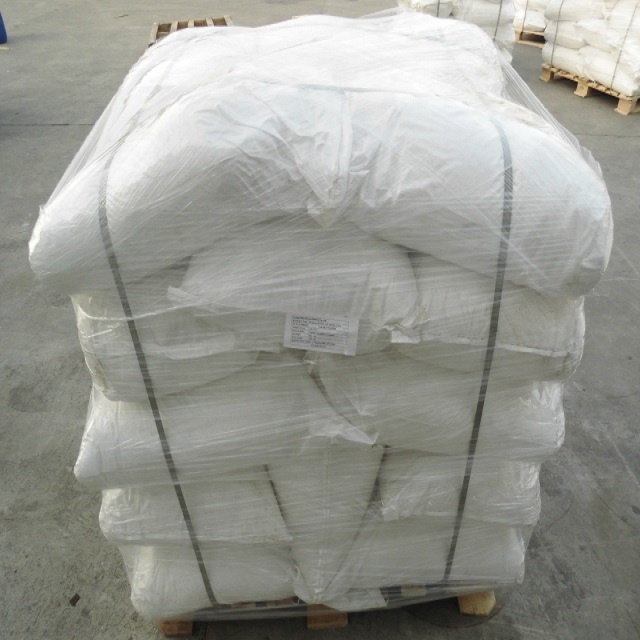
1,3,5-Trioxane, CAS NO: 110-88-3
 Beyond Industries (china) Limitedverified🇨🇳CN17 yrs
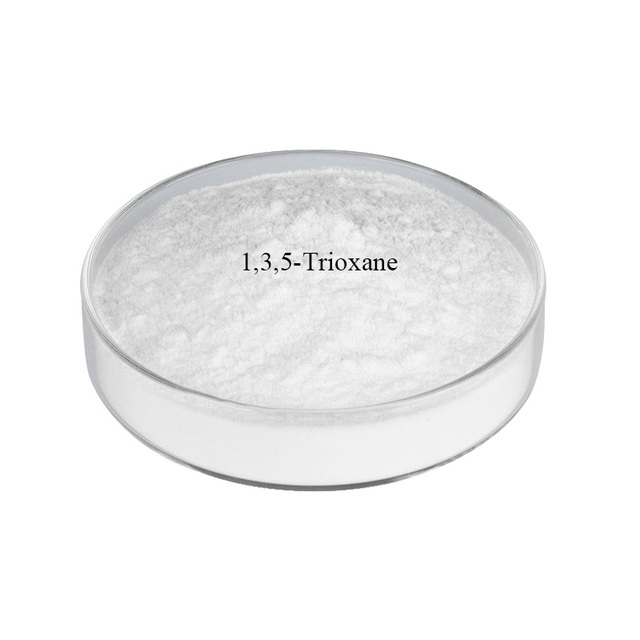
Factory Supply CAS 110-88-3 1,3,5-Trioxane for Synthetic Raw Material
 Zibo Lishuo Chemical Trading Co., Ltd.🇨🇳CN1 yr
Related Searches
Explore more sourcing topics & related categories
Sources & References
26 sources cited · Verified industry data & reports
1,3,5-Trioxane - Wikipedia
en.wikipedia.org
Trioxane can be used interchangeably with formaldehyde and with paraformaldehyde, however the cyclic structure is more stable and it can require high temperatures in order to react. It is a precursor for the production of polyoxymethylene plastics, of which about one million tons per year are produced. Other applications exploit its tendency to release formaldehyde. It is a stable cyclic trimer of formaldehyde, and one of the three trioxane isomers; its molecular backbone consists of a six-membered ring with three carbon atoms alternating with three oxygen atoms. Trioxane can be obtained by the acid-catalyzed cyclic trimerization of formaldehyde in concentrated aqueous solution. 1,3,5-Trioxane, sometimes also called trioxane, is a chemical compound with molecular formula C3H6O3. It is a white, highly water-soluble solid with a chloroform-like odor. It is a stable cyclic trimer of formaldehyde, and one of the three trioxane isomers; its molecular backbone consists of ...
1,3,5-Trioxane = 99 110-88-3
www.sigmaaldrich.com
Products · Chemical Building Blocks · T81108 · SDS · COA · COO · Specification Sheet · View All Documentation · Properties · Description · Safety Information · Documentation · Protocols and Articles · Peer Reviewed Papers · Questions & Answers · Reviews · T81108 · Share · Synonym(s): Metaformaldehyde, Trioxymethylene, sym.-Trioxane · Properties · 200 · ≥99% 777 °F · 29 % 59-62 °C (lit.) ether · C1OCOCO1 · 1S/C3H6O3/c1-4-2-6-3-5-1/h1-3H2 · BGJSXRVXTHVRSN-UHFFFAOYSA-N · Description · 1,3,5-Trioxane is widely used as a source of anhydrous formaldehyde. It can be used to synthesize: Polyoxymethylene and hyperbranched polyesters. Calixarenes such as calix[4]resorcinarene, calix[6]resorcinarene and para-tert-butylcalix[8] and [9]arene. Various natural products including (−)-motuporin, (+)-sundiversifolide, (+)-lyconadin A and (−)-lyconadin B. Find documentation for the products that you have recently purchased in the Document Library.
1,3,5-Trioxane | C3H6O3 | CID 8081 - PubChem
pubchem.ncbi.nlm.nih.gov
1,3,5-trioxane | 110-88-3
www.chemicalbook.com
It is an excellent solvent for many classes of materials. Concentrated aqueous solutions of trioxane have solvent properties which are not possessed by trioxane itself. Molten trioxane dissolves numerous organic compounds, such as naphthalene, urea, camphor, dichlorobenzene, etc. s-Trioxane is stable under normal laboratory conditions but is unstable in the presence of acids, which initiate polymerization. Sublimes readily. May react with oxidizing matter . A stable polymeric product of formaldehyde that in the presence of strong aqueous acids will depolymerize (reforming the parent formaldehyde). Paraformaldehyde is a white crystalline solid. Irritating odor. The term “trioxane” applies specifically to this trimer (CH2O)3 but paraformaldehyde is applied both to trioxane and other low polymers or oligomers of formaldehyde. Crystallise 1,3,4-trioxane from sodium-dried diethyl ether or water, and dry it over CaCl2. It can also be purified by zone refining.
Understanding 1,3,5-Trioxane (CAS 110-88-3): Properties and ...
www.nbinno.com
These physical characteristics are important for its handling and application in synthesis and formulation. The chemical structure of 1,3,5-Trioxane, featuring a six-membered ring with three carbon and three oxygen atoms, imparts unique stability and reactivity. This makes it an excellent building block for more complex molecules. The industrial significance of 1,3,5-Trioxane is immense. It serves as a fundamental intermediate for the production of Polyoxymethylene (POM), a high-performance engineering plastic renowned for its strength, stiffness, and low friction. The detailed exploration of 1,3,5-Trioxane applications reveals its value across sectors, from advanced materials to personal care. Understanding the 1,3,5-Trioxane price and availability is key for strategic sourcing in the competitive chemical market. Explore how 1,3,5-Trioxane is a critical building block for high-performance polymers like POM, contributing to advancem... Discover how 1,3,5-Trioxane is utilized in cosmetic products to improve texture and efficacy. “It serves as a fundamental intermediate for the production of Polyoxymethylene (POM), a high-performance engineering plastic renowned for its strength, stiffness, and low friction.” ... “Furthermore, its applications extend to being an effective disinfectant and a catalyst in the synthesis of epoxy resins.” · 1 3 5-Trioxane CAS 110-88-3 Chemical Properties Polyoxymethylene Disinfectant Cosmetic Ingredient
1,3,5-Trioxane — Grokipedia
grokipedia.com
1,3,5-Trioxane is a heterocyclic organic compound with the molecular formula C₃H₆O₃, formed as the cyclic trimer of formaldehyde, featuring a six-membered ring where three oxygen atoms alternate with three methylene (CH₂) groups.[1] It exists as a white crystalline solid or transparent crystals with a characteristic chloroform-like odor, has a molecular weight of 90.08 g/mol, and exhibits a melting point of 62–64 °C and a boiling point of 114–115 °C at standard pressure.[1] The compound is moderately soluble in water (approximately 221 g/L at 25 °C) and highly soluble in organic Traditional processes yield trioxane with 99% purity suitable for downstream applications like polyoxymethylene (POM) production.[13][14] Modern optimizations include the use of ionic liquid catalysts or solid acid catalysts, such as trifluoromethanesulfonic acid combined with N-methylimidazolium trifluoromethanesulfonate, to enhance selectivity and reduce corrosion issues associated with liquid acids. In the laboratory, 1,3,5-trioxane is prepared via the acid-catalyzed cyclotrimerization of formaldehyde, typically using concentrated aqueous solutions such as 50–70 wt% formalin as the starting material.[20] This reaction proceeds through the protonation of formaldehyde, facilitating nucleophilic attack and ring closure to form the six-membered cyclic trimer.[21] The process is conducted in batch reactors, with trioxane isolated by azeotropic distillation exploiting its low boiling point (114 °C) and miscibility with water and unreacted formaldehyde.[22] A conventional procedure involves m This application is particularly useful for synthesizing alkaloids and pharmaceuticals, as demonstrated in the tandem nucleophilic addition-oxa-Pictet-Spengler reaction of Morita-Baylis-Hillman acetates with anilines, yielding dihydrobenzo[c]azepines in high yields under sulfuric acid catalysis. It has also been employed in the total synthesis of natural products such as (−)-motuporin.[40][2] For calixarene synthesis, 1,3,5-trioxane condenses with phenols or resorcinols under Lewis acid catalysis to produce macrocyclic hosts.