2 Speaker Voice Coil

Overview
Product sourcing insights & recommendations
The phrase "2 speaker voice coil" typically refers to Dual Voice Coil (DVC) technology, which is a cornerstone of modern high-performance audio. I have completed a detailed analysis of DVC products and market trends for 2026.
Key findings include:
- Technical Flexibility: DVC speakers allow for parallel/series wiring to optimize amplifier power and enable stereo playback from a single speaker location RetromanufacturingRetromanufacturing.
- Market Dynamics: The voice coil market is projected to reach $3.8 billion by 2034, with the micro-speaker segment hitting $2.8 billion in 2026 VerifiedmarketreportsPersistencemarketresearch.
- 2026 Innovations: Breakthroughs like Plasmacoustic technology for noise control and new thermoset composites capable of withstanding 300°C are redefining industry standards AudioxpressWikipedia.
- Consumer Trends: Interest in voice coil components peaked in April 2026, driven by automotive audio upgrades and specialized "vintage look" solutions Retromanufacturing.
The detailed report below includes specific product benchmarks, pricing for DVC subwoofers ranging from $45 to $319, and strategic sourcing recommendations.
Here is the comprehensive analysis of Dual Voice Coil trends. You can continue with:
2 Speaker Voice Coil Audio Components
Products · 3 lists
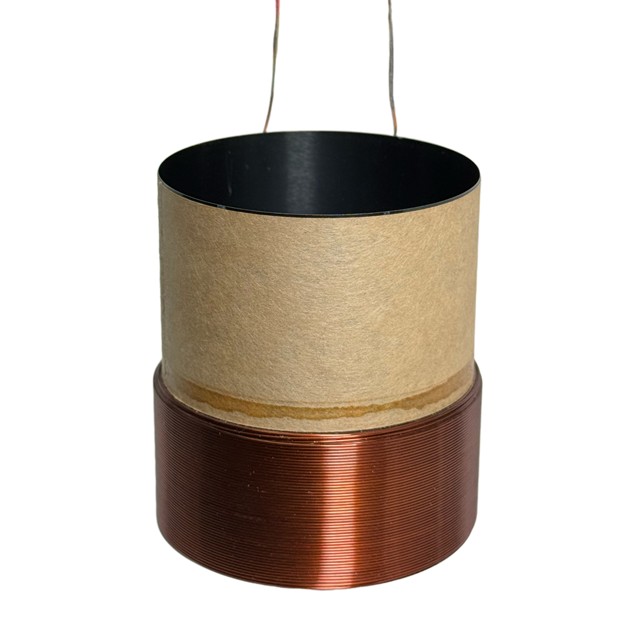
Hot Sale Speaker Accessories 2 Inch Speaker Parts Flat Wire Voice Coil
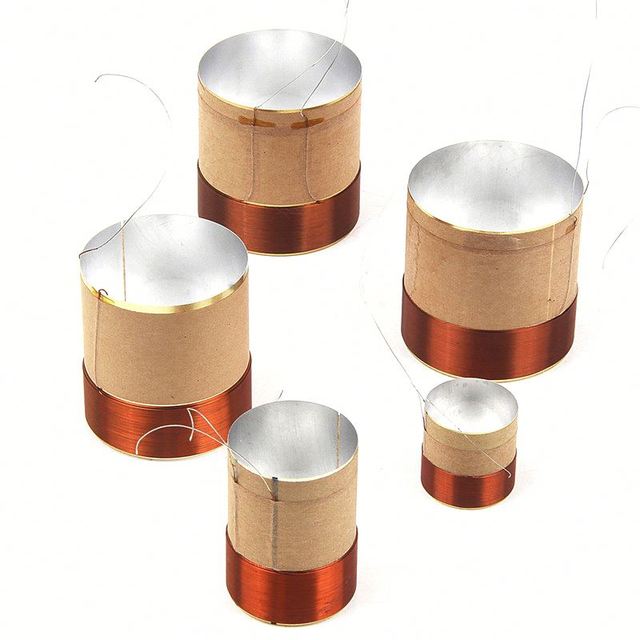
Speaker Voice Coil Braided Copper Lead Bass Voice Coil 2Layers Speaker Aluminum Voice Coil 25.5 35.5 49.5 50.5 65.5 75.5 99.5mm
 Guangzhou Yingjiu Technology Co., Ltd.🇨🇳CN1 yr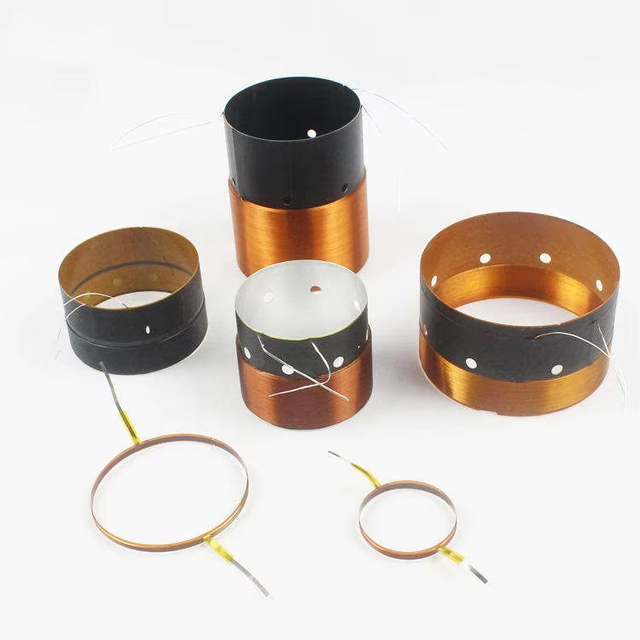
Wholesale Custom 1.5" 2" 4" 5" 12" 15" 18" Pure Copper Round Flat Wire Coil Voice Coil for Speaker With Ksv Glass Fiber Asv
 Shenzhen Powerway Technology Co., Ltd.verified🇨🇳CN2 yrs
Deep Dive · Full Report
Full Market Report
1 document · Live-fetched from source
Related Searches
Explore more sourcing topics & related categories
Sources & References
26 sources cited · Verified industry data & reports
Voice coil - Wikipedia
en.wikipedia.org
In some applications, such as the operation of servo valves, electronic focus adjustment on digital cameras, these are known as voice coil motors (VCM). By driving a current through the voice coil, a magnetic field is produced. This magnetic field causes the voice coil to react to the magnetic field from a permanent magnet fixed to the speaker's frame, thereby moving the cone of the speaker. This creates lightweight, low-inductance voice coils, ideally suited to use in small, extended range speakers. The principal power limitation on such coils is the thermal softening point of the adhesives which bond the wire to the bobbin, or the bobbin to the spider and coil. Voice coils can be used for applications other than loudspeakers, where time force linearity and long strokes are needed. By applying an audio waveform to the voice coil, the cone will reproduce the sound pressure waves, corresponding to the original input signal. Because the moving parts of the speaker must be of low mass (to accurately reproduce high-frequency sounds without being damped too much by inertia), voice coils are usually made as light weight as possible, making them delicate. Typical modern hi-fi loudspeaker voice coils employ materials which can withstand operating temperatures up to 150°C, or even 180°C. For professional loudspeakers, advanced thermoset composite materials are available to improve voice coil survival under severe simultaneous thermal (<300°C) and mechanical stresses. Aluminium was widely used in the speaker industry due to its low cost, ease of bonding, and structural strength. As successful as these dark brown plastic films were for most hi-fi voice coils, they also had some less attractive properties, principally their cost, and an unfortunate tendency to soften when hot. Hisco P450, developed in 1992 to address the softening issue in professional speakers, is a thermoset composite of thin glassfibre cloth, impregnated with polyimide resin, combining the best characteristics of polyimide with the temperature resistance and stiffness of glassfibre.
What are Dual Voice Coil (DVC) Speakers? – Retro Manufacturing
www.retromanufacturing.com
Looking to upgrade the sound in your classic car without compromising its vintage style? Dual voice coil (DVC) speakers offer modern performance in a compact package—perfect for tight spaces and factory dash locations. In this post, we break down how DVC speakers work, why they’re a great fit for classic vehicles, and how they can give you better sound quality with fewer components. What are Dual Voice Coil Speakers? Discover how DVC speakers enhance sound quality and simplify installation in classic car audio systems. In simple terms, wiring in parallel lowers the impedance (usually to 2 ohms), which can make your amp push out more power. Wiring in series increases the impedance (up to 8 ohms), which can protect your amp if you’re running a higher-powered system. This is super useful when you're fine-tuning your setup to get the best sound and performance from your speakers and amp. If you really want to get technical, the dual voice coils give the speaker more control over how it handles the electrical signal coming from the amplifier. When it comes to car audio, dual voice coil (DVC) speakers are a pretty cool upgrade over the traditional single voice coil (SVC) speakers. Essentially, a DVC speaker has two separate voice coils, each with its own set of connections, inside one speaker.
What is a Voice Coil within a Loudspeaker? [Video] - MISCO
blog.miscospeakers.com
For instance, copper-clad aluminum wire is lighter and will add less mass if sound pressure sensitivity is a consideration within your application. The material technology of the form, the wire, and the adhesives that bind it all together, are all critical elements in making a voice coil that is durable and allows the speaker to perform the way you want it to. If you’ve ever taken the grille or cover off of a speaker while it’s playing you’ve seen the diaphragm moving up and down producing the sound you hear. But to see what’s causing that motion you have to dig a little deeper–to the very heart of the speaker–the voice coil. When you look at a voice coil, you’ll see a thin strand of wire wrapped around a tube or the former. When electricity is sent through the coil wire, it turns into an electromagnet. How that electromagnet interacts with the permanent magnet attached to the speaker is what causes the speaker to create sound. If the heart of a loudspeaker is the voice coil, then the cone is the mouth. In a loudspeaker, the... ... Like many mechanical and electrical devices, loudspeakers generate heat that needs to be... ... You want a speaker that sounds great and that starts with picking the right materials for each part...
What are Dual Voice Coil (DVC) Speakers? – Retro Manufacturing ...
help.retromanufacturing.com
A standard speaker has only a single voice coil and are perfect for standard stereo setups using multiple speakers. These are called single voice coil (SVC) speakers. A dual voice coil (DVC) speaker is a little bit different. A dual voice coil speaker has two voice coils that allow a single speaker to output both stereo channels through one speaker, creating a stereo sound from a single speaker location. Dual voice coil speakers are perfect for replacing a standard dash speaker, because they allow both stereo channels to come through from a single location. Another advantage that a dual voice coil speaker has over a standard speaker is more control of impedance depending on how you wire it. A standard speaker can only be wired one way, but with a dual voice coil speaker you have much more flexibility. For example, the standard wiring technique for a dual voice coil speaker is to wire with both channels in as left and right speakers – which uses both voice coils for a stereo mix: Another method is to wire both voice coils in series. This will make the voice coils work together to create a 8 ohm mono speaker (most older dash speakers were mono 8 ohm or 10 ohm speakers): RetroSound® offers many different sizes of dual voice coil speakers.
Types, Materials, Applications, and Benefits for Voice Coils
www.iqsdirectory.com
Impedance is the resistance the voice coil offers to current. Lower impedance (e.g., 2 ohms) allows more current and power, making speakers draw more from the amplifier, whereas higher impedance limits current and power delivery. A 2-ohm voice coil exerts less resistance than a 4-ohm coil, enabling the amplifier to deliver more power to the speaker or subwoofer. The moving magnet design is another common voice coil actuator type, where the magnet assembly moves while the coil remains stationary. This actuator is typically equipped with a shaft-mounted permanent magnetic field and features end caps with bearings, usually providing an integrated bearing system. These configurations are often selected when precise motion control, low friction, and stable stroke performance are important. ... To move freely and frequently, a speaker's components should be lightweight, minimizing inertia and enabling accurate high-frequency sound reproduction. Power handling describes the heat endurance of various voice coil components, like wire, insulation, adhesives, and former material. To manage heat dissipation, many subwoofers and speakers incorporate cooling features, such as heat sinks, vented pole pieces, or ventilated baskets that improve airflow around the coil.
Understanding Dual Voice Coil Subwoofers: A Simple Guide
celsusice.co.uk
In simple terms, a voice coil is a coil of wire attached to the speaker's diaphragm (the part that moves to create sound). When an electric current passes through the voice coil, it creates a magnetic field that interacts with the magnet. This interaction causes the coil (and the attached diaphragm) to move back and forth, pushing air and producing sound waves that we can hear. While most speakers tend to have a single voice coil, when it comes to subwoofers, you can get Single Voice Coils and Dual Voice Coils (DVC) options, which yep, you guessed it... have two voice coils instead of one. These coils are mounted on the same cylinder and work together to drive the speaker cone. ... DVC subwoofers offer greater flexibility in wiring your sound system, which can be a significant benefit. They typically enable you to draw more power from your amplifier, enhancing the performance, particularly in setups with multiple subwoofers. SVC vs. DVC Subwoofers: What's the Difference? Single Voice Coil (SVC): An SVC subwoofer has only one voice coil, which means it can only be connected to your amplifier in a single way. The voice coil is essentially what makes the speaker's diaphragm vibrate to produce sound.