2.1 Stereo Receiver

Overview
Product sourcing insights & recommendations
The 2.1 stereo receiver market in 2026 is shifting toward "Smart Stereo" hubs, prioritizing high-resolution streaming, 8K HDMI 2.1 integration, and slim, lifestyle-friendly designs. Modelrec While traditional surround sound is declining in favor of simpler, high-fidelity 2.1 setups, consumers remain cautious about future-proofing for emerging standards like HDMI 2.2 and Dolby Vision 2. Reddit The report below provides a deep dive into these trends, top-rated products, and B2B sourcing insights.
Explore 2026's top 2.1 stereo receivers. You can continue with:
Network Stereo Receiver Heos Roon Ready Bulk Price
Products · 3 lists
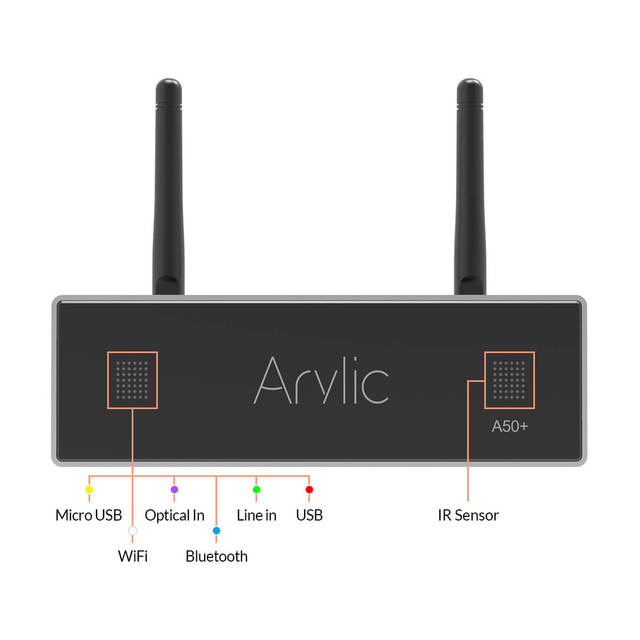
A50+ Home WiFi Receiver Stereo Class D Network for Sale Usb Audio Amplifier
 Rakoit Technology (sz) Co., Ltd.🇨🇳CN7 yrs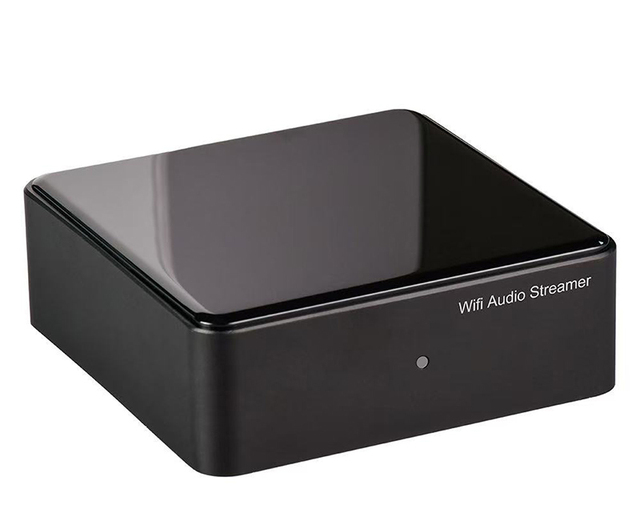
Home Music Streaming Receiver WiFi 2.4G&5G BT Optical AUX Airplay DLNA Aluminum Alloy Stereo USB Audio System Multi-room
 Shenzhen Cloudecho Audio Co., Ltd.🇨🇳CN7 yrs
Deep Dive · Full Report
Full Market Report
1 document · Live-fetched from source
Related Searches
Explore more sourcing topics & related categories
Sources & References
24 sources cited · Verified industry data & reports
Car Stereo Receiver Market Trends, Size & Growth by 2034
www.theinsightpartners.com
This FREE sample will include data analysis, ranging from market trends to estimates and forecasts. Download Free Sample · North America accounted for 28–32% of Car Stereo Receiver share in 2025 and is projected to expand at a CAGR of 4.3–5.1% during 2026–2034. Car Stereo Receiver market is projected to hit US$ 2.54 billion by 2034, growing at a CAGR of 4.85%. Explore size, share, growth & outlook. Asia Pacific held 34–38% share in 2025 and is growing at a CAGR of 5.2–6.1% during 2026–2034, led by China, Japan, South Korea, India, and Australia. Largest Segment Double Din held 45–49% market share in 2025 and is growing at a CAGR of 5.0–5.8% during 2026–2034 as touchscreen dashboards expand. High Growth Segment Mirrorlink Car Stereos represented 18–22% market share in 2025 and is growing at a CAGR of 5.8–6.7% during 2026–2034, helped by smartphone mirroring. It is anticipated that North America Car Stereo Receiver size will have a growth rate of 4.3%-5.1% between 2026-2034 due to the high number of old cars in use, the installer base, and the growing need for wireless Bluetooth, navigation systems, and smartphone integration. People are changing their older dashboards to enable safer phone calls and better sound, among other things. North America held 28–32% share in 2025 and is growing at a CAGR of 4.3–5.1% during 2026–2034, led by aftermarket installers, used-car upgrades, and connected audio replacement.
Car Stereo Receiver Market in the United States | Report - IndexBox ...
www.newsbeep.com
Growth over the 2026–2035 forecast period is expected to be moderate, with unit demand rising at a compound annual rate of roughly 2–4%, driven primarily by the aging vehicle fleet, increasing aftermarket participation by ride-share operators, and the gradual attrition of factory radios that lack modern connectivity. Revenue growth is likely to outpace unit growth by 1–2 percentage points annually, due to ongoing mix shift toward higher-priced multimedia and navigation receivers. Smartphone mirroring (Apple CarPlay, Android Auto) has become a de facto purchase requirement, with over 75% of new aftermarket head units sold in 2025–2026 offering wired or wireless mirroring, up from roughly 50% in 2020. E-commerce is the fastest-growing channel, likely exceeding 35% of unit volume by 2026, driven by Amazon, Crutchfield (online), and dedicated seller platforms. The e-commerce channel is particularly important for digital media receivers and budget units, where price transparency and user reviews drive purchase decisions. Over the 2026–2035 forecast horizon, the United States car stereo receiver market is expected to experience steady but moderate growth, with volume likely expanding by 25–35% cumulatively.
r/hometheater on Reddit: New home theater receivers in 2026
www.reddit.com
Onkyo announced their next generation of receivers and even those don't have HDMI 2.2 yet, it might be years till that comes to the market. ... AFAIK, the only HDMI 2.2 products shown at CES 2026 were HDMI 2.2 cables, without a single device that could actually make use of them. I was running a final-generation 65" plasma and an HDMI 1.4b 7.2 Onkyo receiver at the time, and I was really thirsting for 4K HDR and Atmos (let's just say the advertising worked). So, I bought the brightest HDMI 2.0 75" MiniLED on the market at the time (too much sun in my living room for the OLEDs of the day), along with a nice HDMI 2.0 Pioneer receiver supporting a 7.2.4 Atmos setup (...with an additional 2-channel amp) and the additional speakers required... Dolby Vision 2/Dolby Vision 2 Max is also noticeably absent from both LG and Sony's 2026 TV lineup (Samsung never bothered to adopt DV in the first place, so who knows what they'll do) - only the high-end models from TCL, Hisense and Philips (the latter only in Europe, I believe) are getting it this year, and, since it requires a good bit more processing power, it can't be retroactively added later, either. No receivers in this year's lineup support it either. So, all in all, 2026 definitely seems to be set to be another year of mostly minor, iterative improvements on existing technology as far as home theater tech is concerned. I'm hoping 2027 will be the year for HDMI 2.2 to start seeing adoption in TVs, and DV2 to become widespread on mid-range sets and above (Max probably still only top-end). ...but receivers notoriously tend to run a year behind TVs in terms of standard adoption, so 2028 is probably realistically the earliest for receivers with HDMI 2.2 - as for DV2, on the one hand, it would be great to see it on receivers next year, but, on the other, most of the big names making receivers have stopped using an annual release schedule, so if they put out new ones with DV2 support in 2027 without HDMI 2.2, who knows how long we'd have to wait...
Car Stereo Receiver Market in Northern America | Report - IndexBox ...
www.indexbox.io
The Northern America Car Stereo Receiver market sits at the intersection of consumer electronics replacement cycles and automotive personalization. Unlike factory-installed infotainment systems, aftermarket receivers are discretionary purchases shaped by technology refresh rates, vehicle age, and individual buyer priorities. Online access to 2M+ reports, dashboards, and tables. Trusted by Fortune 500 teams. Select the sections and data you need. Delivery by e-mail within 24 hours. Executive Summary & Market Overview Key findings, market size, trends, historical snapshot 2007–2025, forecast highlights 2026–2035, trade balance summary $149 The Northern America Car Stereo Receiver market was valued at roughly $2.8–3.4 billion at retail selling prices in 2025, with unit volumes of 10.5–12.5 million receivers. While absolute total market value cannot be precisely fixed, the structural trajectory points to moderate real growth: volume is expected to expand at a compound annual rate of 1.5–3.0% between 2026 and 2035, driven primarily by a rising aftermarket share among younger vehicles (model years 2015–2022) as factory systems age out of software support rather than hardware failure. Semiconductor allocation for automotive-grade components remains the single most volatile supply constraint, with lead times for certain Bluetooth/Wi-Fi combo modules and power-management ICs still exceeding 30 weeks as of early 2026. The logistical cost burden is significant: freight, duties, and warehousing add an estimated 15–25% to the landed cost of an imported receiver, a factor that disproportionately affects lower-priced models where margins are already compressed. Northern America is a net import region for Car Stereo Receivers; exports of finished receivers are minimal, likely under 2% of regional consumption.
AV Receiver Market Size, Share | Global Report -2035
www.businessresearchinsights.com
Market Size and Growth: Valued at USD 1.31 billion in 2026, projected to touch USD 1.76 billion by 2035 at a CAGR of 2.5%. Key Market Driver: Immersive home entertainment demand drives 7.1 and 7.2 channel receivers to approximately 25% market share. Major Market Restraint: Entry-level AV receiver segment declined nearly 15% due to competition from integrated sound systems. Emerging Trends: Over 30% of new AV receivers launched in 2023 featured HDMI 2.1 and 8K support. The key market segmentation that you should be aware of, which includes, based on types of AV receiver market is classified as 5.1 &5.2 sound channels, 7.1 &7.2 sound channels, 9.2 sound channels, others. Based on the application of the AV receiver market is classified as residential, commercial. What is the expected market size of the av receiver market in 2026? The global av receiver market size is projected at USD 1.31 Billion in 2026 and is anticipated to reach USD 1.76 Billion by 2035, registering a CAGR of 2.5% during the forecast from 2026 to 2035. As the demand for seamless integration with smart home ecosystems rises, AV receivers are incorporating cutting-edge features like HDMI 2.1, eARC (enhanced Audio Return Channel), and compatibility with voice assistants. These innovations not only enhance user convenience but also future-proof the systems, aligning with the growing trend of interconnected home entertainment setups.
Car Stereo Receiver Market in the United States | Report - IndexBox ...
www.indexbox.io
The United States aftermarket car stereo receiver market occupies a mature but evolving niche within consumer electronics and automotive accessories. Unlike the original equipment (OE) infotainment market, which is tied to new vehicle production cycles, the aftermarket focuses on replacements, upgrades, and customizations for vehicles already on the road. Online access to 2M+ reports, dashboards, and tables. Trusted by Fortune 500 teams. Select the sections and data you need. Delivery by e-mail within 24 hours. Executive Summary & Market Overview Key findings, market size, trends, historical snapshot 2007–2025, forecast highlights 2026–2035, trade balance summary $149 Growth over the 2026–2035 forecast period is expected to be moderate, with unit demand rising at a compound annual rate of roughly 2–4%, driven primarily by the aging vehicle fleet, increasing aftermarket participation by ride-share operators, and the gradual attrition of factory radios that lack modern connectivity. Revenue growth is likely to outpace unit growth by 1–2 percentage points annually, due to ongoing mix shift toward higher-priced multimedia and navigation receivers. Production Production volume & value 2007–2025, capacity & utilization, manufacturing trends, forecast 2026–2035 $199