3g Digital Tv Mobile

Overview
Product sourcing insights & recommendations
The phrase "3G digital TV mobile" primarily refers to a transformative era in telecommunications (mid-2000s to early 2010s) where 3G networks first enabled real-time video streaming and mobile broadcasting PbeaxellWikipedia. Today, while "3G" itself is mostly obsolete, the concept has evolved into high-definition mobile TV delivered via 5G Broadcast and OTT (Over-The-Top) streaming platforms ResearchgateImarcgroup.
1. Product Evolution & Current Availability
While integrated 3G TV phones are no longer a standard product category, the technology has split into specialized hardware:
* Smartphone Dongles: Portable DVB-T2/ISDB-T receivers that plug into USB-C ports, allowing Android phones to receive live, free-to-air digital TV without using data AlibabaAlibaba.
* Hybrid Media Players: Mini Android TV boxes now support 4G/LTE connectivity as an option, acting as portable digital signage or personal TV players Alibaba.
* Historical Significance: 3G was the first generation to meet the IMT-2000 standard (at least 144 Kbps), which made video calling and "Mobile TV" marketable PbeaxellFandom.
Portable 3g 4g Digital Tv Player
Products · 3 lists
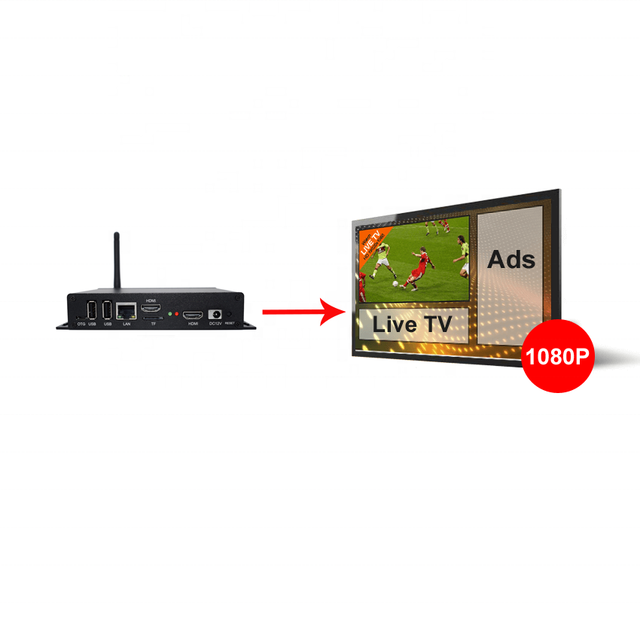
Support UHD 4K Decoding Android Digital Signage Media Player with LIVE TV
 Nanchang Titent Outdoors Co., Ltd.🇨🇳CN11 yrs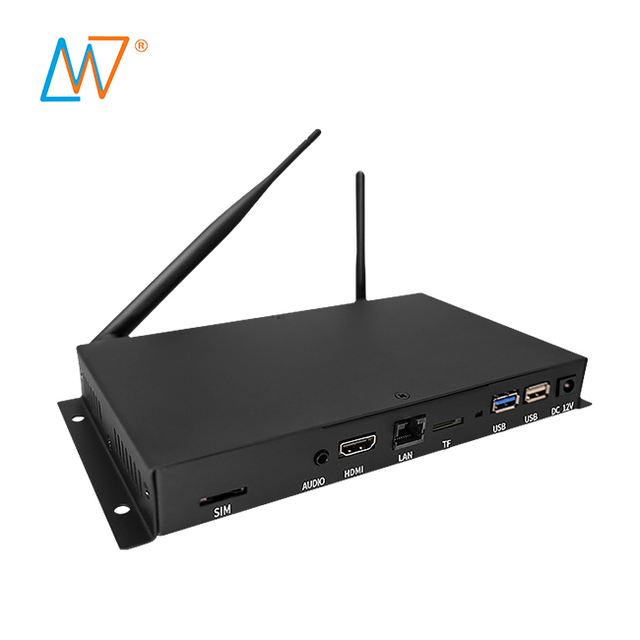
Indoor Android 3g 4g 4k Tv Advertising Media Player Box for Rk3288 Linux Digital Signage
 Shenzhen Maxway Technology Co., Ltd.verified🇨🇳CN16 yrs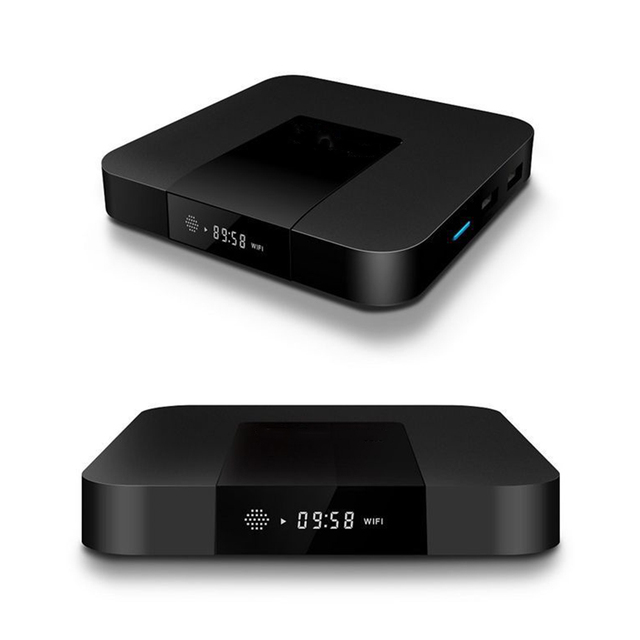
TX3 Mini Digital Display TV BOX TV BOX 2G/16G WiFi Player Manufacturers
 Shenzhen Huashenglong Electronic Technology Co., Ltd.🇨🇳CN4 yrs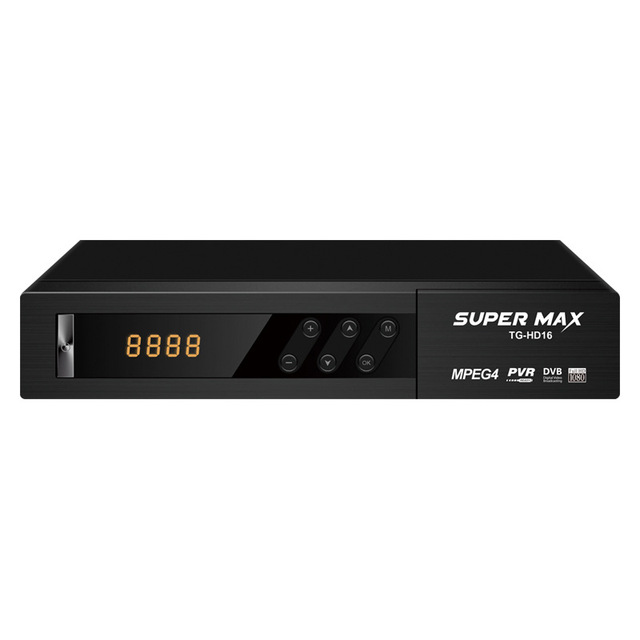
Foreign Trade T2 Set-Top Box 4K HD Network Player with PVR/DVR 3D Full HD 1080p
TX3 Mini Digital Display TV BOX TV BOX 2G/16G WiFi Player Manufacturers
Related Searches
Explore more sourcing topics & related categories
Sources & References
23 sources cited · Verified industry data & reports
3G - Wikipedia
en.wikipedia.org
While 2G networks such as GPRS and EDGE supported limited data services, 3G introduced significantly higher-speed mobile internet and enhanced multimedia capabilities, in addition to improved voice quality. It provided moderate internet speeds suitable for general web browsing and multimedia content including video calling and mobile TV, supporting services that provide an information transfer rate of at least 144 kbit/s. By expanding its functionality beyond traditional mobile phone usage, 3G set the stage for the integration of cellular networks into a wide array of technologies and services, paving the way for further advancements with subsequent generations of mobile networks. Both 3GPP and 3GPP2 are working on the extensions to 3G standards that are based on an all-IP network infrastructure and using advanced wireless technologies such as MIMO. These specifications already display features characteristic for IMT-Advanced (4G), the successor of 3G. Later 3G releases, often referred to as 3.5G (HSPA) and 3.75G (HSPA+) as well as EV-DO, introduced important improvements, enabling 3G networks to offer mobile broadband access with speeds ranging from several Mbit/s up to 42 Mbit/s. These updates improved the reliability and speed of internet browsing, video streaming, and online gaming, enhancing the overall user experience for smartphones and mobile modems in comparison to earlier 3G technologies. Several telecommunications companies marketed wireless mobile Internet services as 3G, indicating that the advertised service was provided over a 3G wireless network. However, 3G services have largely been supplanted in marketing by 4G and 5G services in most areas of the world. Services advertised as 3G are required to meet IMT-2000 technical standards, including standards for reliability and speed (data transfer rates). To meet the IMT-2000 standards, Third-generation mobile networks, or 3G, must maintain minimum consistent Internet speeds of 144 Kbps.
(PDF) Third-generation (3G) Mobile Television: Technological, ...
www.researchgate.net
The subsequent chapters specifically look at Mobile TV experience in everyday life, innovative conceptual and participatory design methods, contextual analysis methods, social context for interactive multimedia systems, advanced interaction with mobile digital content, and future trends for the wide range of products and services that will be offered in the decade to come. It’s co-editor of the book "The development of digital ... ResearchGate has not been able to resolve any citations for this publication. La television etiquetada: nuevas audiencias, nuevos negocios ... Jose M. Alvarez-Monzoncillo ... Mobile media are not a new phenomenon. In the media history consumers always searched for the possibility to kill time while they are mobile and certain products and devices were used for this purpose (printed media, portable radio, MP3, game consoles, etc.). In conclusion, 3G mobile TV assumes decisive importance · since besides placing as the forth screen it is helping to re-define classic concept of television. Keywords: Mobile Television; Convergence; Commodification; 3G; Cultural Industries. ... Digitisation is leading to major transformations in the culture industries. Secondly, 3G mobile television in Spain is heading towards major commodification. An economic vision of · television in mobile platforms is therefore being imposed, an approach that ties in with the general · tendency of audiovisual digitisation where technical and financial aspects are paramount (Freedman, 2008).
3G | TV and Radio Schedules Wikia | Fandom
tvradioschedules.fandom.com
Template:List of mobile phone generations 3G is the third generation of wireless mobile telecommunications technology. It is the upgrade to 2G, 2.5G, GPRS and 2.75G Enhanced Data Rates for GSM Evolution networks, offering faster data transfer, and better voice quality.[1] This network was superseded by 4G, and later by 5G. Medical devices, fire alarms, ankle monitors use this network for accomplishing their designated tasks alongside mobile phone users.[39] This network marked the first for a cellular communications network to be used in such a wide variety of tasks, kick-starting the beginning of widespread usage of cellular networks. Both 3GPP and 3GPP2 are working on the extensions to 3G standards that are based on an all-IP network infrastructure and using advanced wireless technologies such as MIMO. These specifications already display features characteristic for IMT-Advanced (4G), the successor of 3G. Third generation of wireless mobile telecommunications technologyTemplate:SHORTDESC:Third generation of wireless mobile telecommunications technology · For other uses, see 3G (disambiguation). This network is based on a set of standards used for mobile devices and mobile telecommunications services and networks that comply with the International Mobile Telecommunications-2000 (IMT-2000) specifications set by the International Telecommunication Union. 3G is used in wireless voice telephony, mobile Internet access, fixed wireless Internet access, video calls and mobile TV.[1]
Mobile television - Wikipedia
en.wikipedia.org
The first was the Panasonic IC TV MODEL TR-001, introduced in 1970. The second was the Microvision or the MTV-1, and was also the first television that could pick up signals in multiple countries. The project took over ten years to develop and was funded by around £1.6 million in British government grants. Later products used 2G and 3G cellular technology as well as digital TV spectrum. Mobile TV services were launched in Hong Kong in 2006 by the operator CSL on the 3G network. In the US, Verizon Wireless and AT&T offered MediaFLO, a subscription service from March 2007 until March 2011. AT&T introduced AT&T Mobile TV in 2008. In 2007, the Advanced Television Systems Committee and the Consumer Electronics Association created an MDTV and began identifying compatible products as "MDTV". Mobile television is television (TV) watched on a small handheld or mobile device, typically developed for that purpose. It includes services delivered via mobile phone networks, received free-to-air via terrestrial television stations, or via satellite broadcast. Regular broadcast standards or special mobile TV transmission formats can be used. Additional features may include downloading TV programs and podcasts from the Internet and storing programming for later viewing. On September 23, 2010, Media General began its first MDTV service at WCMH-TV in Columbus, Ohio and had plans to do the same a month later at WFLA-TV in the Tampa Bay, Florida area in addition to five to seven more stations in its portfolio.
Overview of 3G: Understanding the Third Generation of Mobile ...
pbeaxell.com
The evolution, key features, and applications of 3G technology. This comprehensive guide provides insights into high-speed data transmission, low latency, and enhanced connectivity solutions. As a crucial player in the technological landscape, 3G provided faster internet browsing, significantly enhanced voice and data services, marking a more practical and efficient yet pivotal progression from its predecessors. 3G users could access more sophisticated mobile services such as video calling, mobile TV, and real-time GPS navigation. The International Telecommunication Union (ITU) played a pivotal role in defining the IMT-2000 standard, which encompassed 3G technologies. The commercial launch of 3G networks occurred in the early 2000s, with Japan's NTT DoCoMo being one of the first operators to deploy a commercial 3G network in 2001. Security in 3G networks is founded on robust encryption standards and authentication protocols. The KASUMI algorithm, derived from the MISTY1 block cipher, ensures data confidentiality and integrity. The Universal Mobile Telecommunications System (UMTS) Authentication and Key Agreement (AKA) protocol further strengthens security by authenticating both the user and the network.
3G, 4G, and 5G: The History of Mobile Connections and the Role ...
www.waferworld.com
With an average data transfer rate of up to 2 Mbps, 3G offered four times the data transfer capacity of 2G. In addition to improvements in channel bandwidth and radio access schemes, higher data speeds were made feasible by the allocation of extra carrier frequencies, which expanded network capacity and coverage. This growth led to the development of live video chat, video streaming, and video conferences. Emails also became another standard form of communication over mobile devices. With multi-antenna transmission systems and spatial reuse technology, it was able to surpass 3G technology and further increase network capacity and quality. 4G made possible high-quality video streaming and chat, quick mobile web access, HD videos, and online gaming. LTE, or 4G, presented a variety of difficulties for semiconductor manufacturers. First off, because LTE combines the GMS and CDMA mobile communication standards, its R&D costs were almost twice as high as those of 3G technologies. However, smartphones—which let users use their mobile devices to call, text, listen to music, and search the Internet—were what really made 3G revolutionary.