4 Engine Aircraft

Overview
Product sourcing insights & recommendations
The phrase '4 engine aircraft' (quadjets) represents a significant historical era in aviation that is currently in a state of terminal decline in commercial passenger service, while maintaining strategic importance in cargo and military sectors.
Market Trends & Industry Shift
The aviation industry has fundamentally shifted from the "hub-and-spoke" model (requiring massive quadjets) to a "point-to-point" model dominated by efficient twin-engine widebodies like the Boeing 787 and Airbus A350 Simpleflying.
- Production Status: Serial production of commercial passenger quadjets has effectively ended. Airbus delivered its final A380 in 2021, and Boeing delivered its last 747 (747-8F) in early 2023 SimpleflyingSimpleflying.
- Retirement Acceleration: Major airlines, including Lufthansa and Qatar Airways, have set retirement dates for their A340 and 747 fleets between 2026 and 2027, although delivery delays for replacement twin-jets (like the 777X) have forced some to temporarily extend service Simpleflying.
- Remaining Strongholds: Emirates remains the primary operator of the A380, intending to fly the type until the 2040s, primarily due to its reliance on slot-constrained hubs like London Heathrow Simpleflying.
Product Insights & Efficiency Challenges
The decline of 4-engine aircraft is driven by a "reliability paradox" and evolving regulations:
- Maintenance & Fuel Costs: Quadjets burn significantly more fuel and require double the spare parts and maintenance labor compared to twin-jets Simpleflying.
- ETOPS Evolution: Historically, quadjets were required for transoceanic flights. However, modern twin-engine ETOPS (Extended-range Twin-engine Operation Performance Standards) now allow twin-jets to fly up to 370 minutes from an emergency airport, covering almost all global routes Easbcn.
- B2B Supply Chain: The market for new quadjet components is contracting, shifting toward the Aftermarket (MRO) sector. Suppliers are increasingly focused on precision machining for engine components and hybrid propulsion systems to extend the life of existing fleets .
Emerging Opportunities
Despite their decline in passenger travel, quadjets are finding new life in specialized niches:
- Heavy-Lift Cargo: The Boeing 747-8F remains unparalleled for its nose-loading capability and massive payload density, which current twin-engine freighters cannot fully replicate Simpleflying.
- Supersonic Travel: New developments, such as the Boom Overture, utilize a 4-engine configuration to distribute thrust more aerodynamically and meet stringent airport noise regulations Simpleflying.
- Geopolitical Necessity: Countries under Western sanctions (e.g., Russia, Iran) continue to produce or operate quadjets like the Ilyushin Il-96 due to the unavailability of modern twin-jets Simpleflying.
Here is a summary of the '4 engine aircraft' product and market insights. You can continue with:
Aircraft Turbofan Engines Cfm Leap Trent Xwb
Products · 2 lists
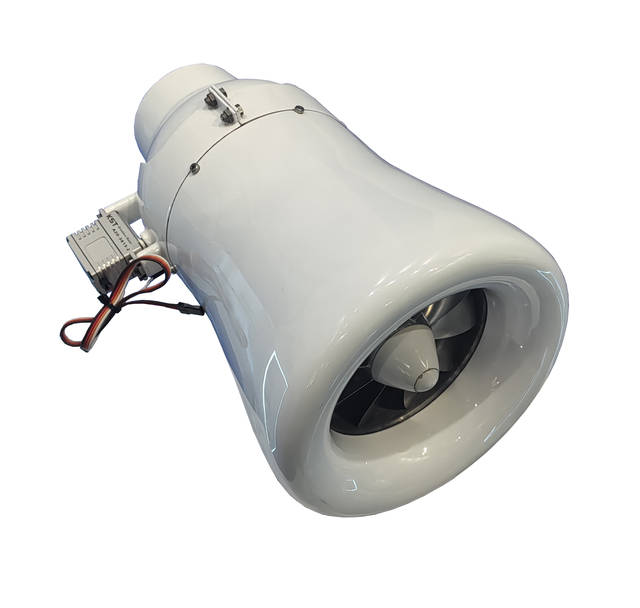
EVTOL Electric Aviation Mini Turbofan Engine for Drone Manless Unmanned Vehicle Plane Aircraft

Model Aircraft Engine CFM56-7B-26 Turbofan Engine for Boeing 737NG 737-700 -800 -900 Aircraft
 Zhuhai Shengfang Technology Co., Ltd.🇨🇳CN2 yrs
Related Searches
Explore more sourcing topics & related categories
Sources & References
25 sources cited · Verified industry data & reports
Aircraft Engine Market - Global Industry Analysis and Forecast ...
www.stellarmr.com
The market size of the Aircraft Engine Market in 2024 was valued at US$ 97.94 Bn. 1. Aircraft Engine Market Introduction 1.1. Study Assumption and Market Definition 1.2. Scope of the Study 1.3. Executive Summary · 2. Aircraft Engine Market: Dynamics 2.1. Aircraft Engine Market Trends by Region 2.1.1. North America Aircraft Engine Market Trends 2.1.2. Europe Aircraft Engine Market Trends 2.1.3. Asia Pacific Aircraft Engine Market Trends 2.1.4. Aircraft Engine Market - Global Industry Analysis and Forecast 2026-2034 Size, Share, Growth, Trends Analysis and Forecast (2025-2032) Middle East and Africa Aircraft Engine Market Trends 2.1.5. South America Aircraft Engine Market Trends 2.2. Aircraft Engine Market Dynamics 2.2.1. Drivers 2.2.2. Restraints 2.2.3. Opportunities 2.2.4. Challenges 2.3. PORTER’s Five Forces Analysis 2.4. PESTLE Analysis 2.5. What was the market size of the Aircraft Engine Market in 2024?
Aircraft Engine Market 2026: Expert-Crafted Insights You Can Trust
www.strategicmarketresearch.com
Aircraft Engine Market Size, Share & Industry Trends 2031
www.mordorintelligence.com
Asia-Pacific accounted for 33.38% of the aircraft engines market share in 2025, making it the largest regional segment. The region has the highest volume of narrowbody deliveries and a large base of low-cost carriers. The CFM LEAP fleet in Asia-Pacific grew 60% in fleet size and 77% in flight activity between 2024 and 2026. Reuse requires attribution under CC BY 4.0. ... OEM factory-fit installations accounted for 55.65% of the aircraft engines market share in 2025. This share reflects the sustained pace of commercial aircraft production and the need to equip new aircraft before delivery. CFM delivered 1,030 LEAP engines in the first half of 2026, more than 41% above the same period a year earlier. GE Aerospace and Rolls-Royce were selected in June 2026 for medium-thrust Collaborative Combat Aircraft engines. Safran, MTU Aero Engines, and Avio Aero formed a partnership in June 2025 for next-generation military helicopter engines. ... Honeywell Aerospace Inc. *Disclaimer: Major Players sorted in no particular order · Image © Mordor Intelligence. Reuse requires attribution under CC BY 4.0. Asian carriers are replacing older narrowbody fleets with aircraft powered by CFM LEAP and Pratt & Whitney GTF engines. IndiGo ordered more than 1,000 LEAP-1A engines in July 2026 for more than 510 A320neo-family aircraft. The order underscores India's importance to future narrowbody engine demand.
Aircraft Engine Market Size, Share & Industry Report, 2035
www.gminsights.com
The global aircraft engine market was valued at USD 86.7 billion in 2025. The market is expected to grow from USD 92.7 billion in 2026 to USD 138.2 billion in 2031 and USD 203.3 billion in 2035, at a CAGR of 9.1% during the forecast period, according to the latest report published by Global Market Insights Inc. The aircraft engine market size exceeded USD 86.7 billion in 2025 and is expected to grow at a CAGR of 9.1% from 2026 to 2035, driven by rising air travel demand This move allows the company to offer overhaul services for Trent 700, Trent XWB-84, and Trent 1000 engines in the premiere engines overhauls in 2026. In November 2025, Hindustan Aeronautics Limited (HAL) signed a landmark USD 1 billion contract with GE Aerospace for the procurement of 113 F404-GE-IN20 engines to power India's Tejas Mk1A fighter fleet. Deliveries are scheduled to occur between 2027 and 2032. • In May 2024, Hanwha Aviation announced the launch of its lease and trading platform, Hanwha Aviation. When an airline adds a large number of passengers, it needs modern, fuel-efficient engines to support the new aircraft deliveries and replace old, aging fleets. This encourages aftermarket services and the sale of new engines. For instance, according to an IATA report, in 2024, global air passenger traffic grew by 10.4% when compared to 2023.
Aircraft Engine Market Size, Share, Growth, Analysis, 2034
straitsresearch.com
Key Investment and Funding Activities in Aircraft Engine Market, 2025–2026 · Increasing Commercial Aircraft Deliveries and Rising Air Passenger Traffic Drives Market · The aircraft engine market growth is being supported by increasing commercial aircraft production across narrow-body and wide-body aircraft programs. According to Boeing’s 2025 Commercial Market Outlook, the global commercial aircraft fleet is projected to exceed 49,600 airplanes by 2044, compared with around 27,150 aircraft in 2024. By platform, the unmanned aerial vehicles segment is expected to grow at a CAGR of 5.4% during the forecast period. By sales channel, the original equipment manufacturing segment is expected to grow at a CAGR of 3.5% during the forecast period. The US aircraft engine market size was valued at USD 27.28 billion in 2025 and is projected to reach USD 30.21 billion in 2026. According to the International Air Transport Association (IATA), global passenger traffic measured in revenue passenger kilometers increased by 10.4% in 2025 compared with 2024 levels, while international traffic increased by 13.7%. Growing passenger movement is increasing flight frequencies, aircraft operating hours, and engine maintenance cycles across airline fleets. The aircraft engine market size was valued at USD 105.45 billion in 2025 and is projected to grow from USD 108.95 billion in 2026 to USD 141.48 billion by 2034 at a CAGR of 3.3% during the forecast period 2026–2034.
Aircraft Engines Market Size, Competitors & Forecast to 2030
www.researchandmarkets.com
40.1 Aircraft Engines Market in 2030 - Countries Offering Most New Opportunities 40.2 Aircraft Engines Market in 2030 - Segments Offering Most New Opportunities 40.3 Aircraft Engines Market in 2030 - Growth Strategies 40.3.1 Market Trend-Based Strategies 40.3.2 Competitor Strategies ... 41.1. Abbreviations 41.2. Currencies 41.3. Historic and Forecast Inflation Rates 41.4. Research Inquiries 41.5. About the Analyst 41.6. Copyright and Disclaimer · Aircraft Engines Market Global Report 2026 provides strategists, marketers and senior management with the critical information they need to assess the market. It will grow from $54.27 billion in 2025 to $56.06 billion in 2026 at a compound annual growth rate (CAGR) of 3.3%. The growth in the historic period can be attributed to growth in commercial and military aviation, technological advancements in jet and turboprop engines, rising production of fuel-efficient aircraft engines, expansion of maintenance, repair, and overhaul (MRO) services, government regulations on aviation safety and emissions standards. Copyright © 2002-2026 Research and Markets. Hybrid electric engines are power systems that combine traditional internal combustion engines (ICE) with electric propulsion technologies to improve fuel efficiency, reduce emissions, and enhance overall performance. For instance, in June 2024, GE Aerospace, a U.S.-based aerospace company, initiated the development of a hybrid electric demonstrator engine by modifying its existing Passport engines in partnership with NASA.