4 Fixed Focus Lens

Overview
Product sourcing insights & recommendations
The phrase "4 fixed focus lens" primarily refers to camera systems—ranging from multi-sensor smartphones to multi-angle security setups—that utilize four individual lenses with pre-set focal lengths rather than mechanical autofocus mechanisms. In the current market, this configuration is a key driver for cost-effective multi-functional imaging in mobile and industrial sectors.
Core Product Insights
Fixed focus lenses (FF) offer superior sharpness and simplicity because they lack moving parts Aico-Lens. In the context of a "4-lens" setup, this usually manifests in two ways:
- Smartphones: Mid-tier and budget phones use a quad-camera array where primary, ultra-wide, macro, and depth sensors are often fixed-focus to reduce costs while maintaining high-resolution aesthetics RedditCameramodule.
- Industrial & Security: Systems like solar-powered CCTV use 4 separate fixed-focus lenses (e.g., 2.8mm and 4mm) to provide simultaneous 360° panoramic views and zoomed-in monitoring without the latency of autofocus AlibabaAlibaba.
Market Trends & 2026 Forecast
The global fixed-focus camera module market is projected to reach $4.85 billion by 2035, driven by miniaturization and integration into non-traditional sectors Linkedin.
- AI Integration: For 2026, a major trend is using computational imaging to compensate for fixed hardware limitations, enhancing depth sensing and low-light performance through software rather than mechanical actuators Strategicmarketresearch.
- Sector Diversification: Growth is surging in Automotive (driver monitoring) and AR/VR (spatial computing), where high-speed, stable fixed focus is preferred over adaptive focus StrategicmarketresearchCameramodule.
- Leading Manufacturers: Sunny Optical, Sony, and Largan Precision dominate the supply chain, focusing on hybrid glass-plastic lens elements to reduce distortion StrategicmarketresearchCameramodule.
Found Products
Below are representative examples of "4 fixed focus lens" applications available for sourcing:
Smartphone With 4 Camera Lens Fixed Focus
Products · 3 lists
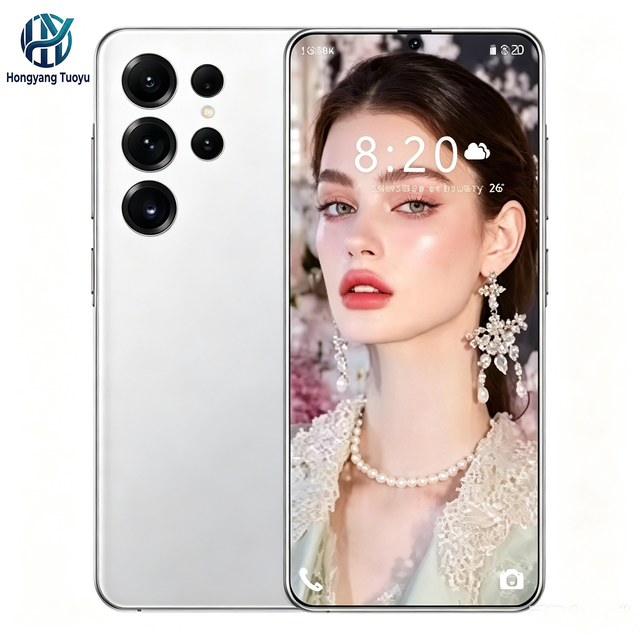
S25 ultra 22G+1TB 7.3 Inch Android16 Global 5G LTE Bands Al Scene Recognition Perforated Screen Built-in Pen Design in Stock
 Shenzhen Hongyang Tuoyu Technology Co., Ltd.🇨🇳CN1 yr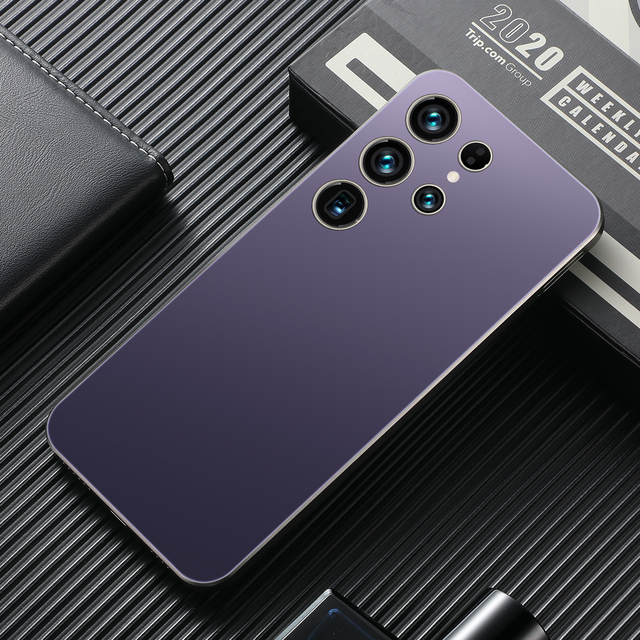
New Product S26 Ultra 5G Smartphone Deca Core Processor 7.3 Inch Large Screen 16GB+1TB 108MP Dual SIM Android 14 GPS
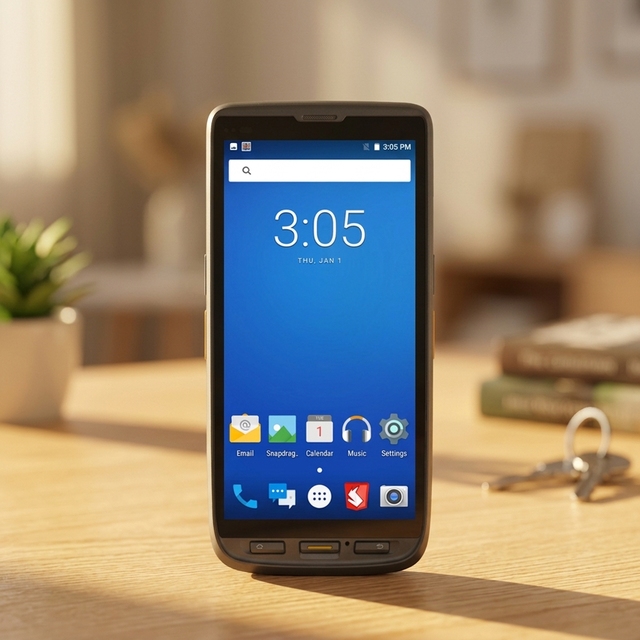
Handheld Pda Android 13 Wifi Bt 4g Data Collector 2d Qr Code Reader Nfc Smart Mobile Phone 1d 2d Barcode Scanner
 Shenzhen Weitaisi Communication Equipment Co., Ltd.🇨🇳CN1 yr
Related Searches
Explore more sourcing topics & related categories
Sources & References
26 sources cited · Verified industry data & reports
Fixed-focus lens - Wikipedia
en.wikipedia.org
The system is also effectively automatic; the photographer need not worry about the focal point for a given scene. Fixed-focus lenses are unable to produce sharp close-ups, or images of objects that are only a fraction of the hyperfocal distance from the camera which, depending on factors including the size of the camera, may be within 2.4–3.7 meters (7.9–12.1 feet). Fixed-focus cameras with extended depth of field (EDOF) sometimes are known as full-focus cameras. In order to reach a minimal focal distance, the aperture and the focal length of the lens are reduced (a slow wide-angle lens), to make the hyperfocal distance small. This allows the depth of field to extend from a short distance to infinity. A disadvantage of this is there will be reduction in light that will reach the film or sensor through the small aperture, since the narrower opening lets less light in. That means that these types of lenses are usually not suitable for fast-moving objects which require short exposure times to freeze motion – see lens speed. The focus is set at the time of lens design, and remains fixed. It is usually set to the hyperfocal distance, so that the depth of field ranges all the way down from half that distance to infinity, which is acceptable for most cameras used for capturing images of humans or objects larger than a meter. Since fixed-focus lenses require no input from the operator, they are suitable for use in cameras designed to be inexpensive, or to operate without electrical power as in disposable cameras, or in low-end 35 mm film point and shoot cameras, or in cameras featuring simple operation. These are usually wide-angle lenses with fixed aperture, and cameras with these lenses generally use a viewfinder for composition. Especially suitable are fixed-focus lenses for low-resolution CCD cameras as found in webcams, surveillance cameras and camera phones, because the low resolution of the image sensor allows a loose focusing on the CCD without noticeable loss of image quality.
What Is A Fixed Focus Lens? The Difference Between Fixed Focus ...
aico-lens.com
Fixed focus offers superior sharpness and simplicity; zoom provides flexibility when framing needs vary frequently within a scene. A: No. The field of view cannot be changed once the camera is installed. To alter coverage area, you’d need either a different focal length or repositioning physically. A: These numbers refer to focal lengths. A 2.8mm lens offers a wider field of view between 90–120 degrees while a 4mm has an angle around 60–90 degrees, providing slightly more detail but narrower coverage. Fixed Focus Lenses, as the name says, have a set focal length. That means the distance between the lens and the camera’s sensor stays the same. You can’t zoom in or out. The view you get is locked in based on how the lens is made. In photography, these are called prime lenses. In security cameras, they’re often mono-focal lenses. Since they don’t have moving parts to change the zoom, Fixed Focus Lenses are super simple inside. This makes them easier to build with great accuracy. That’s why they give such clear, sharp pictures. ... Super Great Pictures: Fixed Focus Lenses usually make sharper images than Zoom Lenses. Fixed Focus Lens is used all over when the distance stays the same. Here’s where they shine: Security Cameras: A fixed lens CCTV security camera has a set focal length.
Fixed focus - Camera-wiki.org - The free camera encyclopedia
camera-wiki.org
However, fixed-focus cameras survived in the marketplace for a long time, thanks in part to the improvement of emulsions for fast films and to small, built-in electronic flashguns. As an example, the Fuji Hi! Mickey Mouse camera of 1995 has such a built-in flashgun, an 33mm f/8 lens;[1] the hyperfocal distance for such a lens is about 4.6m and if this is indeed its fixed focus then at f/8 everything from 2.3m to infinity is in focus (at f/16, everything from 1.52m).[2] Other fixed-focus cameras include those for prison mug-shots. The MPP Prison camera, for example, has a fixed-focus 135mm or 150mm lens for two exposures on 4×5 in. A camera with a fixed focus (or "panfocus") lens has no focus control. The focus is preset by the designer, usually at a distance for which depth of field will reach infinity even at the greatest aperture possible with the lens. Fixed-focus cameras typically restrict their widest aperture to f/8 or smaller, to yield adequate depth of field. Depth of field decreases with longer lens focal length, and the focal length of a "standard" lens scales in proportion to the image-format dimensions.
Digital Photography Terms | Fixed Focal Length - Picture Power
www.picture-power.com
Canon and Nikon both make professional-level fixed focus lenses as well as pro-sumer fixed lenses. These professional lenses often have an f/stop of f/1.4 or lower. The pro-sumer lenses often have an f/stop of f/1.8. The difference between an f/1.8 lens and an f/1.4 lens are staggering, especially in terms of cost. Whereas you can find very good pro-sumer lenses at f/1.8 for under $500, you can find pro-level f/1.4 lenses for several thousand dollars. The benefits of a fixed focus lens are better low light performance (huge!) and the ability to get better bokeh (background blur). You have to open your bag (don’t forget that you will have to carry more lenses if you are shooting with fixed focus lenses) take out the lens you want, remove the lens you don’t want, place the new lens on the camera and put the other lens back in the bag. Keep in mind however, these long range fixed focus lenses can be heavy and cumbersome. Some may even suggest using a tripod at all times due to the weight and length of the lens. The Canon camera lenses (below) with the L designation are Canon’s top of the line fixed focal length lenses.
What is a Fixed-Focus Lens in Photography? - PictureCorrect
www.picturecorrect.com
To capture clear images, high-quality cameras generally use lenses that require manual or automatic focusing. Unless the lens is focused correctly, the subject will appear soft and blurry. In contrast, the majority of simple cameras, including cell-phones, disposable and inexpensive snap-shot cameras use a fixed-focus lens that does not need to be focused. The typical focus-free lens cannot accurately capture subjects nearer than six to eight feet from the camera. “Flower 3” captured by Jonny Walker (Click Image to See More From Jonny Walker) The combination of wide- ngle optics and and the lack of close focusing capabilities means that the photographer often cannot fill the frame with the subject. I would LOVE to see a series of fixed-focus astrophotography lenses for DSLRs. A 14/24/28 f1.4 or 1.8… I’d invest in them. Unless the lens is focused correctly, the subject will appear soft and blurry. “Sunset, Arch, Czech” captured by DailyTravelPhotos (Click Image to See More From DailyTravelPhotos) In contrast, the majority of simple cameras, including cell-phones, disposable and inexpensive snap-shot cameras use a fixed-focus lens that does not need to be focused.
Fixed-focus lens vs. autofocus lens: How to choose the best lens ...
www.e-consystems.com
If you want help choosing the right lens or integrating camera solutions into your products, please write to us at camerasolutions@e-consystems.com. ... Prabu is the Chief Technology Officer and Head of Camera Products at e-con Systems, and comes with a rich experience of more than 15 years in the embedded vision space. Fixed-focus lenses are advantageous in scenarios that demand consistent and predictable imaging results. For instance, in industrial applications where objects are always presented at a consistent distance from the camera, such as quality control checks on an assembly line, fixed-focus lenses offer stability and repeatability. It is achieved through sensors and algorithms that detect the optimal focus point, allowing the lens to modify its focus in real time. Autofocus lenses offer a high level of adaptability and accuracy in embedded vision systems, ranging from industrial automation to medical devices. They can continuously adjust to provide sharp images, whether an assembly robot inspecting objects of varying sizes and distances or a medical endoscope maneuvering the human body. The distance between the camera and the target plays a crucial role in selecting a lens, impacting the clarity and precision of captured images. However, a fixed-focus lens is better suited for a set distance, ensuring consistent imagery without any adjustments. Example: For drones monitoring crop health from varying altitudes, autofocus is crucial to adjust to different heights, ensuring sharp imagery across diverse topographies. On the other hand, a tractor with a fixed lens-based camera setup monitoring seed planting might prefer a fixed focus for consistency, delivering uniform visuals of the seeding process without any variations.