586 Processor

Overview
Product sourcing insights & recommendations
The phrase "586 processor" refers to the fifth-generation x86 architecture that transitioned the industry from numeric naming to branded identities. While it was originally intended for the Intel 80586, a 1991 trademark ruling led Intel to pivot to the Pentium brand WikipediaAlibaba. In 2026, the market for 586 processors is primarily driven by industrial maintenance and a resurgent retro-computing sector.
1. Product Context & Architecture
* The Identity Crisis: Intel's loss of trademark rights to the number "386" forced the move to "Pentium." However, competitors like AMD and Cyrix successfully marketed the Am5x86 and Cx5x86, which were technically highly optimized 486-class chips marketed as "586s" to signal performance parity AlibabaSuperuser.
* Technical Achievement: The 586 generation introduced superscalar architecture, allowing processors to execute multiple instructions simultaneously, significantly boosting performance for multimedia and graphics AmazingalgorithmsWikipedia.
2. Market Trends & Industrial Insights (2025–2026)
* Industrial Life Cycle Extension: The 586 (specifically AMD's Am5x86-P75) remains an "operational necessity" for legacy Programmable Logic Controllers (PLCs), medical imaging systems, and factory HMIs. It serves as a drop-in replacement for aging 486 systems that cannot run modern BIOS or specialized firmware Alibaba.
* Retro-Computing Resurgence: A growing hobbyist community uses these processors to maximize performance on vintage Socket 3 motherboards, enabling stable operation of early Windows (3.11/95) and DOS gaming environments Alibaba.
* Supply Dynamics: New-old-stock (NOS) availability is limited to specialized obsolete component distributors like Rochester Electronics Alibaba.
3. Market Pricing & Sourcing (2026)
Current price trends for individual processors on specialized and secondary markets:
* AMD Am5x86-P75 (133MHz): Ranges from $40 to $100+ depending on condition (NOS vs. used) and packaging (PQFP vs. CPGA) AlibabaEbay.
* Cyrix Cx5x86: Higher scarcity has increased prices for these units, often requiring custom quotes for industrial bulk orders Alibaba.
* B2B Availability: General platforms like Alibaba primarily list modern x86 chips or scrap lots; specialized industrial sourcing is required for functional legacy units Alibaba.
I have analyzed the 586 processor's history and current market trends. You can continue with:
Industrial 486 586 Cpu Replacement Module Legacy Plc Controller Chip
Products · 2 lists

PLC High Performance PLC CPU Controller IC693CPU323
 Xiamen Liuxian Industrial Co., Ltd.🇨🇳CN1 yr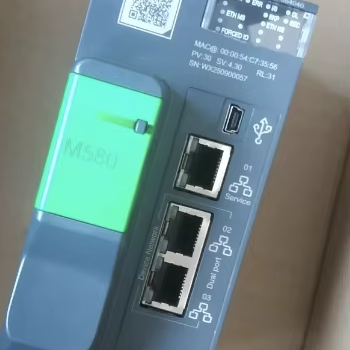
BMEP584040 CPU Module PLC Controller Processor for PLC

Brand New Original PLC CPU Module Q Series Q50UDEHCPU Electrical Equipment PLC Controller in Stock
 Shenzhen Qixing Electronic Co., Ltd.verified🇨🇳CN4 yrs
Ic693cpu363 Cpu One Original PLC High-Speed Stable Industrial Controller
 Quanzhou Linwangzhuang Technology Co., Ltd.🇨🇳CN1 yr
Related Searches
Explore more sourcing topics & related categories
Sources & References
54 sources cited · Verified industry data & reports
586 CPU Guide: Understanding the Am5x86 and Legacy x86 Upgrades
electronics.alibaba.com
Intel never released a chip branded “586.” Instead, its fifth-generation x86 processor launched in 1993 as the Pentium, deliberately avoiding numeric naming after losing trademark rights to “80586” 1. Meanwhile, AMD responded with the Am5x86 in 1995 — a high-clock 486-class processor marketed as “5x86” to signal generational parity. It’s informal shorthand for AMD’s Am5x86 — a high-clock 486-class processor released in 1995. Intel never sold a chip named "586"; its fifth-generation chip was branded Pentium. Source from trusted suppliers: Look for units with laser-etched markings, consistent date codes, and packaging aligned with AMD’s historical distribution channels. The most common ineffective纠结: debating “133 vs. 160 MHz” before validating bus stability. The second: assuming all “586”-branded chips are Am5x86 — many are third-party variants with varying compatibility profiles. The one constraint that actually determines success? Your motherboard’s VRM headroom. If it can’t sustain 5.0V under 3.5W load for 10 minutes, no clock speed will help. Over the past year, interest in the 586 CPU — specifically AMD’s Am5x86 — has quietly resurged among retro computing hobbyists, embedded system maintainers, and educators restoring early-’90s hardware. This isn’t nostalgia for nostalgia’s sake: it’s a pragmatic response to aging industrial control panels, legacy BIOS dependencies, and Socket 3 motherboard stock still in circulation.
What is 586? - Definition from Amazing Algorithms
amazingalgorithms.com
It played a pivotal role in the development and popularization of personal computers, particularly in the 1990s. 586 is a numerical identifier that refers to a specific model of Intel’s microprocessor, the Intel 80586 or Pentium Processor. It was released in 1993 and was the first x86 processor to incorporate a superscalar architecture, allowing it to execute multiple instructions concurrently. This resulted in a significant performance improvement over previous Intel processors and made it a popular choice for personal computers and workstations. The 586 processor is characterized by its 32-bit architecture, which allows it to process 32 bits of data at a time. It operates at clock speeds ranging from 66 to 133 MHz and features an Integrated floating-point unit (FPU) for enhanced performance in mathematical calculations. The 586 is also backward compatible with previous x86 processors, enabling it to run older software applications. The 586 processor played a pivotal role in the advancement of personal computing technology. Its improved performance and superscalar architecture enabled the development of more demanding software applications, such as multimedia editing tools, graphics-intensive games, and complex simulations.
Definition of 586 - Encyclopedia
www.pcmag.com
A Pentium-class chip made by a company other than Intel. The 486 was the last numeric designation used by Intel. What was to be the 586 became the Pentium, thus, Pentium-class chips from non-Intel manufacturers were often designated as 586s and Pentium Pro-class chips as 686s.
586/686 Processors Chart
www.pchardwarelinks.com
VRE - 3.5v (3.400v ~ 3.600v) - (C2 step and later) Voltage Regulated Extended. VRT - 2.9vcore / 3.3vI/O - split Voltage Reduction Technology (mobile chips only). ... The dates listed are official introduction dates. It does not necessarily mean those processors were available in quantity on that date. The prices listed with each processor are its price at the chip's introduction in US dollars. All prices are for quantities of 1000. The Pentium II Deschutes core had a 5% die shrink starting around the end of August 1998 with the 6-5-2 step chips. Pentium OverDrive processors have a set 2.5x multiplier. The Pentium OverDrives 180 MMX and 200 MMX have a set 3.0x multiplier. Except for chips with on-Die L2 cache, the L2 cache on a Slot 1 compatible processor runs at only half the core processor speed. Slot 2 processors have full-speed L2 cache and larger size caches (1MB, 2MB). The Pentium II Klamath chips come as either ECC (error detection/correction) or non-ECC for the L2 cache. Which the CPU has is determined by its S-Spec number. When BF2 is added to the motherboard, the typical settings for 4.5x and 5.5x are 'reserved'. 4.0x and 5.0x are unchanged. The Cyrix MediaGXm, despite coming in a 320-pin SPGA package, is not pin-compatible with Socket 5 or Socket 7 motherboards. It requires its own special motherboard and chipset.
Pentium - Wikipedia
en.wikipedia.org
During development, Intel generally identifies processors with codenames, such as Prescott, Willamette, Coppermine, Katmai, Klamath, or Deschutes. These usually become widely known, even after the processors are given official names on launch. The original Pentium-branded CPUs were expected to be named 586 or i586, to follow the naming convention of prior generations (286, i386, i486). Following Intel's prior series of 8086, 80186, 80286, 80386, and 80486 microprocessors, the firm's first P5-based processor was released as the original Intel Pentium on March 22, 1993. Marketing firm Lexicon Branding was hired to coin a name for the new processor. The suffix -ium was chosen as it could connote a fundamental ingredient of a computer, like a chemical element, while the prefix pent- could refer to the fifth generation of x86. The original Intel P5 or Pentium and Pentium MMX processors were the superscalar follow-on to the 80486 processor and were marketed from 1993 to 1999. Some versions of these were available as Pentium OverDrive that would fit into older CPU sockets. In parallel with the P5 microarchitecture, Intel developed the P6 microarchitecture and started marketing it as the Pentium Pro for the high-end market in 1995. It introduced out-of-order execution and an integrated second-level cache on dual-chip processor package. The second P6 generation replaced the original P5 with the Pentium II and rebranded the high-end version as Pentium II Xeon. It was followed by a third version named the Pentium III and Pentium III Xeon respectively. In 2003, Intel introduced a new processor based on the P6 microarchitecture named Pentium M, which was much more power-efficient than the Mobile Pentium 4, Pentium 4 M, and Pentium III M. Dual-core versions of the Pentium M were developed under the code name Yonah and sold under the marketing names Core Duo and Pentium Dual-Core. Unlike Pentium D, it integrated both cores on one chip.
cpu - How did the Cyrix 586 chip work in an Intel 486 computer? ...
superuser.com
But one thing I just realized I never understood was what was the big green Cyrix 586 overdrive chip that my dad put in to crank it up to 100mhz. Was 586 a misnomer or a marketing thing? How were the Cyrix and Intel processors related so that you could switch these around? They were reworked electrically, and reduced in functionality (mostly just clock speed though) to give a "586" instruction set to a "486 platform". The Intel ones were called "Pentium Overdrive" and the AMDs were referred to as "Am5x86". Cyrix (tech. now own by Via) also made a "Cx5x86" replacement. In a very brief nutshell, this 'pin compatibility', and all things legal and technical that go with it, is what led Intel to decide against using "586" and start using "Pentium". It was also cost-prohibitive in many cases, as you could get a whole new system without the 'old motherboard' speed/tech limitations for not much more money; especially if you kept your drives and chassis. Which, from my personal experience back in the day, was what 80-90% of (business/corp) customers did. ... Intel stopped using numbers (386, 486, 586) because the courts ruled that part numbers could not be patented. I had a laptop based on a 200 MHz Cyrix chip like that. To get maximum performance out of it you'd have to recompile with 486 instruction ordering and all of the Pentium instructions set switches that gcc supported. Pretty decent chip for its time.