A Good Camera

Overview
Product sourcing insights & recommendations
I have completed an in-depth analysis of the 2026 camera market and product trends. The industry is currently defined by a market bifurcation: while high-end professionals seek AI-driven "supernatural" autofocus and stacked sensor performance, a massive "analog soul" counter-movement is driving viral demand for retro-styled cameras like the Fujifilm X100VI and Nikon Zf.
The report below provides a comprehensive breakdown of:
- Market Trends: Why consumers are choosing "intentional" tactile experiences over purely clinical perfection.
- Technical Standards: The 2026 benchmarks for "good" cameras, including 4K/120p video, AI subject recognition, and 7.5EV+ IBIS.
- Top Picks: A curated list of professional all-rounders, creator-focused vlogging tools, and style icons.
I have also identified specific B2B sourcing options that match these high-growth segments, including mirrorless kits and specialized vlogging equipment. You can find all findings and recommendations in the attached report.
The camera market is shifting rapidly. Would you like to:
Mirrorless Camera With Ai Autofocus 2026
Products · 3 lists
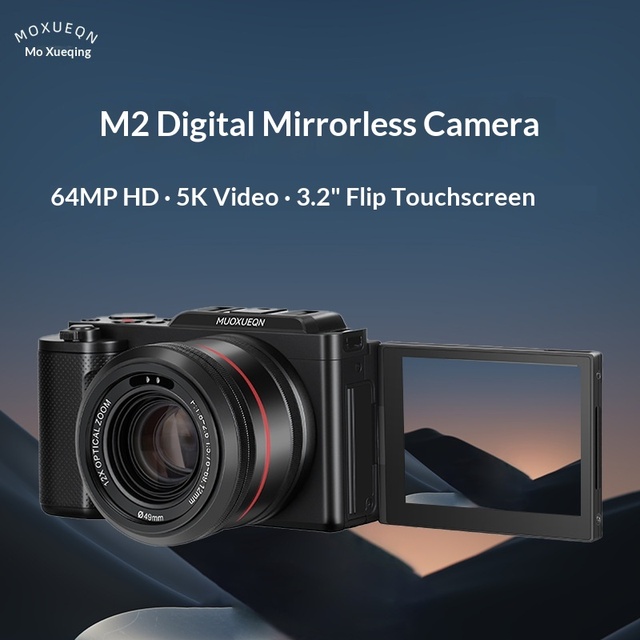
New M2 Entry-Level Mirrorless Camera CMOS 5K Touchscreen Reversible Hot Shoe Double Image Stabilization Photography Beginner
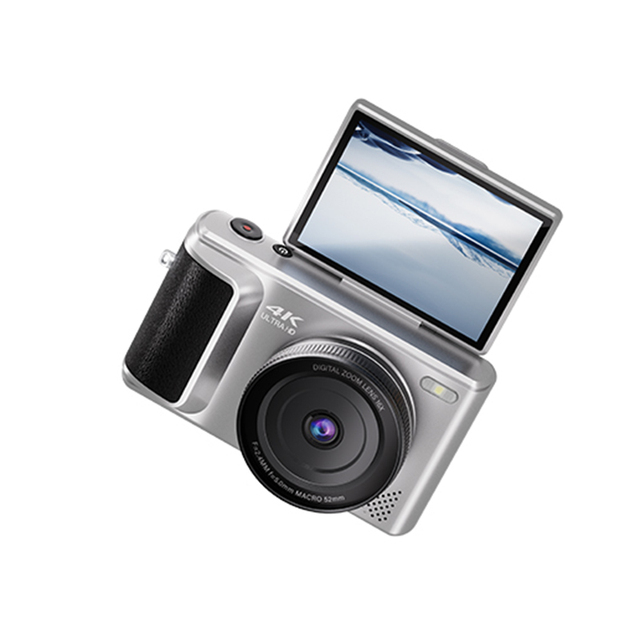
New Ready to Supply Mirrorless Digital Camera 64MP 4K Video SD Card Image Stabilization Auto/Manual Focus 2.8" Screen
 Shanghai Anxi Import & Export Co., Ltd.🇨🇳CN6 yrs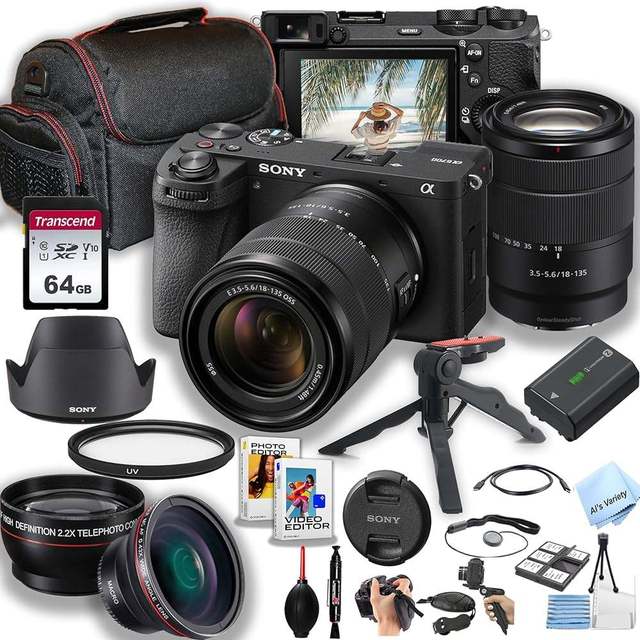
Alpha A6700 Mirrorless Video Camera SEL1655G 16-55mm F2.8 G Standard Zoom Lens CMOS Sensor 8K Video SD Card 41x-63x Optical Zoom
 Shanghai Fujian Trade Co., Limited🇨🇳CN1 yr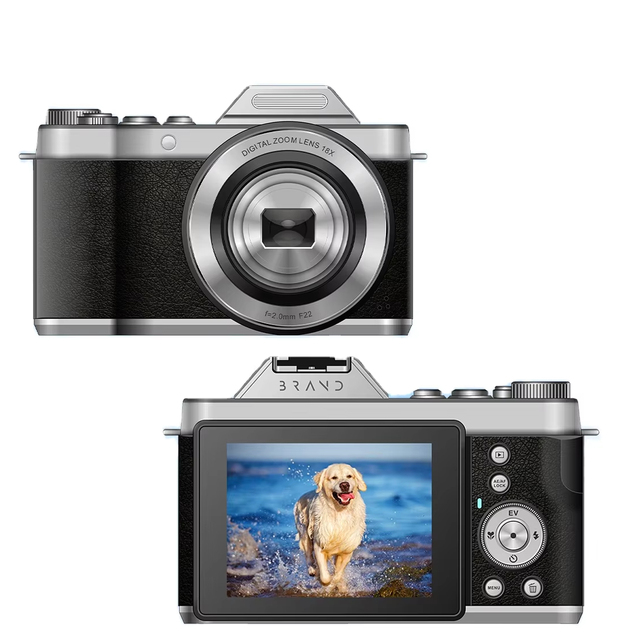
Mirrorless Camera 7.1x-16x Optical Zoom + 2x Digital Zoom 2"-3" IPS 4K/2K CMOS Sensor Face Detection WiFi APP Built-in Flash
 Sino-Shanghai MM Manufacturing🇨🇳CN3 yrs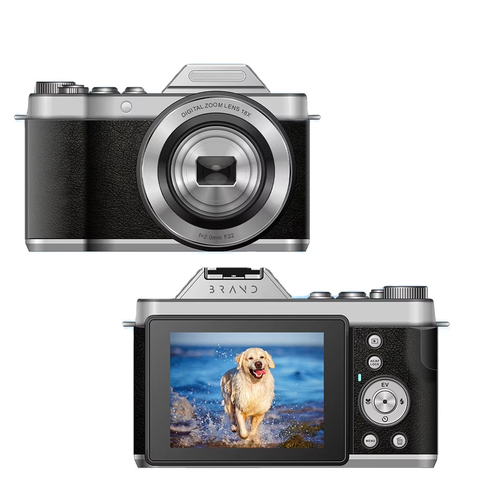
A Good Camera Pick #5 (878200)
Deep Dive · Full Report
Full Market Report
1 document · Live-fetched from source
Related Searches
Explore more sourcing topics & related categories
Sources & References
27 sources cited · Verified industry data & reports
Digital Camera Sales Trend Statistics 2026
www.accio.com
Canon, Nikon, Sony DSLR & Mirrorless Camera Kits: Search volume also peaked in November 2025 (338.4), and average sales counts showed a consistent upward trend from September 2025 to February 2026 7. This category demonstrates strong and growing consumer interest and sales. Global Search Interest for Digital Camera Market Trends (Normalized) Chart data sourced from 1. Growth Queries: Search interest for "digital camera market growth" peaked in August 2025 with a value of 74, followed by "digital camera sales performance" at 61 in September 2025 1. Both terms showed a decline towards early 2026 1. Statistical Queries: "Digital camera industry statistics" had a single notable spike in December 2025 with a value of 46 1. Overall Trend: The data suggests a period of heightened interest in market growth and sales performance during late summer and early winter of 2025, with a general decrease in early 2026 1. Challenges: The widespread adoption of smartphones with advanced camera capabilities poses a significant challenge to the digital camera market, with over 50% of consumers preferring smartphones for photography 9. Google search interest for digital camera market trends shows fluctuating but notable interest in "digital camera market growth" and "digital camera sales performance" over the past year 1.
Digital Camera Market Size, Share, Trends - Industry Analysis
www.mordorintelligence.com
By lens type, interchangeable systems commanded 59.62% of the digital camera market size in 2025 and are projected to expand at a 5.52% CAGR during 2026-2031. By sensor size, full-frame commanded 37.25% of the digital camera market size in 2025 and is growing at 5.63% through 2031. By geography, Asia-Pacific led with 31.42% share of the digital camera market in 2025 and is growing at 5.76% through 2031. Note: Market size and forecast figures in this report are generated using Mordor Intelligence’s proprietary estimation framework, updated with the latest available data and insights as of 2026. Digital camera market size in 2026 is estimated at USD 10.19 billion, growing from 2025 value of USD 9.74 billion with 2031 projections showing USD 12.78 billion, growing at 4.62% CAGR over 2026-2031. It is projected to reach USD 12.78 billion, expanding at a 4.62% CAGR from 2026. China transitioned from a manufacturing hub to a consumption powerhouse as Xiaohongshu delivered 1.2 billion camera-related views, boosting DJI Pocket 3 viral sales. Japan anchors R&D leadership, and BCN Awards illustrate Sony and Nikon gaining local ground. North America remains a trendsetter in creator workflows despite tariff-driven retail inflation of 20–40% on imports.
Digital Camera Market Size, Share & Industry Analysis, 2026-2035
www.gminsights.com
Prioritizing wireless transfer, AI-assisted imaging, and mobile app integration will help meet rising consumer demand. Leveraging government-backed digital initiatives and growing content creation trends will drive strong market growth. China’s digital camera market is estimated to grow at a significant CAGR of 7.9% from 2026 to 2035. The global digital camera market was valued at USD 24.4 billion in 2025. The market is expected to grow from USD 24.8 billion in 2026 to USD 41.8 billion in 2035, at a CAGR of 6% during the forecast period, according to the latest report published by Global Market Insights Inc. The digital camera market size exceeded USD 24.4 billion in 2025 and is expected to grow at a CAGR of 6% from 2026 to 2035, driven by high content creation & social media adoption From 2022 to 2023, the digital camera market really grew, going from USD 21.3 billion to USD 22.8 billion. The was due to rising consumer demand for high-quality imaging, advancements in mirrorless and professional cameras, increasing content creation and social media trends, and enhanced features like AI-assisted photography, connectivity, and compact, durable designs.
Cameras Statistics 2026: Growth, Mirrorless Trends, and Key Insights ...
xtendedview.com
The global camera industry continues to evolve as mirrorless systems, AI-powered imaging, and content creation reshape consumer demand. Cameras now play a critical role in industries such as digital marketing, filmmaking, e-commerce product photography, surveillance, and creator-driven social media content. At the same time, manufacturers are adapting to competition from smartphone photography by focusing on premium imaging experiences and professional workflows. Explore the latest camera statistics, market trends, shipment figures, and adoption patterns shaping the industry. The market is expected to more than double in value between 2025 and 2035, showing strong long-term demand for action cameras. In 2026, the action camera market size is estimated at $3.63 billion, increasing from $3.33 billion in 2025. From 2026 to 2035, the market size is expected to rise from $3.63 billion to $7.22 billion, nearly doubling over the forecast period. The highest projected market value in the chart is $7.22 billion in 2035. The data shows consistent year-over-year growth, with the market increasing every year from 2025 to 2035. Between 2030 and 2035, the action camera market is expected to grow by $2.07 billion, rising from $5.15 billion to $7.22 billion. The wedding photography market is worth $26.1 billion in 2024, expected to reach $56.3 billion by 2034 at a CAGR of 8.0%. Over 165 million new creators joined major social platforms between 2020 and 2025, boosting camera sales. The creator economy is projected to surpass $250 billion globally by 2026, with 22.5% CAGR growth.
Digital Camera Market Size, Share, Growth & Trends | Analysis - 2026
www.alliedmarketresearch.com
This report provides an extensive analysis of the current and emerging market trends and dynamics in digital camera market. Digital camera comprises numerous component such as lens, viewfinder, body shell, and LCD screen. The digital camera market is anticipated to witness a significant growth during the forecast period, owing to the fact that it provides high-quality images & videos and enables storage of images or videos in computer memory. Factors such as rise in demand for lightweight, high-quality digital camera majorly drive the growth of the global digital camera market. In addition, increase in applications of digital camera in entertainment, media, and sports drives the market growth. However, high cost associated with the camera and large time required to transfer data restrain the market growth. The market segmentation is based on product and geography. By product, the market is categorized as built-in lens camera, interchangeable lens camera, DSLR, and non-reflex.
Digital Camera Market Size, Industry Share, Analysis, 2034
www.fortunebusinessinsights.com
Access 74+ Detailed Reports Featuring Market Insights, Trends, Forecasts, & Competitive Analysis Across Sectors: The global digital camera market to reach USD 12.64 billion by 2034, expanding at a 4.88% CAGR during the forecast period 2026-2034. The global digital camera market size was valued at USD 8.23 billion in 2025. The market is projected to grow from USD 8.63 billion in 2026 to USD 12.64 billion by 2034, exhibiting a CAGR of 4.88% during the forecast period. Another key trend in the Digital Camera Industry Report is the integration of artificial intelligence in autofocus tracking, subject recognition, and image processing. Cloud connectivity, wireless file transfer, and remote camera control are gaining importance in professional workflows. Sustainability and durability are also influencing product design, with weather-sealed bodies and longer lifecycle components. The Digital Camera Market Insights indicate that premium pricing is supported by performance differentiation rather than volume sales. The Japan Digital Camera Market is shaped by strong domestic manufacturing expertise and sophisticated consumer preferences. Japanese users prioritize image quality, compact design, and advanced autofocus performance. The Digital Camera Market Analysis highlights strong adoption of mirrorless systems for both photography and videography. Professional photographers, media organizations, and hobbyists drive demand. Specialty retailers and brand stores play a significant role in distribution. Japan also influences global trends through early adoption and product testing.