A Supplies Pid Controller

Overview
Product sourcing insights & recommendations
The phrase 'a supplies pid controller' refers to the critical role of Proportional-Integral-Derivative (PID) controllers in power supply regulation and industrial process automation DewesoftWevolver. In power electronics, these controllers are essential for maintaining constant output (voltage/current) despite fluctuating loads in DC power supplies and inverters WevolverWikipedia.
Market Trends & Insights (2026)
The global PID controller market is projected to reach $1.6 billion by 2026, growing at a CAGR of 2.2% Globenewswire. Key insights include:
- Sector Dominance: Temperature controllers remain the largest segment, forecast at $638.8 million by 2026, followed by motion and flow controllers Globenewswire.
- Industry 4.0 Integration: There is a strong shift toward Hybrid and Intelligent PID controllers that integrate with IIoT (Industrial Internet of Things) and big data to provide actionable operational insights Globenewswire.
- Regional Momentum: The Asia-Pacific region, particularly China (market size $306.1 million by 2026), is seeing high demand driven by the semiconductor and electronics manufacturing sectors GlobenewswireNatlawreview.
- Technical Innovation: Advanced tuning software and cascaded PID loops are emerging to manage complex multi-variable systems with high precision and minimal overshoot WevolverGlobenewswire.
Product & Supplier Landscape
The current market offers a wide range of PID controllers, from budget-friendly digital thermostats to high-end industrial process controllers.
Key Product Categories:
- Temperature Controllers: Compact units like the INKBIRD series (approx. $16–$25) and REX-C100 models are popular for packaging and molding machines AlibabaAlibaba.
- Process Controllers: Advanced single-loop and programmable models (e.g., $250+) for heavy industrial automation Alibaba.
- Microprocessor-based Models: High-precision units with Modbus/RS485 support for smart factory integration Alibaba.
Top Manufacturers & Suppliers:
- Global Leaders: ABB, Honeywell, Omron, and Yokogawa continue to dominate the high-end industrial sector 24Marketreports.
- Specialized Chinese Manufacturers: Suppliers such as Zhejiang Suosite and Xiamen Maxwell are emerging as key players, offering scalable production and international compliance (CE/ISO) AlibabaAlibaba.
For detailed lists of products and suppliers, including technical specs and pricing, please refer to the files provided below.
Based on the market trends and product search, you may continue with:
Industrial Pid Process Controller
Products · 3 lists
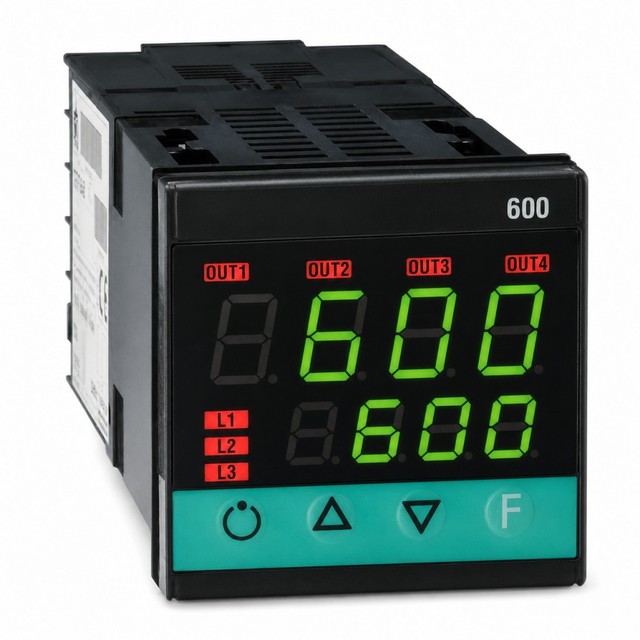
650-D-R00-01030-0-G Single-Loop PID Process Controller for Industrial Process Control

Cautoni Swastik Instrumentation Digital PID Controller for Electrical Control Panels Smart Factory Industrial Applications 220V
 CAUTONI SWASTIK INSTRUMENTS (INDIA) PRIVATE LIMITED🇮🇳IN1 yr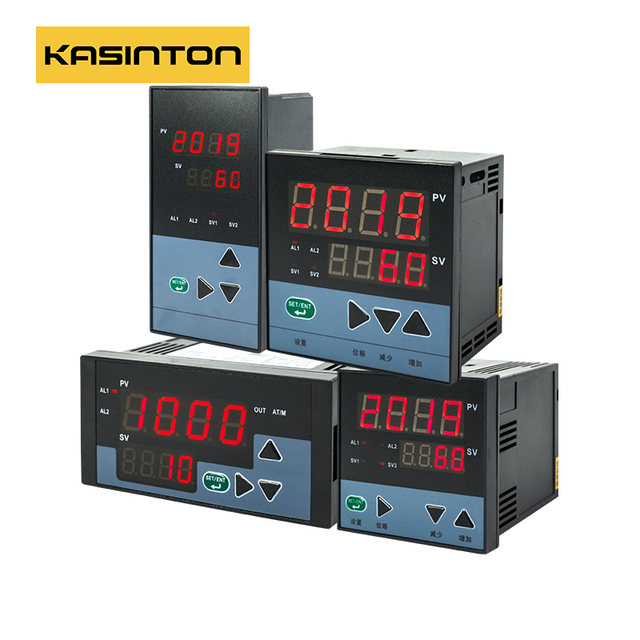
Industrial Grade Construction Dual Alarm Function Stable Performance PID Regulator Controller
 Wuxi Jiashidun Technology Co., Ltd.verified🇨🇳CN2 yrs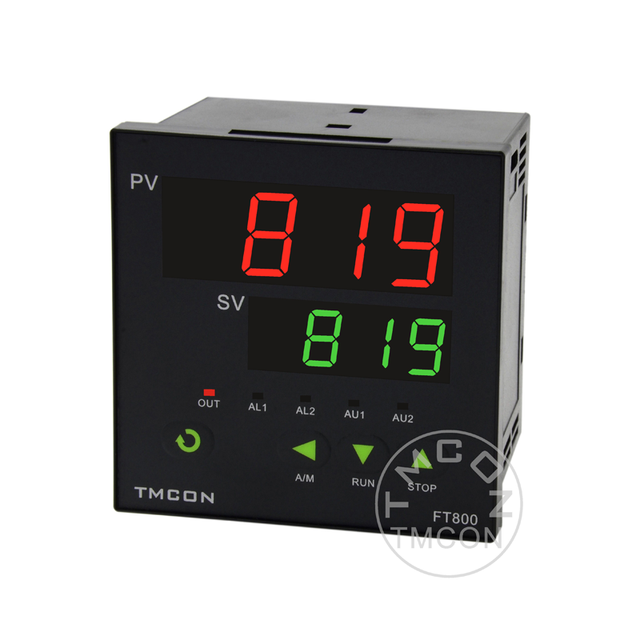
FT819 TMCON High Precision PID Intelligent Digital Industrial Process Temperature Controller with RS485 Modbus Communication
 Guangzhou Tmcon Electronic Technology Co., Ltd.🇨🇳CN10 yrs
Industrial Intelligent Programmable Process Controller PID Temperature Controllers with RS485/232 MODBUS-RTU
 Yuyao Kingcreate Instruments Co., Ltd.🇨🇳CN9 yrs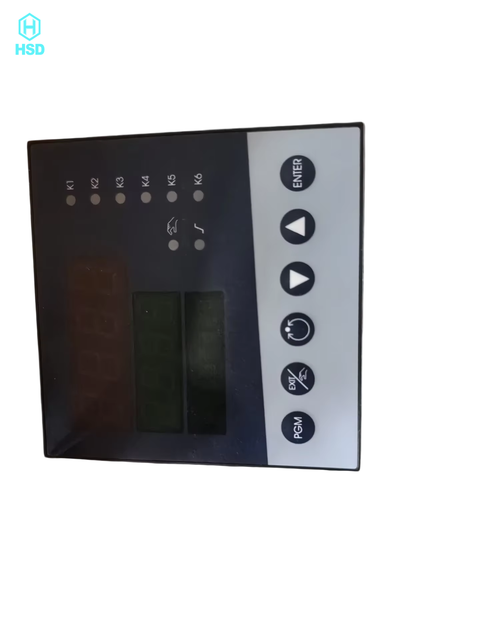
DICON500 Universal Process PID Controller With Digital Display for Industrial Temperature Process Control System

Industrial Digital PID Temperature Regulation Process Control Panel Instrument Controller DC2800-CE-0S0-100-000-00-0
 Xiamen Kongketu Industrial Automation Co., Ltd.🇨🇳CN1 yr
Single Loop PID Temperature Controller 4 20mA Relay Output Digital Process Controller Universal Mounting
 Shanghai Chikong Automation Instrument Co., Ltd.🇨🇳CN8 yrs
Universal Input Autotune Controller Universal Process Limit Controller PID Temperature Controller
 Xuzhou Sanhe Automatic Control Equipment Co., Ltd.🇨🇳CN13 yrs
Controls 2331101 PID Controller
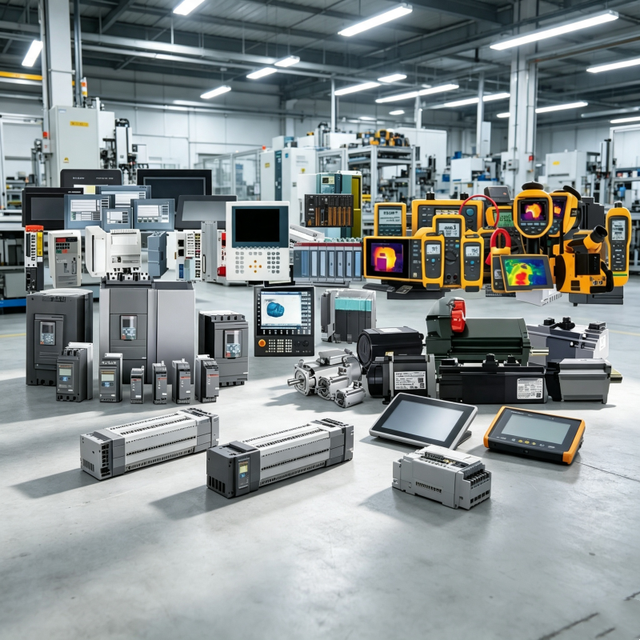
Compact High Speed PID Temperature Controller E5DC-QX2ASM-802
 Xiamen Liuxian Industrial Co., Ltd.🇨🇳CN1 yr
HT Furnace PID High Precision PID Controller Temperature Controller
 Zhengzhou Hengtong Furnace Co., Ltd.🇨🇳CN9 yrs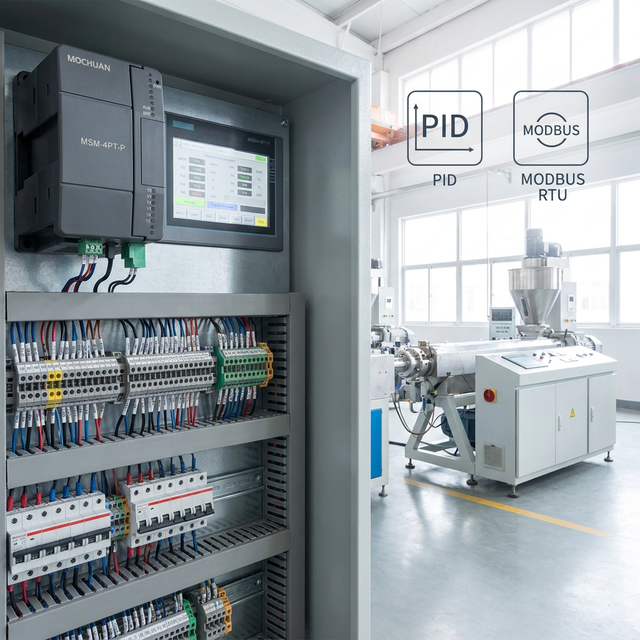
Mochuan PID Controller - Reliable Semiconductor Production Solution with RS485/Modbus
 Wuxi Mochuan Drives Technology Co., Ltd.🇨🇳CN12 yrs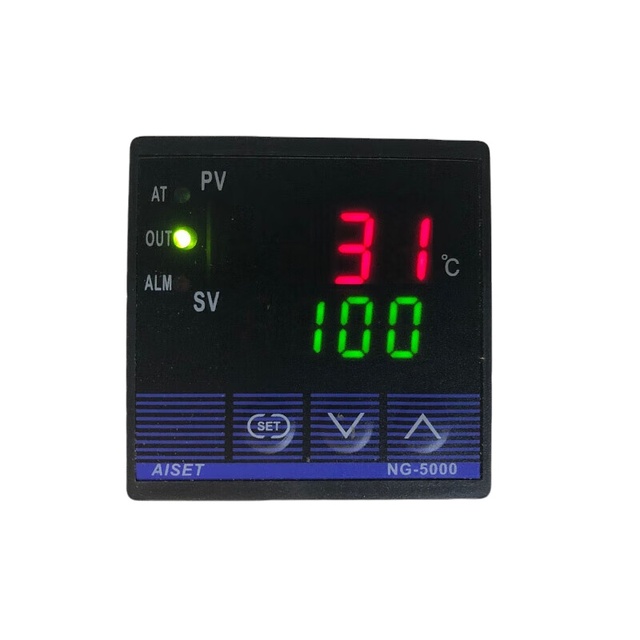
AISET NG-5411-2 K Type Digital PID Temperature Controller with Panel Mount and 1 Year Warranty for Bag Making Machines
 Ruian Win-Win Machinery Co., Ltd.verified🇨🇳CN10 yrs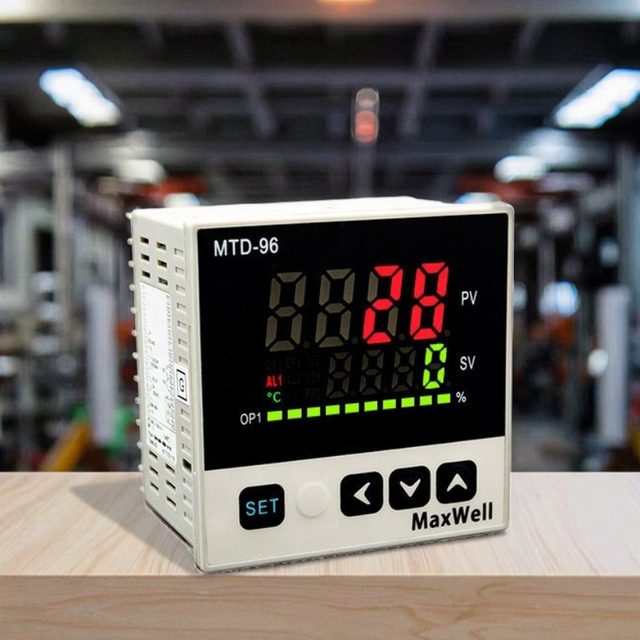
MTD-96 Digital PID Temperature Controller for Industrial Use
 Xiamen Maxwell Automation Limitedverified🇨🇳CN12 yrs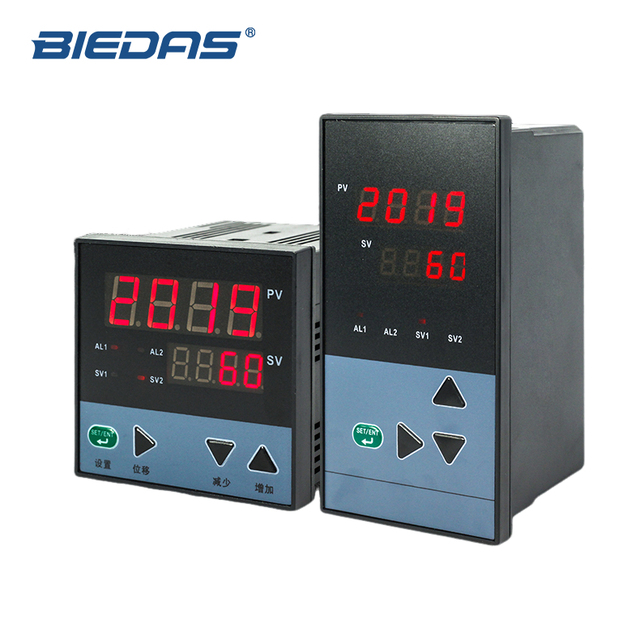
High Stability Multi Signal Input Isolated Design Anti Interference Industrial Grade PID Controller
 Wuxi Baiyida Mechanical And Electrical Technology Co., Ltd.verified🇨🇳CN3 yrs
Custom Dual Digital Programmable PID Temperature Controller for Injection Molding Machine
 Yancheng Laiyuan Electric Equipment Co., Ltd.🇨🇳CN14 yrs
STA Programmable PID Temperature Controller for Chamber Muffle Furnace
 Sta Refractory (zhengzhou) Co., Ltd.🇨🇳CN14 yrs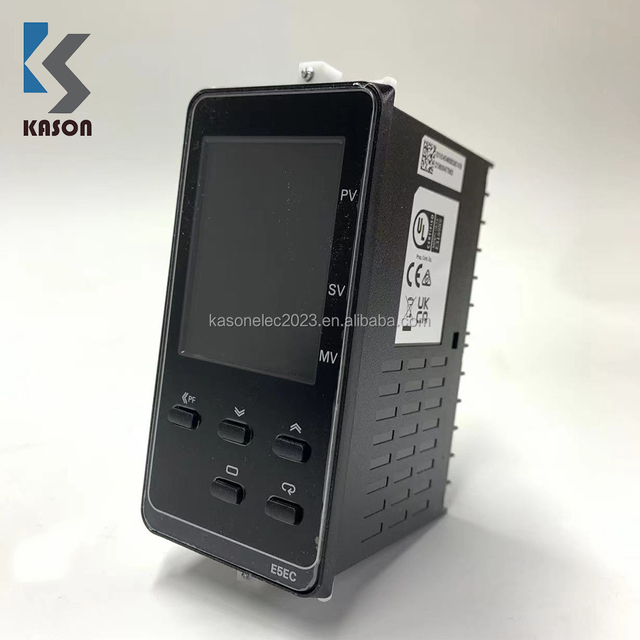
New Original PID Digital Temperature Controller E5EC-RR2ASM-820

SAMSON TROVIS 6493 Electronic Process Controller Digital PID Panel Mount Compact Controller
 Xiangjing (Shanghai) Mechanical And Electrical Tech Co., Ltd.verified🇨🇳CN8 yrs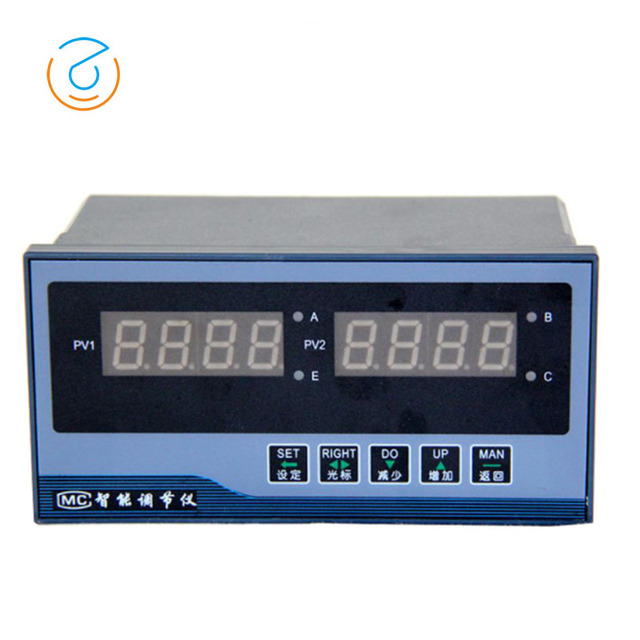
Manufacturer Direct Sale Intelligent PID Digital Controller
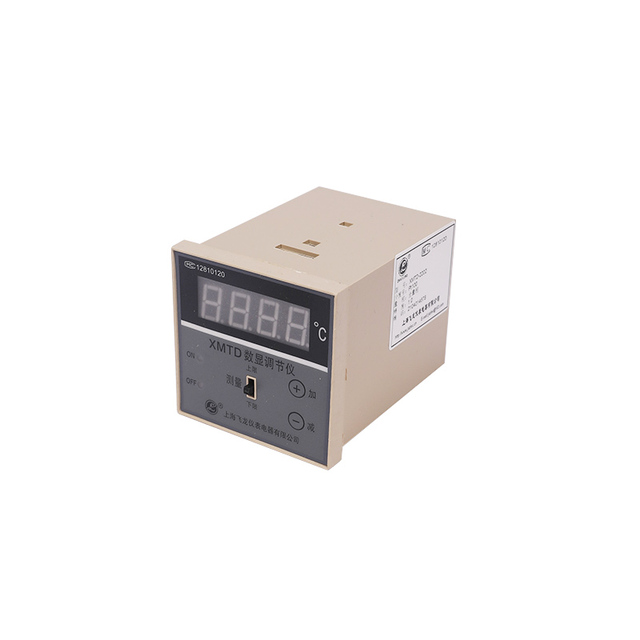
Industrial Use PID Adjusting Temperature Controller XMTD-2202 Digital Temperature Controller
 Taizhou Haoqi Electric Co., Ltd.verified🇨🇳CN11 yrs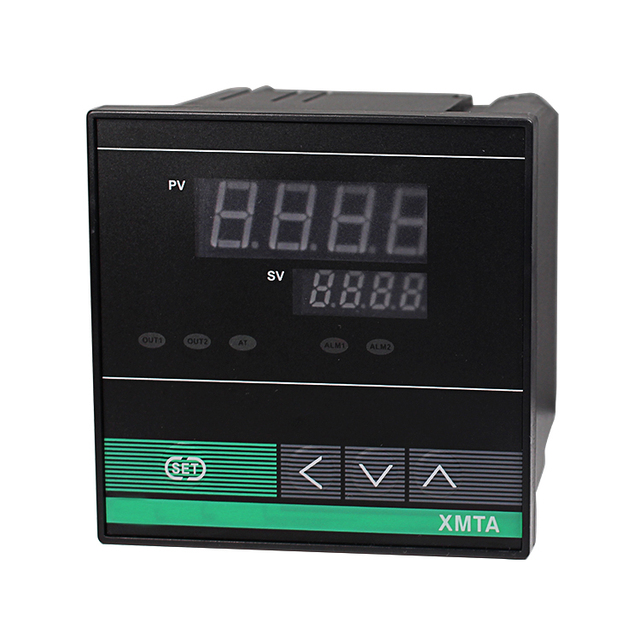
Best Wholesale Universal Input Industrial PID Digital XMTA-8411 Temperature Controller High Quality
 Yueqing Hongshuo Electrical Co., Ltd.verified🇨🇳CN12 yrs
40-1 UNIVERSAL PID TEMPERATURE CONTROLLER
 Xiamen Global Shengda Electronics Co., Ltd.🇨🇳CN1 yr
Boil Pid Temperature Automation Plc Controller
 Shenzhen Coolmay Technology Co., Ltd.verified🇨🇳CN10 yrs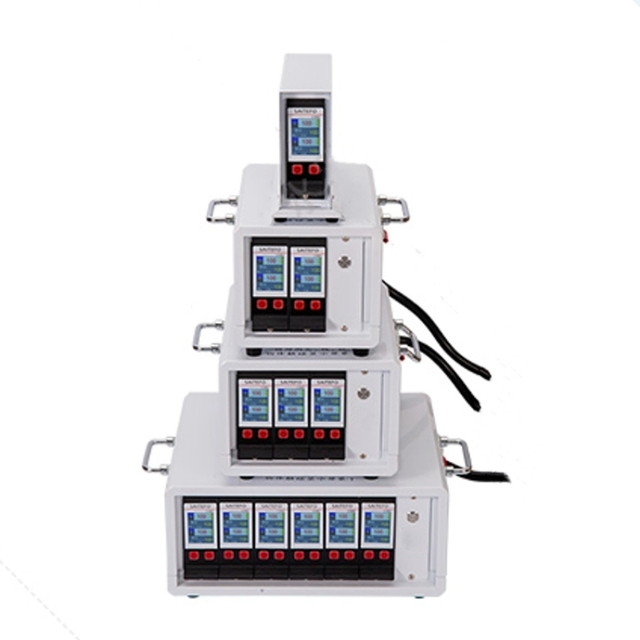
Industrial Capillary Automation Mini PID Control Box PWM Output Temperature Controller for Extruder
 Guangzhou Guling Commerce Co., Ltd.🇨🇳CN7 yrs
Customizable Intelligent Digital PID Temperature Controller OEM and ODM Supported Instrument
 Shanghai Teshi Machinery Equipment Co., Ltd.🇨🇳CN11 yrs
Related Searches
Explore more sourcing topics & related categories
Sources & References
28 sources cited · Verified industry data & reports
PID controller - Wikipedia
en.wikipedia.org
If a velocity loop PID controller is being used to control the speed of the load and command the force being applied by the actuator, then it is beneficial to take the desired instantaneous acceleration, scale that value appropriately and add it to the output of the PID velocity loop controller. This means that whenever the load is being accelerated or decelerated, a proportional amount of force is commanded from the actuator regardless of the feedback value. A proportional–integral–derivative (PID) controller, or three-term controller, is a feedback-based control loop mechanism commonly used to manage machines and processes that require continuous control and automatic adjustment. It is typically used in industrial control systems and various other applications where constant control through modulation is necessary without human intervention. Lastly, the derivative (D) component predicts future error trend by assessing the rate of change of the error, which helps to mitigate overshoot and enhance system stability, particularly when the system undergoes rapid changes. The PID output signal can directly control actuators through voltage, current, or other modulation methods, depending on the application. A common example is a vehicle's cruise control system. For instance, when a vehicle encounters a hill, its speed will decrease if the engine power output is kept constant. The PID controller adjusts the engine's power output to restore the vehicle to its desired speed, doing so efficiently with minimal delay and overshoot. The theoretical foundation of PID controllers dates back to the early 1920s with the development of automatic steering systems for ships. This concept was later adopted for automatic process control in manufacturing, first appearing in pneumatic actuators and evolving into electronic controllers.
What is a PID Controller? | Dewesoft
dewesoft.com
Electronics applications use PID controllers for tasks like voltage regulation, motor control, and power conversion in applications ranging from power supplies to motor drives. Proportional-integral-derivative PID controllers are fundamental components of today’s automation and control systems. PIDs utilize a closed-loop feedback control mechanism that continuously adjusts outputs based on the difference between a desired setpoint and the measured value. Based on this error signal, the controller adjusts the system's control input to minimize the error and maintain the process variable close to the setpoint. ... Error Calculation: The PID controller continuously calculates the error signal as the difference between the desired set point and the current process variable. Feedback Loop: The process variable is continuously measured and fed back to the controller, closing the control loop. The controller adjusts the control input based on the feedback, aiming to minimize the error and maintain the process variable at the setpoint. PID controllers are available as dedicated instruments, as shown below.
The PID Controller & Theory Explained - NI
www.ni.com
The popularity of PID controllers can be attributed partly to their robust performance in a wide range of operating conditions and partly to their functional simplicity, which allows engineers to operate them in a simple, straightforward manner. As the name suggests, PID algorithm consists of three basic coefficients; proportional, integral and derivative which are varied to get optimal response. A PID controller is an instrument that receives input data from sensors, calculates the difference between the actual value and the desired setpoint, and adjusts outputs to control variables such as temperature, flow rate, speed, pressure, and voltage. It does this through three mechanisms: proportional control, which reacts to current error; integral control, which addresses accumulated past errors; and derivative control, which predicts future errors. The PID controller sums those three components to compute the output. PID control operates within a closed loop system, or PID loop, which is a control mechanism that reads sensors to provide constant feedback, calculating the desired actuator output at a regular interval known as the fixed loop rate.
What is a PID Controller?
www.digikey.com
If we are working in continuous time, then we would likely need some calculus to actually compute the integral to get the area under the error curve. However, most modern PID controllers are digital and operate on discrete time, which means we simply sample the error at a set interval. PID controllers are mechanisms that operate on feedback to control a system, process, or plant. They work by measuring this feedback over time and adjusting the process’s input as needed to achieve a desired setpoint. They are extremely popular in industrial settings used to control, among other things: heaters, boilers, blowers, and robotic arms. You can also find them in everyday applications, such as cruise control systems in cars. In the rest of this post, we will cover the basic theory behind how PID controllers operate. The very first PID controllers (as analyzed by Nicolas Minorsky in the 1920s) were pneumatic. Eventually, analog electronics (e.g. using op-amps) were used to create such controllers. Most modern PID controllers are built using computers or microcontrollers (including programmable logic controllers, PLCs).
Introduction to PID — FIRST Robotics Competition documentation
docs.wpilib.org
First, we’ll get some nomenclature for PID controllers out of the way. In a PID context, we use the term reference or setpoint to mean the desired state of the mechanism, and the term output or process variable to refer to the measured state of the mechanism. For those already familiar with PID control, this interpretation may not be consistent with the classical explanation of the P, I, and D terms corresponding to response to “past”, “present”, and “future” errors. While that model has merit, we will instead be approaching PID control from the viewpoint of modern control theory, as proportional controllers applied to different physical quantities we care about. Roughly speaking: the proportional term drives the position error to zero, the derivative term drives the velocity error to zero, and the integral term drives the total accumulated error-over-time to zero. All three terms are added together to produce the control signal. We’ll go into more detail on each of these below. ... Throughout the WPILib documentation, you’ll see two ways of writing the tunable constants of the PID controller. Figure 2.4 shows an example of steady-state error for a flywheel, and figure 2.5 shows how an integrator added to the flywheel controller eliminates it. However, too high of an integral gain can lead to overshoot, as shown in figure 2.6. ... For information on using the WPILib provided PIDController, see the relevant article.
DwyerOmega | Blog | What is a PID Controller?
www.dwyeromega.com
A PID controller is an instrument used to control temperatures. Learn what are the different types of PID Controllers and how PID controllers work from Omega. A PID controller is an instrument used to maintain a process variable, such as temperature, flow, pressure, or speed, at a desired setpoint. These devices continuously measure the difference between the setpoint and the actual value, adjusting output to minimize that difference. They can seamlessly switch between maintaining tight temperature control in a pharmaceutical reactor, regulating air flow in an HVAC system, or adjusting feed rates in a packaging line — all while minimizing fluctuations and ensuring product quality. A PID controller constantly measures process variables and compares them to the desired setpoint. It then calculates how much correction is needed and adjusts to bring the process back on target. What makes a PID controller especially powerful is how it combines three control strategies into one seamless response: