Adsl Amplifier

Overview
Product sourcing insights & recommendations
I have completed a comprehensive analysis of the ADSL line amplifier market, focusing on best-selling products on Alibaba.com and global demand trends for 2026.
The investigation reveals that while traditional ADSL boosters are being phased out, VDSL2 Ethernet Extenders and Industrial Line Repeaters are seeing sustained demand as critical bridges in global telecom infrastructure upgrades. I have identified high-volume products with prices ranging from $35 to $110 for standard extenders and up to $900 for industrial-grade units.
The global market for DSL network equipment is projected to maintain momentum through 2026, particularly in the Asia-Pacific region, which holds a 42% market share due to massive rural infrastructure investments. The attached report details technical specifications, B2B price benchmarks, and regional demand drivers to support your sourcing strategy.
Based on the infrastructure trends and pricing benchmarks, you may consider these next steps:
Vdsl2 Ethernet Extender Wholesale Price Best Selling
Products · 3 lists
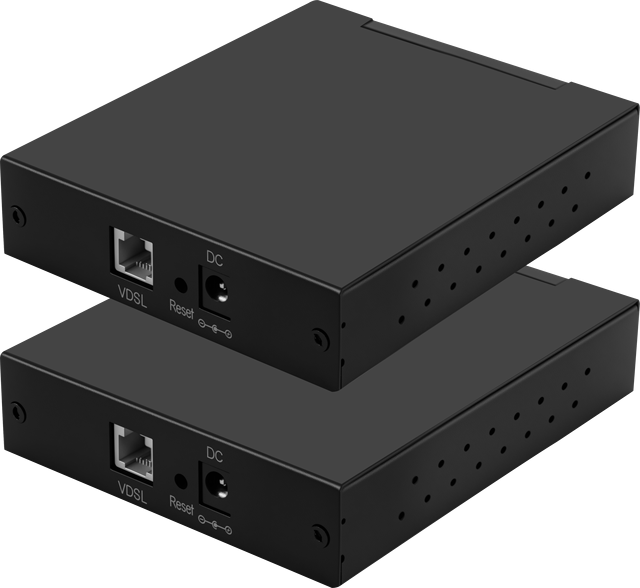
Long-range Vdsl Ethernet Extender Gigabit LAN Port Home Outdoor Extend the Network Through Telephone Lines
 Shenzhen Yingdakang Technology Co., Ltd.🇨🇳CN17 yrs
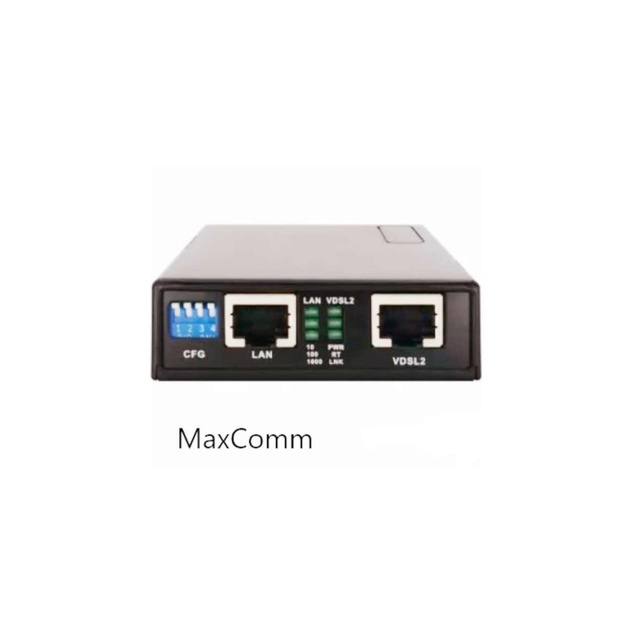
High Efficiency Economic Gigabit Vdsl2 Ethernet Extender Ultra-Speed Copper Lan Extender Over Ethernet
 MAXCOMM CO., LTD.🇹🇼TW17 yrs
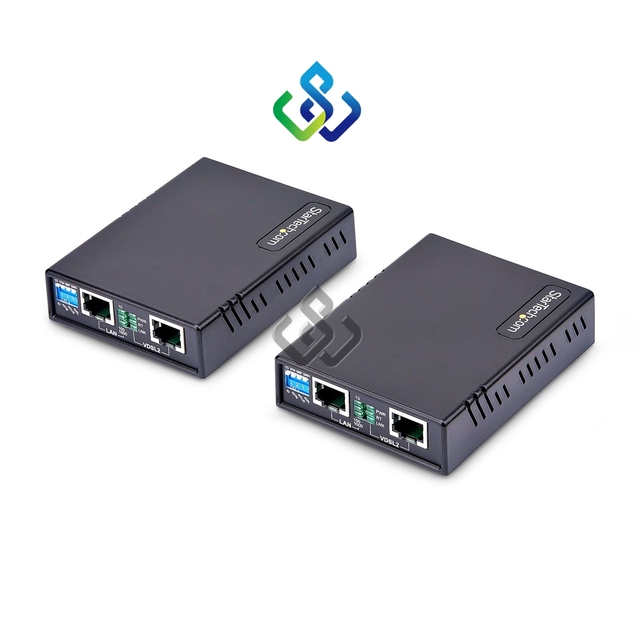
IN STOCK ORIGINAL BRAND NEW VDSL2 ETHERNET EXTENDER VDSL-LAN-EXTENDER-1G
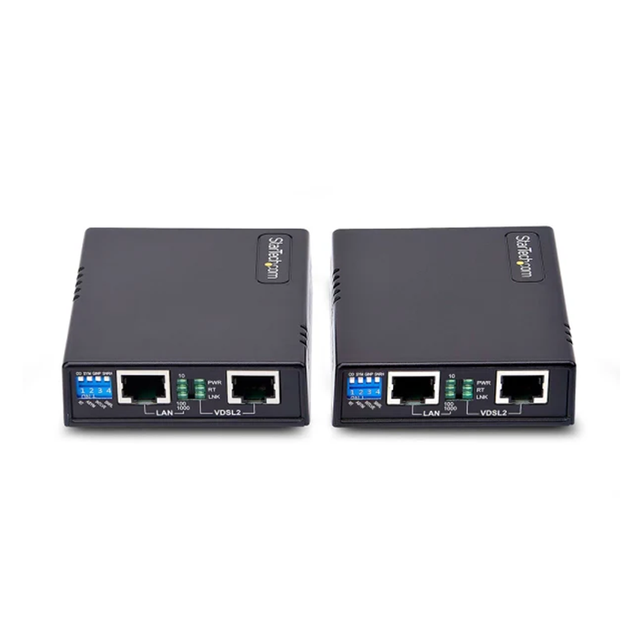
Hot Selling VDSL-LAN-EXTENDER-1G VDSL2 Ethernet Extender Kit up to 0.6mi (1km) Long Range Network Repeater
 Shenzhen Junxin Industrial Control Technology Co., Ltd.🇨🇳CN4 yrs
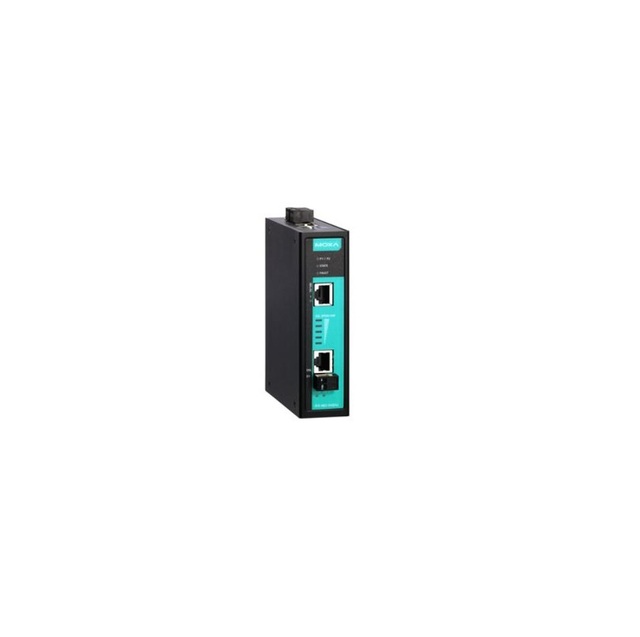
MOXA IEX-402-VDSL2-T Managed SHDSL Ethernet extender with 1 10/100BaseT(X) port and 1 DSL port
 Xiamen Tongkong Technology Co., Ltd.🇨🇳CN8 yrs
IEX-402-VDSL2-T Managed SHDSL Ethernet extender with 1 10/100BaseT(X) port and 1 DSL port
 Shenzhen Anke Automation Co., Ltd.🇨🇳CN3 yrs
MOXA IEX-402-VDSL2-T Managed SHDSL Ethernet Extender with 1 10/100BaseT(X) Port and 1 DSL Port
 Shenzhen Yunyifeng Technology Co., Ltd.verified🇨🇳CN7 yrs

Moxa Iex-402-vdsl2-t Managed Shdsl Ethernet Extender with 1 10/100baset(x) Port and Dsl New Original Industrial Automation
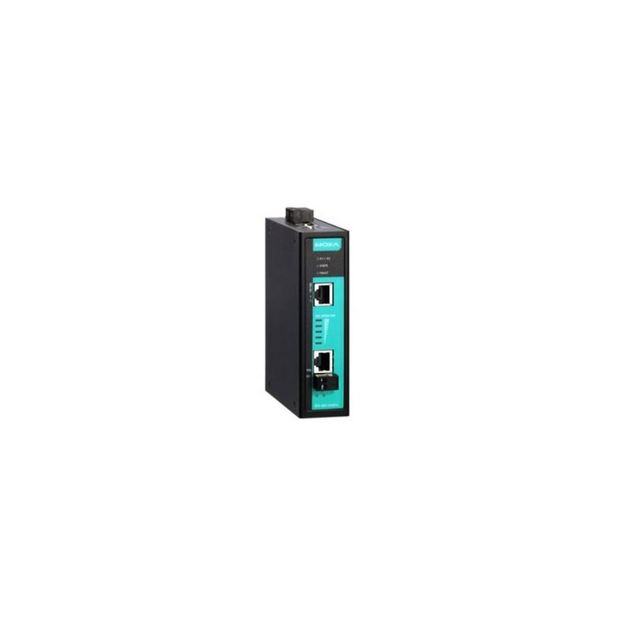
Iex-402-vdsl2-t Managed Shdsl Ethernet Extender with 1 10/100baset(x) Port and Dsl New Original Industrial Automation
 Shenzhen Fuyejin Trading Co., Ltd.🇨🇳CN1 yr

IEX-402-VDSL2-T Managed SHDSL Ethernet Extender With 1 10/100BaseT(X) Port and 1 DSL Port
 Xiamen Sanyiliu Supply Chain Management Co., Ltd.🇨🇳CN1 yr
Deep Dive · Full Report
Full Market Report
1 document · Live-fetched from source
Related Searches
Explore more sourcing topics & related categories
Sources & References
27 sources cited · Verified industry data & reports
Fiber Optic Amplifiers Market Forecast Points Higher Toward 2035 ...
www.indexbox.io
According to the latest IndexBox report on the global Fiber Optic Amplifiers market, the market enters 2026 with broader demand fundamentals, more disciplined procurement behavior, and a more regionally diversified supply architecture. The global Fiber Optic Amplifiers Market is entering a sustained growth phase, with demand projected to accelerate through 2035 as network operators upgrade infrastructure to handle exponentially rising data traffic. Advanced Traffic Controller Cabinets Atc Cabinets Market to Reach New Heights by 2035, Driven by Smart City Infrastructure Upgrades ... Instant access. No credit card needed. ... Online access to 2M+ reports, dashboards, and tables. Trusted by Fortune 500 teams. Select the sections and data you need. Delivery by e-mail within 24 hours. Executive Summary & Market Overview Key findings, market size, trends, historical snapshot 2007–2025, forecast highlights 2026–2035, trade balance summary $149 Trade (Imports & Exports) Import & export volumes and value, trade balance, top trading partners, trade forecast 2026–2035 $249 · Imports by Source Country +$99 Exports by Destination +$99 By Product Segment +$99 Monthly Trade Data +$149 · Regulatory & Trade Policy Import duties & tariffs by HS codes, non-tariff barriers, standards & certifications, trade agreements, labeling & packaging requirements $99 · Logistics & Distribution Key trade routes, transport infrastructure, freight & insurance costs, distribution channel structure, warehousing & cold chain $149 Asia-Pacific leads the global market with 42% share, driven by massive telecom infrastructure investments in China, India, and Southeast Asia. China is both the largest producer and consumer, with domestic manufacturers supplying a growing share of global amplifier modules.
DSL Modem Market Trends & Forecast Analysis 2026–2035
www.globalgrowthinsights.com
In the Middle East & Africa, DSL modems serve around 28% of broadband users, mainly due to underdeveloped fiber infrastructure. Rural and semi-urban regions form the core user base, with ADSL technology being the most common. Growth in this region is being supported by digital literacy programs and increased investment in telecom infrastructure. Over 43% of telecom operators in developing nations are still investing in DSL infrastructure to expand rural connectivity. Investments are also being directed toward the modernization of existing DSL lines, with more than 29% of infrastructure funding in certain regions focused on hybrid models combining DSL and Wi-Fi technologies. Additionally, private players are targeting high-demand rural zones, contributing to a 33% increase in regional DSL rollouts. Over 72% of global households now require broadband connectivity, and DSL remains a cost-effective solution in many regions. Demand for ADSL and VDSL technologies is particularly prominent in rural and suburban areas, where fiber-optic infrastructure remains underdeveloped. HDSL, ADSL, and VDSL dominate deployments due to their scalability and compatibility with existing infrastructure. On the application side, household and commercial segments collectively account for over 70% of the market share, driven by the rising demand for stable internet connections.
Digital Subscriber Line (DSL) Network Equipment Market Size, Report ...
www.precedenceresearch.com
The digital subscriber Line (DSL) network equipment market is expected to grow by 2035, driven by demand for cost-effective broadband, technological upgrades (VDSL2, G.fast), and infrastructure expansion in emerging markets. The market sizing and forecasts are revenue-based (USD Million/Billion), with 2025 as the base year. Last Updated : 08 Jul 2026 | Report Code : 5929 | Format : PDF / PPT / Excel | Author : Shivani Zoting | Reviewed By : Aditi Shivarkar | ✓ Fact Checked | ❝ Cite Digital Subscriber Line (DSL) Network Equipment Market Size, Report by 2035 Source: https://www.precedenceresearch.com/digital-subscriber-line-network-equipment-market The increasing need for high-speed internet services like cloud computing and remote work propels investments in DSL infrastructure. The U.S. and Canada have established policies and funding initiatives to enhance broadband availability, especially in rural and underserved regions. The sophisticated telecommunications framework, strong broadband demand, and governmental backing of North America have greatly impacted its leading position in the market. China is building momentum in the market in the region due to large investments in telecommunications infrastructure, government programs such as the Broadband China initiative, and the implementation of advanced technologies, including 5G and hybrid networks. Government programs and funding for digital infrastructure have boosted the demand for DSL equipment. The BharatNet initiative in India delivers broadband access to every gram panchayat, with Tejas Networks supplying Gigabit Passive Optical Network (GPON) technology. Rapid urban growth and digital advancements have resulted in an increase in internet users, rendering DSL a budget-friendly option for enhancing connectivity. The telecommunications industry of India is expanding quickly, bolstered by initiatives backed by the government.
Telecom Network Infrastructure Market Report, 2026-2033
www.grandviewresearch.com
Size, Share & Trends Analysis Report By Infrastructure Type (Wireless Network Infrastructure, Fixed Network Infrastructure, Core Network Infrastructure), By Component, By Network Technology, By End User, By Region, And Segment Forecasts ... The global telecom network infrastructure market size was valued at USD 108.8 billion in 2025 and is projected to grow from USD 116.2 billion in 2026 to USD 190.1 billion by 2033, at a CAGR of 7.3% from 2026 to 2033. The telecom network infrastructure market in the Asia Pacific is being driven by rapid 5G deployment, increasing demand for high-speed broadband and mobile connectivity, and rising investments in network modernization and fiber-optic infrastructure. According to the India Brand Equity Foundation and the Telecom Regulatory Authority of India (TRAI), India exemplifies these trends, with gross telecom revenue rising from USD 39.22 billion in FY24 to USD 43.42 billion in FY25, and total internet subscribers reaching 979 million by June 2025. Fastest-growing regional market: Asia Pacific (highest CAGR, 2026-2033) By country: The U.S. held the largest market share in 2025 ... Telecom operators and internet service providers are investing heavily in upgrading their networks to meet growing consumer and enterprise demands, while the expansion of cloud services and data centers is further propelling market growth. The fixed network infrastructure segment is expected to grow at a significant CAGR from 2026 to 2033, driven by increasing demand for high-speed broadband connectivity and the expansion of fiber-optic networks across urban and rural regions. The rising adoption of cloud services, video streaming, and remote work solutions is accelerating the need for robust, reliable fixed-line networks.
Optical Amplifier Market Size, Share, and Industry Trends Forecast ...
markwideresearch.com
The Optical Amplifier Market assessed at $3.8 Billion in 2026 is forecast to scale to $8.05 Billion by 2035, progressing at a 8.70% CAGR throughout the forecast period. Data center operators in hyperscale cloud infrastructure represent the fastest-expanding buyer segment as interconnection bandwidth requirements multiply. FCC spectrum management rules in the United States, EU Green Deal energy efficiency mandates under ECHA frameworks, and China's GB standards for telecommunications equipment collectively shape certification requirements and market access protocols across major demand centers. These regulatory layers force manufacturers to maintain parallel compliance tracks for electromagnetic compatibility, material restrictions under REACH, and national security screening of network infrastructure components. CERN's fiber infrastructure around Geneva concentrates European scientific procurement. Broadcasting:Video transport networks require amplifiers with minimal group delay variation across wide bandwidths. National broadcasters in Germany and Japan sustain niche volume. Telecommunications anchors the volume base while data centers expand most quickly. BharatNet rural fiber-to-the-home targets create volume demand for cost-optimized amplification modules. TRAI and CEA frameworks govern telecom infrastructure deployment and power efficiency standards.
Optical Amplifier Market Growth Opportunities & Trends
www.reanin.com
Governments and telecom operators in these regions often face challenges such as inadequate infrastructure investments, insufficient educational initiatives, and a lack of exposure to the long-term benefits of optical amplifier usage. Incentives from governments, such as smart city initiatives and broadband development policies, are further driving investment in optical infrastructure. These programs often include funding for backbone connectivity, where optical amplifiers are essential to delivering consistent, high-capacity services across urban and rural locations. Companies that proactively engage with local telecom providers, offer customized product portfolios, and invest in local partnerships are likely to gain early traction in these fast-growing markets. Regional Momentum and Expansion Regional competition is intensifying, with Asia-Pacific contributing over 45% to overall demand, driven by robust telecommunication upgrades. North America and Europe emphasize growth through early adoption and infrastructure modernization. Emerging markets driving fiber optic adoption - Emerging economies are rapidly expanding their telecommunications infrastructure, creating significant opportunities for the deployment of optical amplifiers.