Amd Processor Phenom

Overview
Product sourcing insights & recommendations
The AMD Phenom processor family, once a groundbreaking monolithic quad-core design, has transitioned into a niche legacy product as of 2026. While it remains a popular choice for retro-gaming enthusiasts and budget-conscious hardware hobbyists, its market presence is now dominated by the secondary refurbished market.
I have synthesized a comprehensive report detailing its architectural significance (such as the K10 microarchitecture), historical performance benchmarks, and its current commercial status in the wholesale market. The report also highlights the technical barriers, such as the lack of AVX instructions, which limit its use in modern software environments.
Key wholesale insights show that units like the Phenom II X4 955 are still available in bulk for as low as $6–$25, primarily serving maintenance for legacy industrial systems or ultra-budget builds.
I've analyzed the AMD Phenom processor market trends. You might find these next steps useful:
Amd Phenom Ii X4 965 955 Black Edition Processor Bulk Used
Products · 3 lists
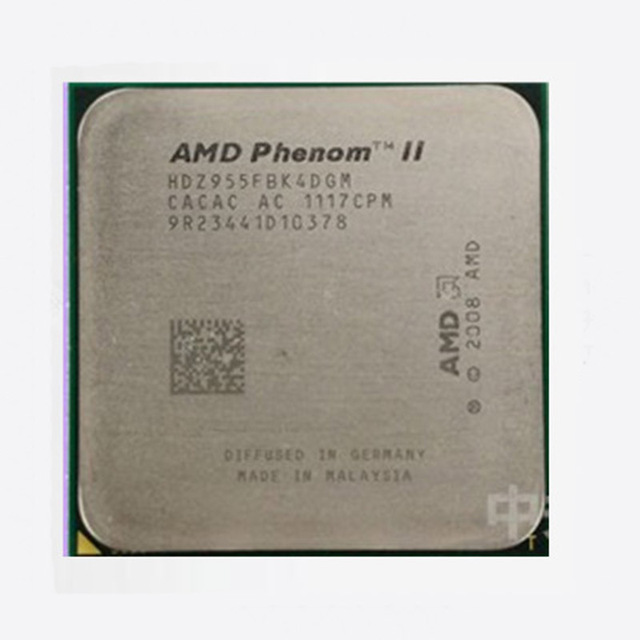
Used II X4 955 3.2GHz 6MB L3 Cache Processor Socket AM3 CPU for Desktop in Stock
 SOUTH LEGEND TECHNOLOGY COMPANY LIMITEDverified🇭🇰HK2 yrs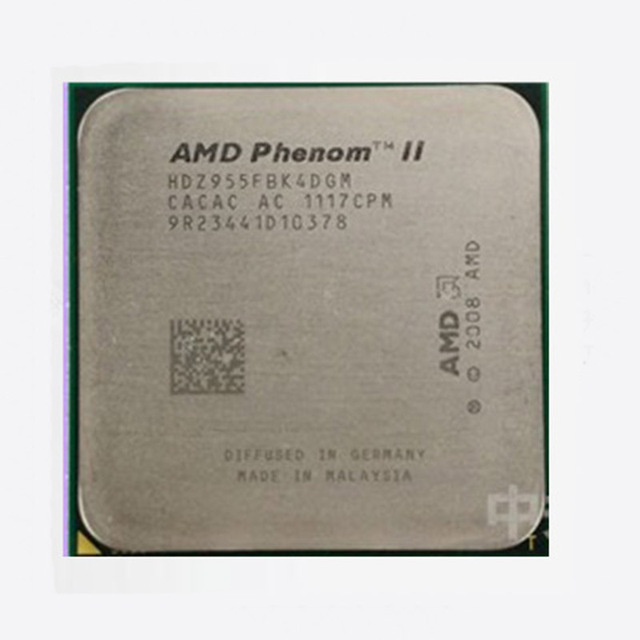
Processors for II X4 955 3.2GHz 6MB L3 Cache Socket AM3 Cpu
 Shenzhen South Legend Technology Co., Ltd.🇨🇳CN12 yrs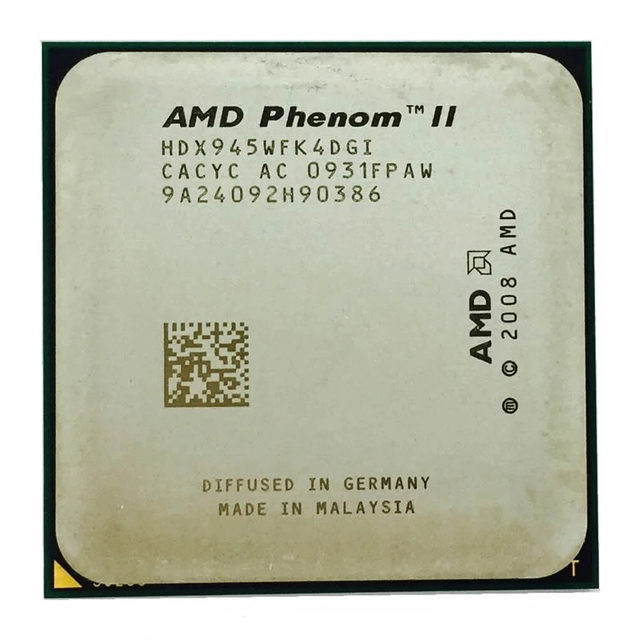
For AMD Phenom II X4 945 95W 3.0GHz Quad-Core CPU Processor HDX945WFK4DGM/HDX945WFK4DGI Socket AM3
 Shenzhen Shangfan Technology Co., Limited🇨🇳CN10 yrs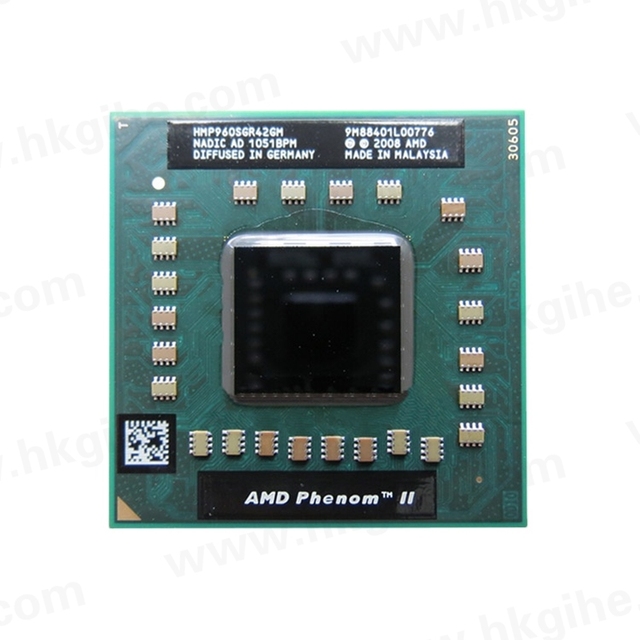
Brand new AMD Phenom II P960 HMP960SGR42GM CPU Processor 1.8GHz Quad-Core Quad-Thread Socket S1 High quality
 Shenzhen Gihe Electronics Co., Ltd.🇨🇳CN5 yrs
Deep Dive · Full Report
Full Market Report
1 document · Live-fetched from source
Related Searches
Explore more sourcing topics & related categories
Sources & References
26 sources cited · Verified industry data & reports
List of AMD Phenom processors - Wikipedia
en.wikipedia.org
It includes the AMD Phenom II X6 hex-core series, Phenom X4 and Phenom II X4 quad-core series, Phenom X3 and Phenom II X3 tri-core series, and Phenom II X2 dual-core series. Other related processors based on the K10 microarchitecture include the Athlon X2 Kuma processors, Athlon II processors, and various Opteron, Sempron, and Turion series. Processors with an e following the model number (e.g., 910e) are low-power models, usually 45 W for Athlons, 65 W for Phenoms. Processors with a "u" following the model number (e.g., 270u) are ultra-low-power models, usually 20 W for single core chips or 25 W for dual core chips. All models support: MMX, SSE, SSE2, SSE3, SSE4a, ABM, Enhanced 3DNow!, NX bit, AMD64, Cool'n'Quiet, AMD-V All models support: MMX, SSE, SSE2, SSE3, SSE4a, ABM, Enhanced 3DNow!, NX bit, AMD64, Cool'n'Quiet, AMD-V · Memory support: DDR2 SDRAM up to PC2-8500, DDR3 SDRAM up to PC3-10600 (Socket AM3 only) On some Callisto dual core processors e.g. 555 BE, the two disabled cores can be enabled, effectively providing a quad core processor for the price of a dual core. This however does not work on all the processors with two cores disabled. Most Regor-based processors feature double the L2 cache per core (1 MB) as other Athlon II and Phenom II processors. All models support: MMX, SSE, SSE2, SSE3, SSE4a, ABM, Enhanced 3DNow!, NX bit, AMD64, Cool'n'Quiet, AMD-V ... Unlike Phenom II desktop processors, Phenom II mobile processors lack L3 cache. All models support: MMX, SSE, SSE2, SSE3, SSE4a, ABM, Enhanced 3DNow!, NX bit, AMD64, Cool'n'Quiet, AMD-V · Memory support: DDR2 SDRAM up to PC2-8500, DDR3 SDRAM up to PC3-10600 (Socket AM3 only) On some Heka triple core processors e.g. 720 BE, the fourth disabled core can be enabled, effectively providing a quad core processor for the price of a triple core.
AMD Phenom - Wikipedia
en.wikipedia.org
Phenom (/fɪˈnɒm/) is the 64-bit AMD desktop processor line based on the K10 microarchitecture, in what AMD calls family 10h (10 hex, i.e. 16 in normal decimal numbers) processors, sometimes incorrectly called "K10h". Triple-core versions (codenamed Toliman) belong to the Phenom 8000 series and quad cores (codenamed Agena) to the AMD Phenom X4 9000 series. The first processor in the family was released in 2007. AMD considers the quad core Phenoms to be the first "true" quad core design, as these processors are a monolithic multi-core design (all cores on the same silicon die), unlike Intel's Core 2 Quad series which are a multi-chip module (MCM) design. BIOS and software workarounds disable the TLB, and typically incur a performance penalty of at least 10%. This penalty was not accounted for in pre-release previews of Phenom, hence the performance of early Phenoms delivered to customers may have been less than the preview benchmarks. "B3" stepping Phenom processors were released March 27, 2008 without the TLB bug and with "xx50" model numbers. An AMD subsidiary released a patch for the Linux kernel, to overcome this bug by software emulation of accessed- and dirty-bits. The model numbers of the Phenom line of processors were changed from the PR system used in its predecessors, the AMD Athlon 64 processor family. The Phenom model numbering scheme, for-later released Athlon X2 processors, is a four-digit model number whose first digit is a family indicator. Energy Efficient products end with an “e” suffix (for example, "Phenom 9350e"). Some Sempron processors use the prefix LE (for example, "Sempron LE-1200") ... ↑ "AMD to Drop "Athlon" Moniker on the High End". DailyTech. May 2, 2007. Archived from the original on 2007-05-06.
List of AMD Phenom processors — Grokipedia
grokipedia.com
The AMD Phenom processors are a family of 64-bit central processing units (CPUs) for desktop, mobile, and embedded systems developed by Advanced Micro Devices (AMD), based on the K10 microarchitecture and released from November 2007 through 2011.[1][2] Introduced as AMD's first quad-core desktop processors, the Phenom line marked a shift to integrated memory controllers and HyperTransport interconnects, supporting DDR2 and later DDR3 memory on sockets AM2, AM2+, and AM3.[3][4] The original Phenom series, launched in late 2007 on a 65 nm process with initial quad-core X4 models like the Phenom This refresh delivered 20-30% average performance gains over the original Phenom in multi-threaded applications, better aligning with Intel's offerings through enhanced overclocking headroom and architectural tweaks like improved branch prediction.[11] To broaden market coverage, AMD expanded the lineup with triple-core variants in early 2009 and dual-core models by 2010, releasing the final Phenom II processors in the second quarter of 2011.[12] AMD announced the discontinuation of the Phenom family in 2012, with several models reaching end-of-life status by December of that year, as the comp The Phenom X4 processors based on the Agena core represented AMD's initial entry into the quad-core desktop market, utilizing a 65 nm silicon-on-insulator (SOI) process to deliver four integer cores with integrated memory controllers. The Phenom II X6 processors utilizing the Thuban core marked AMD's entry into the consumer six-core desktop CPU market, built on a 45 nm silicon-on-insulator (SOI) process by GlobalFoundries.[26] These processors were designed for high-performance computing tasks such as content creation, gaming, and multitasking, offering improved multi-threaded performance over prior quad-core models.[27] Launched starting in April 2010, the lineup targeted Socket AM3 platforms and introduced AMD Turbo Core technology, which dynamically increases clock speeds on fewer active cores to boost single-threaded performance while managing thermal limits.
AMD Phenom II - CPU - Tech Explained - HEXUS.net
m.hexus.net
Along with other minor architectural improvements, AMD's new Phenom II chips, comprising of the X4 920 (2.8GHz) and X4 940 Black Edition (3.0GHz), were priced aggressively at £160 and £190, respectively, and competed well against Intel quad-core chips in the same pricing bracket. Phenom I and II were socket-compatible, meaning that a user who purchased an AM2+ motherboard, which formed the vast majority of supporting chipsets, could run either processor without needing to upgrade to a new board. Now, in February 2009, AMD is introducing a new range of Phenom II chips and a new form-factor, AM3, required because the chips support both DDR2 and DDR3 memory, although not at the same time. Present AM2+ motherboards support DDR2 only, and the increase in speed by adopting DDR3, as seen with Intel's Core i7 processor, means that the new Phenom IIs can work with either existing boards and DDR2, or with newer AM3, DDR3-only boards, due to be released this month: the choice is yours. The Phenom AM3 chips will also bring the tri-core X3 models into the fold, and two have been released this month. As you can see, AMD has a number of processor that litter the £75-£150 space, often with overlapping pricing between tri- and quad-core models. Of course, Intel has the dominant lead in areas that AMD doesn't even have chips, and the also-recently-introduced Core i7 is the fastest desktop processor around, but it costs £240 on top of the extra platform costs associated with the supporting X58 chipset and DDR3 memory. AMD's introduction of the Phenom II processor has brought the company back into contention in the £125-£190 space.
The Ultimate Guide To AMD Processor Generations
www.itechtics.com
Overall, the AMD Phenom processor series was a significant milestone in AMD’s history, offering users a powerful and affordable alternative to Intel’s offerings. This move was made in 2017 as part of AMD’s effort to focus on delivering innovative solutions to the enterprise market while the Opteron processors had become outdated. Despite being discontinued, the Opteron series remains a reliable choice for organizations seeking cost-effective computing solutions for their infrastructure requirements. ... This one is among the most brilliant lines of desktop processors that redefined the high-performance computing landscape in 2007. The Phenom processors were designed for desktop computers and popular among gamers and power users. However, they were eventually superseded by AMD’s Ryzen processors, which offered even higher levels of performance and efficiency. ... The first generation of Phenom processors was released in November 2007 and included models with base clock rates ranging from 1.8 GHz to 2.6 GHz. Their continued innovation and performance have helped to establish them as a leading player in the processor market. Designed and manufactured by Advanced Micro Devices (AMD), these processors are responsible for executing the vast majority of calculations and instructions that make up a computer’s computing power. It allows the computer to perform carry out tasks, from basic web browsing to complex scientific simulations. The history of AMD processors dates back to 1969 when the company was founded.
Phenom II - Wikipedia
en.wikipedia.org
The Thuban Phenom II X6 is the CPU in the Leo Platform which also includes the AMD 890 chipset and the Radeon HD 5800 series graphics. The Phenom II triples the shared L3 cache size from 2MB (in the original Phenom line) to 6MB, leading to benchmark performance gains as high as 30%. In another change from the original Phenom, Cool'n'Quiet applies to the processor as a whole, rather than on a per-core basis. AMD claims that this behaviour is due to the BIOS, not the memory controller; several board manufacturers have addressed the issue with a BIOS update. The dual-spec memory controller also gives motherboard manufacturers and system builders the option of pairing AM3 with DDR2, as compared to competing chips from Intel which require DDR3. "Thuban" and "Zosma" Phenom II processors support AMD's Turbo Core overclocking performance-boost technology. When not all cores are needed, the processor will automatically overclock up to half of the cores by up to 500 MHz, leaving the other half idle. In turn, when the application demands more than half of the cores, the processor will run on standard clock rate and with all cores enabled. The flagship AMD Phenom II X6 1100T shifts 3.3 GHz to 3.7 GHz. The standard processors allow for overclocking, however not to the point that a Black edition CPU will. The Phenom II range of CPUs is the first series of AMD CPUs to have a low enough minimum temperature of operation to support "extreme" cooling methods such as dry ice, liquid nitrogen or liquid helium, a deficiency in older CPUs referred to as the "Cold Bug". In a public demonstration of the Phenom II's overclocking potential at CES 2009 in Las Vegas on 10 January 2009, Sami "Macci" Mäkinen (a record-breaking overclocker) used a Phenom II X4 940 and a DFI LANParty 790FXB-M2RS with a combination of liquid nitrogen and liquid helium cooling to take the processor to a clock rate of 6.5 GHz and succeeded in beating the world record 3DMark 2005 score with a total of 45474. A group named LimitTeam successfully overclocked AMD’s Deneb 45 nm Phenom II X4 955 processor (Black Edition) on April 30, 2009, and submitted the results for validation to CPU-Z.