Android 4.4 Kitkat Tablet
Overview
Product sourcing insights & recommendations
In 2026, the Android 4.4 KitKat tablet has shifted from a mainstream consumer device to a specialized tool for industrial kiosks, legacy educational projects, and retro-tech communities AlibabaReddit. While commercially obsolete for daily use, it remains a high-value niche product due to its lightweight architecture and extremely low cost GsmarenaBogleheads.
Market Trends & Availability (2026)
* Wholesale Pricing: New units (primarily OEM/White-label) range from $15 to $55 depending on quantity and screen size (7" vs 10") AlibabaAlibaba.
* Industrial Niche: A significant portion of the active market involves "Industrial All-in-One Kiosks" where the OS's stability and low resource needs are an advantage for dedicated tasks like restaurant POS or medical displays AlibabaAlibaba.
* Supply Dynamics: Production is rare; current stock is mostly comprised of legacy components (like Allwinner A33 or MTK chips) repurposed for budget-sensitive markets AlibabaAlibaba.
Product Insights
* Core Limitations: Most modern apps (WhatsApp, YouTube, Banking) are no longer compatible due to expired security certificates and TLS protocol limits AlibabaReddit.
* Common Use Cases:
* Retro Gaming: Excellent for NES/GameBoy emulators PermiesReddit.
* Smart Home Controllers: Dedicated panels for lighting or media (e.g., Kodi remotes) BogleheadsReddit.
* Offline Education: Pre-loaded tablets for remote areas where internet connectivity is not required Alibaba.
* Security Warning: These devices do not receive patches and are vulnerable to modern exploits. They should never be used for primary email, banking, or personal identity management TechradarTrendmicro.
The attached files provide detailed B2B sourcing data, including specific suppliers and pricing tiers for these legacy devices.
Based on these findings, you can explore the following next steps:
Android 4.4 Tablet Industrial Kiosk Legacy Use
Products · 2 lists

Industrial All in One Kiosk 13.3 Inch Wifi A64 Android 6.0 Restaurant Tablet PC
 Shenzhen Hopestar Sci-Tech Co., Ltd.verified🇨🇳CN15 yrs
JAWEST Touch Screen10 Inches Android Industrial Tablets Panel PC with Embedded VESA Mount for Pos Medical Industrial Kiosk
 Shenzhen Jiaweishi Electronic Technology Co., Ltd.🇨🇳CN14 yrs
RK3188 Optional Android OS and Linux OS 15.6'' Metal Frame Tablet Pc/Android Tablet NFC Kiosk/Industrial Tablet With RK3188 1+8G
 Shenzhen HCWY AIO & Monitor Technology Co., Ltd.🇨🇳CN12 yrs
Aluminum Ip65 10" Inch Tablet Android Industrial Panel Mount Embedded Industrial Computer
 Shenzhen Le Hua Display Electronic Technology Co., Ltd.🇨🇳CN13 yrs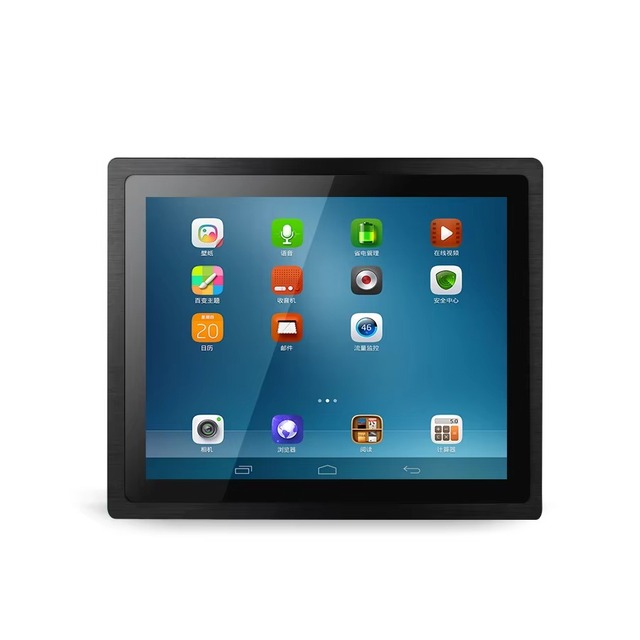
10.4 Inch Android All in One Embedded Industrial Tablet Panel PC
 Shenzhen Shinho Electronic Technology Co., Ltd.verified🇨🇳CN11 yrs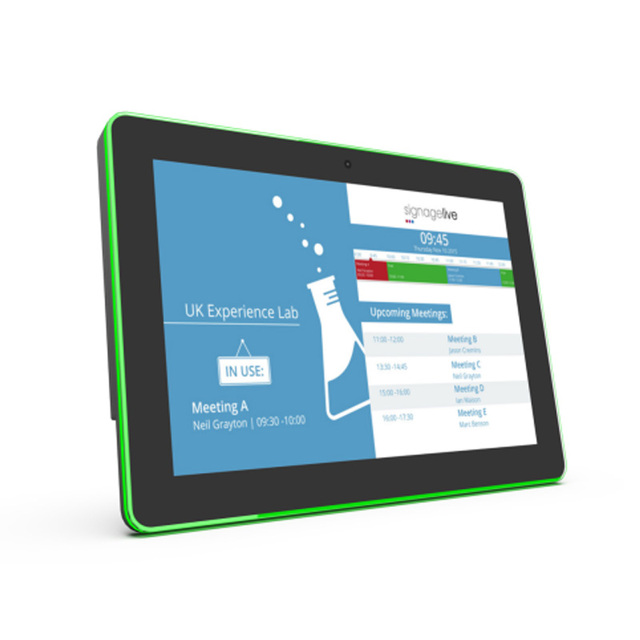
Industrial Android Panel Pc 10.1 Inch Android 14 RK3567S Capacitive Touch Wall Mount All in One PC 4G lte Android Tablet
 Shenzhen Hopestar Sci-Tech Co., Ltd.verified🇨🇳CN19 yrs
Related Searches
Explore more sourcing topics & related categories
Sources & References
28 sources cited · Verified industry data & reports
Android KitKat - Wikipedia
en.wikipedia.org
As part of the promotional efforts, Kit Kat bars in the shape of the Android robot logo were produced, while Hershey ran a contest in the United States with prizes of Nexus 7 tablets and Google Play Store credit. The Nexus 5, developed by LG Electronics, was unveiled on September 30, 2013, as the launch device for KitKat. One of the bugs introduced in version 4.4 and solved in version 4.4.1 was the hairy heart: the yellow heart emoji ⟨💛⟩ would be shown as a hairy heart ⟨⟩. Additionally, 4.4 was designed to be more aggressive in managing memory, helping to guard against apps wasting too much memory. The overall interface of KitKat further downplays the "Holo" interface appearance introduced on 4.0, replacing remaining instances of blue accenting with greys and white (such as the status bar icons), and getting rid of the Wi-Fi upstream and downstream traffic indicators (triangles pointing up and down), though they can still be seen in the quick control center menu. Lagerling phoned a representative of Nestlé, who owns the KitKat brand and produces the confectionery (outside the United States, where it is made by The Hershey Company under license), and quickly reached a preliminary deal for a promotional collaboration between the two companies, later finalized in a meeting at Mobile World Congress in February 2013. A new runtime environment known as the Android Runtime (ART), intended to replace the Dalvik virtual machine, was introduced as a technology preview in KitKat. ART is a cross-platform runtime which supports the x86, ARM, and MIPS architectures in both 32-bit and 64-bit environments. Android KitKat is the codename for the eleventh version of the Android mobile operating system, representing release version 4.4. Unveiled on September 3, 2013, KitKat focused primarily on optimizing the operating system (running on as little as 512 MB of RAM; Project Svelte) for improved ...
Android version history - Wikipedia
en.wikipedia.org
It was released to the public on June 16, 2026. The main hardware platform for Android is currently the 64-bit ARM architecture (i.e. ARMv8-A; previous main platforms were 32-bit ARMv7 and ARMv5), with x86_64 and 32-bit x86 used in emulators. The MIPS architectures were officially supported in some versions of Android, but were dropped in NDK r17. In 2012, Android devices with Intel processors began to appear, including phones and tablets. On February 22, 2011, the Android 3.0 (Honeycomb) SDK – the first tablet-only Android update – was released, based on Linux kernel 2.6.36. The first device featuring this version, the Motorola Xoom tablet, was released on February 24, 2011. The update's features included: The SDK for Android 4.0.1 (Ice Cream Sandwich), based on Linux kernel 3.0.1, was publicly released on October 19, 2011. The performance improvement involved "Project Butter", which uses touch anticipation, triple buffering, extended vsync timing and a fixed frame rate of 60 fps to create a fluid and "buttery-smooth" UI. Android 4.1 Jelly Bean was released to the Android Open Source Project on July 9, 2012, and the Nexus 7 tablet, the first device to run Jelly Bean, was released on July 13, 2012. On June 24, 2014, a version of Android KitKat exclusive to Android Wear devices was released. The version history of the Android mobile operating system began with the public release of its first beta on November 5, 2007. The first commercial version, Android 1.0, was released on September 23, 2008. The operating system has been developed by Google on a yearly schedule since at least 2011.
Flashback: Android 4.4 KitKat optimized the OS for phones with ...
www.gsmarena.com
About a year after its release, v4.4 KitKat was already running on one third of Android devices and it wouldn’t be until mid-2015 before KitKat caught up with Jelly Bean. It never hit 50% adoption as Lollipop was already out by that time and gobbling up market share. © 2000-2026 GSMArena.com Mobile version Android app Tools Contact us Merch store Privacy Terms of use We may have undersold how much KitKat changed Android’s UI as one minor change had a major impact – v4.4 allowed users to choose a default launcher in the Settings screen. This was possible in earlier versions, but it was tedious. Now anyone could easily try out different launchers if they weren’t happy with what the manufacturer skin had to offer. A few more UI tweaks included adopting a translucent look for certain UI components like the status bar and navigation bar. KitKat made the status and navigation bars translucent • The Immersive full screen mode
r/androidafterlife on Reddit: Is Android 4.4.4 KitKat still usable?
www.reddit.com
Galaxy Pocket 2, Android 4.4 KitKat Survival Guide for 2026. (+ROOT Tools!) ... My samsung phones/tablets on each android version! Posted by u/slapap6699 - 28 votes and 12 comments How to log in to Android KitKat?
Android KitKat | Android Developers
developer.android.com
Now your apps can use every pixel on the device screen to showcase your content and capture touch events. Android 4.4 adds a new full-screen immersive mode that lets you create full-bleed UIs reaching from edge to edge on phones and tablets, hiding all system UI such as the status bar and navigation bar. Find out more about KitKat for consumers at www.android.com. Android 4.4 is designed to run fast, smooth, and responsively on a much broader range of devices than ever before — including on millions of entry-level devices around the world that have as little as 512MB RAM. KitKat streamlines every major component to reduce memory use and introduces new APIs and tools to help you create innovative, responsive, memory-efficient applications. OEMs building the next generation of Android devices can take advantage of targeted recommendations and options to run Android 4.4 efficiently, even on low-memory devices. Android 4.4 introduces platform support for built-in IR blasters, along with a new API and system service that let you create apps to take advantage them. Using the new API, you can build apps that let users remotely control nearby TVs, tuners, switches, and other electronic devices. The API lets your app check whether the phone or tablet has an infrared emitter, query it's carrier frequencies, and then send infrared signals.
Android 4.4.X Kit Kat Tablets for Sale - eBay
www.ebay.com