Balanced Line Amplifier

Overview
Product sourcing insights & recommendations
I have completed a detailed analysis of the balanced line amplifier market and technical landscape for 2024–2026. The report highlights how this technology, once exclusive to professional studios, is now a cornerstone of the premium consumer audio and 5G infrastructure sectors.
Key Highlights
- Technical Superiority: Balanced architecture is essential for Common-Mode Rejection (CMRR), effectively eliminating noise and ground loop hum in audio and RF signals WikipediaWikipedia.
- Market Growth: The audio amplifier market is projected to reach $5.32 billion by 2031, driven by high-resolution streaming and the surge in "desktop audiophile" hardware MordorintelligenceSarahleeandjohnny.
- Sourcing Trends: Products featuring 4.4mm Pentaconn outputs and dual-matched MMIC RF modules are currently high-growth categories for prosumer and industrial buyers HchsonlineMinicircuits.
The attached report provides a full breakdown of technical benefits, 2026 market drivers, and specific model recommendations for your review.
Based on the technical trends, you can explore the following next steps:
Balanced Headphone Amplifier 4.4mm Pentaconn Xlr
Products · 2 lists

PJ. MIAOLAI SA-60 4.4 Fully Balanced Output Amp TPA6120 High-Fidelity Desktop Headphone Amplifier NE5532 XLR Input With VU Meter
 Dongguan Queenway Century Technology Co., Ltd.🇨🇳CN8 yrs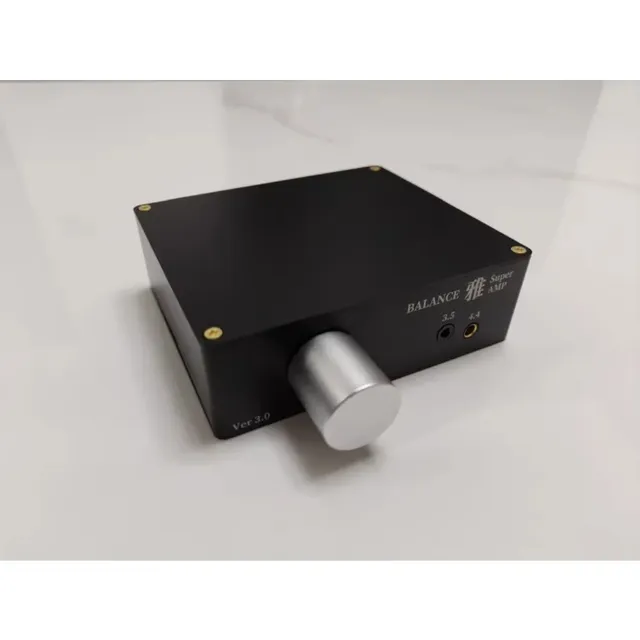
Fully Balanced Headphone Amplifier with DC2.1 Power Input, Supporting 9-24V
 Shenzhen Muting Industrial Co., Ltd.🇨🇳CN5 yrs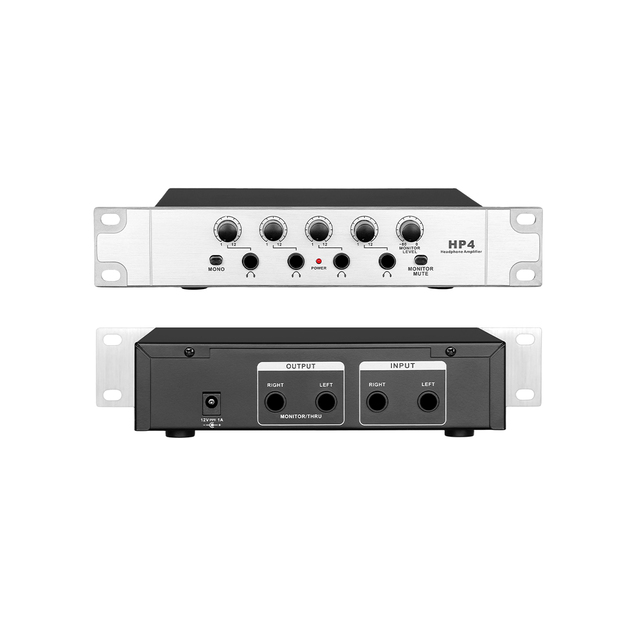
Xlr Connectors Headphone Amplifier 3.5mm Stereo Audio Amplifier HP4
 Enping Yike Musical Instruments Co., Ltd.🇨🇳CN9 yrs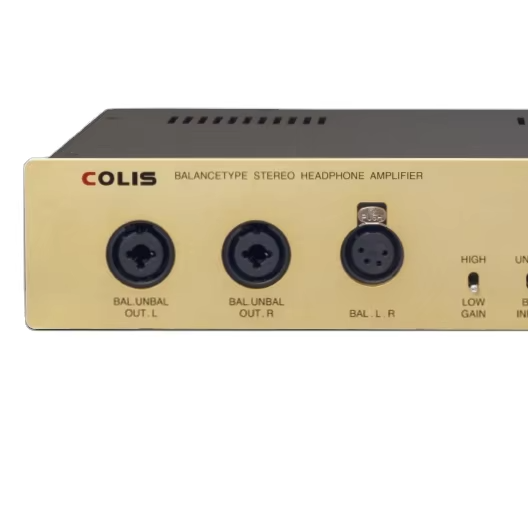
JR SOUND COLIS HPA-206 1-Channel Microphone Amplifier XLR Connection Mono Output Metal Shell Tabletop Mount 1M Impedance
 OONISHI KIKO CO.,LTD🇯🇵JP16 yrs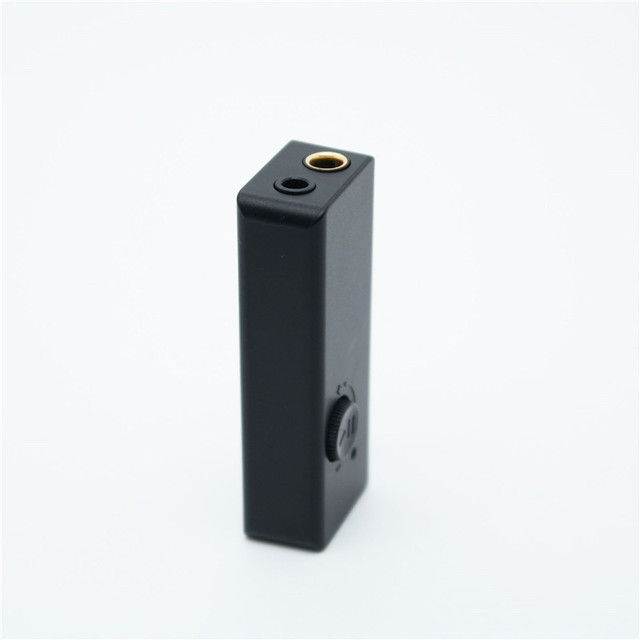
DAC AMP USB-C to 3.5mm Audio Cable Headphone Amplifier DSD256 Dural Out Put 3.5MM 4.4 Balanced Portable Amp
 Zhongshan Zhensheng Electronics Tech Co., Ltd.🇨🇳CN10 yrs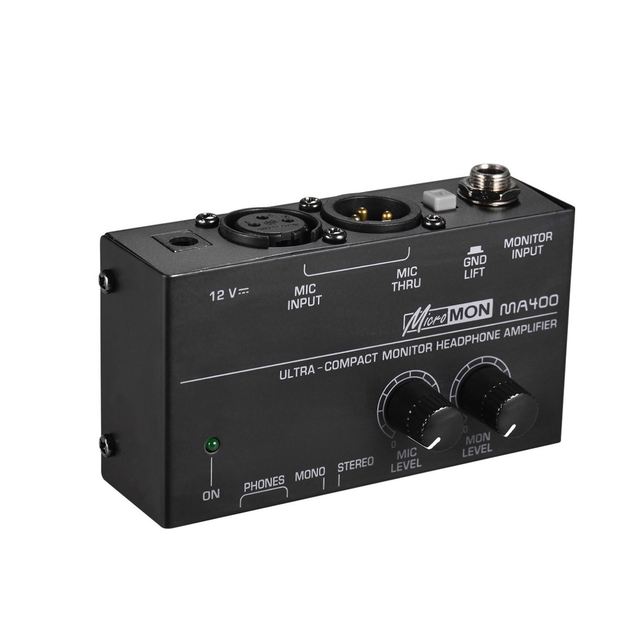
Ultra Compact Monitor Earphone Amplifier Amp With XLR Microphone Input 6.35mm Monitor Input 6.35mm & 3.5mm Headphone
 Jiangmen Aoshen Electronic Technology Co., Ltd.🇨🇳CN7 yrs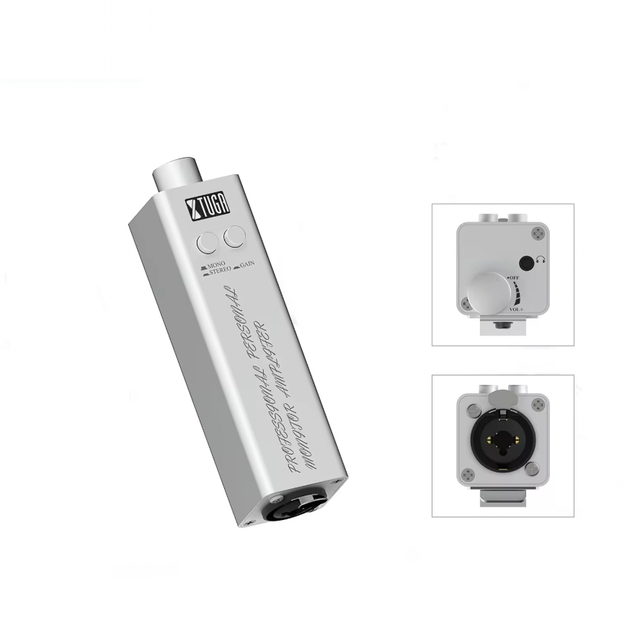
LSY-20 Professional Portable Metal Xlr Input Amplifier Headphone Converter Headphone Amplifier
 Ganzhou Xuanpin Trading Co., Ltd.🇨🇳CN1 yr
Professional Portable Metal XLR Input Headphone Grade Converter Headphone Amplifier
 Alwaysfaith International Trade Co., Ltd. (Huizhou)verified🇨🇳CN10 yrs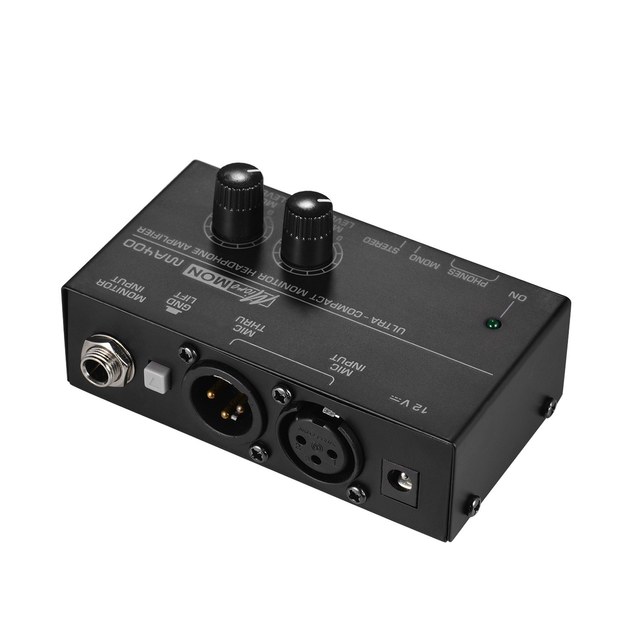
Ultra-Compact Monitor Headphone Amplifier Amp with XLR Microphone Input 6.35mm Monitor Input 6.35mm & 3.5mm Headphone Outputs Vo
 Shenzhen Casdony Technology Co., Ltd.🇨🇳CN6 yrs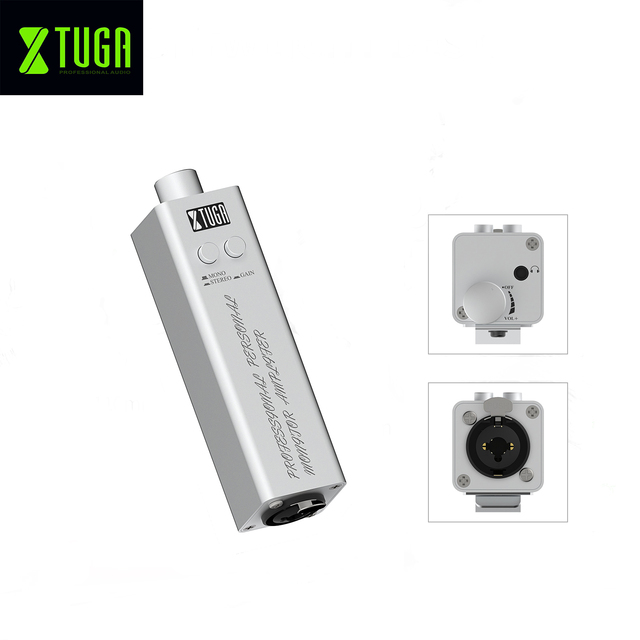
XTUGA LSY-20 Professional Portable Metal Xlr Input Amplified Earphones Stage Converter Headphone Amplifier
 Jiangmen Fanxinghechuang Electronic Technology Co., Ltd.🇨🇳CN4 yrs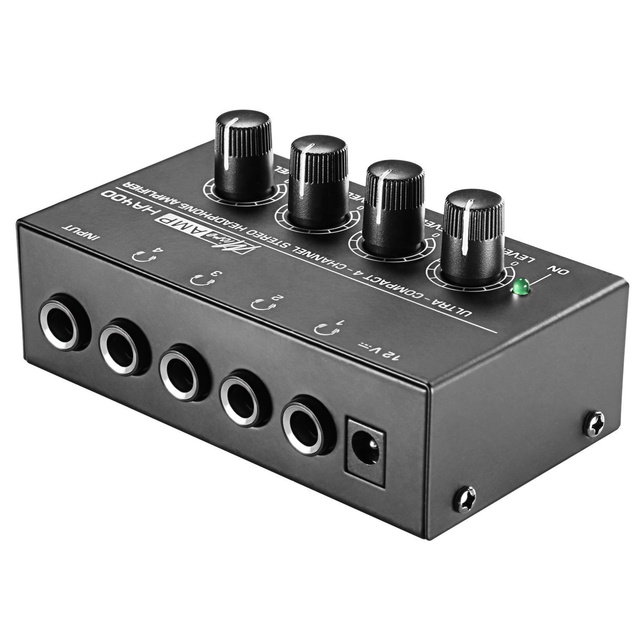
Portable DJ Amplifier 4 Channel Stereo Guitar Headphone Amplifier
 Anqing Rivers Electronic Technology Co., Ltd.🇨🇳CN5 yrs
OEM Factory Compact Audio Stereo Headphone Amplifier Studio Recording 4CH Power Amplifier
 Dongguan Dalang Yangfan Qihang Electronic Firm🇨🇳CN4 yrs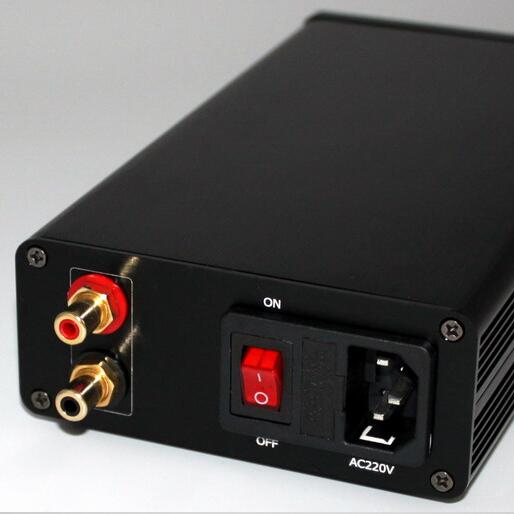
new and original TPA6120A headphone amplifier
 Shenzhen E-Link Technology Co., Ltd.🇨🇳CN9 yrs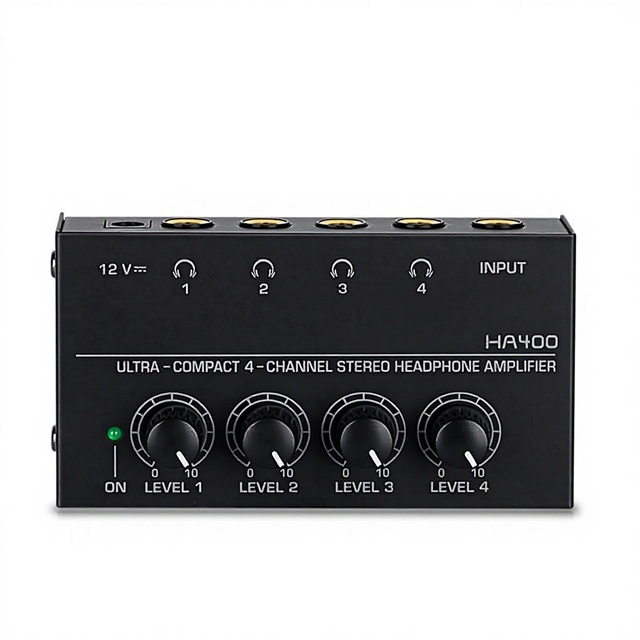
Channel headphone amplifier for mixers monitor power amplifier Multi-channel headphone amplifier for studio mixing
 Shenzhen Kaisheng Century Electronics Co., Ltd.verified🇨🇳CN3 yrs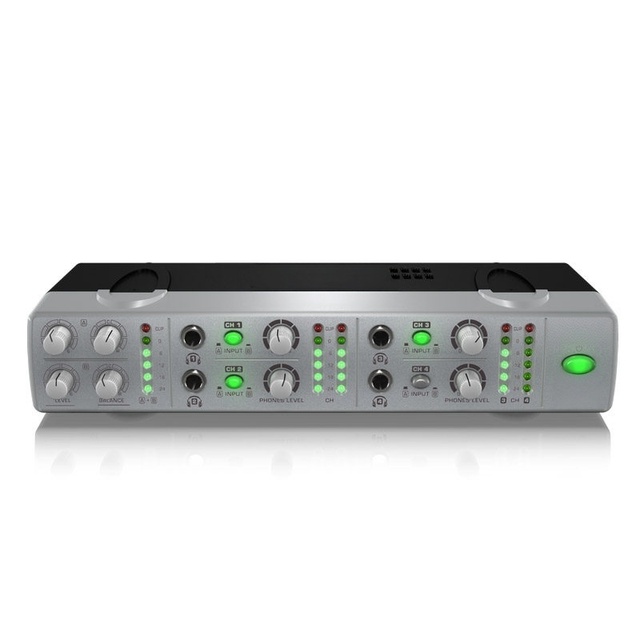
/ AMP800 8-Channel Headphone Splitter Amplifier (Audio Signal Amplification)
 Guangdong Daoran Film And Television Equipment Co., Ltd.verified🇨🇳CN15 yrs
High Quality Low Price HA400 4-way Headphone Amplifier Black Mini Headphones Monitor Power Amplifier
 Alwaysfaith International Trade Co., Ltd. (huizhou)verified🇨🇳CN8 yrs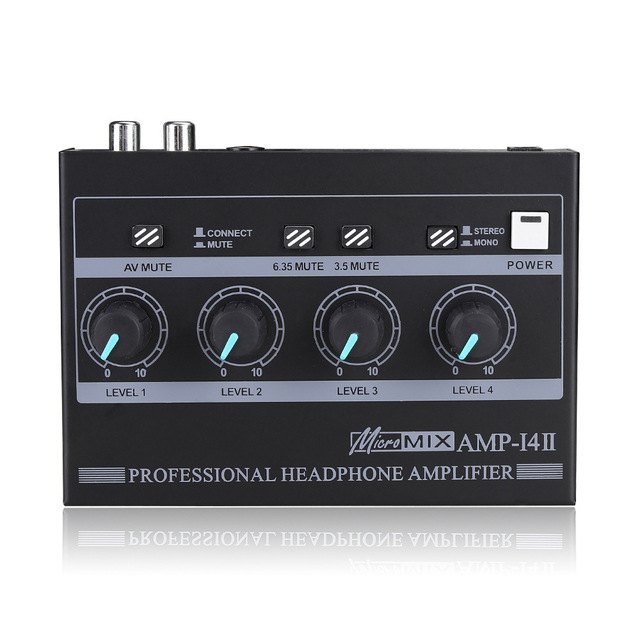
Headphone Amplifier 4-channel headphone amplifier, headphone amplifier, monitoring amplifier, gain splitter
 Shenzhen Jiaxinjie Technology Co., Ltd.🇨🇳CN9 yrs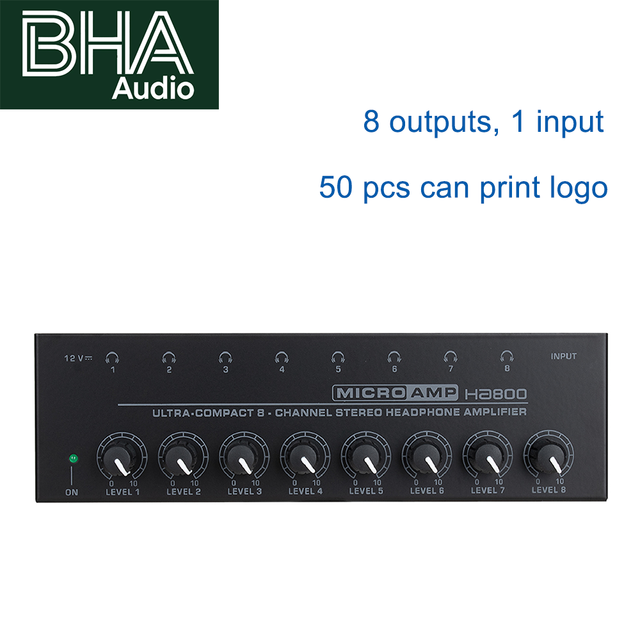
BHA HA800 8 Channel Headphone Amplifier Stereo Mixer Suitable for Studio Recording Imported Chips Wholesale Price OEM CE FCC
 Enping City Shenglaitai Audio Equipment Store🇨🇳CN1 yr
Top Deals 4 Channels Mini O Stereo Headphone Amplifier HA400 Ultra-Compact Audio Amplifier With Power Adapter EU US Plug Adapter
 Shenzhen Ruiletong Technology Co., Ltd.🇨🇳CN3 yrs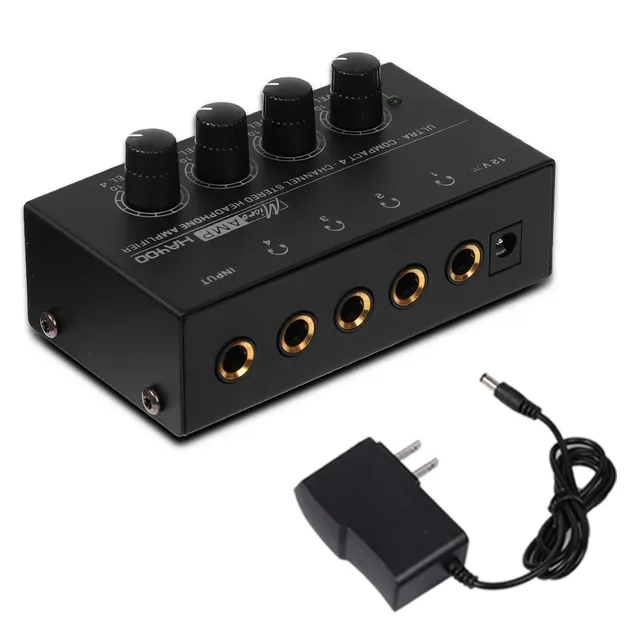
Top Deals 4 Channels Mini O Stereo Headphone Amplifier HA400 Ultra-Compact Audio Amplifier With Power Adapter EU US Plug Adapter
 Shenzhen DIHAO Trading Co., Ltd.🇨🇳CN1 yr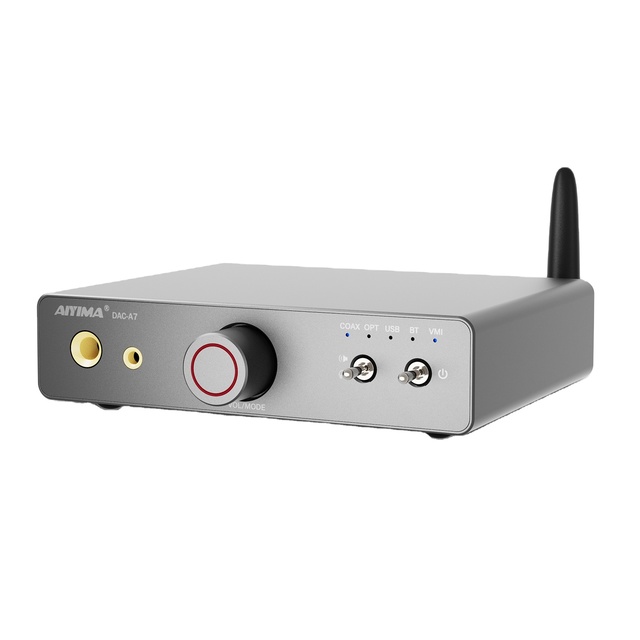
AIYIMA DAC-A7 HIFI Headphone Amplifier ES9038Q2M Audio USB Decoder Preamp for 5.4 3.5/6.35mm Headphones Active Speaker
 Shenzhen Yima Technology Co., Ltd.🇨🇳CN7 yrs
Professional Home Audio 4-Channel Headphone Amplifier with One Key Mute Mono/Stereo AV Interface Mini Metal Material
 Enping Shiyinzhe Electronic Technology Co., Ltd.🇨🇳CN4 yrs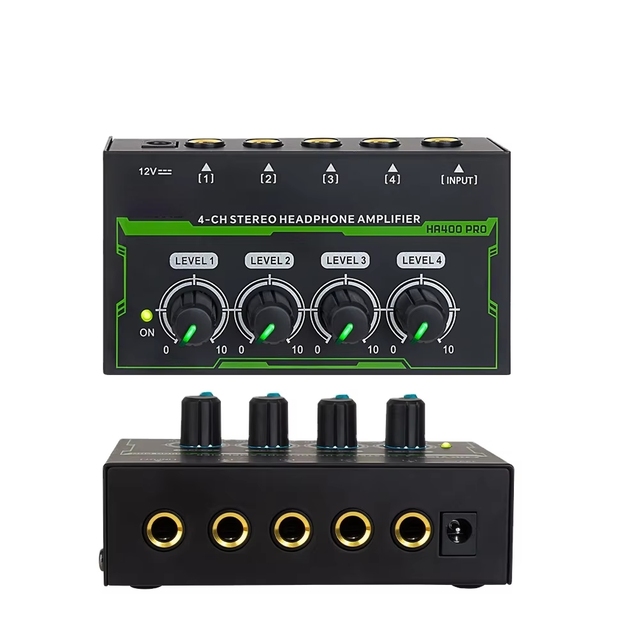
4-channel headphone amplifier, recording studio monitoring amplifier, mixing console, mixing multi-channel headphone amplifier 1
 Shenzhen Huake Shengye Technology Co., Ltd.verified🇨🇳CN2 yrs
Deep Dive · Full Report
Full Market Report
1 document · Live-fetched from source
Related Searches
Explore more sourcing topics & related categories
Sources & References
29 sources cited · Verified industry data & reports
Balanced line - Wikipedia
en.wikipedia.org
In telecommunications and professional audio, a balanced line or balanced signal pair is an electrical circuit consisting of two conductors of the same type, both of which have equal impedances along their lengths, to ground, and to other circuits. The primary advantage of the balanced line format is good rejection of common-mode noise and interference when fed to a differential device such as a transformer or differential amplifier. As the telephone system grew, it became preferable to use cable rather than open wires to save space, and also to avoid poor performance during bad weather. The cable construction used for balanced telephone cables was twisted pair; however, this did not become widespread until repeater amplifiers became available. Loading coils were used to improve the distance achievable with cable but the problem was not finally overcome until amplifiers started to be installed in 1912. Twisted pair balanced lines are still widely used for local loops, the lines that connect each subscriber's premises to their respective exchange. Let's be clear from the start here: if the source impedance of each of these signals was not identical i.e. balanced, the method would fail completely, the matching of the differential audio signals being irrelevant, though desirable for headroom considerations. ↑ "Part 3: Amplifiers". Circuits driving balanced lines must themselves be balanced to maintain the benefits of balance.
Balanced audio - Wikipedia
en.wikipedia.org
Only the common-mode impedance balance of the driver, line, and receiver play a role in noise or interference rejection. This noise or interference rejection property is independent of the presence of a desired differential signal. ↑ Karki, James (2016) [2002]. "Texas Instruments Application Report SLOA054E: Fully-Differential Amplifiers" (PDF). Texas Instruments. Archived from the original on 5 November 2020. Retrieved 10 June 2021. ↑ Rane technical staff. Microphone interconnections are therefore a common application for a balanced interconnection, which allows the receiver to reject most of this induced noise. If the power amplifiers of a public address system are located at any distance from the mixing console, it is also normal to use balanced lines for the signal paths from the mixer to these amplifiers. As long as the impedances are balanced, noise will couple equally into the two wires (and be rejected by a differential amplifier), regardless of the signal that is present on them. A simple method of driving a balanced line is to inject the signal into the "hot" wire through a known source impedance, and connect the "cold" wire to the signal's local ground reference through an identical impedance. When driven in differential mode by two identical amplifiers, this impedance change will be the same for both lines, and thus cancelled out. Professional audio products (recording, public address, etc.) generally provide balanced inputs and outputs, typically via XLR or TRS phone connectors. Due to common misconceptions about differential signalling, this is often referred to as a quasi-balanced or impedance-balanced output, though it is, in fact, fully balanced and will reject common-mode interference. However, there are some minor benefits to driving the line with a fully differential output:
A Practical Introduction to RF/Microwave Balanced Amplifiers and ...
blog.minicircuits.com
Our emphasis to this point has been on the -90⁰ phase shifts that occur in the hybrid, enabling phase cancellation or in-phase combination, and the benefits these attributes offer for LNA design. But beyond the improvements in noise figure, IP3, and output power, quad-combined-pairs are remarkably effective at improving system performance anywhere a system connects to an imperfect load. Figure 2: General block diagram of balanced amplifier (quad-combined pair) showing signal phase shifts for reflected signal from RF output. One common application for the balanced amplifier is in the low noise amplifier (LNA) of a receiver front end. In addition to high linearity / OIP3 requirements, designers are intent on squeezing every tenth of a dB of noise figure out of their LNA. The tradeoff for the desired combination of linearity and noise figure performance, however, is degradation of the input return loss and VSWR of the device. A balanced amplifier is the proper term for a pair of devices operated in quadrature phase and combined to amplify a signal. Quadrature simply means that signals incident upon the devices are 90⁰ out-of-phase with one another. This article explains the use of quadrature hybrid splitters and combiners (also often called hybrid couplers) in balanced amplifier configurations and the advantages of combining two amplifier devices in this fashion.
Balanced circuit - Wikipedia
en.wikipedia.org
In fact, one leg of the equipment side can be earthed without effecting the balance on the line as shown in figure 5. With transformers the sending and receiving circuitry can be entirely unbalanced with the transformer providing the balancing. Active balance is achieved using differential amplifiers at each end of the line. As noted above, it is possible to drive a balanced line with a single-ended signal and still maintain the line balance. This is represented in outline in figure 7. The amplifier driving one leg of the line through a resistor is assumed to be an ideal (that is, zero output impedance) single-ended output amp. The other leg is connected from ground through another resistor of the same value. The impedance to ground of both legs is the same and the line remains balanced. The receiving amplifier still rejects any common-mode noise as it has a differential input. On the other hand, the line signal is not symmetrical. The line and circuit remain balanced, and the benefits of common-mode noise rejection continue to apply, whether or not the applied signal is itself differential (symmetrical), always provided that the generator producing that signal maintains the impedance balance of the line. There are a number of ways that a balanced line can be driven and the signal detected. In all methods, for the continued benefit of good noise immunity, it is essential that the driving and receiving circuit maintain the impedance balance of the line. It is also essential that the receiving circuit detects only differential signals and rejects common-mode signals.
Microwaves101 | Balanced Amplifiers
www.microwaves101.com
Microwaves101 | Balanced Amplifiers
Engineering:Balanced line - HandWiki
handwiki.org
In telecommunications and professional audio, a balanced line or balanced signal pair is an electrical circuit consisting of two conductors of the same type, both of which have equal impedances along their lengths, to ground, and to other circuits. The primary advantage of the balanced line format is... "Audio Balancing Issues". http://www.jands.com.au/support/product-support/audio-technical-materials/geek-files/audio-balancing-issues-explained. "Let’s be clear from the start here: if the source impedance of each of these signals was not identical i.e. balanced, the method would fail completely, the matching of the differential audio signals being irrelevant, though desirable for headroom considerations." ↑ "Part 3: Amplifiers". In telecommunications and professional audio, a balanced line or balanced signal pair is an electrical circuit consisting of two conductors of the same type, both of which have equal impedances along their lengths, to ground, and to other circuits.[1] The primary advantage of the balanced line format is good rejection of common-mode noise and interference when fed to a differential device such as a transformer or differential amplifier.[2] The combination of a balanced line and differential signaling in audio applications is balanced audio and is commonly used in sound reinforcement and sound recording and reproduction. As the telephone system grew, it became preferable to use cable rather than open wires to save space, and also to avoid poor performance during bad weather. The cable construction used for balanced telephone cables was twisted pair; however, this did not become widespread until repeater amplifiers became available.