Best Linux Smartphone

Overview
Product sourcing insights & recommendations
The Linux smartphone market in 2026 has reached a pivotal stabilization point, shifting from a developer niche to a strategic tool for "technological sovereignty" within the EU public sector and defense industries AlibabaAlibaba. While the "App Gap"—particularly the lack of native banking and social media support—remains the primary barrier for 96% of users, search interest for "privacy antidote phones" has surged by 210% YoY Alibaba.
I have analyzed the current product leaders, including the Volla Phone X23 for daily usability, the Purism Librem 5 for hardware-certified security, and the PinePhone Pro for developer flexibility AlibabaFactuallyFactually. The comprehensive report below details the hardware specifications, market growth drivers (projected at 10.7% CAGR), and strategic recommendations for enterprise vs. individual adoption.
The report also identifies emerging performance leaders like the Liberux NEXX and new entries like the Jolla C2 designed for European government workflows ThinglabsAlibaba. Check the deliverable file for a full breakdown of the ecosystem health and competitive landscape.
Here is the 2026 Linux smartphone market report. You can continue with:
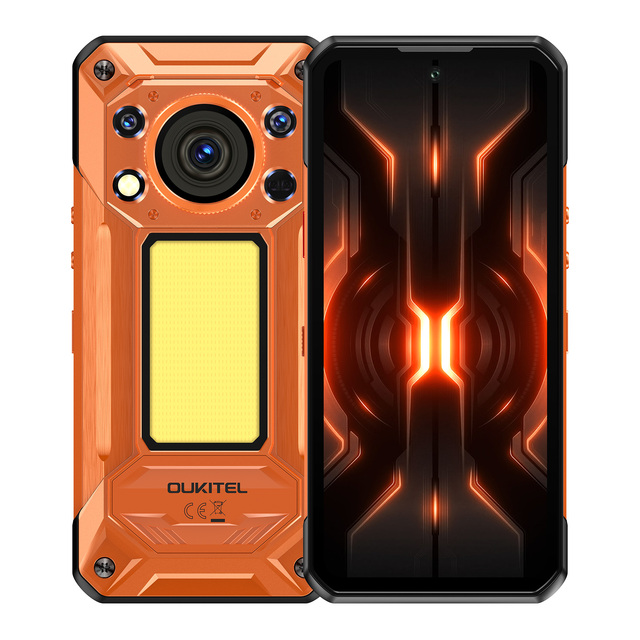
Secure Privacy Smartphone Open Source Hardware Wholesale
Products · 3 lists

Deep Dive · Full Report
Full Market Report
1 document · Live-fetched from source
Related Searches
Explore more sourcing topics & related categories
Sources & References
28 sources cited · Verified industry data & reports
Best Linux Phones 2026: PinePhone Pro, Librem 5, and A... | Factually
factually.co
If you want a practical Linux smartphone in 2026, the landscape has narrowed: the PinePhone Pro and Volla Phone X23 (Ubuntu Touch) are the most reliable daily drivers today, while the Purism Librem 5 remains the privacy benchmark but is no longer a current consumer lineup and lags behind in day-to-day usability for many users; mainstream phones running mainline Linux (Pixel 3a, OnePlus 6/6T) are usable but require DIY effort [1] [2] [3]. Purism’s Librem 5 was designed around hardware transparency and repairability with visible emphasis on physical kill switches and published schematics, while Pine64’s PinePhone Pro and Volla devices follow community-focused, pragmatic designs that favor modularity and serviceability over polish; reviewers highlight Purism’s hardware documentation and physical kill-switch persistence as distinguishing design choices [4] [3]. ... The Librem 5 historically offered better GPU and mainline-kernel support versus the original PinePhone and was reported by users to feel snappier for browsing and If you want a Linux phone you can actually use every day in 2026, buy a PinePhone Pro (if you like community-driven flexibility) or a Volla Phone X23 (if you want the most polished Ubuntu Touch experience); buy a Librem 5 only if hardware transparency, persistent kill-switches and formal libre endorsements are your priority and you accept the compromises in app/feature polish; avoid expecting flagship-class camera, VoLTE, and plug‑and‑play carrier support without some tinkering [1] [4] [5]. Librem 5 vs. PinePhone: comparison of two Linux smartphones
Best Linux Smartphones for Developers and Privacy in 2 | Factually
factually.co
The practical choices in 2026 center on three clear leaders: PinePhone Pro for developer flexibility and distro-hopping, Purism Librem 5 for hardware-enforced privacy and convergence, and Volla Phone (X23/Volla OS builds) for the smoothest out‑of‑box Ubuntu Touch experience; each trades mainstream convenience for varying degrees of openness, hardware polish, and app compatibility [1] [2] [3]. If you want a working daily driver with the fewest surprises, Volla/Ubuntu Touch is the safest pick; if you want to develop, test kernels and switch OS images, PinePhone Pro wins; if your priority is strict privacy-by-design and hardware kill switches plus convergence, choose the Librem 5 [2] [1] [3]. If your priority is privacy and mainstream app compatibility rather than full-stack openness, a Google Pixel running GrapheneOS or a Pixel with a privacy-focused Android ROM remains the most practical privacy-oriented alternative in 2026; many privacy-minded users on forums still recommend Pixel+GrapheneOS for day-to-day security without sacrificing apps [6]. For those who need app ecosystems, mainstream Android with microg/VollaOS-style Google-free builds can be easier to live with than a fully separate Linux stack [10].
Best Linux Phones for Daily Use in 2026 (Call Reliabil...
factually.co
"Linux phone reviews for daily use 2026" "Best Linux smartphones for call reliability and app support" Found 10 sources · This article may be outdated. Consider refreshing it to get the most current information.Refresh · Executive summary · If you want a Linux phone in 2026 that works as a true daily driver, the field has matured but remains niche: a handful of purpose-built devices (Purism Librem 5, PinePhone Pro series, Jolla C2, Volla) and well-supported community ports on older Android hardware are the realistic choices, each trading app breadth and some telephony polish for privacy and openness [1] [2] [3]. Expect reliable cellular voice on only the best-supported hardware or commercial stacks (Sailfish/UBports), limited native app availability (audits found ~217 solid apps across platforms), and frequent dependence on community fixes or Android-compat layers for mainstream apps [4] [3] [5]. Commercial Linux phones like the Librem 5 emphasize repairability, privacy hardware (kill-switches), and published BOMs—Purism’s 2026 revisions added hardware-level memory protections and persistent kill-switch behavior, reflecting a purposeful hardware-first approach to reliability [1]. Pine64’s PinePhone Pro targets community-minded durability with privacy switches and modular support at a $399 price, while Jolla’s C2 follows conventional handset design optimized for Sailfish’s smaller commercial footprint [2] [5] [1]. Top pick — Purism Librem 5 (v2.1 GSM): choose this if you prioritize call reliability backed by vendor transparency and long-term driver availability; Purism publishes schematics, ships hardware kill switches and added security features in 2026 firmware, and is designed to support verified boot and real telephony features more consistently than hobbyist ports [1]. Runner-up — PinePhone Pro (current PinePhone Pro / Pro 2 lineage): best value for multi-distro flexibility and active community support; the PinePhone Pro’s RK3399S, 4GB/128GB configuration and $399 price point make it the most
Linux Phone Guide: How to Choose a Working Device in 2026
electronics.alibaba.com
If you’re interested in Jolla, pre-orders are expected to open in July 2026 — and the device is positioned to meet enterprise requirements upon launch. This piece isn’t for keyword collectors. It’s for people who will actually use the product. ... A Linux phone runs a fully open-source mobile OS built on the Linux kernel — like Ubuntu Touch or postmarketOS — with no proprietary Android layers or mandatory cloud services. Which Linux phone works best for daily use in 2026? If you’re a typical user, you don’t need to overthink this. As of early 2026, only two Linux phones reliably serve as daily drivers: the PinePhone Pro (with postmarketOS or Mobian) and the Volla Phone X23 (with Ubuntu Touch). Jolla’s upcoming device shows promise and is expected to ship in late 2026; the Librem 5 has reached end-of-life for official support. WhatsApp lacks official Linux mobile support. Some banks offer Progressive Web Apps (PWAs); others require Android/iOS. Check your bank’s web interface first — many provide full functionality there. ... Yes — with strong support for Deutsche Telekom, T-Mobile US, and Swisscom. Vodafone UK and Orange France are actively receiving firmware updates to improve VoLTE interoperability in 2026. A Linux phone is a smartphone running a fully open-source mobile operating system built on the Linux kernel — not Android (which uses Linux but layers proprietary Google services and closed firmware). True Linux phones run distributions like Ubuntu Touch, postmarketOS, Plasma Mobile, or Sailfish OS.
6 Best Linux Phones in 2026 - GeekVintage
geekvintage.com
We also considered overall user experience, including camera quality, battery life, and display. The ranking reflects a balance of these factors, favoring phones that provide a strong Linux-compatible experience without sacrificing essential smartphone features. Budget buyers or beginners should consider models with easier community support and lower complexity, while power users may prefer premium devices with advanced hardware. Choose based on your main priorities—whether it’s durability, customization, or value—and you’ll find the right Linux phone for 2026. The Motorola Think Phone stands out as the best Linux-compatible device for business users who need durability and seamless integration with their workflows. Its impact-resistant Gorilla Glass Victus and MIL STD 810H durability make it ideal for demanding environments, surpassing many typical smartphones that lack rugged features. Open-source compatibility and active developer communities are crucial for Linux phones, as they determine how much you can custom ... Performance matters if you plan to use demanding apps or multitask frequently. ... Long-lasting batteries are a common concern for smartphone users.
Best Linux Phones for Daily Use in 2026 (Call Reliabil... | Factually
factually.co
"Linux phone reviews for daily use 2026" "Best Linux smartphones for call reliability and app support" Found 10 sources · This article may be outdated. Consider refreshing it to get the most current information.Refresh · Executive summary · If you want a Linux phone in 2026 that works as a true daily driver, the field has matured but remains niche: a handful of purpose-built devices (Purism Librem 5, PinePhone Pro series, Jolla C2, Volla) and well-supported community ports on older Android hardware are the realistic choices, each trading app breadth and some telephony polish for privacy and openness [1] [2] [3]. Expect reliable cellular voice on only the best-supported hardware or commercial stacks (Sailfish/UBports), limited native app availability (audits found ~217 solid apps across platforms), and frequent dependence on community fixes or Android-compat layers for mainstream apps [4] [3] [5]. Commercial Linux phones like the Librem 5 emphasize repairability, privacy hardware (kill-switches), and published BOMs—Purism’s 2026 revisions added hardware-level memory protections and persistent kill-switch behavior, reflecting a purposeful hardware-first approach to reliability [1]. Pine64’s PinePhone Pro targets community-minded durability with privacy switches and modular support at a $399 price, while Jolla’s C2 follows conventional handset design optimized for Sailfish’s smaller commercial footprint [2] [5] [1]. Top pick — Purism Librem 5 (v2.1 GSM): choose this if you prioritize call reliability backed by vendor transparency and long-term driver availability; Purism publishes schematics, ships hardware kill switches and added security features in 2026 firmware, and is designed to support verified boot and real telephony features more consistently than hobbyist ports [1]. Runner-up — PinePhone Pro (current PinePhone Pro / Pro 2 lineage): best value for multi-distro flexibility and active community support; the PinePhone Pro’s RK3399S, 4GB/128GB configuration and $399 price point make it the most