Bitcoin Asic Usb Miner

Overview
Product sourcing insights & recommendations
The Bitcoin USB and mini ASIC miner market in 2026 has transitioned from a profit-driven sector to a specialized hobbyist ecosystem focused on solo mining (lottery mining) and blockchain education. While the network difficulty has surged to approximately 144.4 Trillion, making consistent profits from these devices impossible, they remain highly popular for their low entry cost and open-source nature. SolosatoshiCryptonews
Market Trends & Consumer Insights (2026)
* Solo Mining as a "Lottery": Consumers are increasingly drawn to "mini" ASICs like the Bitaxe Gamma, which offer a chance (albeit small) to hit a full block reward of 3.125 BTC ($212,500+) without the noise and heat of industrial rigs. SolosatoshiCoincodex
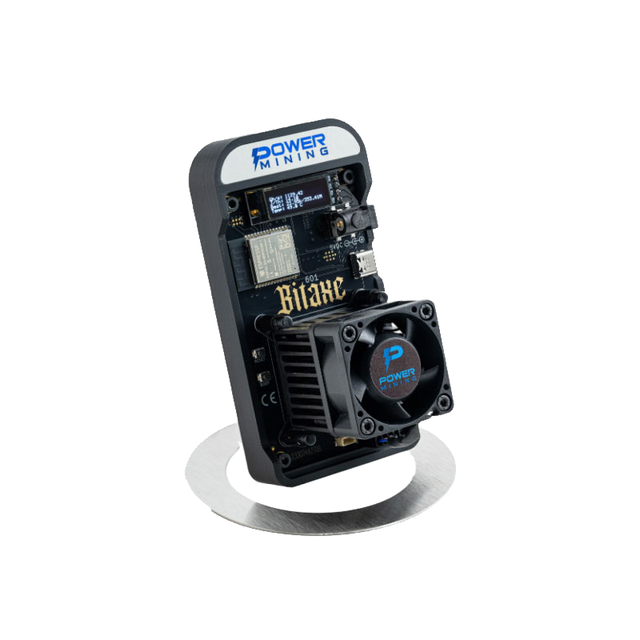
* Evolution of Hardware: The market is moving away from basic USB sticks toward standalone Wi-Fi-enabled "mini" miners. These devices, such as the Bitaxe Gamma 601, utilize industrial-grade 3nm chips (BM1370) to offer terahash-level performance in a pocket-sized form factor. HashrateindexSolosatoshi
* Open-Source Dominance: The community favors hardware running open-source firmware like AxeOS, which provides real-time monitoring and decentralization, moving away from older closed-source USB manufacturers. EzblockchainSolosatoshi
Top Product Specifications
Below are the leading models currently dominating the hobbyist market:
| Model | Chip Type | Hashrate | Efficiency | Key Features |
|---|---|---|---|---|
| Bitaxe Gamma (601/602) | BM1370 (3nm) | 1.2 - 2.5 TH/s | ~15 J/TH | Wi-Fi, USB-C powered, Web GUI interface. Solosatoshi |
| Canaan Avalon Nano 3S | Proprietary | ~4 TH/s | ~140W total | Portable, high hashrate for consumer grade. Hashrateindex |
| GekkoScience Compac A2 | 2x BM1370 | 600 GH/s - 1 TH/s | ~20W | Traditional USB-stick form factor, requires powered hub. Solosatoshi |
| NerdMiner (v2) | ESP32-S3 | ~1 MH/s | <1W | Educational/Desk toy, nearly zero chance of mining. Solosatoshi |
Bitcoin Asic Usb Miner Bitaxe Gakkoscience Avalon Nano
Products · 2 lists
Related Searches
Explore more sourcing topics & related categories
Sources & References
26 sources cited · Verified industry data & reports
What is a USB Bitcoin Miner? Real Costs, Odds, and Smarter ...
www.solosatoshi.com
In January 2026, the Bitcoin network briefly exceeded 1.1 ZH/s, per Hashrate Index. The long-term trend is clear: difficulty goes up over time. Every increase makes every miner’s odds proportionally worse. For an ESP32 NerdMiner at 1 MH/s, the odds were already one in trillions per day. Each difficulty increase pushes those already impossible numbers even further. For ASIC-based devices, the same proportional decrease applies, but from a starting hashrate that is hundreds of thousands to millions of times higher. At 144.4T difficulty (February 2026), a NerdMiner ESP32 at 0.001 GH/s would take an estimated 1.47 billion years. That is longer than the age of Earth. A Disruptor USB at 300 GH/s would take roughly 380,514 years. Even a 4x Disruptor combo at $599.99 faces 95,129 years. These are not rounding errors. These are generational timescales that no amount of luck can realistically overcome. ... There is one unverified claim of a NerdMiner v2 finding block #836,569 in March 2024, but no independent on-chain confirmation exists. Browse specialty retailers and you will find ASIC sticks and hybrid devices like the Disruptor running Bitmain chips at 300+ GH/s. All of these devices promise a shot at the 3.125 BTC block reward, currently worth approximately $212,500 at ~$68,000 per BTC (per CoinDesk, February 21, 2026). According to data from minerstat and CloverPool, Bitcoin’s network difficulty reached 144.4 trillion on February 19, 2026, a 14.73% jump and the largest single increase since 2021. The total network hashrate hovers around 1 zettahash per second (1,000 EH/s), per CoinDesk network data. Here is what those numbers mean for every USB miner category on the market, alongside purpose-built open-source ASIC miners for direct comparison:
Bitcoin Mining USB Top Sellers 2026
www.accio.com
Offer Scalable Solutions: Provide a range of products from entry-level USB miners to high-capacity ASICs to cater to both hobbyists and large-scale operations 2. Stay Informed on Market Trends: Monitor Bitcoin's hashrate, difficulty adjustments, and profitability metrics to anticipate shifts in demand and adjust sourcing strategies accordingly 56. This section represents what end-users are purchasing directly from consumer platforms like Amazon. The top-selling products are primarily USB-based solo miners and compact ASIC miners, catering to hobbyists and small-scale miners looking for an easy entry point into cryptocurrency mining. The Canaan Avalon Nano 3S and various models from Lucky Miner dominate sales, indicating a strong consumer interest in solo mining solutions that can be easily connected to a computer via USB 1. ... This section reflects what industry peers and businesses are sourcing from B2B platforms like Alibaba. The products listed here are more diverse, ranging from high-capacity ASIC miners to specialized USB and solo mining devices, catering to a wide range of mining operations from small setups to large-scale enterprises. Bitmain APW11A1216-1A Power Supply for Antminer T21 Miner PS... ... Min. order: 1 unit ... High Quality 1600W Power Supply | QSD Heavy-Duty Output, Sta... ... Min. order: 80 pieces ... High Power 4000w Ac Dc Power Supply 24V 36V 48V 60V 72V 144v... ... Min. order: 20 pieces ... As 'bitcoin mining' is the core interest, an ASIC (Application-Specific Integrated Circuit) miner represents a more advanced and efficient solution for cryptocurrency mining.
ASIC Bitcoin Mining Hardware Market Size, Share, Growth 2035
www.businessresearchinsights.com
Major Market Restraint: Around 38% of small-scale miners face high electricity consumption challenges, limiting adoption of advanced ASIC mining hardware. Emerging Trends: Nearly 54% of new ASIC hardware models in 2024 incorporated liquid-cooling technology to improve mining efficiency and reduce thermal risks. The global ASIC Bitcoin Mining Hardware Market Size is valued at USD 11.41 billion in 2025 and is expected to grow to USD 12.42 billion in 2026, reaching USD 27.85 billion by 2035, with a projected CAGR of 8.9% during the forecast period 2025-2035. The global ASIC bitcoin mining hardware market is anticipated to an extensive growth in the coming years, driven by several factors. Growing bitcoin's popularity and acceptance as a digital currency has fueled the demand for efficient mining hardware. The expanding user base and investment in bitcoin have incentivized miners to upgrade their equipment to maintain competitive mining operations. Apart from this, some manufacturers are creating specialized ASIC miners for specific cryptocurrencies or algorithms to cater to niche markets within the mining sector. According to the U.S. Securities and Exchange Commission (SEC), over 1,200 institutional investors participated in blockchain and DeFi initiatives in 2024, increasing the demand for high-performance ASIC Bitcoin mining hardware. Miners, inspired by the potential for increased profitability, seek to expand their operations and invest in more powerful ASIC miners to capitalize on the higher bitcoin prices. Consequently, rising price of bitcoin is attributed to elevate the ASIC bitcoin mining hardware market growth. According to the U.S. Commodity Futures Trading Commission (CFTC), more than 18 million active Bitcoin wallets in 2024 incentivized miners to upgrade to energy-efficient ASIC hardware to handle higher transaction volumes.
Beyond the ASIC Arms Race: Bitcoin Mining in 2025–2026
ezblockchain.net
As of mid-2025, global network metrics underscore this shift: the Bitcoin network hashrate has surged to ~831 EH/s, having peaked above 900 EH/s, reflecting heavy reinvestment in ASIC upgrades. Simultaneously, mining profitability hit its highest levels since the 2024 halving: miners earned an average of $57,400 per EH/s in July 2025, up about 4 % from June, according to JPMorgan’s tracked data [2]. These trends affirm that while new ASICs still matter, the competitive frontier is broadening. Between architectural leaps, miners are focusing on: Enhanced cooling integration (hydro, immersion, liquid) ... These advances may yield incremental gains of 5–15 % in efficiency, but in a tight margin environment, they can be decisive. Network difficulty remains a central control knob for mining dynamics. After the 2024 halving, many expected difficulty growth to temper; instead, the hash rate rebounded swiftly, pushing difficulty upward again. While centralization strengthens economies, measures like open-source ASICs, decentralized pool protocols (e.g. Stratum v2), and DATUM templates seek to rebalance power dynamics. The outcome remains unsettled: the network may bifurcate into “enterprise class” operations and resilient grassroots miners. Looking toward 2026, ASIC development will push further into integration, adaptability, and system-level optimization. As the ASIC arms race gives way to a more holistic contest, miners in 2025–2026 must shift their mindset: success now hinges on marrying advanced hardware with robust energy strategy, operational agility, and regulatory resilience.
Bitcoin Mining in 2025–2026: Beyond the ASIC Arms Race
cryptonews.com
Meanwhile, the industry faced serious headwinds: U.S. tariffs boosted mining equipment prices, the 2024 halving slashed miner rewards, but the network hashrate hit record highs. Mining profitability shrank, but the competition for it became unprecedentedly high. Mining’s next chapter will be carved by three global technological and economic trends unfolding right now. First, ASICs are hitting the physical limits of their performance, which means just picking the most powerful rig is no longer enough. Each new generation of ASICs (shrinking transistor size from 55nm to 3nm) brought dramatic efficiency gains, fueling explosive hashrate growth. But Moore’s Law slows, and chip size reduction hits physical and economic limits. Improvements in efficiency from silicon alone are hitting a plateau. The 2024 halving cut miner revenues, leaving margins tighter than ever. In fact, competition with AI could end up working to miners’ advantage. AI and HPC don’t have to eat mining; they can converge. Both industries share similar needs: they require massive power, advanced cooling systems, and real estate optimized for compute. Some mining companies are already cashing in. They’re adapting their capacity for the AI demands, bringing back good ol’ GPUs alongside ASICs. AI and high-performance computing (HPC) companies are consuming more and more energy, and their competition with mining firms for grid access is intensifying. In the USA, AI/HPC players are expanding their domestic operations and securing large-scale power capacity (50 MW or more). Some simply acquire major mining companies and replace ASIC Bitcoin miners with AI-serving GPUs.
ASIC Miner Profitability Calculator 2026 with Live Prices & ROI
www.asicminervalue.com
Live income estimates of all known ASIC miners, updated every minute. Compare every ASIC miner in real time: daily profit, ROI, efficiency and best prices, all updated every minute with your own electricity cost and currency.