Box Barcode Scanner

Overview
Product sourcing insights & recommendations
I have analyzed the current market for "box barcode scanners," identifying key shifts toward 2D area imaging and AI-powered industrial automation. The global market is projected to reach $9.1–9.7 billion by 2026, with stationary "box" scanners representing the fastest-growing segment due to the GS1 Sunrise 2027 mandate. Industrial models now support conveyor speeds up to 2m/s, while retail versions focus on omnidirectional QR code scanning for mobile payments. The attached report provides detailed market size data, regional trends, and product benchmarks.
Here is the market report for box barcode scanners. You can explore further with:
Omnidirectional Hands Free Box Barcode Scanner Retail
Products · 3 lists

Bluetooth and USB 1D 2D QR Barcode Scanner Omnidirectional Versatile Hands-Free Payment for POS
 Swiftforce Electronic Technology Co., Ltd.verified🇨🇳CN2 yrs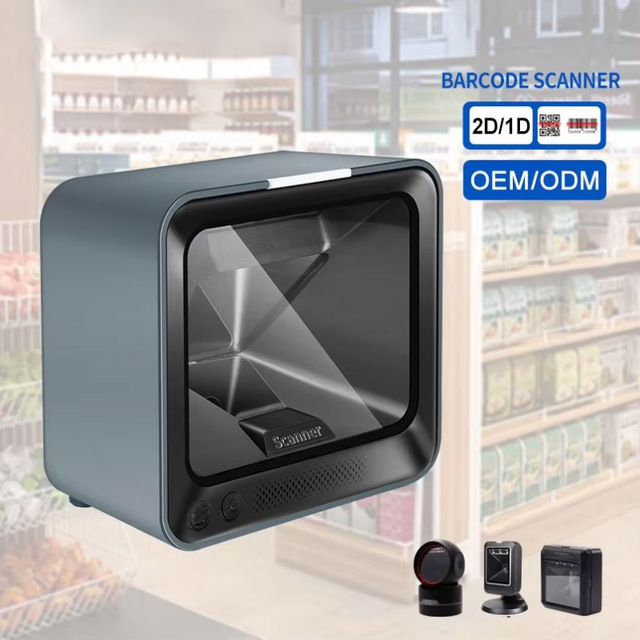
2D Handsfree Barcode Scanner QR Omnidirectional Desktop Scanner, USB Wired Big Scan Window Barcode Reader
 Shenzhen Yuhao Xingcheng Science Technology Co., Ltd.🇨🇳CN4 yrs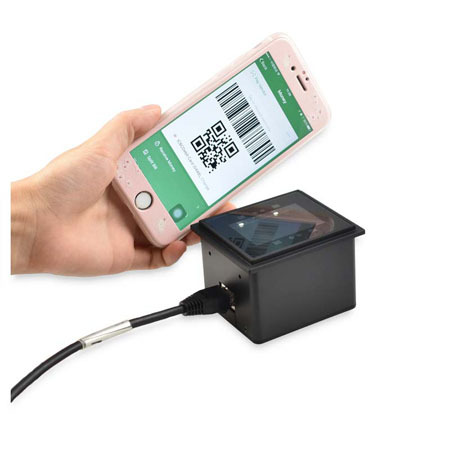
Hot Selling RD4500 Automatic Scanning Hands Free 1D 2D QR Code Reader Desktop Omnidirectional Barcode Scanner for Supermarket
 Shenzhen Scansmart Iot Technologies Co., Ltd.🇨🇳CN1 yr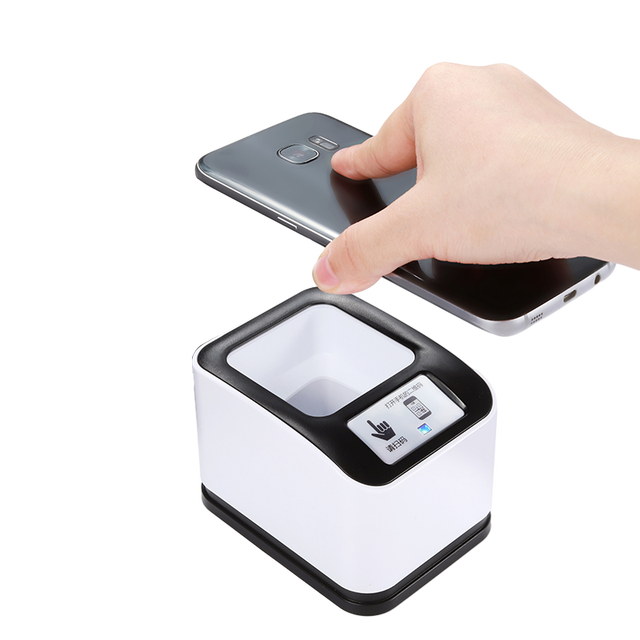
Handsfree Payment and Receipt Barcode Scanning Box 2D/1D Barcode Scanner QR Desktop Reader Black/Grey Texture MP2200
 Guangzhou Yoko Electronics Co., Ltd.verified🇨🇳CN12 yrs
Deep Dive · Full Report
Full Market Report
1 document · Live-fetched from source
Related Searches
Explore more sourcing topics & related categories
Sources & References
27 sources cited · Verified industry data & reports
Barcode Scanner Market Size, Share & Future Scope, 2033
www.persistencemarketresearch.com
The global barcode scanner market is projected to be valued at US$9.7 billion in 2026. ... The barcode scanner market is expected to reach US$15.9 billion by 2033. ... Key market trends include the integration of barcode scanning with AI and the rising use of mobile-based scanning solutions. North America is predicted to be the leading region in 2026 with a share of approximately 41.2%, backed by a well-established retail infrastructure, early adoption of advanced automation technologies, and the presence of leading barcode scanner manufacturers and solution providers. The healthcare sector is a particularly strong demand anchor. Regulatory mandates such as the Food and Drug Administration’s (FDA) Unique Device Identification (UDI) system are compelling healthcare providers and manufacturers to adopt barcode systems for better compliance and traceability. The region also benefits from a superior replacement cycle culture. Businesses routinely upgrade scanner fleets to keep pace with rising throughput demands, creating a consistent base of procurement even in mature deployments. In 2026, the U.S. Europe will likely see steady growth in the forecast period with a share of nearly 20.5% in 2026, boosted by compliance requirements and steady Industry 4.0 adoption rather than infrastructure build-outs. The continent prioritizes sustainable and regulation-compliant devices over constant expansion. Buyers are focused on scanners that meet data protection and compliance standards while prioritizing reliability over steady upgrades. Regulatory dynamics are a key demand trigger.
Barcode Scanners Market - Share, Size and Industry Analysis
www.coherentmarketinsights.com
The widespread adoption of automated warehouses, e-commerce fulfillment centers, and regulatory standards for product traceability also fuels the barcode scanners market demand. Businesses are increasingly investing in AI-enabled and 2D barcode scanners to reduce human errors and improve operational efficiency. For instance, in January 2026, Cognex Corporation introduced the DataMan® 290 and 390 barcode readers, reinforcing its leadership in industrial machine vision. In the UK, the demand is primarily influenced by modern retail chains, pharmaceutical distribution, and healthcare facilities. Barcode scanners help streamline operations, ensure accurate inventory control, and maintain compliance with regulatory requirements. The growth of e-commerce and contactless retail systems has further accelerated the adoption of advanced barcode scanning technologies across various sectors. For instance, in August 2026, Barcode Technologies Ltd announced the launch of RFID Technologies Ltd, marking a strategic expansion into specialized RFID solutions. Governments are promoting smart technologies to enhance operational efficiency, while businesses are adopting barcode scanners to improve inventory management, supply chain tracking, and service delivery. High investments in retail expansion, logistics hubs, and smart city initiatives are contributing to increased market demand. For instance, in January 2026, Ford, in collaboration with DB Schenker, inaugurated a state-of-the-art Parts Distribution Center (PDC) in Dubai South. The global barcode scanners market is estimated to be valued at USD 9,206.5 Mn in 2026 and is expected to reach USD 16,192.0 Mn in 2033, exhibiting a compound annual growth rate (CAGR) of 8.4% from 2026 to 2033.
Explore the Global In-Counter Barcode Scanners Market — analysis ...
www.futuremarketinsights.com
Estimating the size of the in-counter barcode scanners market and revenue potential from 2026 to 2036. Segmentation by vertical (retail and consumer packaged goods, warehousing, transport and logistics). Regional insights across more than 30 markets including key growth countries. Analysis of technology trends, application developments, and adoption patterns. The market is set to reach USD 2.9 billion by 2026-end and grow at a CAGR of 7.7% between 2026-2036 to reach USD 6.1 billion by 2036. Retail and Consumer Packaged Goods will dominate with a 53.1% share. ... Enterprise digital transformation and infrastructure modernization programs are accelerating procurement of in-counter barcode scanners solutions across data-intensive industries. Rising compute density and operational complexity are creating structural demand for in-counter barcode scanners products as organizations scale their technology infrastructure. Regulatory requirements for data management, security, and operational efficiency are embedding in-counter barcode scanners solutions into standard enterprise procurement cycles. ... Retail and Consumer Packaged Goods account for 53.1% of the Vertical segment in 2026, supported by strong demand from primary end-use categories. Retail and Consumer Packaged Goods account for 53.1% of the Vertical segment in 2026, supported by strong demand from primary end-use categories. The leading product category maintains a dominant share, supported by broad compatibility and established procurement patterns across primary end-use sectors. Secondary segments are growing as adoption expands across additional application categories and end-use environments. The in-counter barcode scanners market is segmented by vertical (retail and consumer packaged goods, warehousing, transport and logistics).
Barcode scanner Market Analysis 2026–2035 | Strategic Insights
www.businessresearchinsights.com
In end, even as the COVID-19 pandemic disrupted deliver chains, reduced demand, and created operational demanding situations, the barcode scanner industry is step by step improving as corporations put money into automation and contactless solutions for the future. Enhancing Speed, Accuracy, and Automation Drives the Market · One of the modern trends inside the barcode scanner market is the increasing adoption of AI-powered barcode scanning era, which is revolutionizing industries by way of improving scanning speed, accuracy, and automation skills. Emerging Trends: Wireless and mobile barcode scanners contribute to nearly 42% of recent market expansion due to portability demand. This reflects a compound annual growth rate CAGR of 3.07% between 2026 to 2035. I need the full data tables, segment breakdown, and competitive landscape for detailed regional analysis and revenue estimates. Download Free Sample · The barcode scanner market is a crucial section of the worldwide automatic identification and records seize (AIDC) enterprise. Major gamers inside the barcode scanner market consist of Zebra Technologies, Honeywell, Datalogic, SICK, and Denso Wave, among others. The upward push of IoT, AI-based automation, and RFID integration is in addition enhancing barcode scanning skills. Additionally, the demand for contactless and mobile-primarily based barcode scanning answers is growing, especially in retail and healthcare.
Barcode scanner Worldwide Market Reports
www.worldwidemarketreports.com
The Barcode Scanner market is estimated to be valued at USD 5.8 billion in 2026 and is expected to reach USD 9.6 billion by 2033, growing at a compound annual growth rate (CAGR) of 7.8% from 2026 to 2033. This growth reflects the increasing adoption of barcode scanning technology across various industries, driven by advancements in automation, retail optimization, and supply chain management. The rising demand for efficient inventory tracking and real-time data analytics further propels market expansion during this period. Market trends indicate a significant shift toward integrating barcode scanners with IoT and mobile technologies, enhancing connectivity and data sharing capabilities. Report presents competitive landscape of the global market. This also provides the scope of different segments and applications that can potentially influence the market in the future. The analysis is based on current market trends and historic growth data. While newer technologies like 2D and 3D scanners offer expanded capabilities, the dominance of linear barcode scanners remains intact due to their excellent balance of performance, affordability, and simplicity. By Application: Retail Sector Dominates Driven by Consumer Demand and Efficiency Needs In terms of By Application, the Retail segment holds the largest market share, signifying the critical role barcode scanners play in enhancing operational efficiency and customer service within this industry. The retail environment demands rapid checkout processes, precise inventory tracking, and seamless product management, all of which are significantly bolstered by barcode scanning technology.
Barcode Scanner Market | Global Market Analysis Report - 2036
www.futuremarketinsights.com
The barcode scanner market is expected to expand from USD 9.0 billion in 2026 to USD 16.9 billion by 2036. The market is anticipated to register a 6.5% CAGR during the forecast period. Portable and handheld scanners are likely to lead with 70% share, while retail and commercial businesses are projected to account for 35% of end-user demand in 2026. With expanding export-oriented manufacturing and rising consumer demand for seamless operations, China is establishing itself as a high-growth market in Asia-Pacific. Germany’s barcode scanner market is expected to grow at a CAGR of 6.2% from 2026 to 2036, supported by Industry 4.0 adoption and advanced manufacturing integration. German businesses emphasize precision, reliability, and regulatory compliance, driving demand for sophisticated inventory management and automated systems. Collaborations with international technology providers enable seamless integration of IoT and analytics platforms. Germany’s focus on operational efficiency, innovation, and industrial modernization ensures steady growth across manufacturing and commercial sectors. Japan’s barcode scanner market is projected to grow at a CAGR of 5.9% from 2026 to 2036, supported by retail and logistics modernization, technological innovation, and operational efficiency initiatives. Regionally, the industry is divided into North America, Latin America, Western Europe, Eastern Europe, East Asia, South Asia Pacific, and the Middle East and Africa, where retail modernization, warehouse automation, and adoption of digital inventory systems shape demand. Portable and handheld scanners dominate the industry with approximately 70% share in 2026.