Class H Stage Power Amplifier

Overview
Product sourcing insights & recommendations
The Class H stage power amplifier market is currently driven by a demand for high efficiency (70–85%) paired with the analog linear fidelity traditionally found in Class AB systems. This topology is particularly dominant in professional PA systems, stadiums, and touring environments due to its ability to dynamically track audio signals, which reduces heat dissipation by up to 30% compared to standard designs Hg-AmpAlibabaHg-Amp.
Key findings include:
- Technical Performance: Class H offers superior load stability for complex loudspeaker systems and avoids the switching noise often associated with budget Class D amplifiers AlibabaHg-Amp.
- Market Trends: The global power amplifier market is projected to reach $46.9B by 2026, with Class H remaining a core segment for large-scale installations where high dynamic headroom is required LinkedinGrandviewresearch.
- Sourcing: Professional 2-channel and 4-channel models are widely available, with configurations reaching up to **4*1500W** in compact 2U rack-mount frames AlibabaAlibaba.
I have prepared a comprehensive Market Insight Report detailing technical features, comparative analysis with other amplifier classes, and strategic sourcing recommendations.
Would you like to compare specific Class H models from these suppliers or calculate import tariffs for your region?
Class H Stage Power Amplifier 2 Channel 4 Channel
Products · 2 lists
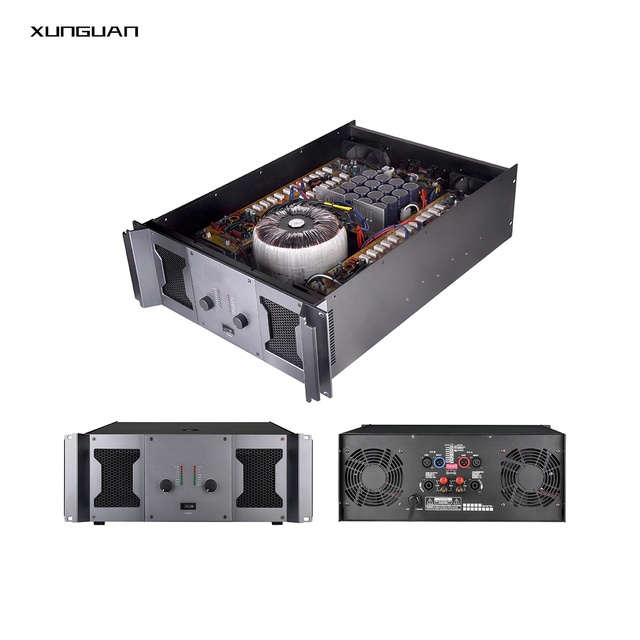
TD-2600 Professional Two Channel 2CH*2600W 8ohm Power Amplifier 4U Can Work at 2ohm 6600W for Concert Stage Subwoofer
 Enping Xunguan Electronics Factoryverified🇨🇳CN6 yrs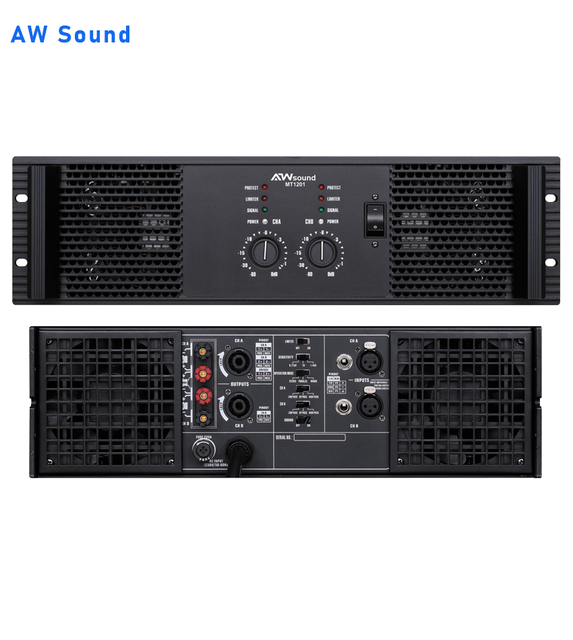
Professional Digital Power Amplifier 2600W 2/4 Ohms Class H 2U Metal Pro Audio Amplifier for Stage & Outdoor Events
 Enping Auway Audio Equipment Co., Ltd.verified🇨🇳CN4 yrs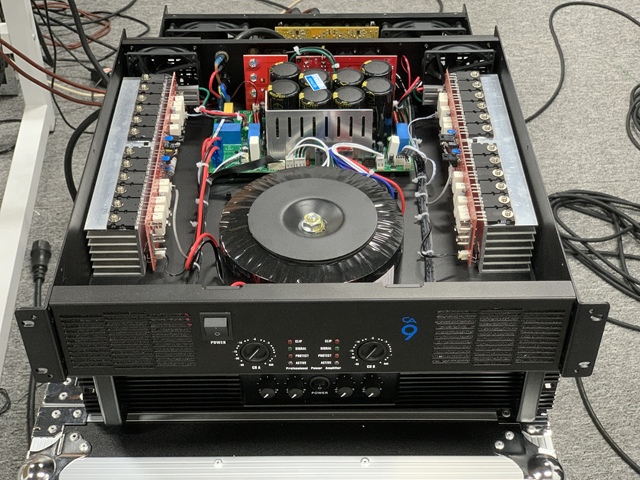
Professional Power Amplifier Class H Amplifier CA9 2x800w Power Stereo Amplifier Audio Sound Equipment for DJ Stage Performance
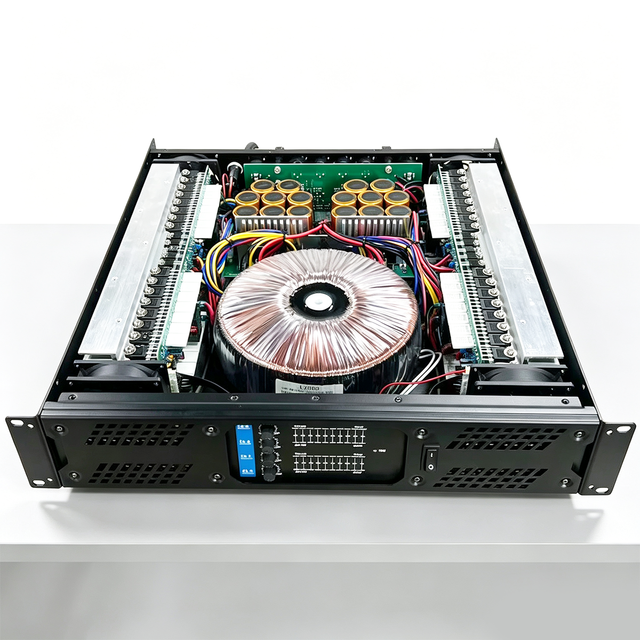
Professional Grade 2U 4-channel Class H 800W Power Amplifier Excellent SoundQuality Amplifier for Outdoor Performance Stages
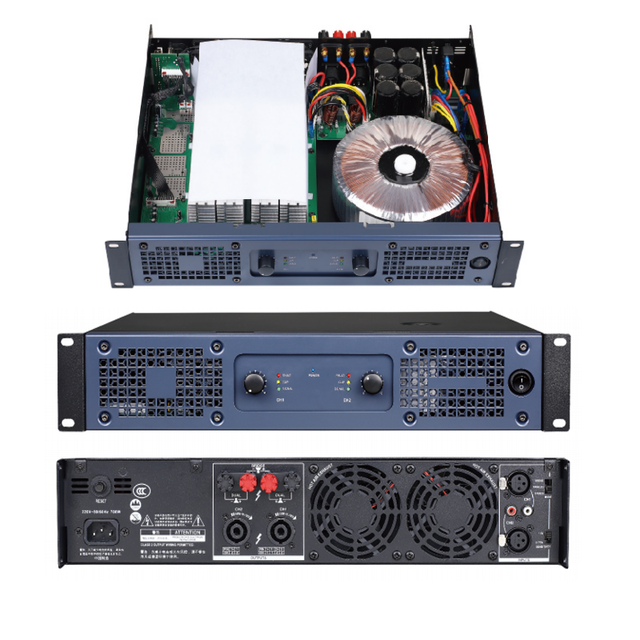
High Quality Class H 2-Channel 2U Power Amplifier All-Aluminum Transformer with Metal Shell Excellent Stage Performance
 Guangzhou Yilowa Audio Co., Ltd.🇨🇳CN7 yrs
3U 4*1700W 4 Channel High Power Stereo Sound Class H Professional Stage Performance Power Amplifier 1 Year Warranty
 Enping Weidian Electronics Co., Ltd.🇨🇳CN1 yr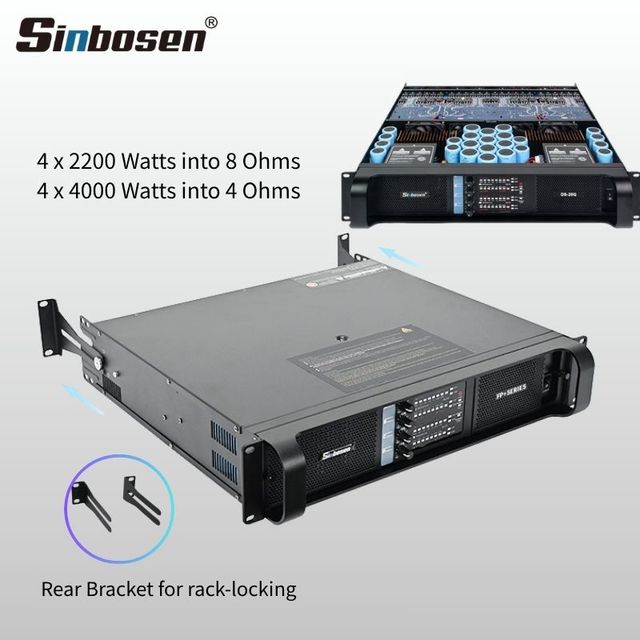
Stage Power Amplifier Factory Direct Sale High Power Switching Power Amplifier Class TD DS-20Q 4*2200W
 Guangzhou Xinbaosheng Audio Equipment Company Limitedverified🇨🇳CN10 yrs
Deep Dive · Full Report
Full Market Report
1 document · Live-fetched from source
Related Searches
Explore more sourcing topics & related categories
Sources & References
26 sources cited · Verified industry data & reports
What Is a Class H Amplifier? How It Works & Key Benefits
www.hg-amp.com
Many designs also offer a bridged mono mode, doubling available power into a single high-power loudspeaker or subwoofer from a single stereo chassis. Q7. Why are Class H amplifiers popular in PA systems? Three factors drive Class H adoption in professional PA: high efficiency reduces operating heat and weight (critical for touring equipment); the linear analog output stage maintains consistent performance across the complex, variable impedance loads of professional loudspeaker systems; and the technology is well-understood and proven in demanding live-sound environments over many years. For system integrators and OEM customers requiring specific connector configurations, front-panel labeling, or firmware feature sets, confirm whether the manufacturer offers factory customization services — this is particularly relevant when sourcing for large-scale installation projects or branded product programs. Q1. How does a Class H amplifier work? A Class H amplifier uses a linear output stage powered by dynamically adjustable supply rails. To understand why the Class H power amplifier is efficient, it helps to first understand why Class AB is not. In a Class AB amplifier, the output stage transistors are powered by a fixed supply voltage — typically ±70 V or ±100 V in a high-power design. When the signal is quiet (which is most of the time in real music), the transistors must drop the full difference between supply voltage and output voltage as heat. If the output is at 10 V peak but the rail is at 70 V, the transistor dissipates power proportional to that 60 V difference — wasted entirely as heat. The most common Class H implementation uses two sets of supply rails — a low rail (e.g., ±30 V) and a high rail (e.g., ±75 V). The amplifier monitors the audio signal continuously. When the signal is below a defined threshold, the output stage operates from the low rail only.
Complete Buyer Guide to Class H Audio Amplifiers in 2026
www.hg-amp.com
This bar chart illustrates the general relative heat dissipation across amplifier classes when delivering comparable output power under typical program material. Class AB amplifiers generate the most excess heat because their output stage maintains a relatively constant voltage differential regardless of signal level. Class H reduces this heat load substantially by tracking the signal and switching rails only when needed, sitting between Class AB and the very low heat output of Class D switching amplifiers. Lower heat generation directly benefits touring and installed sound applications, since it typically means smaller heat sinks, quieter cooling fans, and more consistent performance during long events. Class H scores notably higher on efficiency, heat management, and power density because its rail-switching design avoids the constant high-voltage dissipation that limits Class AB designs at high output levels. Sound fidelity remains close between the two classes, since Class H retains a linear amplification stage similar to Class AB during normal operation. Stadium and outdoor applications, while a smaller share, benefit significantly from the reduced heat output when amplifier racks are enclosed in outdoor equipment housings with limited passive cooling. Selecting the right amplifier depends on matching power output, channel count, and thermal design to the specific venue and speaker load rather than choosing based on amplifier class alone. A Class H power amplifier is a professional audio amplifier design that dynamically adjusts its power supply rail voltage to match the signal being amplified, delivering high output power while significantly reducing wasted heat compared to fixed-rail designs.
The Ultimate Guide to Class H Amplifiers: Powering the Future of ...
smallusefultips.com
With their unique combination of high efficiency, low heat generation, and high power density, Class H amplifiers are poised to revolutionize the world of audio technology. A Class H amplifier is a type of audio amplifier that combines the benefits of Class G and Class AB amplifiers. It operates in a similar manner to a Class G amplifier, but with some key differences. A Class H amplifier uses a combination of high and low voltage rails to power the output stage, depending on the input signal level. The high-voltage stage provides the necessary voltage swing to drive the output transistors, while the low-voltage stage provides the control signal to switch the output transistors on and off. The key to Class H amplifier operation is the use of a tracking power supply, which adjusts the voltage supply to the amplifier stages in real-time, based on the input signal. The power supply controller monitors the input signal and adjusts the switch-mode power supply output voltage accordingly. The switch-mode power supply then provides a high-voltage, low-current output to the amplifier stages. Power Supply Design: The power supply design is critical to the operation of a Class H amplifier. The power supply must be capable of delivering high voltage and high current, while also being highly efficient and reliable. Output Stage Design: The output stage design must be capable of handling high power output, while also maintaining low distortion and high efficiency.
Class H Power Amplifier Guide: How to Choose Wisely
electronics.alibaba.com
It’s not a standalone topology, but an enhancement layer applied to Class AB output stages. ... Yes—if you drive inefficient speakers (≤86 dB/W/m) at high volumes for extended periods, or prioritize silent operation (fanless design). For efficient bookshelf speakers in small rooms, the benefits rarely justify the cost premium. ❓ What is the difference between Class G and Class H amplifiers? But if you regularly drive 4–8 Ω loads at >100W RMS with dynamic peaks (e.g., live sound reinforcement, large-room cinema, or studio monitor control), Class H’s rail-tracking design delivers tangible benefits over standard Class AB—and avoids the switching artifacts sometimes found in budget Class D units. This piece isn’t for keyword collectors. It’s for people who will actually use the product. A Class H power amplifier is a hybrid analog design that builds on Class AB topology but adds intelligent, real-time modulation of its power supply rails. It’s rarely used in battery-powered portable speakers, entry-level AV receivers, or headphone amps—where cost, simplicity, or ultra-low idle draw outweigh rail-tracking benefits. Internal view of a Class H amplifier module highlighting rail-switching circuitry and voltage prediction logic Lately, Class H adoption has accelerated—not because specs look flashy on spec sheets, but because system integrators face two converging constraints: tighter thermal envelopes (smaller enclosures, passive cooling mandates) and rising demand for clean headroom at scale. As DSP-driven loudspeaker management becomes standard, amplifier designers can now predict signal envelope behavior more accurately—making rail-tracking faster and more stable than it was a decade ago 3.
What is a Class H amplifier? - Quora
www.quora.com
Answer (1 of 6): “Class H” has nothing to do with an “H Bridge” output stage. A Class H amplifier is similar to an AB amplifier except it is designed to use power from a low voltage rail during the time that the output signal is low, only drawing power from the higher voltage rail when needed.
Class G/H Amplifier
www.soundbridge.io
Various amplifier designs enhance class-AB output stages with more efficient techniques to achieve greater efficiency with low distortion. The terms "class G" and "class H" (G/H) are used interchangeably to refer to different designs, which vary in definition from one manufacturer or paper to another. There are a variety of amplifier designs that enhance class-AB output stages. They have more efficient techniques to achieve greater efficiency with low distortion. These designs are common in large audio amplifiers. Without the efficiency increases, the heatsinks and power transformers would be prohibitively large (and costly). The output stage operates at its maximum efficiency all the time. This is due to the circuit's ability to keep the rail transistors (T2 and T4) in cutoff until a music voltage peak is sufficient to require the additional voltage from the + and - 80 V supplies. The class H amplifier is two amplifiers in series. Classes G/H amplifiers offer enhancements to the basic class AB design. Class G uses multiple power supply rails of various voltages. Class-G amplifiers (which use "rail switching" to decrease power consumption and increase efficiency) are more efficient than Class AB amplifiers. These amplifiers provide several power rails at different voltages and switch between them as the signal output approaches each level.