Clone A Mobile Phone

Overview
Product sourcing insights & recommendations
The mobile phone market in 2026 is at an inflection point, with a clear distinction between the commercial trend of imitation handsets and the security risks associated with technical phone cloning.
Market Trends & Product Insights
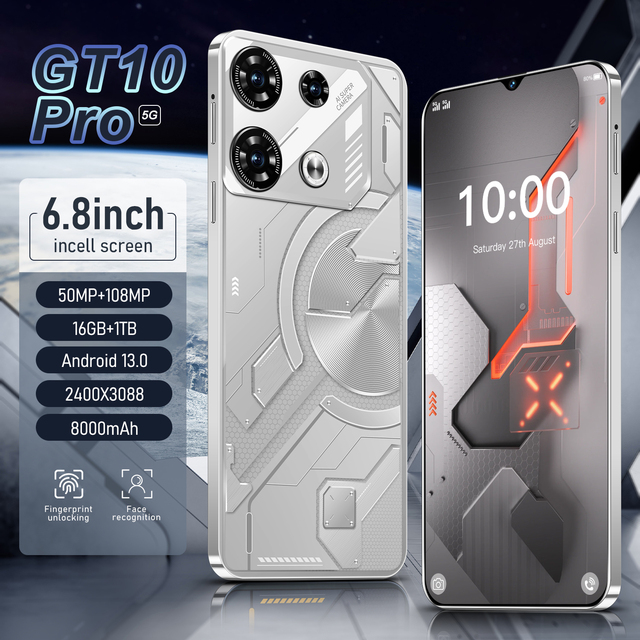
The demand for "clone phones" (imitation handsets) remains persistent in emerging markets (BRIC nations), where consumers seek the aesthetic prestige of flagships like the Samsung Galaxy S26 Ultra or iPhone 17 at a fraction of the cost MarketgrowthreportsThegadgetflow. However, a growing "Digital Wellness" movement is shifting enthusiast interest away from large-screen clones toward minimalist devices like the Light Phone 3 and "dumbphones," driven by a desire to reduce smartphone addiction AccioReddit.
Technical Sourcing & Security
Technical phone cloning—the unauthorized duplication of SIM/ID credentials—remains a significant security risk for non-eSIM devices, leading to financial fraud and identity theft Fcc. Consequently, the industry is accelerating the adoption of eSIM technology and advanced data-wiping tools Idc.
I have identified several products related to these categories, including generic clone smartphones, SIM card cloner tools, and data backup devices. You can find the detailed lists of products and suppliers in the files below.
Based on these 2026 market insights, you may want to:
Clone Mobile Phones Imitation Smartphone
Products · 3 lists

Related Searches
Explore more sourcing topics & related categories
Sources & References
25 sources cited · Verified industry data & reports
Mobile Phones Market Size & Forecast [2035]
www.marketgrowthreports.com
Market Overview Key Findings Latest Trends Market Dynamics Segmentation Analysis Regional Outlook Top Companies Report Coverage Frequently Asked Questions ... The global mobile phones market is likely to grow from USD 627619.96 million in 2026 to USD 1228331.47 million in 2035, with an average CAGR of 7.7% during the forecast period. Emerging markets present significant opportunities for smartphone manufacturers. In India, smartphone shipments grew by 4% in 2024, reaching 151 million units. Companies like Apple are increasing their focus on these markets, with plans to shift the assembly of all iPhones destined for the U.S. market to India by the end of 2026. The mobile phones market is attracting increasing investment across hardware innovation, software ecosystems, and manufacturing localization. In 2024, Apple committed to investing over USD 2 billion in India for expanding its manufacturing base, including the assembly of all iPhones intended for the U.S. market by 2026. Apple's India Expansion (2024): Apple began shifting its iPhone production to India, aiming for 100% of iPhones sold in the U.S. to be manufactured in India by the end of 2026.
Smartphones Market Size, Outlook & Industry Forecast, 2031
www.mordorintelligence.com
DRAM spot prices climbed roughly 20% in late 2024 as wafer capacity was diverted to high-bandwidth server modules.[3]Micron Technology, “Fiscal Q1 2025 Earnings Call,” micron.com Samsung and SK Hynix prioritized automotive and data-center customers, leaving mobile LPDDR shortfalls that forced entry-level Android vendors to dial back memory configurations. In price-sensitive markets, a USD 10 increase pushes buyers toward 4 GB variants or even feature phones, eroding volume forecasts. Component inflation also squeezes razor-thin gross margins, prompting some tier-two brands to postpone launches or bundle fewer accessories. Relief is unlikely before mid-2026 when new fabs ramp, keeping pressure on low-end ASPs across the smartphones market and potentially widening the digital divide. In terms of shipment volume, the market was valued at 1.18 billion units in 2025 and is expected to grow from 1.21 billion units in 2026 to 1.35 billion units by 2031, at a CAGR of 2.21% during the forecast period (2026-2031). Premiumization, propelled by on-device generative AI and larger neural engines, is raising average selling prices even as shipments level off in mature economies. The Smartphones Market size is expected to grow from USD 585.63 billion in 2025 to USD 609.29 billion in 2026 and is forecast to reach USD 739.23 billion by 2031 at 3.94% CAGR over 2026-2031. Note: Market size and forecast figures in this report are generated using Mordor Intelligence’s proprietary estimation framework, updated with the latest available data and insights as of January 2026.
5 Expectations for the Mobile Market in 2026 | TechInsights
www.techinsights.com
At the same time, geopolitical dynamics are reshaping long-term manufacturing strategies, and BRIC and emerging markets are exerting new influence over global demand.In this live TechInsights webinar, our experts will break down five critical developments reshaping the mobile industry in 2026 and beyond. This webinar gives you the context and technical/market signals needed to adapt roadmaps, prioritize investments, and influence architecture choices for AI, datacenter, mobile, and edge products. ... The Supreme Court invalidates IEEPA tariffs as the U.S.-Taiwan trade deal reshapes semiconductor import policy. Read the TechInsights report. ... CES 2026 semiconductor news: AI PCs, Snapdragon X2 Elite, $48B in M&A, ZAM memory, and a 2026 forecast projecting a $1 trillion chip market. The mobile semiconductor market faces an inflection point in 2026. Form-factor innovation — New designs promise to revitalize a stagnating market. Whether you’re a strategist, designer, or executive, this session will equip you with the insights to anticipate change, realign your roadmap, and seize new opportunities. ... Wayne Lam is the Service Director of Mobile Semiconductors at TechInsights, with over a decade of experience in the consumer electronics and smartphone industries.
Smartphone Market Size, Share & Trends Report, 2026-2033
www.grandviewresearch.com
The global smartphone market size was valued at USD 537.6 billion in 2025 and is projected to grow from USD 556.4 billion in 2026 to USD 749.1 billion by 2033, at a CAGR of 4.3% from 2026 to 2033, due to rising consumer demand for feature-rich yet affordable devices, rapid advancements in 5G connectivity, and increasing digital dependency across emerging and developed economies. The market in Asia Pacific dominated with a revenue share of 47.9% in 2025. Key drivers include the proliferation of AI-powered functionalities such as on-device generative AI, enhanced mobile photography, and real-time language translation, as well as growing integration with IoT ecosystems. Additionally, the rapid adoption of mobile payment systems, integration of smartphones into connected ecosystems like smart homes and vehicles, and the push for eco-friendly devices with longer lifecycles are fueling market expansion. The smartphone market in the U.S. is expected to grow significantly at a CAGR of 3.3% from 2026 to 2033. This report forecasts revenue growth at the global, regional, and country levels and provides an analysis of the latest industry trends in each of the sub-segments from 2021 to 2033. For this study, Grand View Research has segmented the smartphone market report based on operating system, distribution channel, price range, and region. Operating System Outlook (Revenue, USD Billion, 2021 - 2033) ... The global smartphone market size was valued at USD 537.6 billion in 2025 and is estimated at USD 556.4 billion for 2026. Demand is primarily driven by rising smartphone penetration, replacement cycles, digital content consumption, and increasing adoption of mobile-based financial and enterprise applications. The market is characterized by rapid product launch cycles, aggressive pricing competition, premiumization trends, and growing consumer preference for integrated digital ecosystems.
8 Smartphone Trends That Will Shape 2026
www.linkedin.com
Smartphone Market Size, Share - Forecast To 2035
www.marketgrowthreports.com
Key Market Driver: Rising global internet penetration is fueling demand—over 5.4 billion people now use mobile internet, and nearly 80% of that access happens through smartphones. Major Market Restraint: Supply chain constraints continue to impact chipset availability, with over 18% of mid-range models delayed in production during Q1 of 2024 alone. Emerging Trends: Foldable phones are gaining real traction, with unit shipments up by 62% in 2024. The Smartphone Market is estimated to be valued at USD 2318.03 million in 2026 and is projected to reach USD 3679.01 million by 2035, registering a compound annual growth rate (CAGR) of 5.3% over the forecast period. The US market is currently dominated by the 5G Transition, with approximately 75% of new smartphones sold in the US being 5G-enabled. Currently, the focus in the US is on AI Integration and Foldable Designs. The trend in the US is the Service-Bundled model, where American mobile carriers offer Free Upgrades to loyal American-market customers. Meanwhile, cloud gaming capabilities on smartphones rose, with over 140 million users accessing mobile gaming platforms via 5G networks in 2024. Additionally, the smartphone market saw a significant uptick in wearables integration, where nearly 48% of new smartphone users also purchased a connected wearable. These synergistic trends collectively underscore a market transitioning into smarter, faster, and more sustainable mobile technology ecosystems.