Cpu Chassis

Overview
Product sourcing insights & recommendations
The term "cpu chassis" refers to the structural enclosure of a computer, commonly known as a PC case or server chassis, which houses the CPU and other internal components Wikipedia. In 2026, the market is undergoing a significant transformation driven by the hardware requirements of generative AI, leading to more specialized, thermally efficient, and aesthetically driven designs.
Market Dynamics & Growth
The market for AI-optimized chassis is experiencing an unprecedented surge:
* Rapid Expansion: The AI server chassis market is projected to grow from $2.0 billion in 2026 to $9.0 billion by 2036, representing a robust CAGR of 16.2% Futuremarketinsights.
* Regional Drivers: China is leading growth with a 15.4% CAGR due to national computing power policies, followed closely by the USA at 13.9% Futuremarketinsights.
* Consumer Interest: Google search interest for "cpu chassis" peaked in March 2026, reflecting high seasonal demand for new hardware builds .
Core Product Trends in 2026
Product evolution is currently focused on three pillars: Thermal Performance, Cable Management, and Aesthetics.
#### 1. Thermal Management & AI-Ready Cooling
As AI chips like NVIDIA’s Blackwell push cooling requirements toward 15kW per rack, air cooling is reaching its limits Futuremarketinsights.
* Liquid Cooling Dominance: Chassis are increasingly designed with direct-to-chip (D2C) cold plates and integrated rack-level distribution manifolds Futuremarketinsights.
* Hybrid Solutions: "Hybrid" chassis are emerging for data centers not yet ready for full liquid loops, using liquid for GPUs while keeping air cooling for CPUs and storage Futuremarketinsights.
#### 2. "Zero-Cable" Aesthetics (Back-Connect)
The trend toward hidden cabling has reached maturity in 2026.
* Rear-Mounted Connectors: Chassis now support motherboards with connectors on the back, enabling a completely clean internal view without visible power or data cables Acegeek.
* Improved Airflow: By removing cable clutter from the main chamber, these designs significantly reduce air resistance and improve thermal efficiency.
#### 3. Panoramic & Scenic Visuals
Chassis are no longer just shells; they are visual showcases for premium hardware.
* 270-Degree Views: The "Fish Tank" or panoramic design—using continuous tempered glass panels—is the standard for enthusiasts Acegeek.
* Integrated Tech: High-end consumer chassis are now featuring built-in 9.2-inch LCD screens for real-time monitoring of CPU temperatures and system metrics.
Liquid Cooling Server Chassis 4u Rackmount Ai Gpu
Products · 3 lists
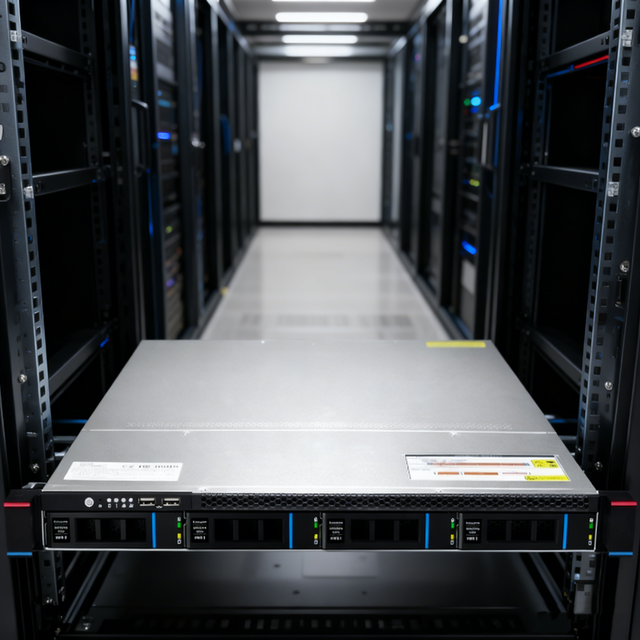
Direct-to-chip (D2C) Liquid Cooling GPU Server Liquid Cooling Chassis OEM/ODM Custom Server Chassis Metal Stamping
 Dongguan Zhicui Metal Products Co., Ltd.🇨🇳CN4 yrs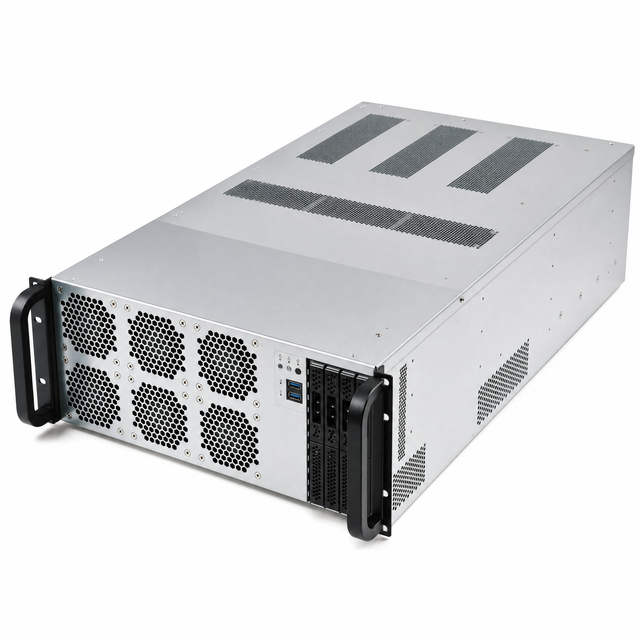
TZR 4U AI Computing Chassis | 19 Inch GPU Rackmount Enclosure for Inference Servers | Custom Front Panel
 Dongguan Shengen Metal Co., Ltd.verified🇨🇳CN8 yrs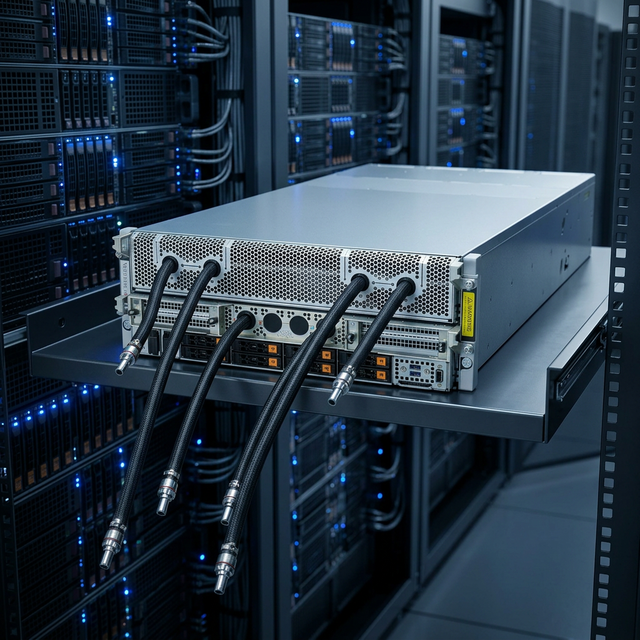
AS-4126GS-NBR-LCC 4U Rackmount Liquid Cooled GPU Server 8 GPUs Dual AMD EPYC 9005 HGX B200 AI Training Deep Learning HPC Stock
 JLS Future Trading Limitedverified🇭🇰HK3 yrs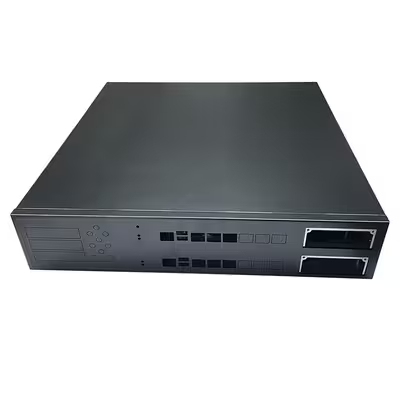
Custom Metal ATX Rack Server Chassis Liquid Cooled AI GPU Data Center Case Enclosure Sheet Metal Fabrication Stock
 SHENZHEN YUCHI TECHNOLOGY Co., Ltd.verified🇨🇳CN5 yrs
Rack 4bays Server Chassis Support EEB EATX Board Four 5090 4090 Option AIO Liquid Cooler with 8 Expansion Slot 4U GPU Case
 Shenzhen Innovision Technology Co., Ltd.🇨🇳CN10 yrs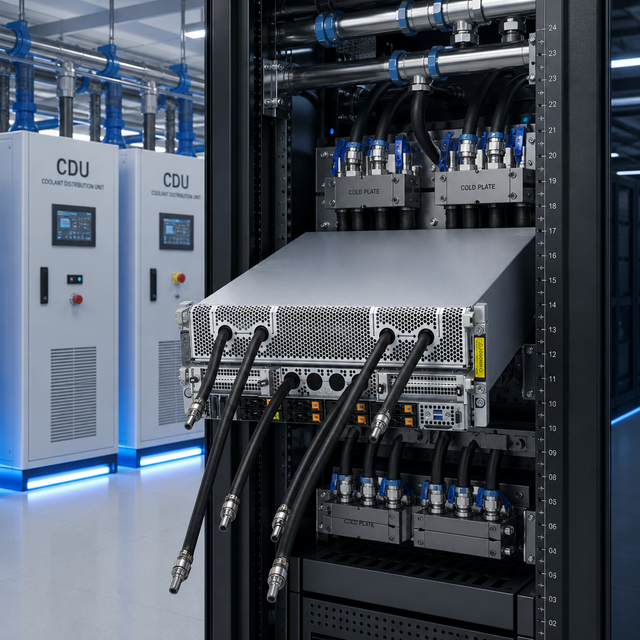
AI Fine-Tuning 8-GPU 4U Rack Server SYS-421GE-NBRT-LCC Dual Xeon 8TB DDR5 Liquid Cooled GPU Server for Model Tuning

OEM Stock Feiteng S5000C-64C Processor OEM803 4U Rack AI GPU Server 8 GPUs Liquid Cooling 3 Years Warranty
 Shenzhen Huatenmax Technology Co., Ltd.🇨🇳CN3 yrs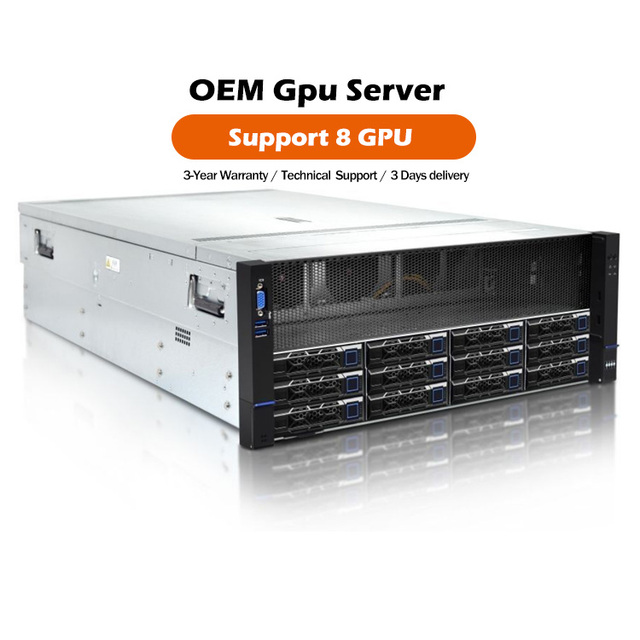
OEM Feiteng S5000C-64C CPU Processor Deepseek R1AI 4U Rack Server Liquid Cooling Chatgpt AI 8-GPU 16*DDR5 Stock
 Beijing Xinchuan Technology Co., Ltd.verified🇨🇳CN5 yrs
2026 Hot Sale 4U Liquid Cooling Server Chassis, Silent Rackmount Case Support 8x HDD for HPC & Deep Learning
 Shenzhen Toploong Technology Co., Ltd.🇨🇳CN14 yrs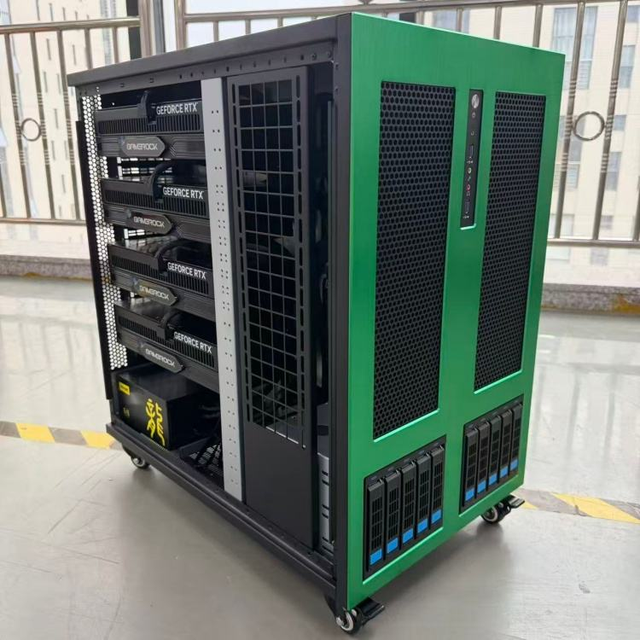
Tower 4-GPU Liquid-Cooled Server Chassis (663x600x380mm) for 3rd/4th Gen Motherboards Supports RTX 4090/5090/PRO 6000 Graphics
 Xinwangronghe (Shenzhen) Technology Co., Limited🇨🇳CN1 yr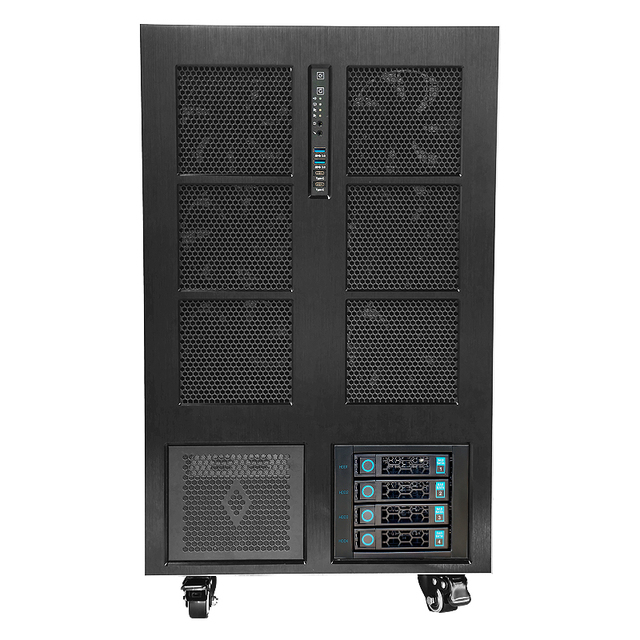
New 4GPU 5width Full Tower Deep Learning Case EATX ATX 4Bays Liquid Cooling Fan Game Chassis Stock Server
 Guangzhou Hengyu Computer Technology Co., Ltd.🇨🇳CN2 yrs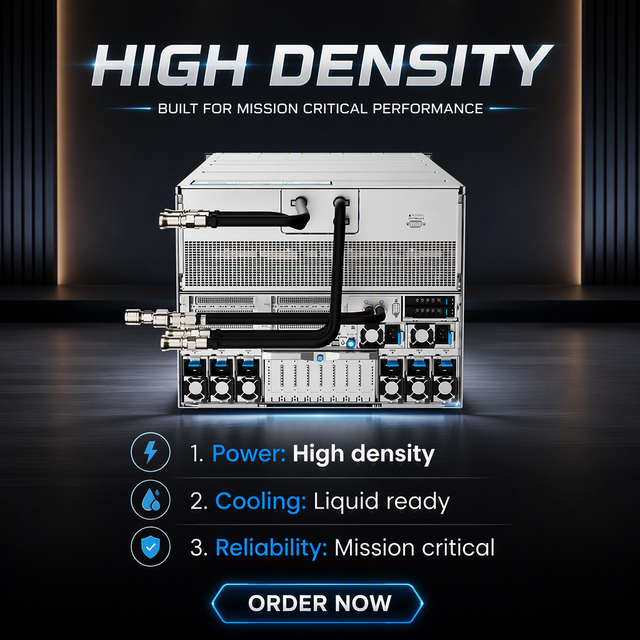
LX G7868Q X6 New Xeon Cold Plate Liquid Cooled GPU Server Rack 32GB DDR5 8 GPUs Stock One Stop Service Data Center AI
Deep Dive · Full Report
Full Market Report
1 document · Live-fetched from source
Related Searches
Explore more sourcing topics & related categories
Sources & References
28 sources cited · Verified industry data & reports
Computer case - Wikipedia
en.wikipedia.org
A computer case, also known as a computer chassis, is the enclosure that contains most of the hardware of a personal computer. The components housed inside the case (such as the CPU, motherboard, memory, mass storage devices, power supply unit and various expansion cards) are referred as the internal hardware, while hardware outside the case (typically cable-linked or plug-and-play devices such as the display, speakers, keyboard, mouse and USB flash drives) are known as peripherals. The structural frame (chassis) of a case is usually constructed from rigid metals such as steel (often SECC — steel, electrogalvanized, cold-rolled, coil) and aluminium alloy, with hardpoints and through holes for mounting internal hardware, case fans/coolers and for organizing cable management. The external case panels, at least one of which are removable, cover the chassis from the front, sides and top to shield the internal components from physical intrusion and dust collection, and are typically made from painted metallic and/or plastic material, while other materials such as mesh, tempered glass, acrylic, wood and even Lego bricks have appeared in many modern commercial or home-built cases. Alternatively, the case may have a single large U-shaped cover that saddles the chassis. From the early 2000s onwards there is a trend towards tool-less cases, in which components are held together with snap-in plastic rails, thumbscrews, and other methods that do not require tools; this facilitates quick assembly and modification of computer hardware and is also cheaper to manufacture.
CPUs are Back: The Datacenter CPU Landscape in 2026
newsletter.semianalysis.com
In their latest Q4 earnings, Intel saw an unexpected uptick in datacenter CPU demand in late 2025 and are increasing 2026 capex guidance on foundry tools and prioritizing wafers to server from PC to alleviate supply constraints in serving this new demand. This marks an inflection point in the role of CPUs in the datacenter, with AI model training and inference using CPUs more intensively. Datacenter CPU Core Count Trend. For our subscribers, we provide our datacenter CPU roadmap to 2028 and detail the datacenter CPUs beyond 2026 from AMD, Intel, ARM and Qualcomm. We then look ahead to what the future looks like for datacenter CPUs, discuss the effects of the DRAM shortage, what NVIDIA’s Bluefield-4 Context Memory Storage platform means for the future of general purpose CPUs, and the key trends to look out for in the CPU market and CPU designs going forward. Below we present our CPU roadmap to 2028, and detail the key features and architectural changes of the datacenter CPUs beyond 2026, including AMD’s Verano and Florence, Intel’s Coral Rapids and cancelled CPU lines, ARM’s Venom specifications, Qualcomm’s return to the datacenter CPU market with SD2, and include NVIDIA’s Bluefield-4 as a sign of how CPU deployments are evolving going forward. We then discuss the impacts of the DRAM shortage on each datacenter CPU segment and look at future CPU trends, highlighting crucial design aspects that will shape CPUs in the next decade. This generation follows the trend of splitting the design into two variants. A 96 core, 192 thread high performance version will be made for AI head nodes and databases that promises a 50%+ improvement in per core performance, while a high-density model for virtualization and cloud compute will increase core counts to 256 and possibly beyond. By then, we expect Huawei to take significant share in Chinese hyperscaler CPU deployments.
2026 PC Case Trends: Panoramic Views, Back-Connect Builds, and ...
www.acegeek.com
For a cleaner mainstream design, the Perspective scenic chassis is also appropriate since it provides ATX/M-ATX/ITX assistance, 410mm GPU clearance, 165mm CPU cooler clearance, side 360mm AIO assistance, Type-C front I/O, side fan support, back exhaust, and bottom follower placements. See the pattern? The winning 2026 spec sheet is not one magic attribute. This is why I would certainly send visitors to AceGeek's thermal-driven PC instance style evaluation after they read the trend piece. It connects wattage, air movement course, TDP, and real chassis style options instead of acting cooling is a line item at the bottom of a spec sheet. Forget vibes. Contrast feature. 2026 Computer Case FadWhat Buyers Think It SuggestsWhat It Really ImpliesSpecs to Examine Prior To PurchasingWarningScenic PC caseGood-looking developMuch more noticeable hardware, but typically tougher air flow designSide consumption, bottom intake, GPU clearance, radiator assistanc This is why a situation such as AceGeek's Lucid back-connecting mini situation is entitled to contextual interior connecting in a write-up regarding 2026 computer case trends. Its spec sheet listings M-ATX and ITX support, 400mm GPU clearance, 165mm CPU cooler clearance, top 360/280mm radiator support, side 280/240mm radiator support, and Type-C front I/O. A breathtaking computer situation misbehaves for air movement only when the design counts on glass-heavy panels without adequate side consumption, bottom intake, follower spacing, or exhaust capacity to move heat away from the CPU and GPU during lengthy workloads, video gaming sessions, or high-power part use. The much better panoramic designs are not secured fashion jewelry boxes. They make use of side fans, bottom fans, dual-chamber layouts, and broad ventilation networks. The weak ones conceal small vents behind significant glass and wish the buyer never checks temperatures. A back-connect
The 7 Trends That Will Define the Next Era of PCs | PCMag
www.pcmag.com
In what may be the most important trend out of Computex 2026, Nvidia made a seismic announcement that it was entering the laptop-hardware space with the · RTX Spark superchip. ... Developed in collaboration with MediaTek, this ambitious 3nm Arm-based system-on-a-chip (SoC) effectively packs Nvidia's DGX Spark AI architecture into a gaming- and creator-class laptop. Packing a 20-core Grace CPU, a Blackwell GPU with 6,144 CUDA cores, and up to 128GB of unified coherent memory, the platform delivers an unprecedented 1 petaflop of local compute—enough to run a 120-billion-parameter model on your device. The Best PC Cases of Computex 2026: These 15 Chassis Are Impossible to Ignore https://www.pcmag.com/news/computex-2026-7-trends-that-will-define-the-next-era-of-pcs Email Comments Add as a preferred source on Google The days of the classic, binary AMD-versus-Intel wars are decidedly done-zo, at least in laptops: 2026 into 2027 is shaping up to be a four-way melee with AMD (Ryzen AI 400), Intel (Core and Core Ultra Series 3), Qualcomm (Snapdragon X2), and Nvidia (RTX Spark) slicing and dicing the market into bits.
The Biggest PC hardware trends from Computex 2026 - Digital Trends
www.digitaltrends.com
Computex 2026 made them feel much more mature. The biggest story was undoubtedly the Intel Arc G3 Extreme processor, a graphics-first platform based on the Panther Lake architecture and manufactured using the cutting-edge Intel 18A process node. Packing a 14-core CPU configuration alongside 12 next-gen Xe3 Celestial graphics cores, complete with hardware ray tracing and Intel XeSS 3 with Multi Frame Generation, Intel finally looks ready to challenge AMD’s long-standing dominance in the premium handheld market. As someone who’s spent years using devices like the Steam Deck and the original ROG Ally, that’s perhaps the most exciting trend of them all. Looking back at Computex 2026, I don’t think I’ll remember the show for a single processor, graphics card, or laptop. Perhaps the clearest example of this shift is Intel’s Project Firefly, a design initiative centered around building ultra-lightweight AI PCs that maximize day-to-day efficiency instead of brute-force horsepower. The conversation has evolved from asking how much raw performance manufacturers can cram into a chassis to how much performance users actually need before portability, battery life, near-silent acoustics, and affordability become the bigger selling points. There’s always a faster processor, a shinier graphics card, or a laptop that’s somehow even thinner than last year’s model. But after spending several days wandering the halls of Computex 2026, talking to engineers, trying products, and occasionally getting lost between exhibition booths, I came away with a very different takeaway.
Future‑Ready PC Build Guide: 2026 Hardware Trends - Comp Doc ...
www.compdoccomputers.com
Following these steps ensures that your system remains agile as new AI workloads emerge, and that you won’t need to replace the entire chassis when the next generation of hardware drops. The hardware revolution of 2026 is less about isolated upgrades and more about an interconnected ecosystem where AI, security, and performance coexist harmoniously. By treating each component as a piece of a larger puzzle—selecting CPUs that think, GPUs that accelerate, and motherboards that talk—you’ll build a machine that not only handles today’s demands but also adapts to tomorrow’s innovations. When I first cracked open a case back in the early 2020s, the idea of a processor that could think was still a sci‑fi fantasy. Fast‑forward to 2026, and AI‑accelerated cores are now a staple on mainstream CPUs, reshaping everything from gaming to content creation. Pairing a CPU with a modest mid‑range GPU now yields results that previously required a high‑end RTX 4090. The trick is matching the AI workload profile to the right silicon—developers will soon write code that automatically detects and utilizes these cores, so future‑proofing your build starts with selecting a motherboard that supports the latest socket and firmware updates. Graphics cards in 2026 have become hybrid powerhouses, combining traditional rasterization with tensor‑driven AI pipelines. In 2026, 80 PLUS Platinum efficiencies are now standard, and many high‑end PSUs feature AI‑driven load balancing that reduces heat output and prolongs component lifespan. Cooling, too, has taken a quantum leap. Hybrid liquid‑air coolers combine a compact radiator with a whisper‑quiet fan array, while vapor‑chamber AIOs now come pre‑filled with nano‑fluid coolants that improve thermal conductivity by up to 12%. If you’re pushing a CPU’s AI cores to 100 % utilization for extended periods, these advancements aren’t optional—they’re essential to maintaining stable boost clocks and preventing thermal throttling.