Crt Tv Card

Overview
Product sourcing insights & recommendations
The "CRT TV card" refers to universal CRT motherboards or mainboards used to repair or upgrade legacy analog televisions. Despite the industry-wide halt in tube production, the market for these components is growing due to high demand in retro-gaming, industrial maintenance, and analog preservation. Modern universal boards now often include HDMI and VGA inputs, allowing users to connect modern devices directly to vintage tubes.
I have analyzed the current market trends, technical specifications, and sourcing options. Prices for standard 14–21 inch universal boards typically range from $33–$65, while larger 25–29 inch boards can reach up to $100. A detailed report covering these insights, along with recommended products and suppliers, is attached below.
Based on this analysis, would you like to:
Crt Tv Motherboard 25 29 Inch Universal
Products · 3 lists
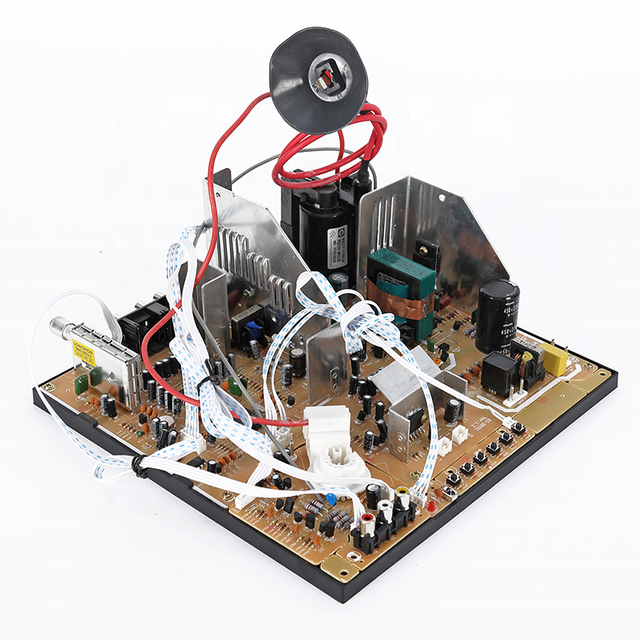
Original New 25-29 Inch CRT TV Motherboard Universal HD Color TV Multilayer PCB Kits Essential TV Parts
 Shenzhen Pinkuo Trading Co., Ltd.🇨🇳CN2 yrs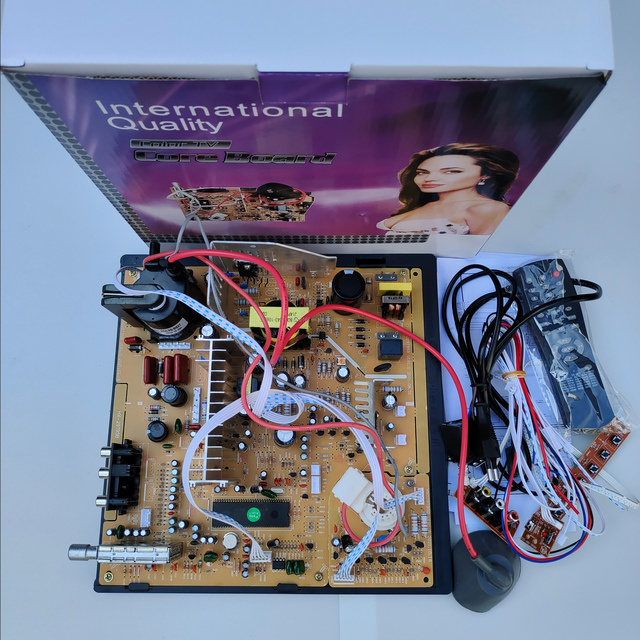
25-29 Inch Universal Color TV Motherboard 25"-29" Universal China Factory CRT TV Kits in Color
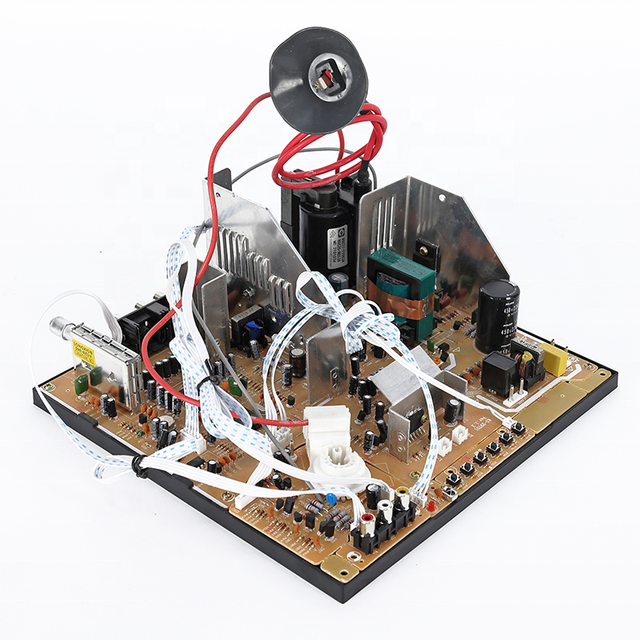
Original new CRT TV motherboard 25-29 inch universal HD color TV motherboard PCB kits for Tv parts
 Shenzhen Beast & Lion Technology Co., Ltd.🇨🇳CN1 yr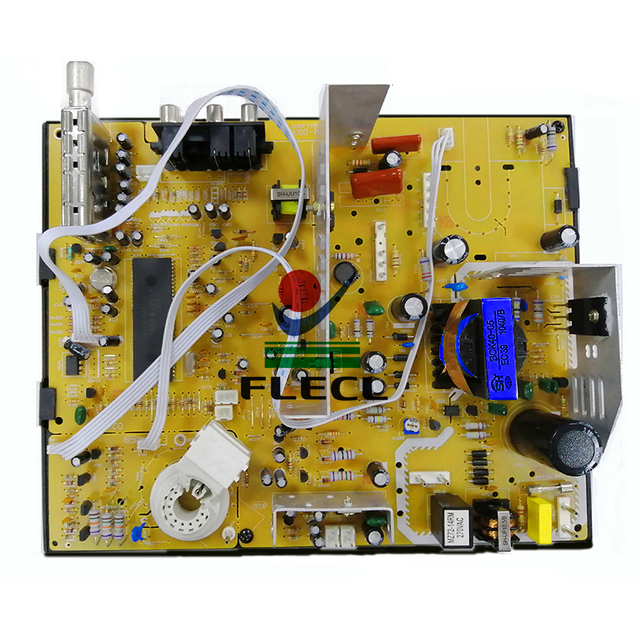
CRT TV Color Tv Pcb Universal Mother Board Main Board 14" 17"21"25"29"
 Foshan Nanhai Feiling Electronics Co., Ltd.🇨🇳CN12 yrs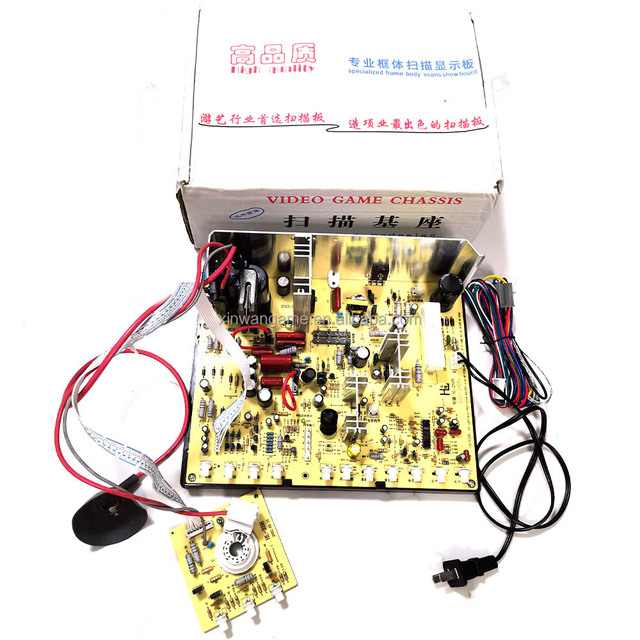
25-29 Inch High-Definition Digital CRT TV Motherboard 29 Inch Universal Board Supports Customized Logo Coin Payment Method Board
 Guangzhou Xinwang Animation Technology Co., Ltd.🇨🇳CN2 yrs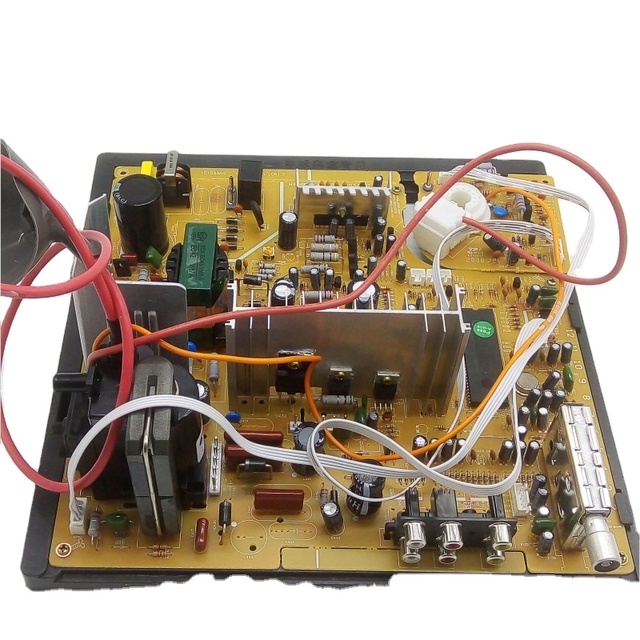
Original new CRT TV motherboard 14-21 inch universal 21 inch HD color TV motherboard PCB
Deep Dive · Full Report
Full Market Report
1 document · Live-fetched from source
Related Searches
Explore more sourcing topics & related categories
Sources & References
28 sources cited · Verified industry data & reports
Cathode ray tube - Wikipedia
en.wikipedia.org
A CRT in a TV is commonly called a picture tube. CRTs have also been used as memory devices, in which case the screen is not intended to be visible to an observer. The term cathode ray was used to describe electron beams when they were first discovered, before it was understood that what was emitted from the cathode was a beam of electrons. In modern CRT monitors and TVs the beams are bent by magnetic deflection, using a deflection yoke. Electrostatic deflection is commonly used in oscilloscopes. The tube is a glass envelope which is heavy, fragile, and long from front screen face to rear end. Its interior must be close to a vacuum to prevent the emitted electrons from colliding with air molecules and scattering before they hit the tube's face. The earliest version of the CRT was known as the Braun tube, invented by the German physicist Ferdinand Braun in 1897. It was a cold-cathode diode, a modification of the Crookes tube with a phosphor-coated screen. Braun was the first to conceive the use of a CRT as a display device. The Braun tube became the foundation of 20th century TV. In 1927, Philo Farnsworth created a TV prototype. The CRT was named in 1929 by inventor Vladimir K. Zworykin. He was subsequently hired by RCA, which was granted a trademark for the term "Kinescope", RCA's term for a CRT, in 1932; it voluntarily released the term to the public domain in 1950. In the 1930s, Allen B. DuMont made the first CRTs to last 1,000 hours of use, which was one of the factors that led to the widespread adoption of TV. While circular CRTs were the norm, European TV sets often blocked portions of the screen to make it appear somewhat rectangular while American sets often left the entire front of the CRT exposed or only blocked the upper and lower portions of the CRT. In 1954, RCA produced some of the first color CRTs, the 15GP22 CRTs used in the CT-100, the first color TV set to be mass produced.
Cathode Ray Tube Television - Magnet Academy
nationalmaglab.org
For decades, the Cathode Ray Tube was used for video displays from televisions to computer screens. Essentially, a cathode ray tube consists of a glass vacuum tube in which a negatively charged plate (called a cathode) is heated so it emits electrons. These electrons are focused and beamed onto a surface to create an image. While smaller CRTs used electrostatic deflection, which occurs when the electron beam is deflected as it passes through charged metal plates, most relied on electromagnetic deflection, which uses magnets to move the electron beam as seen in this tutorial. If you double-click on a magnet, it will flip, reversing the magnetic field and changing the electromagnetic deflection. The two permanent magnets shown are handy for depicting the principle of electromagnetic deflection; in real CRTs, however, two pair of electromagnetic coils are used to bend beams of electrons; the angles of deflection are altered by varying the strengths of the coils, rather than physically moving them.
What Is a CRT, and Why Don't We Use Them Anymore?
www.howtogeek.com
In the context of electronics, CRT stands for "cathode ray tube." It's a technical term for the glass picture tube inside of a vintage TV set or computer monitor---the kind used before flat-screen displays became common. When someone says "a CRT," they might also be referring to a TV set or monitor that uses a CRT instead of the actual cathode ray tube itself. You may have heard the term "CRT," and you might know that it has something to do with TVs, monitors, video games, or computers, but what does "CRT" actually mean? The first reason is that CRTs handle the odd, non-standard display resolutions of old game consoles better than modern digital displays. When used with modern HDTVs, old game console graphics can look stretched, washed out, jagged, or blurry. But when viewed on a vintage CRT, everything is crisp and correctly proportioned. Related: Why Do Old Game Consoles Look So Bad on Modern TVs?
What Is A CRT TV | All Green Electronics Recycling
allgreenrecycling.com
The CRT in a CRT TV is the cathode ray tube, which is essentially a vacuum tube that contains one or more electron guns as well as a fluorescent screen that is used for viewing images. It has a way of accelerating and deflecting electron beam(s) onto television screens in order to create the actual images. This is done so it can be highly shatter-resistant and so it can block the majority of X-ray emissions, especially when the CRTs are being used in consumer products. In recent years, CRT TVs have been all but outdated by newer display technologies like LCDs, plasma displays, and OLEDs, all of which cost less to manufacture, consume less power, and are lower in weights and bulks. In the modern CRT televisions and CRT monitors, magnetic deflection is used to bend the beams. Magnetic deflection is a varying magnetic field that is generated by coils and is also driven by the electronic circuits that are around the tube’s neck. I need TV recycling, but is my TV CRT? When it comes to electronic waste CRT TVs are one the most difficult types of TVs to recycle. A number of companies located in the U.S. charge small fees for the collection of CRT TVS as well as other CRT items. Then, they subsidize their labor via the sale of wire, printed circuit boards and copper. Leaded CRT glass gets sold so that it can be re-melted either into other CRTs or broken down to be used in the construction of roads.
The definitive guide on connecting your PC to a CRT TV | Silos Needed
silosneeded.com
If you’ve ever wondered how to use a normal PC on a consumer CRT TV, perhaps to play retro games via emulators, then look no further. I’ve perused /vr/’s CRT threads and arcade projects and forums threads for a couple of years now, and since a year earlier been playing on what I consider my dream setup. Connect the GPU in a different PCIe port, this seems obvious, but I mention it so you can be sure this means you can use your main OS with your more powerful, modern card and use the old, cheap-ass radeon you’ll buy exclusively for retro gaming. In every part of this tutorial where I tell you to unplug any other non-analogue port (remember, you’ll use the VGA/DVI-I port of your radeon card) I also mean your other GPU’s ports and your motherboard’s. You don’t want your CRT TV ready operating system to use your nvidia card, believe me. On the software side, most people will recommend you hack your GPU by installing a special driver for your card called ‘CRT Emudriver’, which allows your GPU to be driven to the low dot-clocks11 needed to output CRT TV compatible signals. This is for use with windows. I’ll take the mask off now, and tell you: I hate windows, and I would never recommend anyone to use it. I’ll concede that adding RGB capability to your TV sounds great because that’s the color space that the VGA connector uses, that’s why you wouldn’t need an adapter. But I cannot testify that the image quality is drastically better than the one you’d get using component inputs, specially better in such a way that it’s worth it to attempt this mod, which requires technical competency. I suggest checking both the Batocera CRT Script compatibility guide and the Groovyarcade hardware suggestions general for the specifics, but, generally, only the GPU matters.
What is a CRT TV? FAQs on CRT Television and Its Features
www.tataneu.com
Learn about CRT TVs, their technology, history, and features. Discover why they were a household staple. A CRT TV, or Cathode Ray Tube TV, is a type of television that uses a cathode ray tube to display images. This technology involves firing electrons at a phosphorescent screen, which then lights up to create the picture. A CRT TV, or Cathode Ray Tube TV, is a type of television that uses a cathode ray tube to display images by firing electrons at a phosphorescent screen. While CRT TVs are largely obsolete, they are still used by some enthusiasts for vintage gaming and as collectibles.