Crt Tv India

Overview
Product sourcing insights & recommendations


In 2026, the market for CRT TVs in India is defined by a sharp contrast between industrial manufacturing extinction and a resilient niche demand IimaAestechno. While major brands like Videocon and LG exited production years ago, a secondary market thrives, driven by rural utility and a growing urban "retro" subculture IimaAlibaba.
1. Market Status: The "Afterlife" Economy
Large-scale manufacturing of CRT televisions has officially ceased Aestechno. However, the product lives on through a specialized ecosystem:
- Refurbished Dominance: The primary sourcing for CRTs in India now occurs through local repair hubs, second-hand platforms like OLX, and neighborhood electronics markets InstagramAlibaba.
- Component Availability: Wholesale activity has shifted from finished TVs to CRT kits and chassis . Suppliers, primarily from China, continue to export universal CRT boards and parts for the maintenance of existing units in India and Africa AlibabaAlibaba.
- Resilient Pricing: Working units in India typically retail between ₹1,800 and ₹8,500 Alibaba. High-end professional monitors (e.g., Sony PVM/BVM) command premium prices in enthusiast circles Famiboards.
2. Demand Drivers in 2026
Demand is polarized between two very different consumer segments:
- Rural Utility: In states like Bihar and Uttar Pradesh, CRTs are preferred for their voltage stability (180–250V tolerance) and durability in harsh environments IimaAlibaba. Rural TV viewership is projected to grow at 2.3% annually, with CRTs serving as the entry-level device for first-time owners Iima.
- The Retro Gaming Boom: Urban enthusiasts seek CRTs for original consoles (PS1/PS2) because modern flat panels cannot replicate the zero-latency input lag and native scanlines of analog displays YoutubeReddit.
3. Critical Barriers to Manufacturing
The possibility of a manufacturing "revival" is blocked by several "industrial locks" Aestechno:
- Supply Chain Collapse: Vital components like leaded glass and phosphors are no longer produced AestechnoFacebook.
- Environmental Regulations: Modern RoHS and E-waste standards effectively prohibit new CRT production due to high lead content IimaFacebook.
- Logistical Costs: A 32" CRT is significantly heavier and bulkier than modern TVs, making shipping economically non-viable for mass markets Aestechno.
Based on these CRT market insights, you can continue with:
Crt Tv Kit Crt Tv Chassis Wholesale
Products · 2 lists
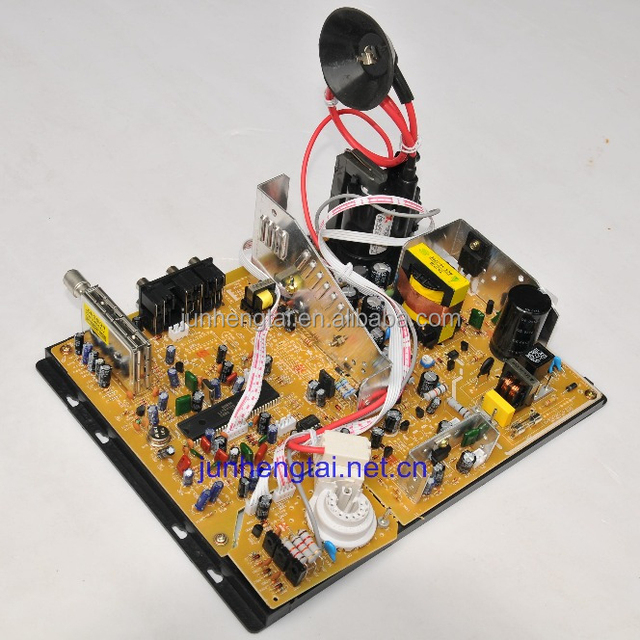
14-21 Hot Sale Good Price CRT Tv Parts Africa Use
 Sichuan Junhengtai Electronic & Electric Appliance Co., Ltd.🇨🇳CN19 yrs
Best Selling Universal Crt Borad for 25-29"
 Foshan Nanhai Feiling Electronics Co., Ltd.🇨🇳CN12 yrs
Tv Board Tv Kits Chassis for Sanyo 14-21
 Tianchang Zhengfei Electronics Co., Ltd.🇨🇳CN16 yrs
Tv Board Tv Kits Chassis for Sanyo 14-21
Related Searches
Explore more sourcing topics & related categories
Sources & References
23 sources cited · Verified industry data & reports
Smart Tv Market Trends, Share and Opportunities 2026-2033
Coherent Market Insights
Smart Tv Market size is growing with a annual growth rate of 11% in the prediction period and it crosses USD 1110.56 Bn by 2033, from USD 521.61 Bn in 2026.
CRT Monitor Market Size, Share, Growth, Analysis, Report ...
Straits Research
The crt monitor market size is projected to grow from $588.52 billion in 2026 to $830.55 billion by 2034, at a CAGR of 4.4% during the forecast period ...

Bigger screen TV sales in India have seen a
LinkedIn · Sarbojit Sarkar , FIE
Bigger screen TV sales in India have seen a surge after The September 2025 GST change,which lowered the tax on TVs over 32 inches from 28% ...

Why no one builds new CRT TVs in 2026: a design house ...
aestechno
In short · Contents · CRT TV in 2026: demand exists, supply is zero · Lock 1: industrial capacity extinguished between 2006 and 2016 · Lock 2: no ...

Connected TVs Market Size, Share, Growth, and Forecast ...
Future Market Insights
The connected TVs market is expected to expand from USD 16,978.4 million in 2026 to USD 60,110.2 million by 2036. The market is anticipated to ...

India Television Market Size and Growth Forecast 2030
TechSci Research
During 2025–2026, the market is entering a strong premiumization phase, driven by rising demand for advanced display technologies such as QLED, Mini-LED, and ...