Curved Fixed Frame Projection Screen

Overview
Product sourcing insights & recommendations
I have completed a comprehensive analysis of the curved fixed frame projection screen market. The report highlights that this segment is driven by a shift toward 4K immersive home theaters and Ambient Light Rejection (ALR) technologies, with the global market projected to reach $308.6 billion by 2026 CoherentmarketinsightsMarketreportsworld.
Key findings include the technical superiority of curved designs in correcting pincushion distortion and increasing perceived brightness by up to 30% Elitescreens. I have also identified leading B2B products and manufacturers offering these solutions at competitive price points ranging from $150 to $1,300 AlibabaAlibaba. The full report detailing market trends, technical specs, and a curated shortlist of products and suppliers is available below.
Here is the detailed market analysis for curved projection screens. You can proceed with:
Custom Curved Projection Screen 150 Inch Manufacturer
Products · 2 lists
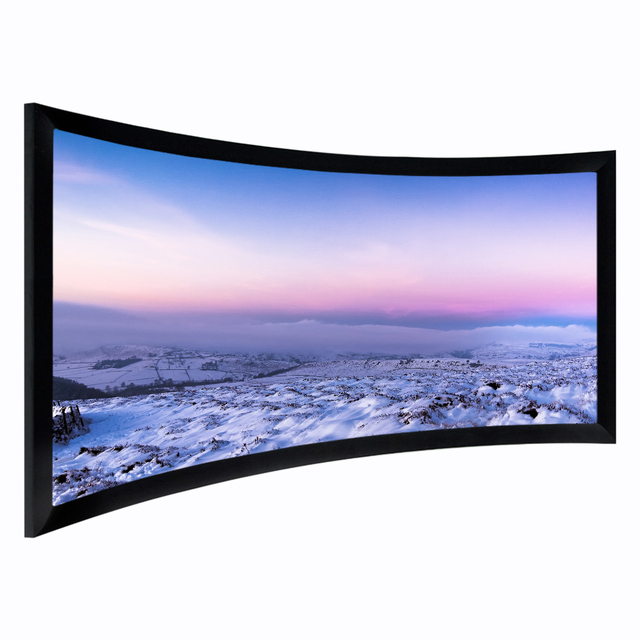
Future 150 Inch Curved Fixed Frame Projector Screen Home Theater Outdoor Aluminum Housing Matte White Led Projector Screens
 Shenzhen Future Information Technology Co., Ltd.verified🇨🇳CN18 yrs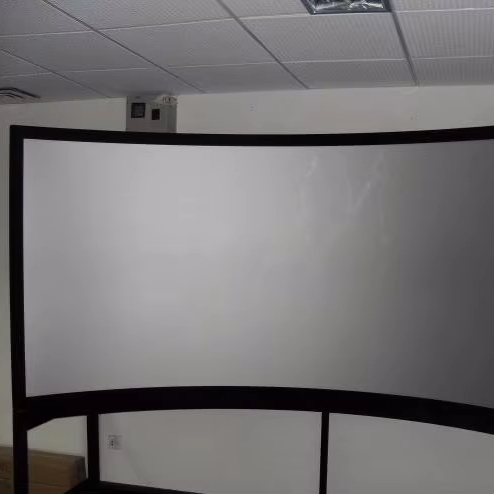
120/150/200 Inch 16:9 Telon Curved Framel Projector Screen for Home Theater & Cinema
 Huizhou Telon Audio And Visual Equipment Co., Ltd.verified🇨🇳CN10 yrs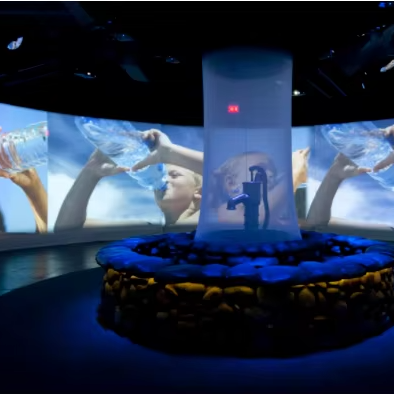
Interactive Projection 360 Degree Curved Projection Screen Curved Projector Screen 3D Projection Screen Exhibition Booth
 Shanghai Easi Computer Technology Corporationverified🇨🇳CN16 yrs
Deep Dive · Full Report
Full Market Report
1 document · Live-fetched from source
Related Searches
Explore more sourcing topics & related categories
Sources & References
27 sources cited · Verified industry data & reports
4K Projection Screen Market Size | Forecast 2026 To 2035
www.marketreportsworld.com
Market Segmentation: Fixed frame 53%, retractable 39%, others 8%; household use 55%, commercial use 45%. Recent Development: ALR upgrades +37%, motorized integration +26%, screen material durability improvement +21%, ultra-short-throw compatibility +16%. The 4K Projection Screen Market Trends indicate strong momentum toward screen technologies optimized for ultra-short-throw (UST) projectors, with 46% of new screens certified for UST compatibility. Commercial adoption of fixed frame screens remains strong, contributing 52% of institutional demand, particularly in education and corporate sectors. Screen material advancements improved color uniformity by 26%, supporting HDR-optimized content. Screen sizes above 135 inches grew 31% in installations, reflecting demand for immersive viewing. Direct-to-consumer online channels now represent 34% of unit sales, compared to 21% previously. These measurable trends reinforce the 4K Projection Screen Market Outlook, 4K Projection Screen Market Insights, and 4K Projection Screen Industry Analysis for B2B buyers. Smart-home integration development receives 28% of innovation budgets, supporting voice and app-controlled operation. UST-compatible screen investments grew 44%, aligned with projector adoption trends. Lightweight aluminum frame development reduced installation labor time by 26%. Commercial procurement programs influence 39% of bulk investment decisions. The USA 4K Projection Screen Market contributes approximately 32% of global unit demand, with annual installations exceeding 1.9 million screens. Household usage represents 54% of domestic demand, while commercial applications account for 46%. Fixed frame screens dominate 57% of installations, particularly in home theaters above 120-inch size formats.
Global Projector Screen Market Size, Trend, Analysis, Outlook.
www.sphericalinsights.com
Based on the type, the global projector screen market is divided into ceiling recessed, wall & ceiling, portable, floor rising, fixed frame, and others. Among these, the portable segment is expected to grow at the fastest CAGR in the global projector screen market during the forecast period. Projection screens can be permanently installed, as in a painted-on-the-wall movie theater, or moveable, as in a conference room or other non-dedicated display area, using floor-rising or tripod variants. These screens are commonly used in company offices for meetings and conferences. Projection screens are available in two configurations: floor-rising or tripod versions for transportation in a meeting room or other non-dedicated display area, and permanently installed in a movie theater or painted on the wall. Typically, corporate organizations use large screens for conferences and meetings. The entertainment sector is evolving with technology, as people migrate from watching movies, events, shows, and other media on small displays to larger ones. Large portable projector screens and projectors are now accessible at affordable prices, increasing the popularity of portable devices.
Projector Screen Market to Surpass US$ 308.6 Billion by 2026
www.coherentmarketinsights.com
The global projector screen market was valued at US$ 86.4 billion in 2017, and is projected to reach US$ 308.6 billion by 2026, exhibiting a CAGR of 15.3% over the forecast period, according to Global Projector Screen Market Report, by Projector Screen Type (Wall/Ceiling Screens, Portable Screens, Fixed Frame Screens, and Other Screens), by Application (Professional Use and Personal Use), by Region (North America, Europe, Asia Pacific, Latin America, Middle East, and Africa). A projector screen is installed on a surface or a support stand for displaying a digital image or video. Use of flat or curved screen depends on optics used to project the image. Key Trends and Analysis of the Global Projector Screen Market: Ultra-short throw (UST) projectors are placed at the nearest distance from the screen according to their range, which is nearly around 8-50 cm. At this range, these projectors offer around 80 inches of wide display. This eliminates the need to adjust the projector or the screen according to the distance. Moreover, short throw projectors have a longer range than ultra-short throw projectors. Short throw projectors are highly preferred by corporate firms for use in business meetings, training, seminars, and other purposes. To know the latest trends and insights related to Projector Screen Market, click the link below: This is majorly due to high presence of SMEs and large-sized enterprises and educational institutes and high disposable income of people in the region. Moreover, introduction and increasing application of UST projectors and ST projectors is also contributing to growth of the projector screen market in this region.
Projector Screen Market Report 2026
www.thebusinessresearchcompany.com
Retail And Wholesale Services Social Services Transport Transport Services Utilities Veterinary Healthcare Filter Reports by Trends
Projector Screen Market Growth & Share Outlook 2034
www.globalgrowthinsights.com
As per Global Growth Insights, the Global Projector Screen Market was valued at USD 103.8 Billion in 2024, projected to reach USD 121.12 Billion in 2025, and expected to rise to USD 141.22 Billion in 2026, ultimately expanding to USD 485.87 Billion by 2034. This surge represents a strong compound annual growth rate (CAGR) of 16.69% during the forecast period from 2025 to 2034. The market’s rapid growth is driven by increasing adoption across educational institutions, corporate environments, home entertainment setups, and large-scale event venues. Fixed frame and electric screens are witnessing the fastest uptake, together contributing over 54% of total market growth, supported by their superior display quality, ease of installation, and advanced motorized control features. Market Size: Valued at USD 103.8 Billion in 2024, projected to touch USD 121.12 Billion in 2025 to USD 485.87 Billion by 2034 at a CAGR of 16.69%. Growth Drivers: Over 38% of demand driven by digital learning, 34% increase in smart office setups, and 28% rise in home theaters. Trends: Fixed frame usage up 32%, portable screens rise 22%, smart home integration grows 25%, and ALR tech adoption at 33%. With a surge in hybrid learning models and remote working trends, the use of projection systems has grown by over 28%, enhancing the overall demand for projector screens globally. Fixed frame projector screens account for over 32% of the market demand, primarily due to their popularity in home theatre installations and professional settings. The projector screen market report provides a detailed and comprehensive analysis of market trends, segmentation, regional insights, key players, and innovation strategies across the global landscape. It covers in-depth data segmented by type—such as electric, fixed frame, manual, portable—and by application, including commercial and home use.
Projector Screen Market Size, Share & YoY Growth Rate, 2032
www.coherentmarketinsights.com
While basic pull-down screens have been used in homes for many years, the demand for larger, motorized, and frameless projector screens that can retract into the ceiling or wall when not in use has risen sharply. These new generation screens with wider aspect ratios and specialized surfaces for ambient light rejection are ideal for modern living rooms. They have become a prominent part of home theatre designs conceived by interior designers. The trend is more prominent in developed nations where disposable incomes are higher and more homes are being built with dedicated home theatre spaces. The projector screen market is expected to witness a positive trend during the forecast period. Technological advancements in projector screens focusing on resolution, brightness, and portability are enhancing end-user experience for various applications such as classrooms, corporate, and home entertainment. Major market players are investing in R&D to develop advanced projection screens such as the role and drape screen, fixed screens, and portable screens. Custom fabricated projector screens that offer optimal viewing experience and protection to the projector from external glare and flutters can cost thousands of dollars. Even basic pull-down screens from well-known brands demand an expenditure of several hundred dollars. The high setup costs encompass not just the screen itself but also accessories needed for proper installation. A fixed frame screen needs to be securely mounted on ceiling or wall with appropriate mounting brackets and hardware. In terms of projector screen type, portable screens is expected to contribute 40.7% share of the market in 2025 owing to their portability and versatility. Portable screens offer flexibility that fixed frames and wall/ceiling mounted screens cannot match. Their lightweight and compact nature allows users to set them up virtually anywhere as needed.