Data Storage Wrist Watch

Overview
Product sourcing insights & recommendations


The market for "data storage wrist watches" is undergoing a significant shift from simple USB-style storage to high-capacity, "phone-free" smart wearables. By 2026, the global smartwatch market is projected to reach $40.61 billion, driven by the demand for edge computing where data is processed locally rather than in the cloud CoherentmarketinsightsPhisonblog.
Key Market Trends & Insights
* High-Capacity Local Storage: Consumers are increasingly demanding devices that function independently of smartphones. This has led to the rise of smartwatches with 4GB to 128GB ROM, capable of storing local maps, extensive music libraries, and complex third-party applications PhisonblogSahha.
* Edge Computing & Predictive Health: New trends indicate a shift toward local data analysis. By 2026, roughly 40% of wearables are expected to feature AI-enabled functions that analyze long-term stored health data locally to provide real-time predictive alerts PhisonblogSahha.
* The "USB Watch" Niche: While smartwatches dominate, a steady niche exists for simple USB wristband drives (2.0/3.0 interface). These are popular for specialized professional data transfer or as secure corporate gifts with capacities ranging from 64MB to 128GB AlibabaAlibaba.
* Durability & Efficiency: Modern storage solutions (eMMC/UFS) are being optimized for ultra-low power consumption and high environmental durability to support the active lifestyles of users while maintaining battery life Phisonblog.
Representative Product Offerings
* High-Memory Android Watches: Devices like the 2.88-inch big screen smartwatch offer 128GB ROM, effectively acting as a wrist-mounted smartphone/hard drive .
* Sports-Centric Offline Storage: Mid-range models (4GB–16GB) focus on offline GPS maps and local music playback, catering to outdoor athletes who want to leave their phones behind .
* Professional USB Flash Watches: Specialized devices combining a digital watch with a one-push audio recording or a concealed USB stick for secure data storage .
Detailed product lists covering smartwatches with large memory, offline GPS/music capabilities, and USB wristband drives have been prepared for your review.
Based on the "data storage" trend, would you like to:
Data Storage Wrist Watch With Large Memory
Products · 3 lists
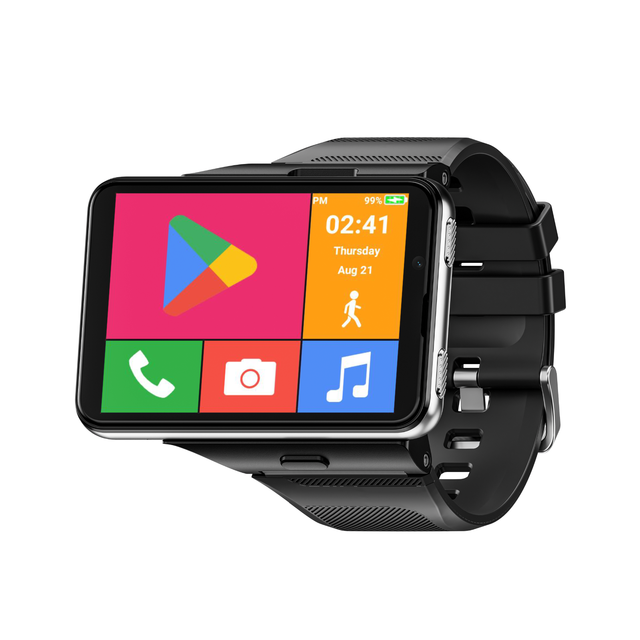
HD 2.88 Inch Big Screen Smart Watch MTK6765 6GB RAM 128GB ROM WiFi GPS Phone Call Android11 4G Smartwatch Dual Camera Appllp Max
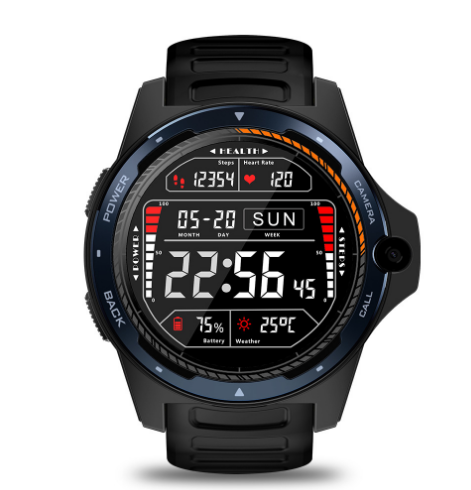
Thor 5 Men's Smart Watch 1.39in Dual Hybrid System AOMLED Display 2GB + 16GB 8.0MP Front Camera 4G Sport
Thor 5 Men's Smart Watch 1.39in Dual Hybrid System AOMLED Display 2GB + 16GB 8.0MP Front Camera 4G Sport
Related Searches
Explore more sourcing topics & related categories
Sources & References
25 sources cited · Verified industry data & reports
Storage Trends for 2026
Infinidat
2026 is projected to be a phenomenal year for enterprise storage. New alignments, convergence, and unbridled growth are changing the way to ...
Watches Market Size, Share & Trends | Industry Report, 2033
Grand View Research
The global watches market size was valued at USD 69.1 billion in 2025 and is projected to grow from USD 71.9 billion in 2026 to USD 96.8 billion by 2033, at a ...

Smartwatches Market Size, Trends and Forecast, 2026-2033
Coherent Market Insights
Smartwatches Market size is expected to reach USD 75.20 Bn by 2033, from USD 40.61 Bn in 2026, exhibiting a CAGR of 9.2% during the forecast ...

The State of Wearable Health Data in 2026: Market Trends ...
Sahha
The wearable fitness tracker market is projected at $70.3 billion in 2026, up from $60.0 billion in 2025 — a 17.1% year-over-year growth rate [1] ...

Watch Market Size, Share, Growth, Opportunities, Analysis ...
Straits Research
The watch market size is projected to grow from USD 130.37 Billion in 2026 to USD 218.91 Billion by 2034, at a CAGR of 6.7% during the ...

Smartwatch Market Size, Trends & Leading Players, 2033
Persistence Market Research
Smartwatch Market to grow from US$48.4 Bn in 2026 to US$99.2 Bn by 2033, at a 10.8% CAGR, driven by rising adoption of health tracking, connectivity, ...