Decoding Rf Receiver Board

Overview
Product sourcing insights & recommendations
I have conducted a comprehensive analysis of the decoding RF receiver board market, identifying key product trends and consumer insights for 2026.
The market is currently pivoting toward high-frequency mmWave bands (24–40 GHz) and System-in-Package (SiP) integration to support 5G infrastructure and automotive radar applications. My research highlights a projected market value of $49.93 Billion by 2026, with significant growth in Non-Terrestrial Networks (NTN) for direct satellite-to-smartphone connectivity.
Key consumer pain points include complex setup procedures (reported by 15.4% of users) and interference sensitivity, which can be mitigated by sourcing shielded modules such as the RXB6 series.
Detailed findings, consumer sentiment analysis, and a curated list of high-performing 433MHz/315MHz receiver boards are available in the reports and files below.
Based on these insights, you can continue with:
Decoding Rf Receiver Board 433mhz 315mhz
Products · 2 lists

Taidacent 315mhz 433mhz ASK Superheterodyne RF Receiver Module PT2272-L4 Super Regenerative Receiver Board
 Shenzhen Taida Century Technology Co., Ltd.🇨🇳CN14 yrs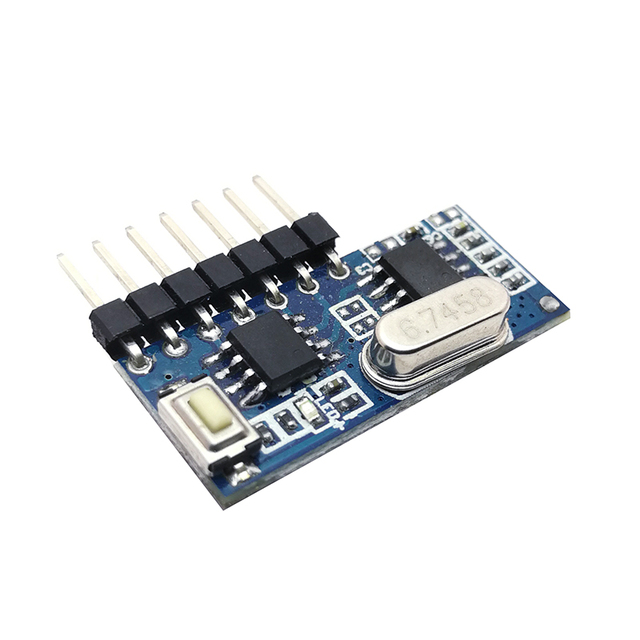
Wifi receiver 433mhz 433RF receiving module 4-channel high-level signal learning decoding receiving circuit board

CY20 Strong Anti Interference 315-433.92MHz Wireless RF Receiver Module
 Shenzhen CY Wireless Technology Limited🇨🇳CN11 yrs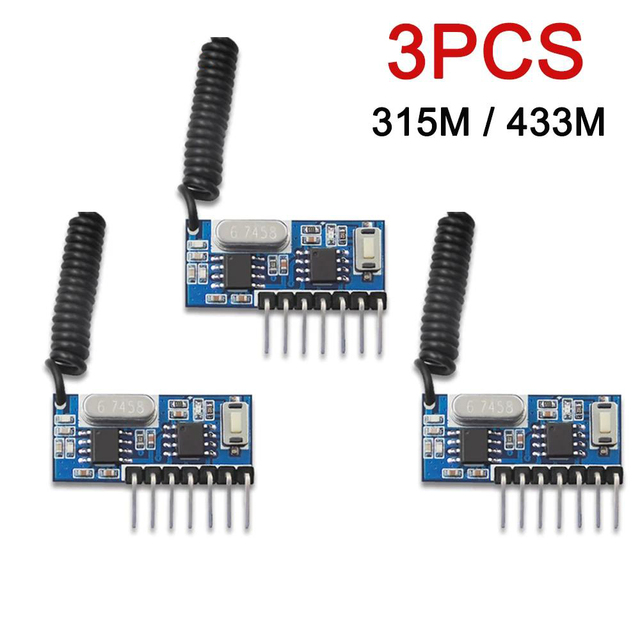
3PCS 433Mhz 315MMhz Wireless RF Receiver Module 4-channel CMOS High Level Receiver Remote Control Module Smart Receiver Board
 Shenzhen Kwm Electronics Co., Ltd.verified🇨🇳CN6 yrs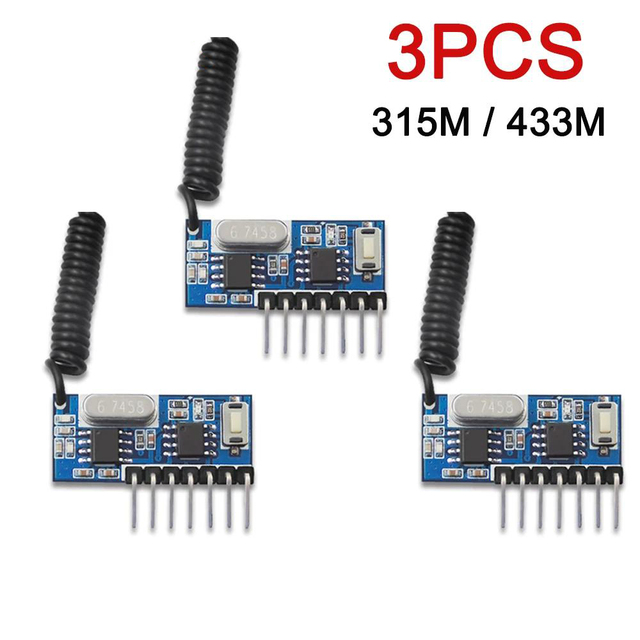
3PCS 433Mhz 315MMhz Wireless RF Receiver Module 4-channel CMOS High Level Receiver Remote Control Module Smart Receiver Board
 Beijing Mengxing Electronic Technology Co., Ltd.verified🇨🇳CN7 yrs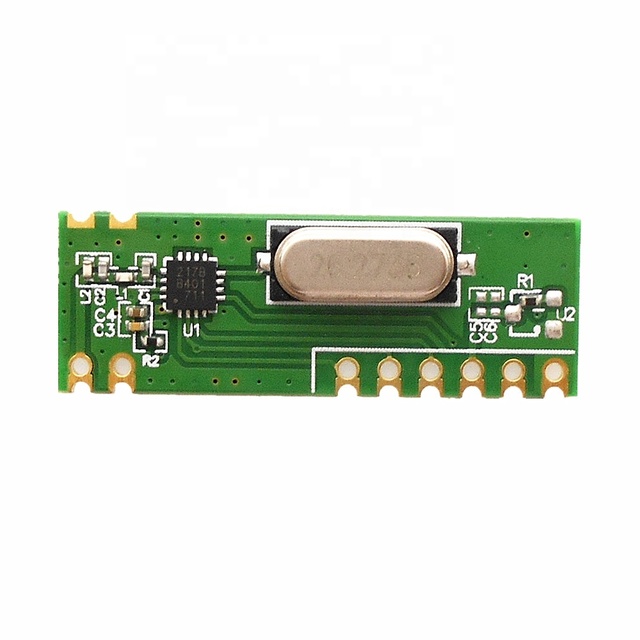
RFM217B Sub-1GHz receiving module 315/433/868/915Mhz 1G wireless receiving module RF transceiver module
 Shenzhen Duoweisi Tech Co., Ltd.🇨🇳CN7 yrs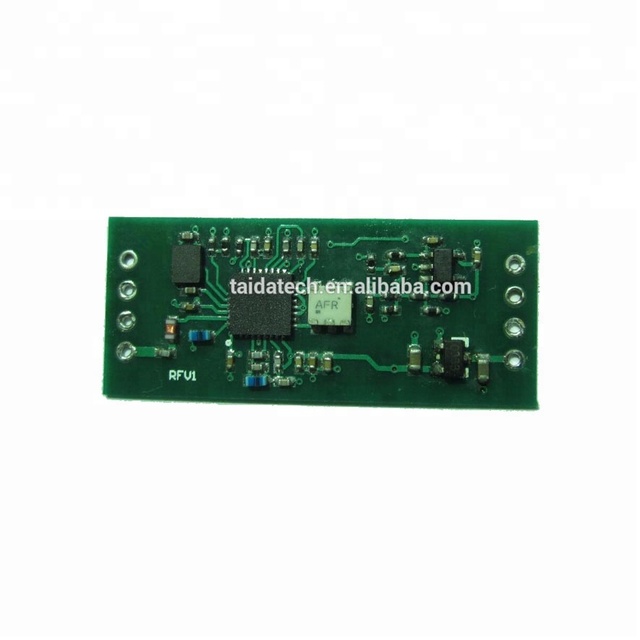
ASK MAX1473 433Mhz 315Mhz RF wireless Receiver Module
 Shenzhen Taida Century Technology Co., Ltd.🇨🇳CN10 yrs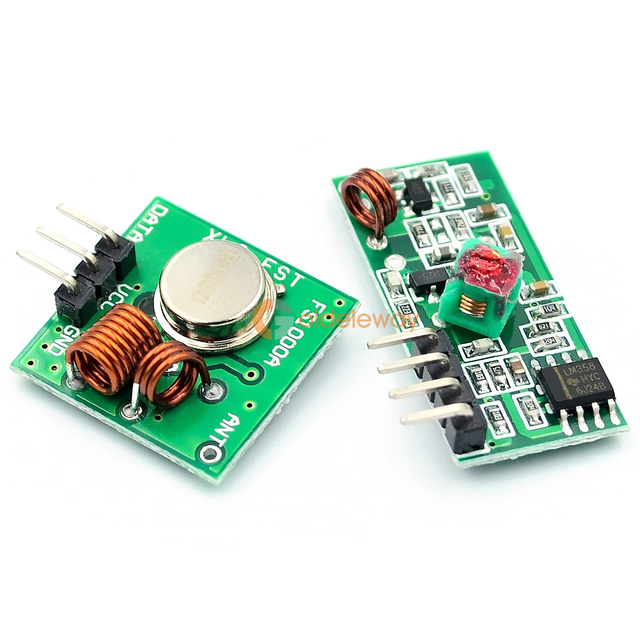
433Mhz 315MHZ RF Wireless Transmitter Module Receiver Kit DC 5V 315 433 Mhz Wireless Module Product Category ICs
 Shenzhen Goldeleway Electronics Technology Co., Ltd.verified🇨🇳CN17 yrs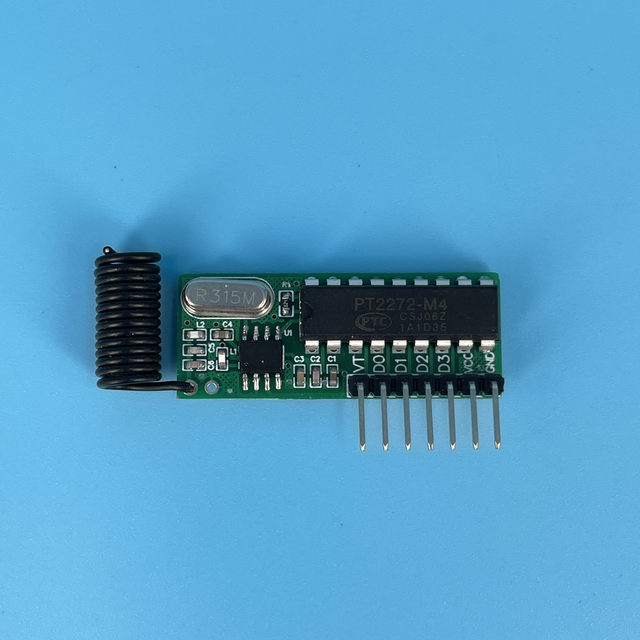
Wireless IR Remote Control Receiver Module Superheterodyne 315MHz 433MHz RX012
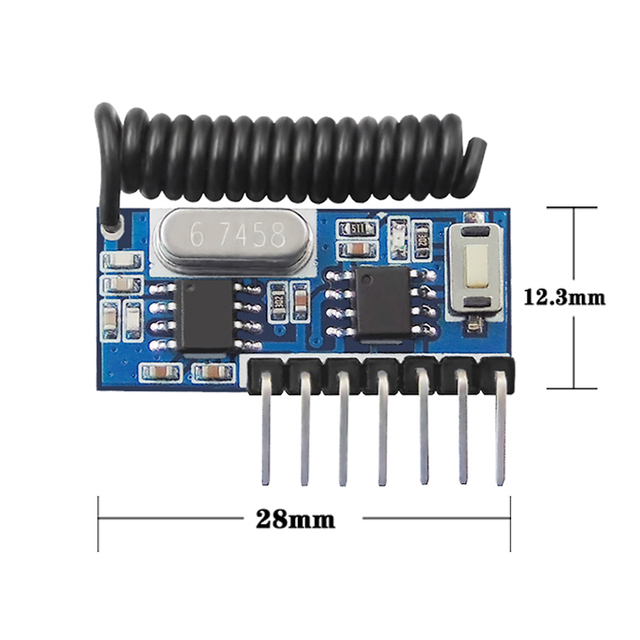
HRJ-9 DC 3.3-5.5v 315/433mhz Wireless RF Receiver Module 4 Channel with Decode
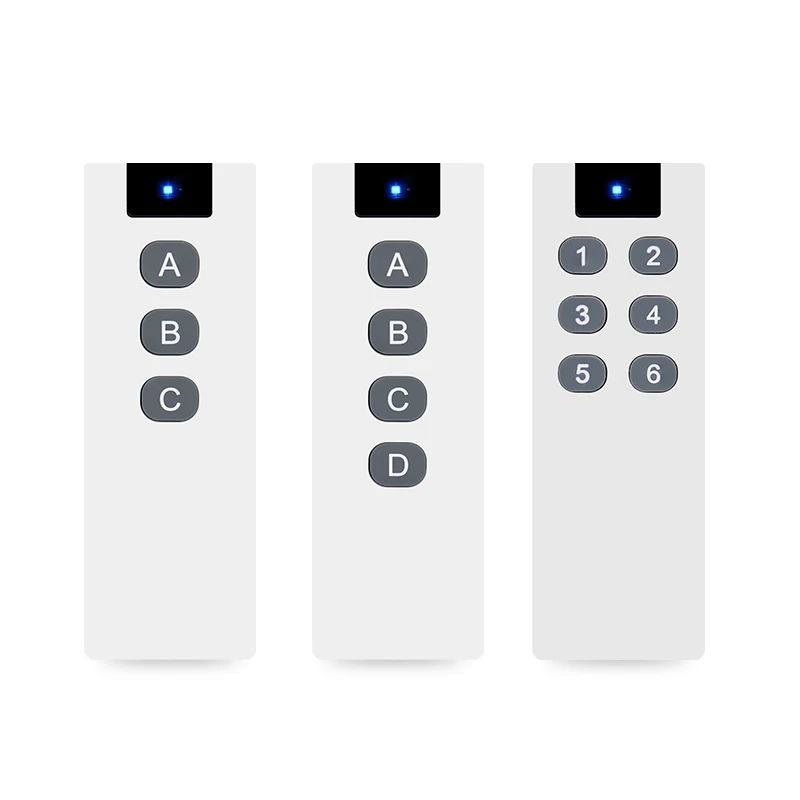 Huazhong IOT (Shenzhen) Group Co., Ltd.verified🇨🇳CN6 yrs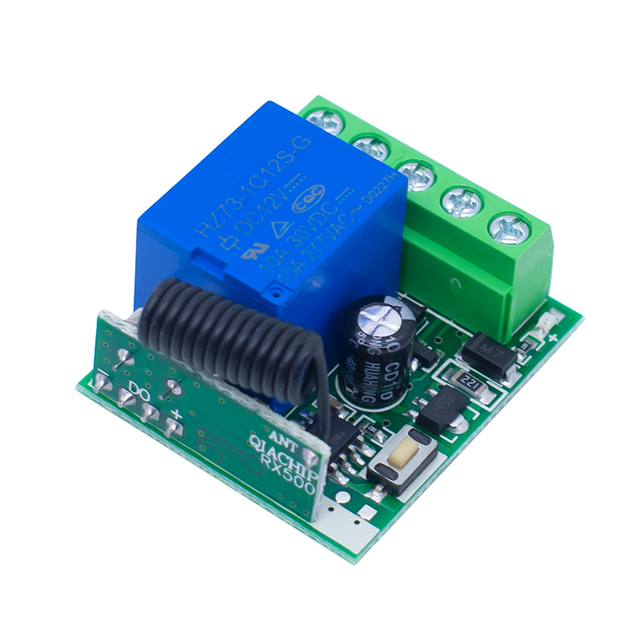
RF Transmitter 433 Mhz Remote Controls with Wireless Remote Control Switch DC 12V 1CH relay Receiver Module
 Shenzhen Inventor Electronic Technology Co., Ltd.🇨🇳CN6 yrs
Wireless IR Remote Control Receiver Module Superheterodyne 315MHz 433MHz RX012
HRJ-9 DC 3.3-5.5v 315/433mhz Wireless RF Receiver Module 4 Channel with Decode
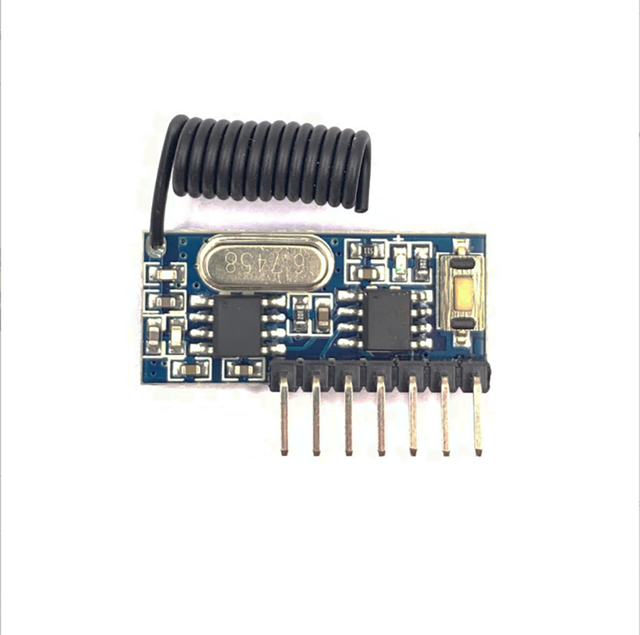
Stock new RX480E-4 DC 3.3-5V Circuit Board 433Mhz Wireless Receiving Module RX480E with Decoding
RF Transmitter 433 Mhz Remote Controls with Wireless Remote Control Switch DC 12V 1CH relay Receiver Module
Deep Dive · Full Report
Full Market Report
1 document · Live-fetched from source
Related Searches
Explore more sourcing topics & related categories
Sources & References
26 sources cited · Verified industry data & reports
RF Components Market - Radio Frequency - Companies & Forecast
www.mordorintelligence.com
Note: Market size and forecast figures in this report are generated using Mordor Intelligence’s proprietary estimation framework, updated with the latest available data and insights as of January 2026. ... Operators activated 1.2 million new 5G macro and small cells in 2025, and China accounted for roughly 60% of those sites.[1]GSMA Intelligence, “Global 5G Base Station Deployments and Open RAN Adoption,” gsmaintelligence.com Each massive-MIMO radio now integrates 64-256 transmit-receive chains, multiplying the number of power amplifiers, low-noise amplifiers, and antenna switches eight- to sixteen-fold compared with 4G deployments. The RF components market size is projected to be USD 44.34 billion in 2025, USD 49.93 billion in 2026, and reach USD 90.42 billion by 2031, growing at a CAGR of 12.61% from 2026 to 2031. Strong momentum stems from escalating 5G infrastructure rollouts, higher RF content per smartphone, and the diffusion of gallium-nitride power devices into base stations and automotive radar. August 2025: Murata committed USD 300 million to expand bulk-acoustic-wave filter capacity in Japan, boosting output 20% by mid-2026. July 2025: NXP released a 77-81 GHz automotive radar transceiver integrating 4 TX and 16 RX channels, cutting BOM cost 25%. ... 6.4 Company Profiles (includes Global Level Overview, Market Level Overview, Core Segments, Financials as available, Strategic Information, Market Rank / Share, Products and Services, Recent Developments) ... The RF Components Market Report is Segmented by Component Type (Power Amplifiers, RF Filters, Antenna Switches, Low-Noise Amplifi Power amplifiers represented roughly 28% of 2025 revenue and are migrating from gallium-arsenide to gallium-nitride die in base stations to push efficiencies past 50%, a switch that lifts average selling prices by 40%-60%. Antenna switches, about 18% of the total, are being absorbed into single-package front-end modules, compressing discrete volumes even as board density rises. Low-noise amplifiers held near 12% but are inching upward because 5G diversity chains demand extra receive paths. The RF components market is at an inflection point where handset makers would rather pay a premium for software-controlled tuners that collapse signal paths than keep stacking fixed filters.
RF Front End Module Market Outlook 2026-2034
www.intelmarketresearch.com
Consumer devices such as smartphones, wearables, and augmented‑reality headsets are becoming more compact, prompting a shift toward highly integrated RF Front End Module Market components. The trend toward system‑in‑package (SiP) architectures reduces board space while improving signal integrity, enabling manufacturers to deliver smaller, lighter, and more reliable products. By integrating low‑noise amplifiers, power amplifiers, and switch matrices for 2 G, 3 G, 4 G, 5 G, and emerging sub‑6 GHz bands, suppliers reduce bill of materials and board space while improving overall RF performance. This shift also simplifies system design, enabling faster time‑to‑market for device makers. Other Trends Another major trend shaping the RF Front End Module Market is the move toward monolithic microwave integrated circuits (MMIC) that embed the entire front‑end chain on a single die. This approach reduces interconnect loss, improves reliability, and aligns with the industry’s push for compact modules in handheld devices. Consumer Electronics The consumer electronics sector in North America is a major consumer of RF Front End Modules. The ongoing demand for smartphones with advanced connectivity features, including 5G capabilities, fuels the growth of this segment. Improvements in power efficiency and miniaturization are key trends shaping product development.
RF Receiver Market Research Report 2033
dataintelo.com
Get demo access to our dashboard and explore real-time market data, trends, and analysis designed to drive smarter decisions. ... This analysis is based on primary and secondary research conducted through Q4 2025, with data verified as of May 2026. Asia Pacific dominates the global RF Receiver market, commanding $4.77 billion in 38.7% of worldwide revenue in 2025, with extraordinary growth projected through 2033 driven by semiconductor manufacturing concentration in Taiwan, South Korea, and China. The region's consumer electronics ecosystem, centered in Shenzhen and Guangzhou manufacturing hubs, generates immense demand for RF Receivers integrated into smartphones, smartwatches, wireless earbuds, and portable IoT sensors. Manufacturing partners including Murata Manufacturing Co. Ltd., STMicroelectronics N.V., and Renesas Electronics Corporation have established regional design and production centers, creating localized supply chains that reduce component costs and accelerate product development cycles. By 2026, Asia Pacific's market share is anticipated to increase as automotive OEMs scale ADAS adoption across Chinese, Japanese, and South Korean vehicle platforms, requiring high-performance millimeter-wave RF Receivers for collision avoidance and autonomous navigation systems. Automotive electrification and autonomous driving system deployment in 35+ million vehicles annually by 2026 necessitate integration of multiple RF Receivers for millimeter-wave radar perception, vehicle-to-infrastructure (V2I) communication, and satellite positioning backup systems. Internet of Things devices reaching 29.4 billion connected units globally by 2026 require integrated RF Receiver solutions for wireless connectivity, with battery-powered applications demanding ultra-low power consumption receiver architectures consuming less than 50 milliwatts in active receive mode.
RF Chip Market Trends | Report [2035]
www.marketreportsworld.com
Texas Instruments,ROHM,Infineon,Murata,Ams AG,NXP,LEGIC Identsystems,Impinj,HOPERF,Atmel,STMicroelectronics,RF Solutions · In 2026, the RF Chip market value stood at USD 1248.85 Million. The RF Chip Market is segmented by type and application, with RF amplifier chips accounting for approximately 34% of usage due to their role in signal strengthening, while receiver chips contribute around 29% in communication systems. RF Receiver Chip: RF receiver chips are used in over 5 billion devices annually, enabling signal reception in smartphones, televisions, and IoT systems. These chips operate across frequencies ranging from 700 MHz to 6 GHz, with advanced models supporting millimeter-wave frequencies above 24 GHz. Others: Other RF chip types include transceivers and integrated RF modules, accounting for over 2 billion units annually. These chips combine receiver and transmitter functionalities, reducing component count by nearly 30%. Approximately 55% of IoT devices utilize integrated RF modules for compact design and energy efficiency.
RF Receiver Global Market Size, Competitors & Forecast
www.researchandmarkets.com
Copyright © 2002-2026 Research and Markets. The RF Receiver market within the context of RFID is a highly competitive space, with a wide range of products and services available. RFID receivers are used to capture and decode radio frequency signals from RFID tags, allowing for the identification and tracking of objects. MEAThe key countries for each region are also included, such as the United States, China, Japan, India, Korea, ASEAN, Germany, France, UK, Italy, Spain, CIS, and Brazil etc. For the competitor segment, the report includes global key players of RF Receiver as well as some smaller players. This report describes the global market size of RF Receiver from 2019 to 2023 and its CAGR from 2019 to 2023, and also forecasts its market size to the end of 2029 and its CAGR from 2024 to 2029.
Europe RF Receiver Market Analysis Report 2026-2033
www.linkedin.com