Designing Data Intensive Applications

Overview
Product sourcing insights & recommendations


The phrase "Designing Data-Intensive Applications" (DDIA) has evolved from a popular technical book title into a foundational architectural paradigm. As of 2026, the field is undergoing a massive shift driven by AI-native architectures, cloud-native maturity, and a move toward decentralized data mesh patterns ThenewstackDev.
1. The "Bible" Update (DDIA 2nd Edition)
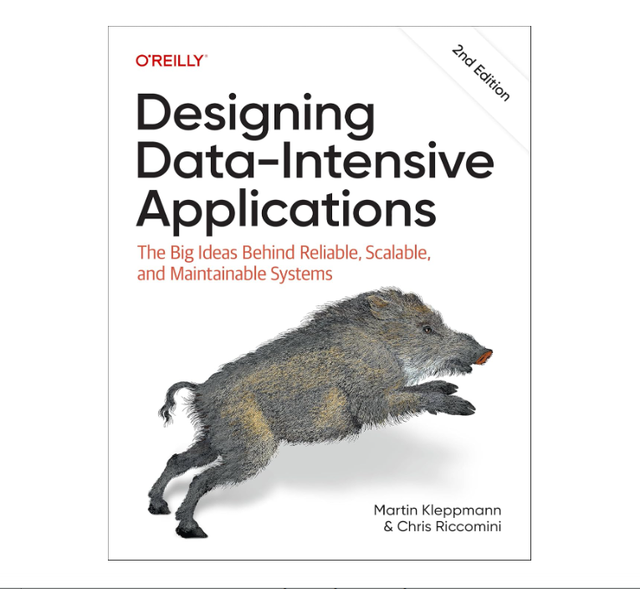
The industry standard text by Martin Kleppmann and Chris Riccomini is receiving a significant 2nd edition release in 2026 KleppmannDokumen. The core updates reflect a decade of cloud evolution:
* Object Storage First: S3 and other object stores are now treated as primary storage building blocks rather than just backup targets, enabling a deeper decoupling of storage and compute ThenewstackScylladb.
* AI & Vector Search: Coverage now includes vector databases and the unique requirements of AI-driven workloads, such as multimodal data management Thenewstack.
* Separation of Planes: A formal split between Control, Data, and Compute planes has become the architectural baseline for modern SaaS Scylladb.
2. Market & Architectural Trends for 2026
Data architecture in 2026 is defined by Applied Complexity and FinOps Dev:
* AI-Native Systems: Systems are now designed "AI-first," integrating Agentic AI directly into the request path and utilizing Retrieval-Augmented Generation (RAG) as core infrastructure rather than an external bolt-on DevDataforest.
* Data Mesh Maturity: Monolithic data lakes have been replaced by Data Mesh architectures, where domain teams own their data as products with formal "Data Contracts" to ensure quality DevModerndata101.
* Edge Convergence: Approximately 75% of enterprise data is now processed at the edge, requiring serverless functions integrated directly into CDNs for sub-100ms response times Dev.
* The Cost Factor (FinOps): In 2026, scalability is primarily a cost problem. Mastering FinOps is essential to prevent AI compute expenses from making applications financially non-viable Dev.
3. Product Insights
The physical book remains a "bible" for software engineers, with both original and 2nd-edition versions available for sourcing.
Designing Data Intensive Applications Book Martin Kleppmann 2nd Edition
Products · 2 lists
Designing Data-Intensive Applications Big Ideas Reliable Maintainable Systems-Fiction Paperback Lamination Printing 120 Sheets
 IMPEXO GLOBAL LLC🇺🇸US1 yr
Expert Designing Data-Intensive Applications by Martin Kleppmann for Big Data and Distributed Systems Available at Export price
 NITNIKZ FOODS LLP🇮🇳IN2 yrs
Related Searches
Explore more sourcing topics & related categories
Sources & References
28 sources cited · Verified industry data & reports
Why the "bible" of data systems is getting a massive rewrite ...
The New Stack
The data systems "bible" gets a 2026 rewrite. Martin Kleppmann and Chris Riccomini discuss updates for AI and cloud-native architectures.
Designing Data Intensive Applications 2nd edition: 12 ...
Reddit · r/ExperiencedDevs
The book is expected in Feb 2026, ... this edition is rather incremental. some explanations were improved and simplified, not-so-many trends ...

Designing Data-Intensive Applications
Apple
You'll be guided through the maze of decisions and trade-offs involved in building a modern data system, learn how to choose the right tools for your needs, and ...

Designing Data-Intensive Applications: The Big Ideas Be…
Goodreads
With this book, software engineers and architects will learn how to apply those ideas in practice, and how to make full use of data in modern applications.

Designing Data-Intensive Applications, 2nd Edition [Book]
O'Reilly Media
2nd Edition by Martin. February 2026 Intermediate to advanced 672 pages … integrating new technologies and emerging trends.

Designing Data-intensive Applications with Martin ...
The Pragmatic Engineer
We talk about the tradeoffs behind modern infrastructure, how the cloud has changed what it means to scale, and the thinking behind Designing ...