Device For Smart Tv

Overview
Product sourcing insights & recommendations
The smart TV device market is experiencing a robust transition toward AI-native ecosystems and high-performance peripherals, with a projected global market size of $284.19 billion by 2026. FortunebusinessinsightsFuturemarketinsights A major trend is the "smartification" of older TVs, where consumers purchase external streaming boxes and sticks to bypass sluggish built-in interfaces. BusinessinsiderAccio
Key insights include:
- Ecosystem Dominance: Consumers are increasingly loyal to existing smart home families (Apple, Google, Amazon), with Android TV holding a 35.8% market share. MordorintelligenceCoherentmarketinsights
- Premium Features: High demand for 4K/8K resolution, Dolby Atmos, and Wi-Fi 6 connectivity is driving the audio and streaming segments. WhathifiAccio
- Consumer Pain Points: Ad clutter and sluggish performance on built-in software present significant opportunities for external "clean UI" devices. PcworldBusinessinsider
I have compiled a comprehensive market report including trend visualizations, consumer pain point analysis, and top B2B product recommendations. Please refer to the file below for the full synthesis.
Here is the detailed market trend report for smart TV devices. You can explore further with these options:
Wireless Soundbar For Smart Tv Dolby Atmos
Products · 3 lists
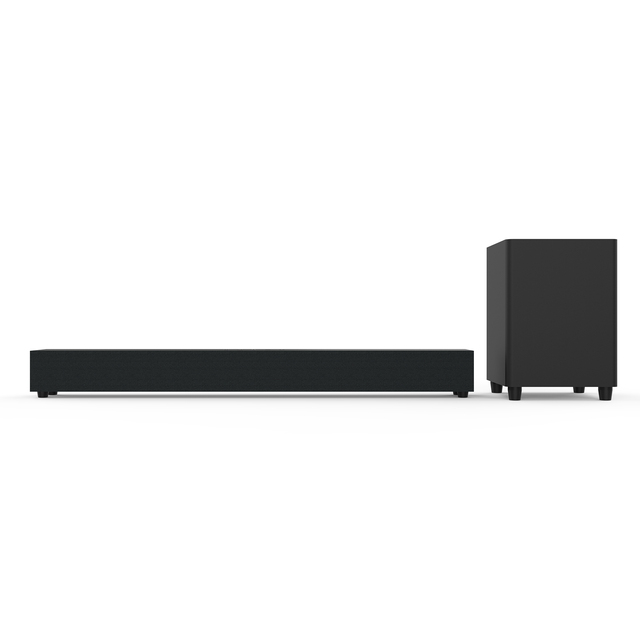
BS-65 TV Sound Bar with Subwoofer Box Soundbar Wireless Speaker Home Theater Surround Sound System Aux/USB/Optical/Coaxial/RCA
 Shenzhen Haisaite Technology Co., Ltd.verified🇨🇳CN7 yrs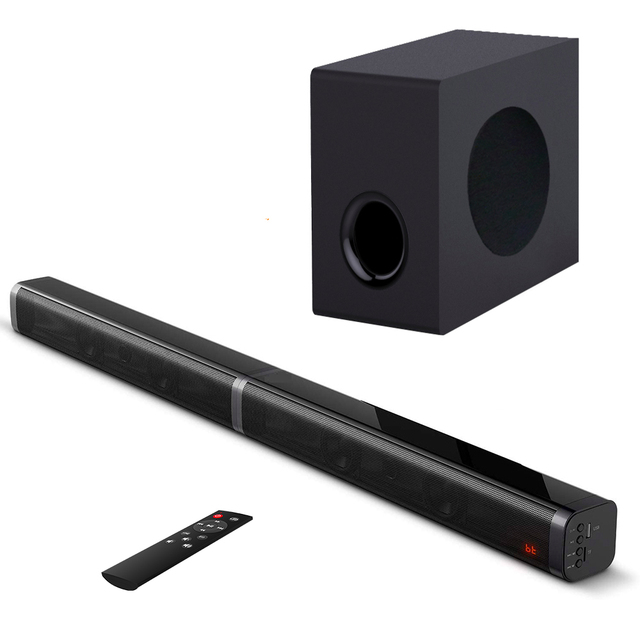
Home Theater 5.1 TV Soundbar Separable BT Wireless Speakers Audio Echo Wall Sound Bars With 3D Surround Subwoofer Boost Bass Box
 Huasheng (shenzhen) Technology Limited🇨🇳CN8 yrs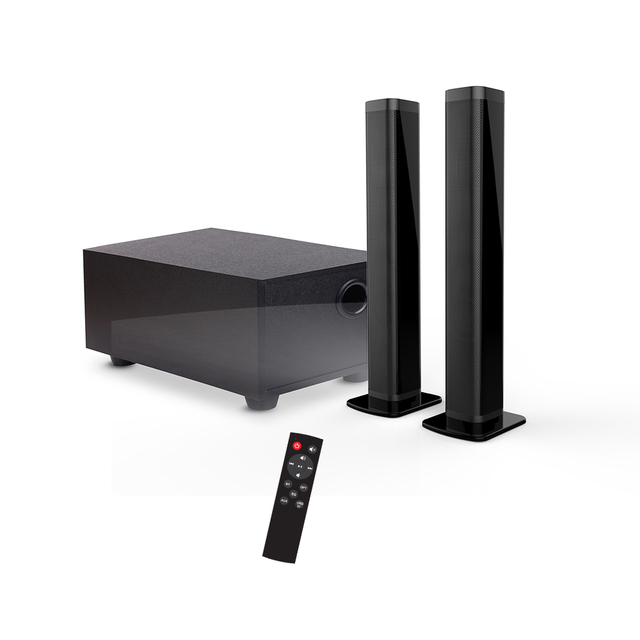
Home Theater 5.1 TV Soundbar Separable BT Wireless Speakers Audio Echo Wall Sound Bars With 3D Surround Subwoofer Boost Bass Box
Deep Dive · Full Report
Full Market Report
1 document · Live-fetched from source
Related Searches
Explore more sourcing topics & related categories
Sources & References
28 sources cited · Verified industry data & reports
Smart Tv Market Trends, Share and Opportunities 2026-2033
www.coherentmarketinsights.com
Market Size Estimation – Historical (2020–2024), Current (2026), and Forecast (2026-2033) Regional Breakdown – North America, Europe, Asia Pacific, Middle East, Africa, Latin America and across 35 countries · Competitive Landscape – Company market share analysis, product benchmarking, and detailed Company Profiles for more than 25+ players. Customer Intelligence – Customers profiles of more than 50 Customers · Segmental Analysis – Market Size, Y-o-Y growth rate, Trends, and use-cases across more than 5 segments, and 25 sub-segments. On the basis of Operating System, Android TV division is likely to hold around 35.8% shares in 2026. North America will hold dominating position with 42.4% of market shares during the forecast period. Smart TVs provide advanced features like internet connectivity, access to streaming apps and content, and voice assistants. Rising preference for connected devices and increasing internet penetration can boost demand for smart TVs globally. Japan is likely to hold highest shares in the global smart TV market in 2026. This is owing to the strong presence of leading electronics manufacturers such as Sony, Panasonic, and Sharp; continuous advancements in display technologies like OLED and 8K; high consumer demand for premium home entertainment systems; and the country’s rapid adoption of IoT and AI-integrated devices. The CAGR of the Smart Tv Market is projected to be 11.4% from 2026 to 2033. Increasing demand for converged media and entertainment and growing penetration of high-speed internet are the major factors driving the growth of global smart TV market. High initial investment and cost of upgrading and interoperability issues between devices and platforms are the major factors hampering the growth of global smart TV market.
Smart TV Market Size, Share & Forecast to 2036 | FMI
www.futuremarketinsights.com
Forecast for 2026 to 2036. Future Market Insights opines the smart TV market faces a AI Native or Obsolete shift, where hardware-led refresh cycles are yielding to AI-integrated, ecosystem-driven platforms powered by generative AI and operating system sovereignty battles. Historical Data Covered: 2016 to 2024 | Base Year: 2025 | Estimated Year: 2026 | Forecast Period: 2027 to 2036 In January 2026 at CES, Samsung Electronics unveiled its Vision AI platform integrating generative AI capabilities across its 2026 TV lineup, enabling contextual content recommendations and dynamic interface organization based on viewing patterns and household preferences [15] In August 2024, Haier Group Corporation launched its premium M95E series of QD-Mini LED 4K televisions in India, equipped with advanced technology designed to provide exceptional viewing, sound, and gaming experiences targeting the growing premium segment [16] Analyst Opinion at FMI: Rahul Pandita, Principal Consultant at Future Market Insights, opines, "In the updated version of the Smart TV Market Report for 2026 to 2036, product strategists will find insights into how AI-native operating systems and generative UI are restructuring content discovery economics. The report includes a comprehensive analysis of market dynamics, featuring Global and Regional Market Sizes (Volume and Value) and a 10-year Forecast (2026-2036).
Smart TV Market Size, Share, Trends | Industry Forecast [2034]
www.fortunebusinessinsights.com
The global smart TV market size was valued at USD 258.08 billion in 2025. The market is projected to grow from USD 284.19 billion in 2026 to USD 678.86 billion by 2034, exhibiting a CAGR of 11.50% during the forecast period. The South America and the Middle East & Africa markets are expected to grow at a moderate rate over 2026 to 2034. The South America market reached a valuation of USD 15.90 billion in 2025. The rising demand for affordable smart televisions in mid-income segments within these regions significantly contributes to volume sales and market dominance, thereby fostering market growth. Their slim, sleek profile allows for mounting on walls or placement on stands without consuming excessive space, making them suitable for most homes. High-income household consumer demand for the slim and flat TVs to hang them on the wall mainly drives the considerable market share of this segment throughout the forecast period of 2026-2034. Asia Pacific held the dominant share in 2025 with a value of USD 91.64 billion and is also anticipated to lead in 2026, with a value of USD 100.29 billion.
Smart TV Market Size, Share & Trends | Industry Report 2033
www.grandviewresearch.com
The Roku segment is expected to register the fastest CAGR of 14.4% from 2026 to 2033. The growth is driven by Roku’s focus on delivering a simplified, user-friendly interface that enhances accessibility for a wide consumer base. Its broad compatibility with leading streaming platforms, combined with an intuitive remote and platform design, supports seamless content consumption for non-tech-savvy users. The full HD TVs segment is expected to register the fastest CAGR from 2026 to 2033, owing to the offer of a high-quality viewing experience at a more affordable price than 4K models. Full HD remains a popular choice for consumers in regions with limited internet bandwidth, where 4K streaming may not be feasible. The above 65-inch segment is expected to register a significant CAGR from 2026 to 2033, driven by the increasing demand for larger screens for enhanced viewing experiences such as theaters. These TVs are particularly popular among high-end consumers and home entertainment enthusiasts who prioritize immersive experiences. The offline segment is expected to register significant CAGR from 2026 to 2033. This growth is fueled by channels for Smart TV sales, particularly those for high-end smart glass models, are seeing substantial growth. Many consumers still prefer the tactile experience of visiting a physical store, where they can see the display quality firsthand and receive guidance from sales staff.
US Smart TV Market - Share & Statistics
www.mordorintelligence.com
The US Smart TV Market size worth 51.88 million units in 2026 is growing at a CAGR of 2.27% to reach 58.01 million units by 2031. LG Electronics Inc., Samsung Electronics Co. Ltd, Sharp Corporation, Sony Group Corporation and Panasonic Holdings Corporation are the major companies operating in this market. The US Smart TV market size was valued at 50.73 million units in 2025 and estimated to grow from 51.88 million units in 2026 to reach 58.01 million units by 2031, at a CAGR of 2.27% during the forecast period (2026-2031). End-user demand is shifting toward premium picture quality, integrated streaming ecosystems, and gaming-ready features, even as overall growth moderates in a maturing consumer electronics category. Note: Market size and forecast figures in this report are generated using Mordor Intelligence’s proprietary estimation framework, updated with the latest available data and insights as of 2026. Roku OS still accounts for the largest footprint, but Google TV is the fastest riser as search personalization drives watch-time. LG reports that its webOS ad-tech revenue surpassed KRW 1 trillion in 2024, proof that platform economics increasingly offset hardware margin compression.[3]Source: LG Electronics, “LG Announces Fourth-Quarter and Full-Year 2024 Financial Results,” lg.com
Smart TV Market Size, Trends & Leading Players, 2033
www.persistencemarketresearch.com
According to the Society for Information Display (SID), MiniLED adoption in premium TV segments more than doubled between 2022 and 2024, with panel suppliers including AU Optronics and BOE Technology rapidly expanding capacity. Brands that lock in supply chain relationships and build consumer awareness around superior picture quality metrics, such as local dimming precision and peak brightness, will be best positioned to command premium pricing as these technologies move from early adopter to mainstream acceptance between 2026 and 2030. France represents approximately 12% of the European smart TV market, with demand shaped by a strong public broadcasting framework transitioning to hybrid digital delivery and rising penetration of high-speed fiber broadband, Arcep data confirms France's fiber subscriber base crossing 17 million households in 2024. Consumer preference skews toward mid-range smart TVs with strong streaming platform integration. France's market trajectory is positive, supported by the ongoing decline in legacy cable subscriptions and the rise of IPTV services. Asia Pacific is the fastest-growing regional smart TV market, with a projected CAGR of approximately 10.2% from 2026 to 2033, and commanded the largest volume base in 2025 reflecting the region's vast and rapidly urbanizing population. Leading Region: North America holds approximately 31% of the global smart TV market share in 2026, driven by near-universal broadband penetration, high disposable incomes, and one of the world's most mature OTT streaming ecosystems sustaining continuous TV upgrade cycles. May 2026: Sharp Corporation announced the launch of 15 AI-equipped AQUOS smart TV models in Japan featuring generative AI-powered interactive characters and personalized content recommendations, developed using OpenAI’s ChatGPT technology to enhance home entertainment experiences.