Discount Network Systems

Overview
Product sourcing insights & recommendations
The term "discount network systems" primarily refers to two distinct but related commercial sectors: third-party savings platforms (like NDNI and Access Development) and internal B2B discount management software (like Vendavo).
1. Market Definitions & Core Products
* Lifestyle & Health Savings Networks: These are B2B2C platforms that provide non-insurance discounts for healthcare, prescriptions, and lifestyle perks. A prominent example is National Discount Networks Inc. (NDNI), which offers telehealth, dental, and pet care discounts to employers and individuals .
* Loyalty & Reward Ecosystems: Platforms such as Access Development operate massive private networks (1M+ locations) allowing organizations to provide white-label discount apps or APIs to their members .
* Automated Discount Management (ADM): In a B2B sales context, these are AI-driven software systems used by companies to manage their own pricing guardrails, preventing "margin leakage" during negotiations VendavoDealhub.
2. Market Trends for 2026
* Autonomous Networking: By 2026, network management is expected to shift toward "no human in the loop," with Agentic AI autonomously handling updates and incident responses Networkworld.
* Network as a Service (NaaS): This market is projected to reach $43.39 billion by 2026, driven by large enterprises adopting cloud-integrated systems to manage remote sites cost-effectively Fortunebusinessinsights.
* Zero-Trust Integration: Security is becoming a core capability of connectivity, with behavioral analytics and automated threat response becoming standard for network-layer IoT authentication Monogoto.
3. Key Findings & Strategic Insights
* Revenue Generation: For brokers and consultants, discount networks are increasingly viewed as "revenue-generating products" that solve the problem of rising health and lifestyle costs .
* AI Efficiency: Enterprise data center networks are seeing a surge in 800GbE switch deployments (91.6% sequential growth) to support the high-bandwidth requirements of AI rack systems Networkworld.
* Consolidation: The network management system market is growing at a 9.2% CAGR, reaching a projected $14.11 billion by 2026 Openpr.
I have analyzed the current market for discount network systems. You can continue exploring these insights by:
Discount Management Software
Products · 2 lists

Royalcraft Enterprise Stock Coupon App Discount Codes Deals & Offers Save Money on Shopping & Services Mac/
 ROYALCRAFT INTERNATIONAL🇮🇳IN1 yr
High Quality Multi-language Discount Coupon Mobile App Custom Logo Professional Internet Version for Android/Linux/MAC-Stock
 THOTTUPURAM POULTRYverified🇮🇳IN1 yr
Hot Sell Software Licenses
 Shenzhen Supo Technology Co., Ltd.🇨🇳CN13 yrs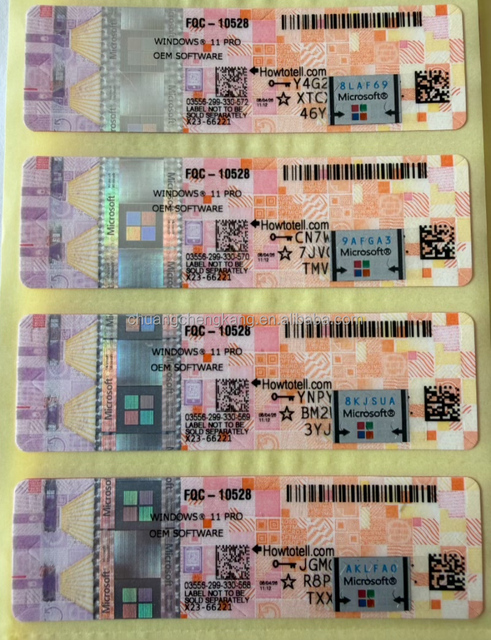
Win11pro Pink Sticker OEM Software License Online Free Shipping Operating System Version
Related Searches
Explore more sourcing topics & related categories
Sources & References
30 sources cited · Verified industry data & reports
Networks in marketing - Wikipedia
en.wikipedia.org
Marketing channels and business networks have been referred to, by Achrol & Kotler as: “Interdependent systems of organizations and relations that are involved in carrying out all of the production and marketing activities involved in creating and delivering value in the form of products and services to intermediate and final customers.” With every step in the chain, value is added to the product, and the cost increases. This increases the incentive for middleman, and or consumer to form other connections to get better deals. As deals and relationships are forged the network becomes more and more complex and integrated, creating disorder. ‘Hubs’ or ‘connectors’ are important aspects to analyze when examining any system or network and marketing is no exception to this. Hubs are distinctive components of network systems and through understanding them a better understanding of network function and behavior can be attained. Barabási states that hubs dominate all networks through the large number of links they possess, that the links hubs provide in areas of high clustering and also between areas of high clustering demonstrate their connective qualities. The presence of hubs in a market can be an important aspect of new product adoption and diffusion rates, by utilizing hubs when bringing a product to market producers can generate more ‘buzz’ and reach a greater target audience with improved efficiency through the use of hubs and their large number of connections across a network. There are multiple simultaneous interactions by actors and components which lead to an overall output of a system. It is important in a marketing environment to recognize that there are many levels of complex systems at play and that targeting individual parts of production, advertising or other aspects will not often result in proportional outputs. The application of chaos theory to marketing systems can lead to new ways of coping with or avoiding these chaotic patterns of behavior, to the extent the rules governing behavior are amenable to control by firms and/or policymakers. Chaos is present in several popular marketing models of product diffusion, market or brand share and market evolution.
What is Discount Management? | Vendavo
www.vendavo.com
Learn everything you need to know about the ins and outs of discount management from the experts at Vendao. By analyzing market trends, businesses can ensure that their discounts remain competitive while maintaining profitability. ... Establishing clear discount policies and guidelines helps maintain consistency, fairness, and transparency in pricing. These policies should outline the criteria for offering discounts, the approval process, and the maximum allowable discount amounts for each customer segment or product category. By offering targeted, value-driven discounts, companies can enhance customer relationships, improve long-term retention, and solidify their position in the market. Close deals faster and more efficiently: In B2B sales, where the sales cycles are often longer and the deals larger, discounts can be a powerful tool to close deals faster. By managing discounts properly, sales teams can use them as an incentive for buyers to commit. Enhance operational efficiency: Automated discount management systems can streamline discount approval workflows, reduce administrative overhead, and ensure consistent application of discount policies across the organization. By optimizing price discounts, businesses can maintain healthy margins while remaining competitive. Optimize and adapt pricing strategies: Discount management provides valuable insights into customer purchasing patterns, price sensitivity, and the efficacy of different discount strategies. This information can be used to refine pricing models and ensure discounts are aligned with market changes and broader business objectives.
What is Discount Management? | DealHub AI
dealhub.io
If you’re unsure about whether a discount management system would be beneficial to your business, ask yourself the following questions: Do I frequently offer discounts on my products and services? CRM: Customers can receive personalized offers based on their data stored within your CRM system. CRM integration also allows for customer segmentation, targeting the right discounts to the right customers. ERP: This integration allows you to track discounts at the transactional level, so you can get an accurate picture of their profitability. Ecommerce Platforms: Discounts and promotions can be managed from your ecommerce platform, including coupon codes, loyalty programs, and more. Marketing Automation Software: Leverage marketing automation software to personalize discounts and ensure they are sent to the right customers. If you answered yes to any of these, a discount management system is probably a good fit for your business. If discount management software is something your business is interested in, there are a few things you should consider when selecting one. Pricing: Of course, budgeting is an essential factor to consider when selecting a discount management system. The cost of these systems ranges from free to several thousand dollars, and finding one that fits within your budget is crucial. Determine how much you are willing to pay, but also consider the ROI of investing in one for your business. Features: Some discount management software comes with more features than others, so it’s important to evaluate each system’s features and capabilities before making a purchase.
How to Implement a Discount Pricing Strategy | Vendavo
www.vendavo.com
Learn how to plan and execute a discount pricing strategy that drives sales without harming your brand or profits. Discover types, steps, and smart tools. Before implementing Vendavo, this distributor struggled with inconsistent pricing policies across regions and limited visibility into true profitability by customer and product line. Their sales teams operated with outdated cost-plus formulas that ignored market dynamics and customer value perception. Vendavo’s core tools work together to create comprehensive discount management systems that prevent margin leakage while maintaining competitive positioning. Additionally, “It’s difficult to understand your customer’s willingness to pay and ascertain how the different tiers, volume breaks, and associated discount curves are defined,” warns Israel Rodrigo, Business Consultant at Vendavo. “The challenge becomes even more complex when we start cross-referencing products, channels, customers, and the aspects of the negotiation process.” · Successful, sustainable outcomes hinge on designing discount strategies that maximize benefits while minimizing risks through clear policies, defined objectives, and systematic monitoring of both financial and customer behavior impacts. The difference between strategic discounting and desperate price-cutting often determines whether businesses build lasting partnerships or erode their market position entirely. A discount pricing strategy is a dynamic pricing approach where businesses strategically reduce product prices based on specific conditions like order size, customer loyalty, or market timing.
Network Marketing - Entrepreneur Small Business Encyclopedia
www.entrepreneur.com
Things can get sticky when a network marketing network compensates participants primarily for recruiting others rather than for selling the company’s products or services. A network marketing system in which most of the revenue comes from recruitment may be considered an illegal pyramid scheme. Since network marketing programs are usually exempt from business opportunity regulation and aren’t defined as franchises under state and federal franchise laws, you’ll need to do your own investigation before investing any money. Network marketing is a type of business opportunity that is very popular with people looking for part-time, flexible businesses. Some of the best-known companies in America, including Avon, MaryKay Cosmetics, and Tupperware, fall under the network marketing umbrella. Network marketing programs feature a low upfront investment–usually only a few hundred dollars for the purchase of a product sample kit–and the opportunity to sell a product line directly to friends, family, and other personal contacts.
Understanding the Network Effect: How It Increases Product Value
www.investopedia.com
E-commerce sites, such as Etsy and eBay, grew in popularity as more sellers joined those marketplaces and sold their products to consumers who embraced online shopping. Companies such as Uber and Lyft evolved and grew the support of participants who signed up and expanded the companies' reach across cities and states. Leveraging the network effect can help grow a business. If a business is in a market subject to the network effect, a company may price products differently when the business begins than when the network effect takes hold. As a business grows due to the network effect, it often makes sense to increase prices as demand for the product grows. The network effect occurs when a product or service becomes more valuable as more people use it, benefiting businesses and consumers by enhancing utility and market presence. Seeking Alpha. "eBay: A Case Study Of 2-Sided Marketplaces." Harvard Business School.