Dled Eled Led Tv

Overview
Product sourcing insights & recommendations
The phrase 'DLED ELED LED TV' encompasses the evolution of backlighting technology in LCD televisions. As of 2026, the market has undergone a significant shift, with DLED (Direct LED) becoming the industry standard for mainstream models, while ELED (Edge-lit LED) is largely being phased out due to reliability concerns Awall.
1. Technology Breakdown: DLED vs. ELED
* DLED (Direct LED): LEDs are arranged in a grid directly behind the screen. This allows for superior brightness uniformity and higher contrast. Modern 2026 designs have reduced the "Optical Distance" to ~20mm, achieving slim profiles similar to edge-lit models without sacrificing durability OpeetvAwall.
* ELED (Edge-lit LED): LEDs are placed along the edges of the panel. While this allows for ultra-thin "razor" designs, it often suffers from "light leakage" at the edges and heat accumulation that can yellow the panel over time. Many top manufacturers have completely abandoned this technology by 2026 OpeetvAwall.
* LED TV: A general marketing term for LCD TVs with LED backlighting (either DLED or ELED).
2. 2026 Market Trends & Insights
* Bifurcated Market: The TV market is split between mass-market affordability (Standard DLED) and premium innovation (Mini-LED/OLED). LED/LCD TVs still command a 57.35% market share Awall.
* The Mini-LED Surge: Advanced Mini-LED technology, which uses thousands of microscopic LEDs for OLED-like contrast, is the fastest-growing segment in 2026, projected to reach 7.9 million units Awall.
* Price Stabilization: After years of decline, TV prices are stabilizing in 2026 due to soaring component costs, particularly DRAM (+50%) and Flash memory (2x). Manufacturers are pivoting to high-spec exports to manage domestic overcapacity Awall.
3. Product Availability & Pricing
I have identified high-quality product options across these categories, primarily from major manufacturing hubs like Foshan and Shenzhen.
* Mini-LED Models: Offer high brightness and local dimming (e.g., ).
* Ultra-Thin Smart TVs: Modern slim DLED and QLED options that maintain a sleek aesthetic (e.g., ).
* 4K Mainstream DLED: Cost-effective smart TVs in 55" and 65" sizes (e.g., ).
Detailed product lists with specifications, pricing, and supplier info are available in the files below.
I can help you further refine your sourcing strategy for these TV technologies. Would you like to:
Dled Tv 4k Smart Tv 55 Inch 65 Inch
Products · 3 lists
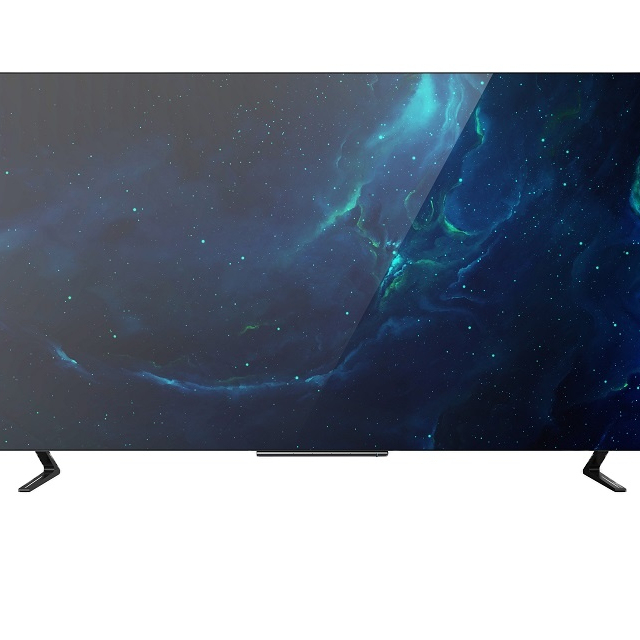
55 Inch 65 Inch OLED UHD 4K Android WebOS Smart LED TV
 EMI COLOR CORP.🇹🇼TW11 yrs
China Hot Sale 65 Inch 4K Ultra HD LED Android Smart TV 2K Definition Flat Screen HD Televiso Lcd 32 40 50 55 Inch Series
 Guangdong Waigaa Electronics Co., Ltd.verified🇨🇳CN4 yrs
VSTI 55 65 75 85 98 100 Smart Tv 4k Ultra Hd Led Tv Smart Television Big Screen Television
 Foshan Mingpin Youchuang International Trade Co., Ltd.🇨🇳CN1 yr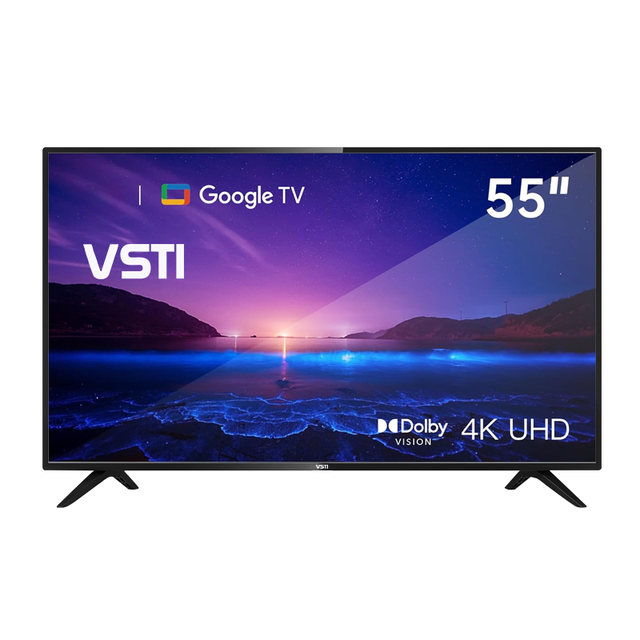
VSTI 55 Inch Smart LED TV With Google and WiFi 4K Ultra HD Variety of Sizes Including 32 43 50 65 75 85Inches
 Guangdong Weishi Technology Co., Ltd.verified🇨🇳CN2 yrs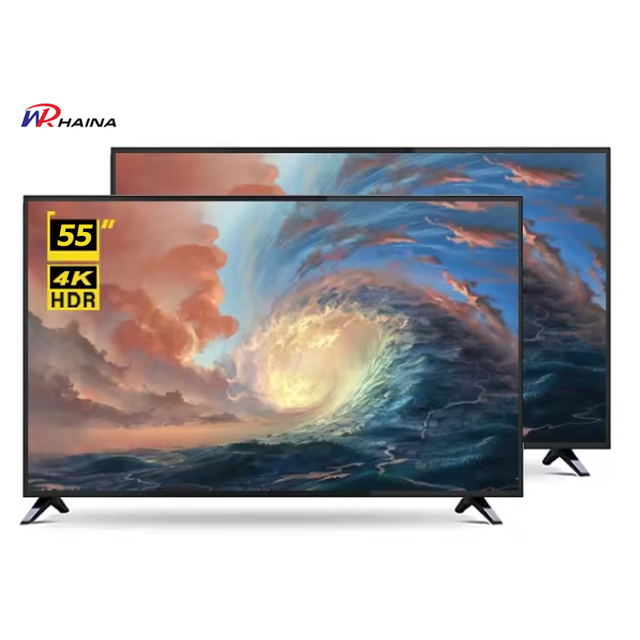
HAINA High Quality Oem Television Smart Tv 65 55 50 43 32 Inch Android Webos google Tv
 Guangzhou Weier Haina Electronic Co., Ltd.🇨🇳CN12 yrs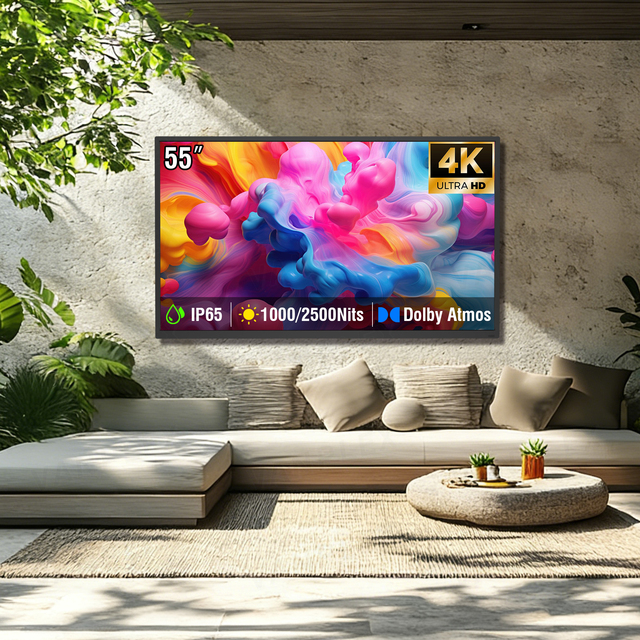
Commercial Outdoor TV 55/65 Inch 4K UHD IP65 Waterproof 1000/2500 Nits Sunlight Readable Smart WebOS WiFi for Restaurant Patio
 Shenzhen Vanplex Co., Ltd.verified🇨🇳CN6 yrs
Related Searches
Explore more sourcing topics & related categories
Sources & References
26 sources cited · Verified industry data & reports
What is the difference between LED and DLED TV? - Quora
www.quora.com
Answer (1 of 7): D-LED in televisions refers to “Direct LED” backlight. With a direct LED backlight the LEDs that actually illuminate the LCD screen are placed in what is often referred to as a “full array” behind the LCD screen. The light from all these LED lamps shine through the LCD screen to ...
From what I know Normal LED and DLED are same and QLED's are bit ...
www.reddit.com
126K subscribers in the 4kTV community. Discussion of 4k TVs. Spoiler alert, it's not. LEDs can be a better option based on use, but one technology is not inherently better than the other in all cases. DLED I'm assuming is direct lit LED. It's better than edge lit because the entire panel is lit, but is still a step down from FALD (full array local dimming) that has zones that can be dimmed when needed to make blacks deeper. MicroLED is a new technology that is still priced way outside of the price range of any consumer. Side note: "Mini LED" was originally used as a marketing term to confuse people vs MicroLED the same way QLED was used to confuse people vs OLED. ... Picking a TV is quite the chore now. LED is the same technology that's been around for decades and is the same technology as LCDs but with an LED light source instead. OLED is self illuminating pixels. QLED is a marketing term, not technology. Quantum dot is a technology, which is what QLED is. Sony used quantum dots years before Samsung decided to use them, only Sony didn't decide to use a marketing term to confuse customers. Samsung marketed "QLED" as a way to confuse customers into thinking they were getting a new technology that's better than OLED.
LED vs. OLED vs. QLED TVs – What’s the Difference? | Samsung US
www.samsung.com
In a nutshell, Samsung Neo QLED TVs offer superb picture quality with outstanding brightness, powered by a massive array of Quantum Mini LEDs. For example, if your room gets a lot of sunlight, a Samsung Neo QLED TV is a great solution for cutting down on glare and reflections on your screen during the day. However, deciding between an LED and Samsung Neo QLED comes down to your budget, lifestyle and viewing expectations. Let's start with the basics. What is an LED TV? LED stands for light-emitting diode, which in layman terms refer to small little bulbs that give off light and color. If you've seen a close-up image of an LED lamp, you would’ve noticed that they are basically numerous smaller bulbs placed side by side. Likewise, a LED TV is basically thousands of red, green, and blue (RGB) light-emitting diodes pieced together. The three primary colors that you see then can produce millions of other colors when mixed in varying proportions. Unlike LEDs that use a backlight to illuminate pixels, OLED TVs have individual pixels that produce their own light, with no separate backlight, giving them the power to turn each pixel on and off for incredible contrast.
DLED, OLED, QLED or LED: Which Screen Should You Choose?
ibertronica.es
DLED, OLED, QLED, and LED are common terms in the display world, but each technology offers distinct features and benefits that can make it more suitable for a specific use. In this article, we’ll explain the differences between these technologies and help you choose the ideal display for you. Discover our entire catalog of displays at the following link. Each of these acronyms represents a type of technology used in TV, monitor, or mobile device displays, and each has its own advantages in terms of image quality, power consumption, and durability. Discover the differences between LED, OLED, QLED and LED, and find the perfect screen for your needs. Read More. For use in well-lit environments that combine quality and durability, QLED offers an excellent alternative. If you need an efficient and economical screen, LED and DLED screens do their job well for daily work and casual entertainment. The latest advances in display technology: OLED,… · Megabyte vs. Gigabyte: Understanding the Differences LED: They offer good image quality and are inexpensive, but their contrast is lower compared to other technologies. DLED: Improves the contrast and uniformity of standard LED screens thanks to direct backlighting.
What is DLED display: DLED vs LED TVs differences explained | Splaitor
splaitor.com
Instead, they simply call them direct backlit LED TVs. Many people, influenced by marketing tactics, often ask about the differences between DLED and LED. However, this comparison is not quite correct, as both screens are manufactured using the same technology and can even be produced in the same factories. For most users the differences will be almost imperceptible, so you can safely buy the TV, which is better for value for money, without paying attention to what type of LED display is used: DLED or ELED. Great article! I never realized there were so many differences between DLED and LED TVs. In brief, yes, it is. In my experience of watching various TVs, I can say that there is virtually no difference between Edge LED and DLED. In some ways the first wins, in some ways the second wins. Today, there are only two main technologies used to produce displays: LED and OLED. CRT screens and plasma displays are obsolete and are no longer manufactured. DLED is simply a marketing term for direct backlit LED screens. Direct backlit displays have evolved over several generations as display technology has improved.
Which Is Better, DLED Or ELED?
www.cnintech.com
What’s the difference between them? How to choose them? ... DLED refers to the direct-lit LED backlights which involves placing several LED bulbs directly behind the entire screen, so that the backlight can be evenly transmitted to the entire screen. The D-LED TV divides the LED backlight into a number of cells, and when showing black, directly turns off the light of its corresponding LED area, and the blackness levels produced are perfect and uniform. Both DLED and ELED are types of LED displays used in televisions and monitors. What’s the difference between them? How to choose them? There are also other benefits to choose a DLED display. It uses local dimming to divide the entire screen into several zones of lights, as a result, it can enhance the contrast ratio eventually improving the overall picture quality. The results of higher numbers of LED lights covering the entire screen make it produce a high peak brightness level. This makes it possible to build a thinner panel, but manufacturers do it at the expense of the lower picture quality because the number of LED lights is reduced by nearly seven times, it is easy to cause the nonuniform brightness, that is, it is brighter on edges but dimmer in middle. On the other hand, less power consumption can be achieved in ELED panel, and it is cheaper than DLED.