Dot Tempered Glass

Overview
Product sourcing insights & recommendations
The term "dot tempered glass" refers to two distinct commercial categories: safety-certified automotive glass and architectural fritted glass. Researchandmarkets
Understanding "Dot Tempered Glass"
- 1Safety Certification (DOT Number): In the automotive industry, "DOT" refers to the U.S. Department of Transportation. Every piece of legal tempered safety glass in a vehicle must bear a permanent stamp with a DOT number (e.g., DOT-123), identifying the manufacturer and compliance with federal safety standards (FMVSS 205). ResearchandmarketsThebuildingcodeforum
- 2Architectural Fritted Glass: In construction, it refers to glass silk-screened with ceramic dot patterns. These dots are fused during the tempering process to provide solar shading, privacy, and bird safety by making the glass visible to wildlife. ResearchandmarketsGrandviewresearch
2026 Market Trends & Insights
The global tempered glass market is projected to reach approximately $71.26 billion by 2026, growing at a CAGR of 6.8%. Researchandmarkets Key trends include:
* Elimination of Anisotropy: A major shift toward "anisotropy-free" glass to remove visual artifacts (leopard spots) visible under polarized light in high-end architecture. Researchandmarkets
* EV & Smart Glass Integration: Surging demand for lightweight tempered glass and panoramic sunroofs for electric vehicles to optimize range and safety. ResearchandmarketsGrandviewresearch
* Sustainability & Green Building: Increased use of recycled cullet and value-added glass (frosted/tinted) to meet LEED energy efficiency requirements. ResearchandmarketsGrandviewresearch
Bird Friendly Dot Pattern Tempered Glass Panels
Products · 3 lists
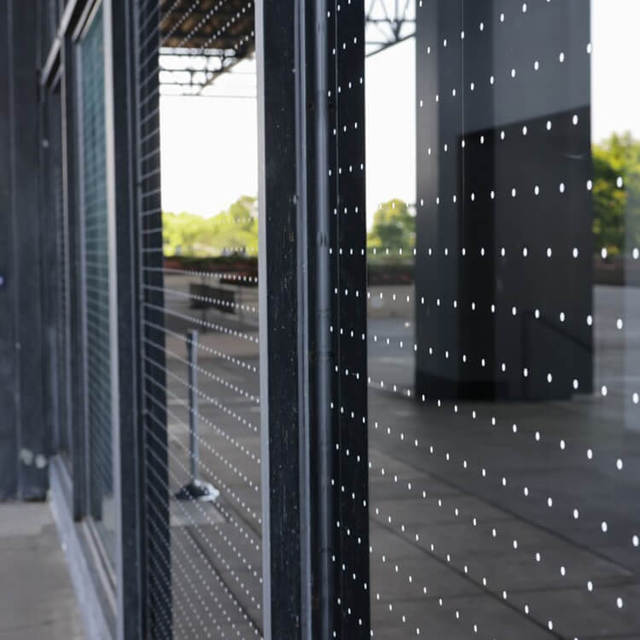
Bird-Friendly Safe Facade Silk Screen Digitally Printing Insulated Tempered Laminated Glass
 Qingdao Laurel Glass Technology Co., Ltd.verified🇨🇳CN9 yrs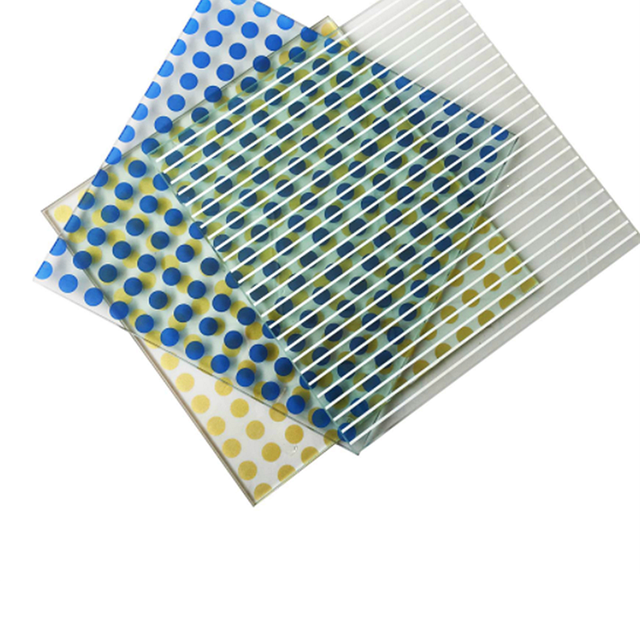
Blue Dot, Yellow Dot Printed Decorative Glass
 Jiangmen Bolipai Glass Products Co., Ltd.🇨🇳CN18 yrs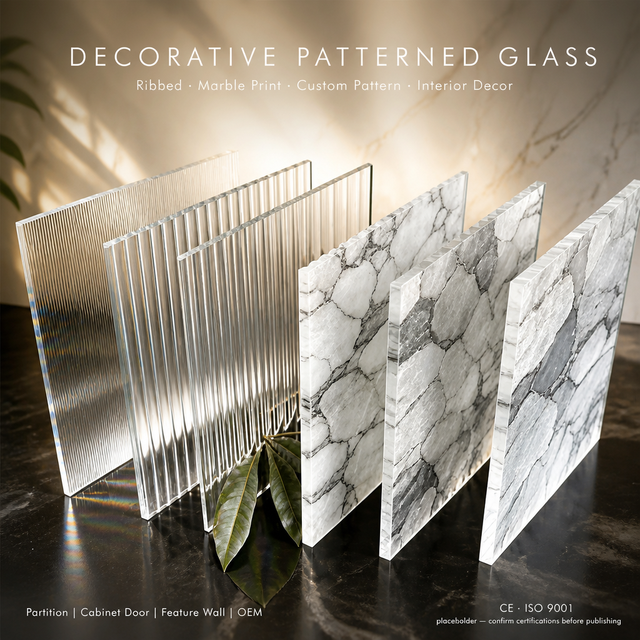
Vintage Patterned Glass Diamond Rain Design Tempered Privacy Glass for Doors Partitions Custom Size Factory Wholesale
 Shandong New Line Import And Export Co., Ltd.verified🇨🇳CN3 yrs
Related Searches
Explore more sourcing topics & related categories
Sources & References
29 sources cited · Verified industry data & reports
Tempered Glass Market Report 2026 - Research and Markets
www.researchandmarkets.com
40.1 Tempered Glass Market in 2030 - Countries Offering Most New Opportunities 40.2 Tempered Glass Market in 2030 - Segments Offering Most New Opportunities 40.3 Tempered Glass Market in 2030 - Growth Strategies 40.3.1 Market Trend Based Strategies 40.3.2 Competitor Strategies ... 41.1. Abbreviations 41.2. Currencies 41.3. Historic and Forecast Inflation Rates 41.4. Research Inquiries 41.5. About the Analyst 41.6. Copyright and Disclaimer · Tempered Glass Market Global Report 2026 provides strategists, marketers and senior management with the critical information they need to assess the market. Major trends in the forecast period include growing use in automotive applications, increasing adoption in modern construction, rising demand for colored and specialty glass, expansion of electrical and electronics applications, enhanced safety and strength standards. Anticipated growth in the automobile industry is set to contribute to the expansion of the tempered glass market. The tempered glass market global report answers all these questions and many more. The report covers market characteristics, size and growth, segmentation, regional and country breakdowns, total addressable market (TAM), market attractiveness score (MAS), competitive landscape, market shares, company scoring matrix, trends and strategies for this market. The tempered glass market size has grown strongly in recent years. It will grow from $66.7 billion in 2025 to $71.26 billion in 2026 at a compound annual growth rate (CAGR) of 6.8%. The growth in the historic period can be attributed to rising automotive production, growing urban infrastructure development, increasing use of safety glass in buildings, early adoption in electrical and electronics industry, demand for clear and low iron tempered glass.
Explore the Global Glass Tempering System Market— analysis of ...
www.futuremarketinsights.com
NGA Technical Standards: Tempered Glass Processing and Quality Requirements. NGA. 4. International Energy Agency. (2025). IEA Solar PV Manufacturing Outlook: Solar Glass Specifications and Production Trends. IEA. 5. World Bank. (2025). World Bank Global Construction Industry Activity Report. World Bank. This bibliography is provided for reader reference. Estimating the size of the market and revenue projections from 2026 to 2036. Glass Tempering System Market is segmented by Tempering Technology (CHQE, Standard Configuration, Advanced Configuration, Chemical Treatment), Application (Flat, Continuous, Oscillating, Bent, Combined Flat and Bent), End Use (Automotive Window, Architectural, Windows And Façade, Mirror & Partitions, Furniture, Electronics, Smartphone, Appliances, Solar Applications, Others), and Region. Forecast for 2026 to 2036. By 2036, the Glass Tempering System Market is expected to be worth USD 127.07 billion. From 2026 to 2036, the market is projected to expand at a CAGR of 4.5%. In 2026, flat glass tempering is expected to account for 33.8% of the application segment, driven by sustained demand from architectural glazing, facade construction, and automotive windshield and side glass production.
Tempered Glass Market Size, Share, Trends & Growth, 2034
www.fortunebusinessinsights.com
Access 74+ Detailed Reports Featuring Market Insights, Trends, Forecasts, & Competitive Analysis Across Sectors: The global tempered glass market size is projected to grow from $123.02 billion in 2026 to $169.07 billion by 2034, at CAGR of 4.05% during forecast period The global tempered glass market size was valued at USD 118.23 billion in 2025. The market is projected to grow from USD 123.02 billion in 2026 to USD 169.07billion by 2034, exhibiting a CAGR of 4.05% during the forecast period. The tempered glass market Trends reveal growing utilization of energy-efficient glass products, smart glazing systems, and decorative tempered glass solutions across commercial and residential infrastructure projects. Automotive manufacturers are also increasing adoption of tempered glass in passenger vehicles to improve occupant safety and meet transportation safety standards. The tempered glass market Insights reveal that modern architectural trends emphasizing transparent infrastructure, energy efficiency, and aesthetic design are further accelerating tempered glass adoption.
Tempered Glass Market in the World | Report - IndexBox - Prices, ...
www.indexbox.io
The global tempered glass market represents a mature yet dynamically evolving segment of the advanced materials industry, underpinned by its non-negotiable role in safety and security applications. As of the 2026 analysis, the market is navigating a complex landscape defined by robust demand from the construction and automotive sectors, counterbalanced by intense cost pressures, energy volatility, and evolving regulatory standards. This report provides a comprehensive, data-driven assessment of the world tempered glass market, dissecting the interplay between supply, demand, trade, and pricing from a 2026 vantage point. The analysis projects key trends and structural shifts through to 2035, offering a strategic outlook on the forces that will dictate competitive success. The goal is to construct a coherent and quantified view of the market size, structure, and dynamics as of the 2026 base year, providing a logical foundation for the qualitative and trend-based forecast to 2035. Primary research forms a critical pillar of the methodology, consisting of targeted interviews with industry stakeholders across the value chain. This includes discussions with executives from tempered glass manufacturers and fabricators, raw material suppliers, equipment vendors, technical experts, and procurement officials from key end-use industries (construction firms, automotive OEMs, appliance manufacturers). It is crucial to note that while the report infers growth rates, market shares, and rankings from available data and trends, it does not publish absolute forecast figures for future years beyond the stated directional and qualitative outlook to 2035. All historical and base-year figures are derived from the sources detailed above. The outlook for the world tempered glass market from 2026 to 2035 is one of steady, technology-inflected growth, heavily influenced by the global agendas of sustainability, urbanization, and safety.
Tempered Glass Market Size, Share | Industry Trends 2025
www.thebusinessresearchcompany.com
Retail And Wholesale Services Social Services Transport Transport Services Utilities Veterinary Healthcare Filter Reports by Trends
Tempered Glass Market Size & Share | Industry Report, 2033
www.grandviewresearch.com
For example, smartphones such as the iPhone and Samsung Galaxy use chemically strengthened tempered glass for screen protection, which has become a standard in the electronics industry. Energy efficiency and environmental sustainability trends are also pushing market demand. For instance, colored tempered glass is widely used in building facades, skylights, and interior partitions in commercial spaces such as malls, airports, and corporate offices. The trend of sustainable construction and green buildings further supports its use, as tinted or coated colored glass helps regulate indoor temperatures by reducing heat gain, thus improving energy efficiency. Manufacturers such as Apple, Samsung, and Xiaomi are incorporating tempered glass to enhance product lifespan and visual clarity. The growing trend of larger and edge-to-edge displays has further accelerated the use of thin, high-strength tempered glass to maintain aesthetic appeal and functional performance. In the automotive industry, the increasing demand for lightweight, durable, and energy-efficient materials is propelling the use of tempered glass in vehicle windows and windshields. This trend is further supported by stringent EU safety and emission regulations, which encourage the adoption of high-performance materials.