Drone 3 Hour Flight Time

Overview
Product sourcing insights & recommendations
The phrase "drone 3 hour flight time" currently defines the frontier of industrial and professional UAV technology, representing a significant shift from traditional battery-powered drones to hybrid and hydrogen propulsion systems.
1. Market Trends & Evolution
* Technological Shift: Standard lithium-ion batteries generally cap flight time at 30–60 minutes. To achieve the 3-hour mark, the market has pivoted toward Hydrogen Fuel Cells (HFC) and Gas-Electric Hybrids. Intelligent-EnergyGrandviewresearch
* High Growth Segments: The global drone market is projected to grow at a CAGR of 9.63% reaching $210B by 2034. Fortunebusinessinsights The segment for "Hybrid" and "Long Endurance" drones is the fastest-growing sub-sector due to industrial demand. Grandviewresearch
* Regulatory Drivers: The expansion of BVLOS (Beyond Visual Line of Sight) regulations in 2026 is the primary driver for 3-hour flight times, as it allows for long-distance infrastructure inspections that were previously restricted. ThedroneuDroneasaservice
2. Technology & Performance Insights
Achieving a 3-hour flight time requires specific propulsion architectures:
* Hydrogen Fuel Cell (HFC): Provides high energy density and silent operation. Drones like the JOUAV CW-25H achieve up to 5.5 hours of flight by replacing batteries with hydrogen tanks. YoutubeJouav
* Gas-Electric Hybrid: Uses a small combustion engine as a generator to power electric motors. The Skyfront Perimeter 8 holds a record of over 13 hours, and can easily carry a 5kg payload for a full 3 hours. Skyfront
* Solar-Augmented: Emerging "tri-source" drones (Solar + Hydrogen + Battery) like SolarXOne can reach 12 hours by harvesting energy mid-flight. Unmannedsystemstechnology
3. Key Industrial Use Cases
Drones with 3+ hour endurance are transforming high-stakes industries:
* Pipeline & Powerline Inspection: Covering 100km+ in a single sortie, replacing expensive manned helicopter flights. Technavio
* Large-Scale Mapping: Utilizing high-accuracy LiDAR over vast terrains for mining and forestry. ThebusinessresearchcompanyJouav
* Border & Maritime Security: Persistent surveillance where staying aloft for hours is critical for mission success. Grandviewresearch
4. Sourcing & Product Availability
While consumer drones (like DJI) are approaching 45–50 minutes, true 3-hour capability is found in the Industrial VTOL (Vertical Take-Off and Landing) category.
* Manufacturers: Specialized suppliers such as Shenzhen Senhang Power and JOUAV are leaders in providing hydrogen and hybrid VTOL platforms for enterprise use. AlibabaJouav
* Pricing: These professional systems typically range from $15,000 to $50,000+ depending on payload and propulsion choice.
Based on these high-end trends, I can help you with:
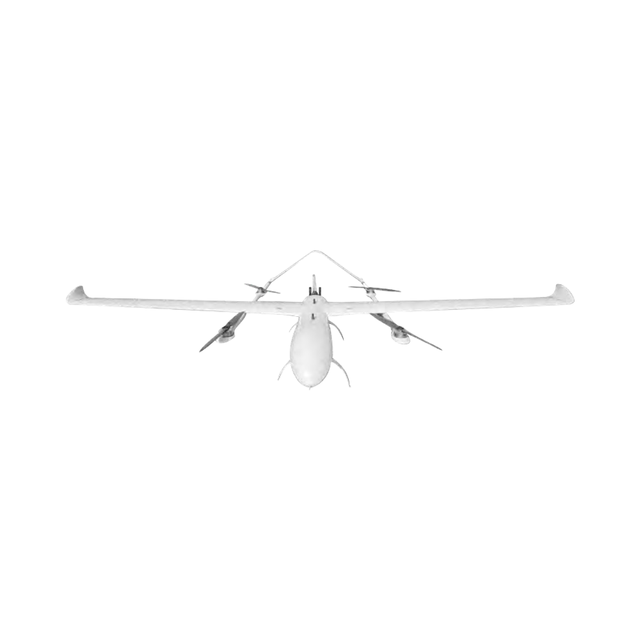
Drone With 3 Hour Flight Time Hybrid Hydrogen Fuel Cell Vtol Long Endurance
Products · 2 lists
Related Searches
Explore more sourcing topics & related categories
Sources & References
28 sources cited · Verified industry data & reports
Drone Market Size, Share & Global Trends [2026–2034]
www.fortunebusinessinsights.com
Access 74+ Detailed Reports Featuring Market Insights, Trends, Forecasts, & Competitive Analysis Across Sectors: The global drone market size is projected to grow from $ 100.74 billion in 2026 to $ 210.26 billion by 2034, at CAGR of 9.63% during forecast period The global drone market size was valued at USD 91.88 billion in 2025. The market is projected to grow from USD 100.74 billion in 2026 to USD 210.26 billion by 2034, exhibiting a CAGR of 9.63% during the forecast period. Software represents approximately 24% of the drone market size due to increasing adoption of AI-enabled navigation systems, cloud analytics platforms, and automated flight management tools. drone market Trends indicate that autonomous mission planning software reduced manual operational intervention by nearly 39% during industrial inspection activities. Drone market trends indicate strong innovation activity focused on autonomous flight capability, AI-enhanced imaging, and modular payload systems. Manufacturers are developing drones equipped with advanced obstacle avoidance technology, thermal imaging sensors, and real-time edge computing capabilities.
Drone Industry Trends 2026 Preview: Tech, Regulations & Career ...
www.thedroneu.com
For drone professionals, 2026 marks a turning point. AI autonomy, BVLOS expansion, and FAA regulatory progress are moving from pilot projects to standard operations. The consumer drone market is projected to reach $6.3 billion in 2026 (Persistence Market Research). 2026 also opens doors for small businesses and startups, such as: Vertical-specific analytics platforms for construction, agriculture, or energy · Autonomous flight software solutions for enterprise fleets · Sensor and hardware innovation for specialized applications · Pilots with entrepreneurial skills can create new business models and target niche markets, combining drone technology with AI and analytics to deliver high-value solutions. Regulatory progress reduces uncertainty around BVLOS and automated flights. Industries shift from trials to full-scale adoption, creating steady demand for skilled pilots. In 2026, drones are more capable, efficient, and autonomous than at any previous point. Several innovations are changing how pilots operate and how companies rely on drones. From longer-range flights to more intelligent data processing, these developments are shaping the tools and skills you’ll need to stay ahead. One of the most significant changes in 2026 will be the expansion of BVLOS (Beyond Visual Line of Sight) operations.
Drone Market Size, Share & Growth Report, 2026-2033
www.grandviewresearch.com
Size, Share & Trends Analysis Report By Component (Hardware, Software, Services), By Product, By Technology, By Payload Capacity, By Power Source, By End-use, By Region, And Segment Forecasts ... The global drone market size was valued at USD 83.8 billion in 2025 and is projected to grow from USD 96.4 billion in 2026 to USD 182.4 billion by 2033, at a CAGR of 9.5% from 2026 to 2033. This report forecasts revenue growth at global, regional, and country levels and provides an analysis of the latest technology trends in each of the sub-segments from 2021 to 2033. For this study, Grand View Research has segmented the global drone market report based on component, product, technology, payload capacity, power source, end use, and region: Component Outlook (Revenue, USD Million, 2021 - 2033) ... The global drone market size was valued at USD 83.8 billion in 2025 and is estimated at USD 96.4 billion for 2026. The increasing development of energy-efficient batteries, hybrid propulsion systems, and lightweight composite materials is further improving flight endurance and overall performance, thereby driving the growth of the hardware segment in the drone market. The services segment is expected to grow at the fastest CAGR of 10.6% from 2026 to 2033, driven by the increasing demand for drone-based solutions such as aerial imaging, inspection, mapping, and delivery services across industries. The hybrid segment is projected to experience the fastest growth from 2026 to 2033. The growth is attributed to the increasing need for drones that offer both long-endurance flight and vertical take-off and landing (VTOL) capabilities. Hybrid drones combine the advantages of fixed-wing efficiency with multi-rotor flexibility, making them ideal for long-range surveillance, mapping, and logistics applications.
Drone Market Growth Analysis - Size and Forecast 2026-2030 | Technavio
www.technavio.com
Our researchers analyzed the data with 2025 as the base year, along with the key drivers, trends, and challenges. A holistic analysis of drivers will help companies refine their marketing strategies to gain a competitive advantage. The strategic application of unmanned systems is expanding, with specific use cases defining the Global Drone Market 2026-2030 for industrial inspection and the Global Drone Market 2026-2030 for precision agriculture. Market trends are centered on achieving full autonomy and extended operational uptime. The rise of drone-in-a-box technology enables persistent aerial monitoring of critical sites, reducing the need for on-site pilots by 100% and increasing data collection frequency. Simultaneously, the pursuit of extended flight endurance is driving the adoption of hydrogen fuel cells and hybrid-electric propulsion, which can increase operational duration by over 300% compared to conventional batteries. Addressing these issues through standardized protocols and robust end-to-end encryption is essential for realizing the full potential of autonomous flight technology and unmanned systems integration. The technology's evolution is also marked by the adoption of light detection and ranging for precise three-dimensional modeling. Get Key Insights on Market Forecast (PDF) Get Free Sample · The drone industry research report provides comprehensive data (region-wise segment analysis), with forecasts and estimates in "USD million" for the period 2026-2030, as well as historical data from 2020-2024 for the following segments. The future includes the Global Drone Market 2026-2030 in urban air mobility, while technologies like the Global Drone Market 2026-2030 with drone-in-a-box solutions and the Global Drone Market 2026-2030 and edge computing promise full operational autonomy. The advancement of autonomous navigation and the deep integration of artificial intelligence are primary drivers fueling market expansion. Market growth is primarily driven by the integration of artificial intelligence and advanced sensors that enable data-driven decision-making. The evolution of autonomous navigation and autonomous flight technology in AI-powered autonomous drones allows for unmanned systems integration into complex workflows, improving efficiency by over 40%.
Statistics and Trends for Drones in 2026 and Beyond - Pilot Institute
pilotinstitute.com
Additionally, hydrogen-powered VTOL drones like Bluebird Aero System’s WanderB-VTOL are also being used for longer transmission patrols. Extended flight endurance of up to six hours allows for more comprehensive infrastructure monitoring with far fewer risks. In 2026, the delivery drone market is expected to reach $1.47 billion. These systems allow drones to safely navigate complex environments with minimal human supervision. Detect-and-avoid systems will play a major role in Part 108 operations, allowing for safer BVLOS flights. In 2026, lightweight, high-performance sensor and payload systems are becoming the norm. Top options include solid-state LiDAR units with ±3 cm accuracy that are only around 2 lbs (1 kg). The Hydrogen & Electric drone market is expected to reach $617.7 million in 2026. Yet, strong growth in the upcoming years promises to accelerate adoption of longer-endurance platforms that can carry heavier payload capacities. This will ultimately expand regional freight corridors and delivery networks worldwide. These drones offer extended flight ranges, reduced emissions, and rapid vertical takeoff and landing capabilities. U.S. Drone Makers Seek Asian Markets ... Think back to 2016, when pilots fought for line-of-sight waivers. Would you have ever dreamed that just a decade later, autonomous drones could fly well beyond visual line of sight for hours? In 2026, businesses and governments alike are expanding drone operations, creating unprecedented opportunities and challenges.
Drone Market Report 2026-2035 | Drone Industry Insights
droneii.com
This 244-page Drone Market Report contains a ten-year forecast of global drone market figures for 2026-2035, broken down by segment, industry, application method, region, and country, as well as drone market unit sales. DII’s Drone Market Report also contains an outline and analysis of current commercial drone regulations, investments, market shares, and challenges facing the industry. Finally, the commercial Drone Market Report also outlines future trends and opportunities to watch in the drone market that will most affect the commercial drone industry in the coming years. Table 1: Commercial drone use cases across industries Table 2: Overview industry verticals Table 3: Commercial drone market size 2025-2030 by industry Table 4: US commercial drone market size 2025-2030 by industry Table 5: Canadian commercial drone market size 2025-2030 by industry Table 6: Brazilian commercial drone market size 2025-2030 by industry Table 7: German commercial drone market size 2025-2030 by industry Table 8: UK commercial drone market size 2025-2030 by industry Table 9: French commercial drone market size 2025-2030 by industry Table 10: Chinese commercial drone market size 202 5.1 Drone Regulation Basics 5.2 Drone Rulemaking – Stakeholders 5.3 Regulatory Timeline and Milestones 5.4 Drone Certification 5.5 Country-specific Developments 5.6 Regulatory Challenges ... 7.1 Investments – Introduction 7.2 Total Investments by Year and Sector 7.3 Investments by Segment and Deal Type 7.4 Investments by Geography 7.5 Top 20 Commercial Investment Deals 2021-2026 7.6 Top 20 Dual-Use Investment Deals 2021-2026 7.7 Top 20 Companies by Total Funding Acquired 2021-2026 The Drone Market Report 2026-2035 provides the most comprehensive analysis and forecast of the commercial drone market.