Earth Remote

Overview
Product sourcing insights & recommendations
The "earth remote" sensing market is experiencing a significant shift toward continuous, intelligent monitoring, with the global market projected to reach $16.5 billion by 2026 at a 10.8% CAGR. Key trends include the dominance of Low Earth Orbit (LEO) constellations for real-time data, the integration of AI-powered analytics for automated object detection, and the rapid growth of Hyperspectral and LiDAR hardware for precision agriculture and environmental monitoring.
I have compiled a comprehensive market trend and product insight report below, which includes detailed technological drivers and high-potential commercial hardware options.
Based on the trends, would you like to:
Hyperspectral Camera For Uav Remote Sensing
Products · 3 lists
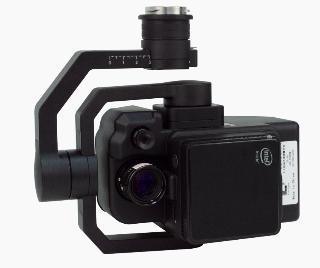
CHNSpec FS60C UAV Hyperspectral Camera with 1 Year Warranty
 Hangzhou Baiteng Electronic Technology Co., Ltd.verified🇨🇳CN3 yrs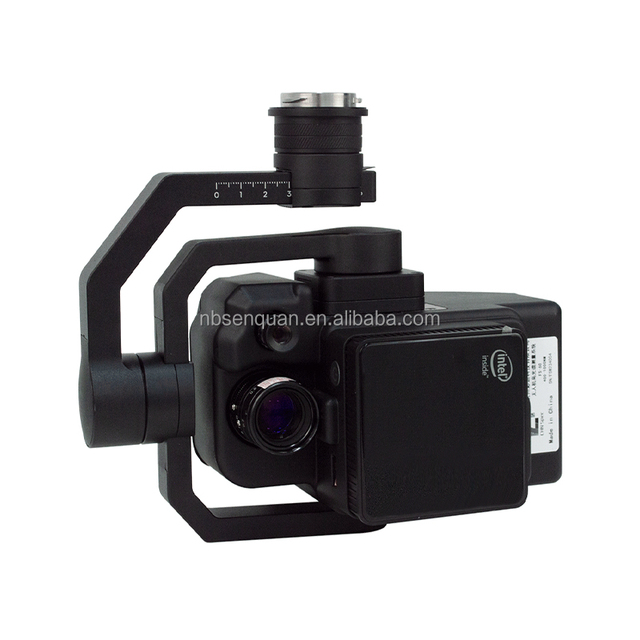
FIGSPEC FS60-C UAV Hyperspectral Camera High Performance for Agriculture & Environmental Monitoring
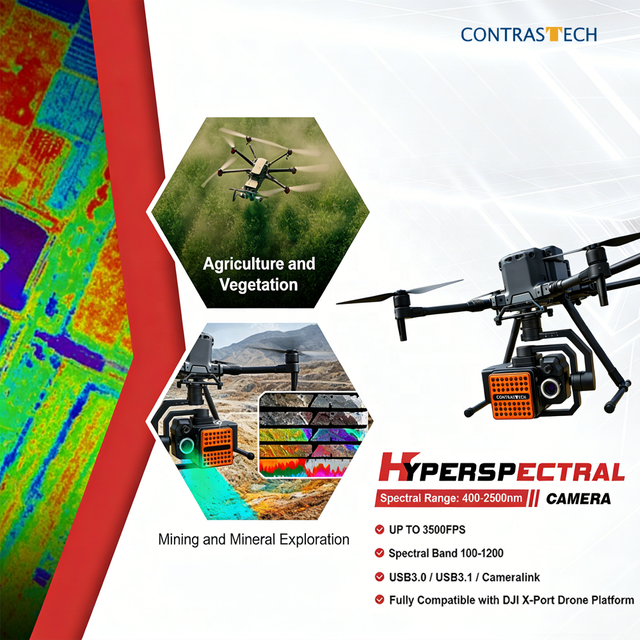
1920p VIS NIR 400-1000nm UAV Hyperspectral Camera for Water Quality Monitoring
 Hangzhou Contrastech Co., Ltd.verified🇨🇳CN13 yrs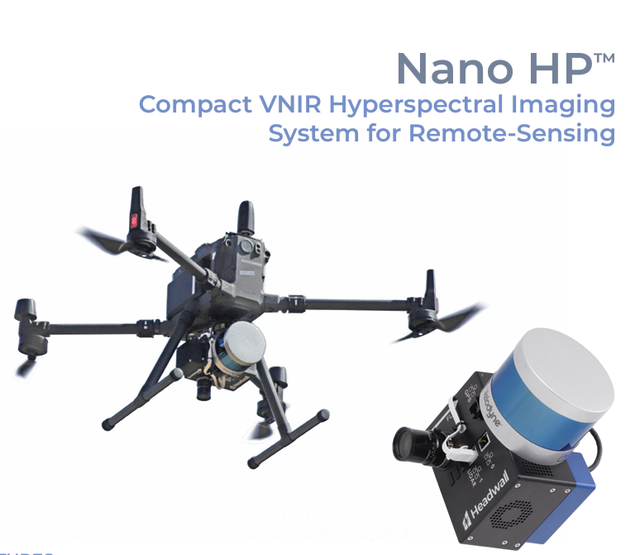
Nano HP Compact VNIR Hyperspectral Imaging System 340 Spectral Bands 1020 Spatial Resolution CMOS Camera for Remote Sensing
 Superegn Mechanical Engineering (Shanghai) Co., Ltd.verified🇨🇳CN3 yrs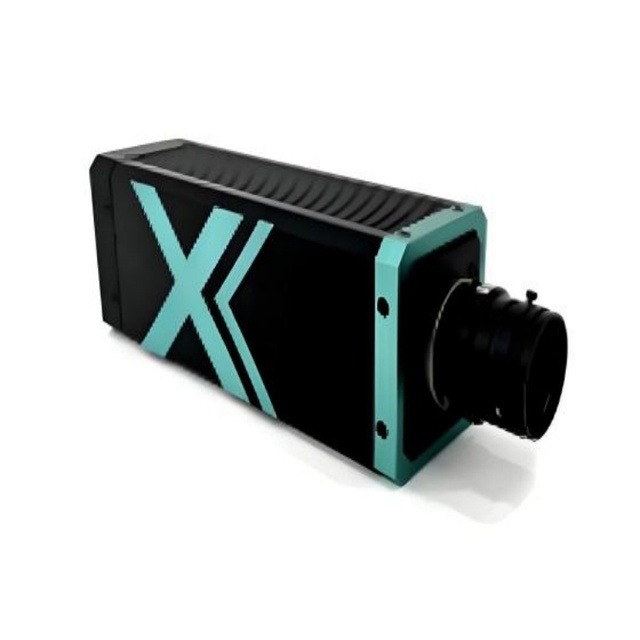
Xtester HY-1230 Visible-Near Infrared Hyperspectral Camera 009 with 1 Year Warranty
 Guangzhou Meiwo Electronics Co., Ltd.🇨🇳CN4 yrs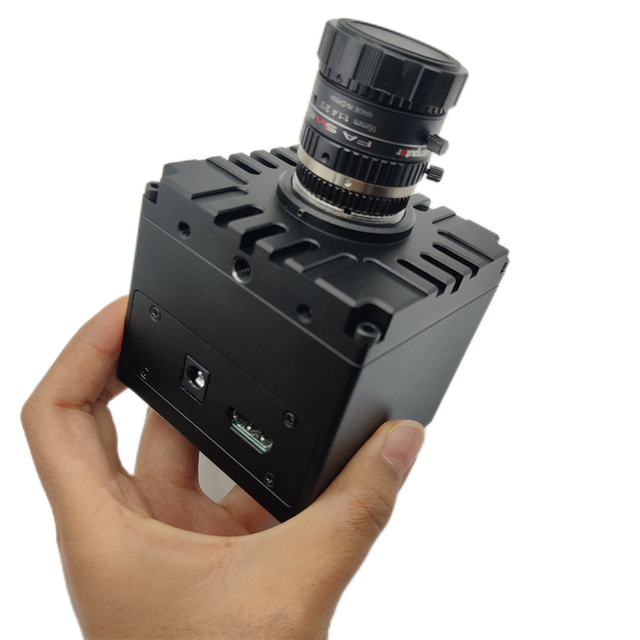
GigE IMX990 NIR Cameras 400nm~1700nm Material Sorting Security Industrial Inspection Machine Vision Hyperspectral Camera
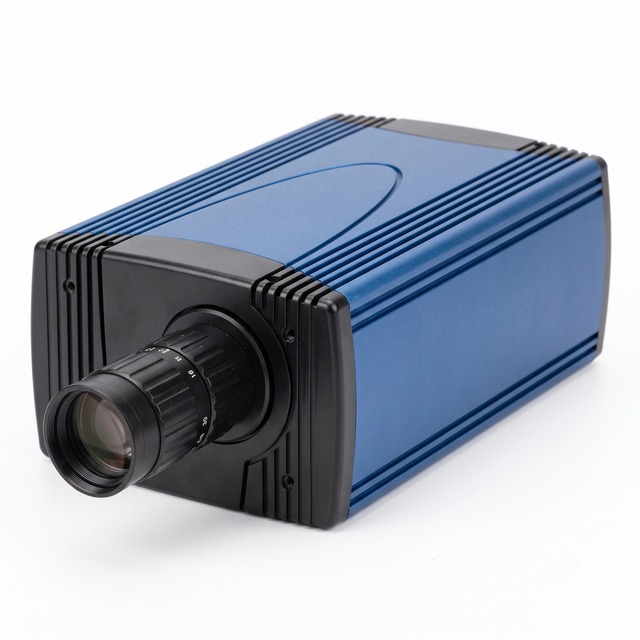
Pushbroom Hyperspectral Camera 400-1000nm 1-2.5nm Resolution USB3.0 10GigE for Precision Agriculture Lab Biomedical Detection
 Guangzhou Jingyi Photoelectric Technology Co., Ltd.🇨🇳CN2 yrs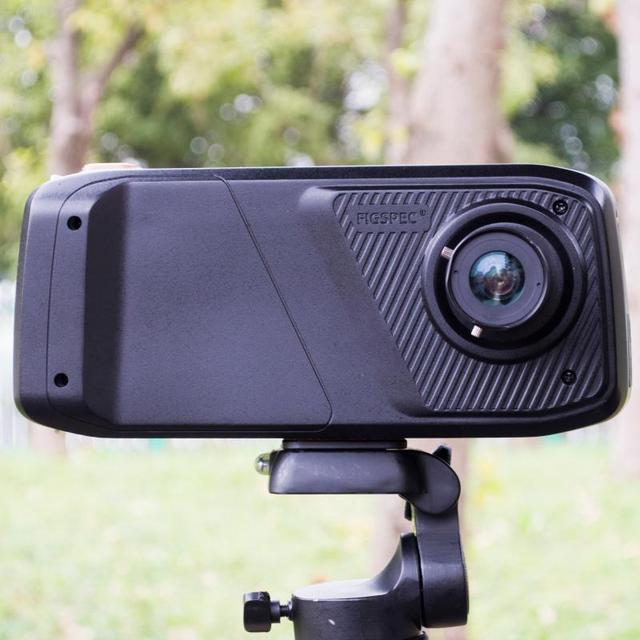
CHNSpec FS-IQ-SWIR-Next-Gen 12bits Dynamic Range Portable Hyperspectral Camera 900-1700nm 1280x1280 Resolution InGaAs
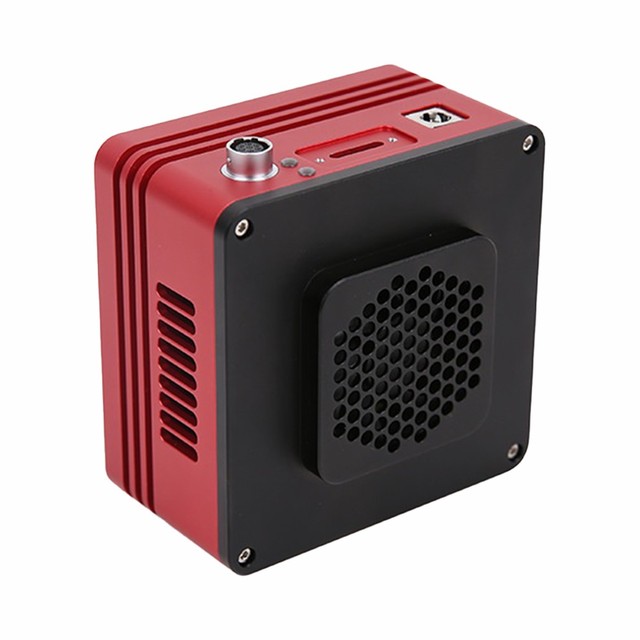
High Resolution Hyperspectral Metallurgical Microscope Camera with Visible-SWIR Imaging for Industrial Inspection Lab Research
 Tianjin Caichi Instrument Co., Ltd.🇨🇳CN1 yr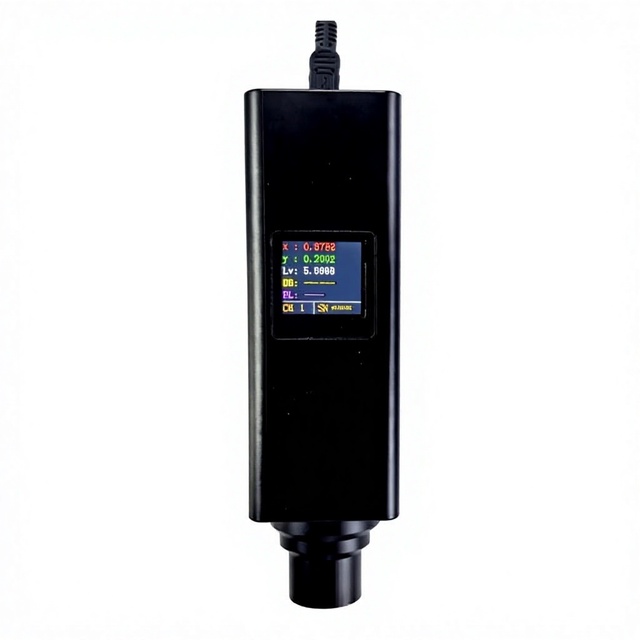
Hyperspectral Camera Screen Color Detection Brightness Detection Applicable for LCD TFT Screen Detection
 Shenzhen Jindong Micro Display Technology Co., Ltd🇨🇳CN3 yrs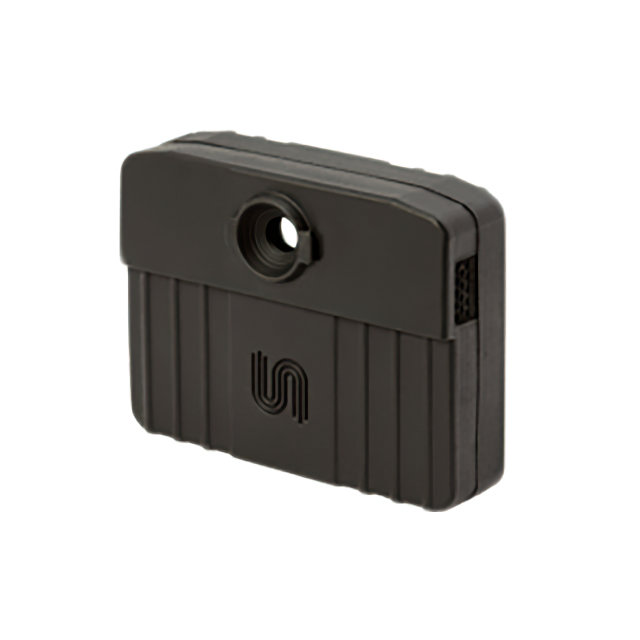
UNS54000 HYPERSPECTRAL IMAGING
 Shenzhen Jinhongyang Technology Co., Ltd.🇨🇳CN9 yrs
UNS54000 HYPERSPECTRAL IMAGING
 SZ Zhancheng Tech. Co., Ltd.🇨🇳CN11 yrs
Deep Dive · Full Report
Full Market Report
1 document · Live-fetched from source
Related Searches
Explore more sourcing topics & related categories
Sources & References
27 sources cited · Verified industry data & reports
Remote Sensing Satellite Market Report 2026 - Research and Markets
www.researchandmarkets.com
Major trends in the forecast period include miniaturization of satellite sensors, high-resolution imaging demand, increased government space programs, expansion of private space companies, integration of multi-sensor payloads. The increasing number of earth observation projects is expected to drive the growth of the remote sensing satellite market in the coming years. The remote sensing satellites market research report is one of a series of new reports that provides remote sensing satellites market statistics, including remote sensing satellites industry global market size, regional shares, competitors with a remote sensing satellites market share, detailed remote sensing satellites market segments, market trends and opportunities, and any further data you may need to thrive in the remote sensing satellites industry. This remote sensing satellites market research report delivers a complete perspective of everything you need, with an in-depth analysis of the current and future scenario of the industry. A remote sensing satellite is a man-made satellite specifically engineered to observe and collect information pertaining to Earth's surface from outer space utilizing a variety of sensing instruments. The remote sensing satellite market size has grown rapidly in recent years. It will grow from $14.9 billion in 2025 to $16.5 billion in 2026 at a compound annual growth rate (CAGR) of 10.8%. The growth in the historic period can be attributed to increasing demand for earth observation and environmental monitoring, technological advancements in multispectral and hyperspectral sensors, government investments in space programs and satellite launches, rising adoption of lidar and electromagnetic sensors for detailed mapping, growth in agricultural and forestry monitoring applications using remote sensing data. The Remote Sensing Satellite Market, valued at USD 16.5B in 2026, is projected to reach USD 24.77B by 2030, growing at a 10.7% CAGR.
Remote Sensing Technology Global Market Report 2026
www.giiresearch.com
The remote sensing technology market research report is one of a series of new reports from The Business Research Company that provides remote sensing technology market statistics, including remote sensing technology industry global market size, regional shares, competitors with a remote sensing technology market share, detailed remote sensing technology market segments, market trends and opportunities, and any further data you may need to thrive in the remote sensing technology industry. This remote sensing technology market research report delivers a complete perspective of everything you ne Remote Sensing Technology Market Global Report 2026 from The Business Research Company provides strategists, marketers and senior management with the critical information they need to assess the market. This report focuses remote sensing technology market which is experiencing strong growth. The report gives a guide to the trends which will be shaping the market over the next ten years and beyond. Remote Sensing Technology Global Market Report 2026 - Remote sensing technology encompasses both active and passive sensing methods for collecting and analyzing information about the physical characteristics of a target area. Active remote sensing involves transmitting coherent electromagnetic (EM) waves towards a target, such as the Earth's surface, and detecting the reflected radiation using sensors. Global Optical Remote Sensing for Automotive Exhaust System Market Size, Share, Trends & Growth Analysis Report 2026-2034
Earth Observation: H1 2026 Review
newsletter.terrawatchspace.com
In this deep dive, we unpack the key investment trends shaping the Earth observation (EO) sector in the first half of 2026, breaking down funding activity by segment, region, growth stage, sensor and year-over-year comparisons. Data: Refers to the collection and delivery of EO data from satellites through various remote sensing instruments. The total investments in EO over H1 2025 are estimated to be $1.7B, with Acquisition and Intelligence segments contributing to more than 80% of all the funding raised, which is in line with the usual trends. Before diving into the analysis, here’s a quick recap of how we define the EO value chain at TerraWatch. While this continues to evolve, as the market evolves, this framework underpins the segmentation used throughout this review (and everything else you will see from us).
Earth Observation Market Size, Share, Growth Report [2034]
www.fortunebusinessinsights.com
The market is projected to grow from USD 7.68 billion in 2026 to USD 14.55 billion by 2034, exhibiting a CAGR of 8.31% during the forecast period. North America dominated the global market with a share of 34.97% in 2025. The earth observation (EO) market revolves around collecting and analyzing information about our planet using satellites, aircraft, drones, and ground-based sensors. It includes imagery data, analytical services, remote sensing, and platforms that convert raw observations into insights for governments, businesses, and researchers. Access 74+ Detailed Reports Featuring Market Insights, Trends, Forecasts, & Competitive Analysis Across Sectors: The global earth observation market size is projected to grow from $7.68 billion in 2026 to $14.55 billion by 2034, at CAGR of 8.31% during the forecast period The market is undergoing a remarkable transformation, moving from periodic satellite-based earth observation and imaging to continuous, intelligent monitoring of the planet. One of the most prominent trends is the adoption of AI-powered analytics, allowing faster interpretation of imagery for agriculture, defense, and environmental management. Multi-sensor data fusion combining optical, radar, thermal, and hyperspectral inputs is becoming standard practice for richer, more accurate insights. North America dominated the earth observation market with a 34.97% share in 2025. The LEO segment is projected to account for a 42.83% share in 2026.
Remote Sensing Technology Market Share & Forecast [2035]
www.businessresearchinsights.com
The market is forecast to grow at a CAGR of 6.1% over the period from 2026 to 2035. I need the full data tables, segment breakdown, and competitive landscape for detailed regional analysis and revenue estimates. Download Free Sample · Remote sensing generation involves obtaining data about objects or regions from a distance, generally from plane or satellites. It encompasses numerous techniques for amassing facts approximately the Earth's floor, surroundings, and oceans without making bodily touch. This trend is expected to keep as remote sensing generation continues to adapt and locate new programs throughout industries. Market Size and Growth: Global Remote Sensing Technology Market size is valued at USD 14.45 Billion in 2026, expected to reach USD 24.68 Billion by 2035, with a CAGR of 6.1% from 2026 to 2035. As of 2026, the global Remote Sensing Technology Market is valued at USD 14.45 billion. What is the current value of the Remote Sensing Technology Market in 2026?
Remote Sensing Satellite Market Size, Share & Growth Report 2033
www.snsinsider.com
Ans: Growth is driven by high-resolution Earth data demand, advanced imaging, defense use, and AI-cloud integration. Ans: The market is valued at USD 47.78 Billion in 2025E and is projected to reach USD 122.86 Billion by 2033. Ans: The Remote Sensing Satellite Market is expected to grow at a CAGR of 12.56% during the forecast period 2026–2033. Analyzes market trends, forecasts, and regional dynamics The Remote Sensing Satellite Market Size is valued at USD 47.78 Billion in 2025E and is projected to reach USD 122.86 Billion by 2033, growing at a CAGR of 12.56% during the forecast period 2026–2033. The Asia-Pacific Remote Sensing Satellite Market is the fastest-growing region, projected to expand at a CAGR of 15.44% during 2026–2033. The growth is powered by increasing investments in space programs in China, India, and Japan and rapidly growing demand for satellite-based Earth observation and environmental monitoring. By Satellite Type, Optical Imaging held the largest market share of 46.27% in 2025, while Hyperspectral satellites are expected to grow at the fastest CAGR of 14.63% during 2026–2033. By Orbit, Low Earth Orbit (LEO) dominated with a 57.84% share in 2025, while Medium Earth Orbit (MEO) is projected to expand at the fastest CAGR of 12.48% during the forecast period.