Electric Charge Apparatuses

Overview
Product sourcing insights & recommendations
The phrase "electric charge apparatuses" refers to hardware components used for delivering, generating, or managing electrical charge, primarily in two distinct sectors: Electric Vehicle Supply Equipment (EVSE) and Industrial High-Voltage Testing.
Product Definition & Types
In modern trade and regulatory contexts (such as the NEC), "electric charge apparatuses" is a sub-category of EVSE, encompassing all fittings and devices between the power source and the vehicle Wikipedia.
* EVSE Components: Core apparatuses include Level 1/2 connectors (J1772, Type 2), DC fast-charge inlets (CCS1, CCS2), and onboard chargers (OBC) that convert AC to DC SciencedirectWikipedia.
* Industrial Apparatuses: These include electrostatic generators, impulse voltage test systems (up to 400kV), and load-break switches used for testing insulation and managing grid-scale electricity AlibabaAlibaba.
* Educational/Lab Tools: Scientific devices like electrophorus and charge producers are used to demonstrate basic electrostatic principles FctemisPasco.
Market Trends & Insights (2025–2030)
The market for these apparatuses is undergoing a massive shift driven by global electrification.
* Explosive Growth: The global EVSE market is projected to reach $142.36 billion by 2030, growing at a CAGR of 31.14% Strategicmarketresearch. The US network alone saw a 6.3% increase in charging ports in Q2 2024 Energy.
* Faster Charging Standards: Industry momentum is shifting from standard AC Level 2 (4–10 hours) to DC Fast Charging (DCFC), which can reach an 80% charge in under 20 minutes TransportationBacancysystems.
* Interoperability & Smart Tech: There is a significant trend toward adapter-led interoperability (e.g., CCS to GBT or NACS adapters) and bi-directional charging (V2G), where the apparatus allows the vehicle to feed power back into the grid BlinkchargingAlibaba.
* Industrial Electrification: High-voltage apparatuses are seeing increased demand for testing the insulation of renewable energy infrastructure, such as solar and wind farm transformers Alibaba.
Here are the product and market insights for electric charge apparatuses. You can explore further with these options:
Evse Apparatuses Components Fittings
Products · 3 lists

DUOSIDA IEC62196-2 Type2 EV Charging Socket 16A 32A 50A IP54 EVSE Parts 68000㎡ Factory Wholesale Europe
 Zhangjiagang Uchen New Energy Technology Co., Ltd.verified🇨🇳CN21 yrs
BOM Sourcing Electronic Components IC Chips One Stop Service Quick Quote EVSE-SIG-BRD1X EVSE-SIG-BRD2X SMD
 Jiuli Xingxin Technology (Shenzhen) Co., Ltd.🇨🇳CN1 yr
QCA7000 type2 EVSE SPI interface Module
 Shenzhen Yuzens Technologies Co. Ltd.🇨🇳CN12 yrs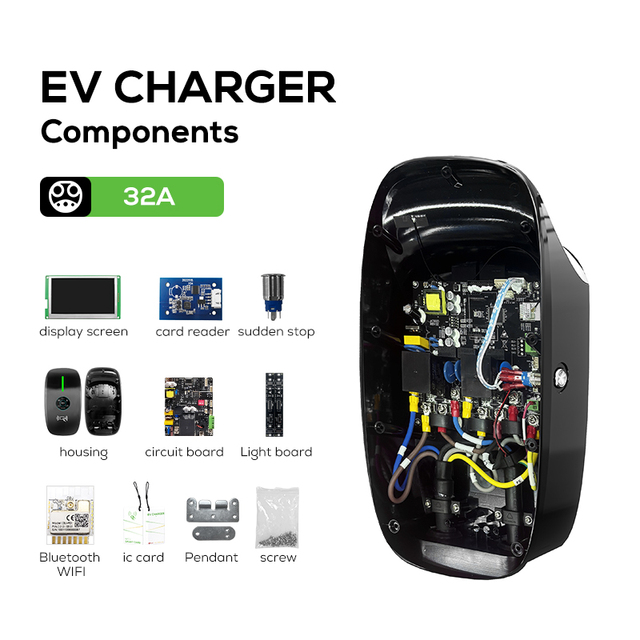
Ovrod 32A SKD Kits and Parts NACS Components for EV Charger PCBA
 Shenzhen Ovrod Electronic Technology Co., Ltd.verified🇨🇳CN4 yrs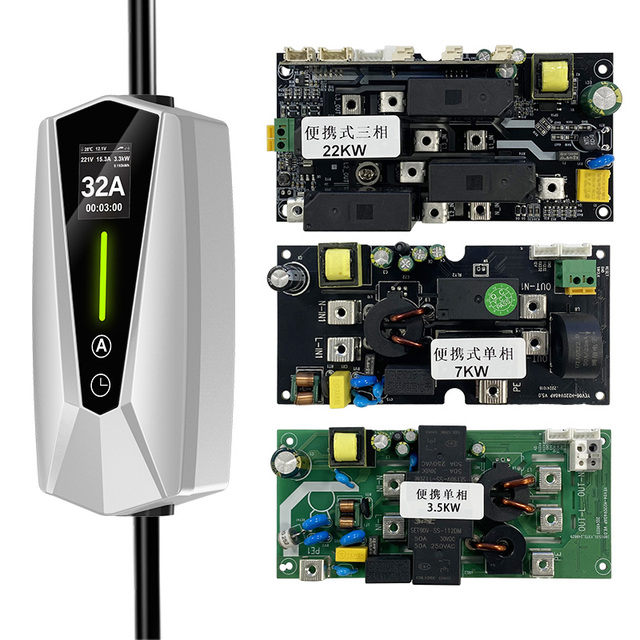
16a Car Usa Mobile 63a Lab 13a 32 Amps Motherboard Control Module 10a Ev Charger Pcb 22kw Wi-fi 7.4 kw Evse Portable Board
 Shenzhen Yuanchuangli Electronic Co., Ltd.🇨🇳CN3 yrs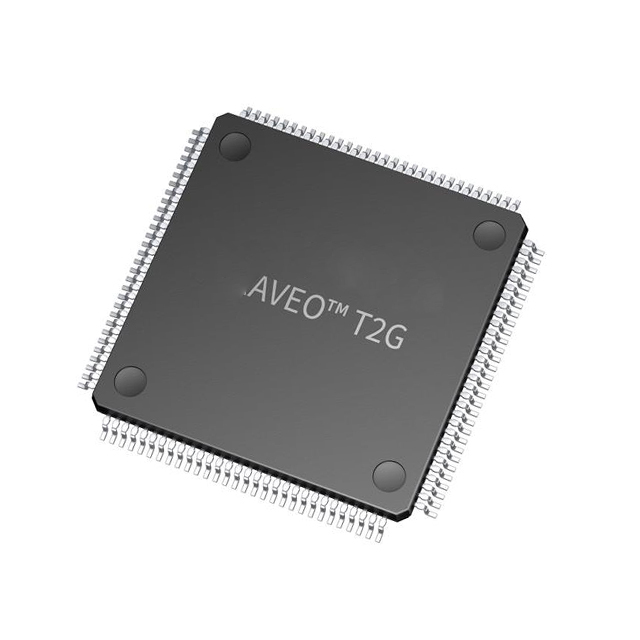
MCU MPU SOC PMIC MOSFET DSP/DSC BJT Block Joint Transistor RF Card Chip Pressure Sensor EVSE-SIG-BRD1X EVSE-SIG-BRD2X SMD
 Shenzhen Shengxing Micro Technology Co., Ltd.🇨🇳CN2 yrs
80A 150A 200A Ccs1 Socket Ev Dc Charging Socket Combo 1 Electric Vehicles Charging Inlet Socket With 1M Cable
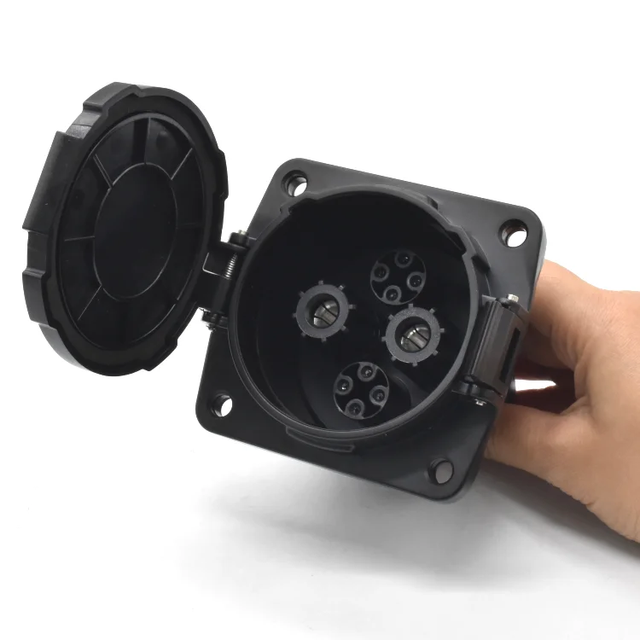
High-Current CHAdeMO EVSE Socket, 125A/200A Inlet Connector with Pin 3 for DC Fast Charging Electric Vehicles
 Chengdu Sixpence Technology Co., Ltd.🇨🇳CN3 yrs
EVSE Charging Connectors 32A J1772 to Type2 EV Charging Adapter
 Chongqing Senku Machinery Imp And Exp Co., Ltd🇨🇳CN10 yrs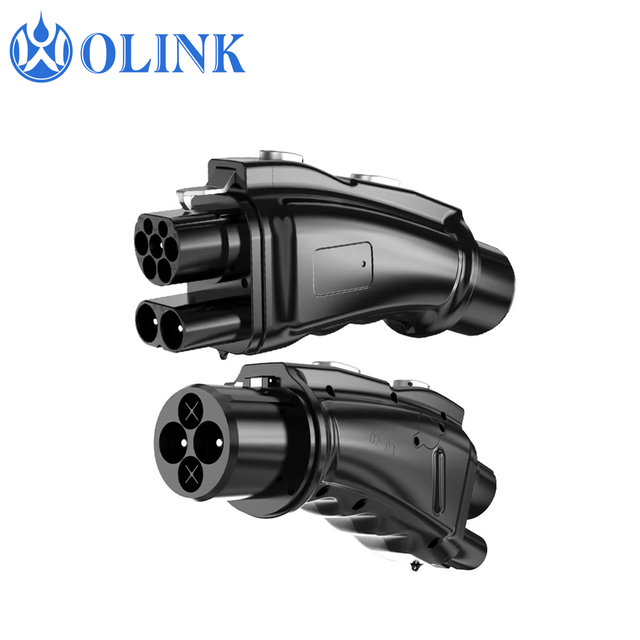
Olink EVSE Charging Connector Fast DC Charger 250A Ccs2 to CHAdEMO Adapter DC EV Adaptor Chademo Ccs2 Adapter
 Huizhou Olink Technology Co., Ltd.verified🇨🇳CN6 yrs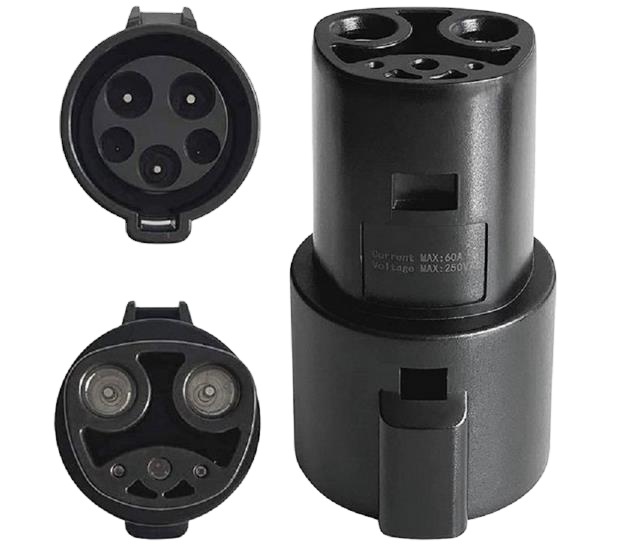
SAE J1772 Type1 Tesla EVSE Adapter for Model S/X/3/Y New Condition EV Charger Socket Tesla Electric Vehicle Connector Convertor
 Suzhou Junchi Electronic Technology Co., Ltd.🇨🇳CN5 yrs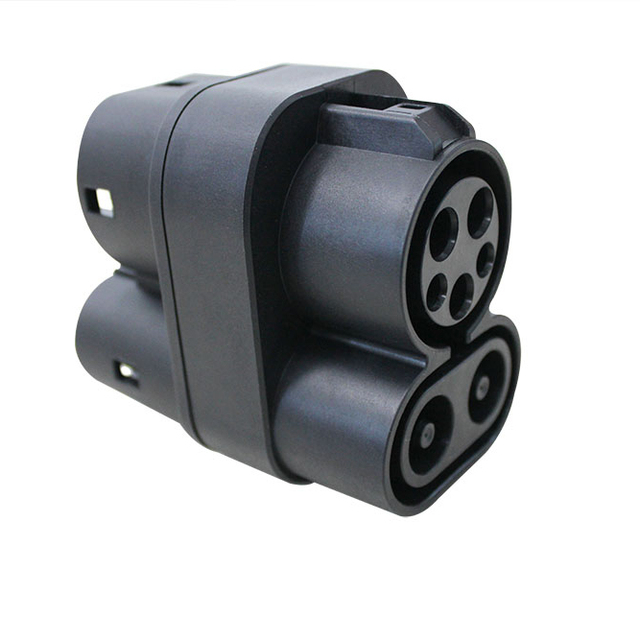
150A EV Adapter CCS Combo 1 to Combo 2 Adaptor EVSE Fast Charger Plug
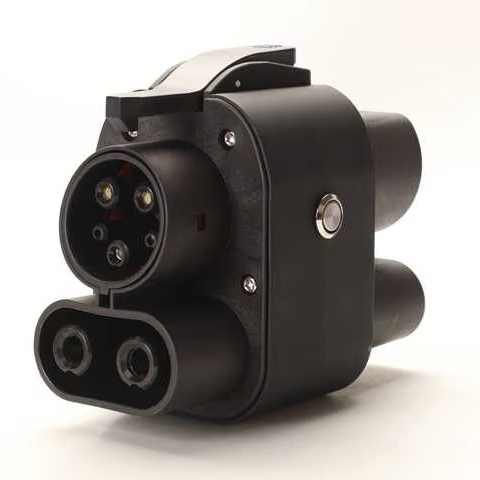
EVSE Connector CCS1 to CCS2 300A DC Charging Adapter CCS2 EV Connectors
 Shenzhen Mandzer New Energy Technology Co.,Ltdverified🇨🇳CN4 yrs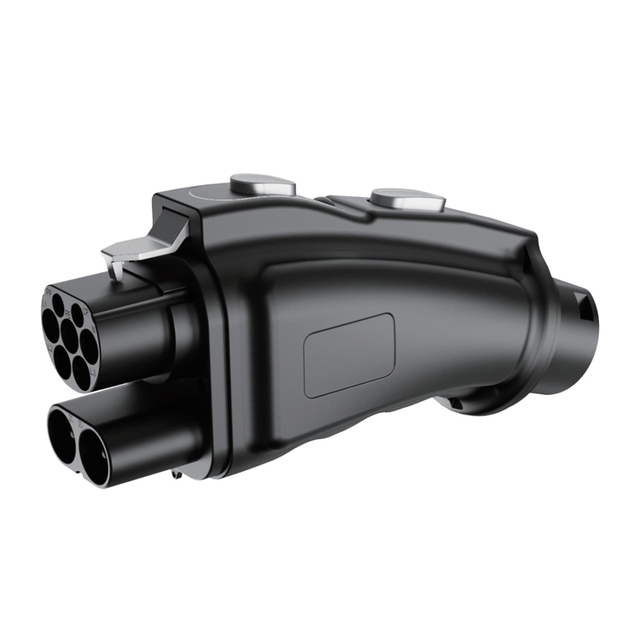
Shipstrive Ready to Ship Accessories Ccs2 to Gbt Evse Charging Connector Ev Dc Charger Parts Adapter
 Nanjing Zhoutuo Information Technology Co., Ltd.🇨🇳CN3 yrs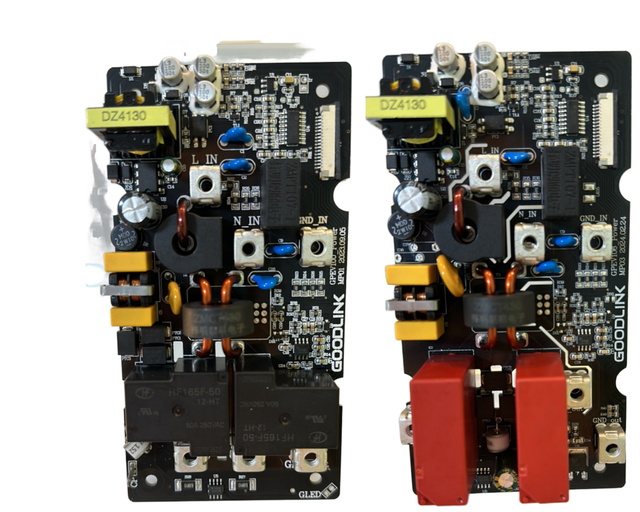
3.5KW 7KW 16A 32A EV Charger PCBA Board Single Phase Tuya WiFi APP Control Custom Portable Wallbox EVSE Mainboard
 Langfang Jinshuo New Energy Technology Co., Ltd.🇨🇳CN3 yrs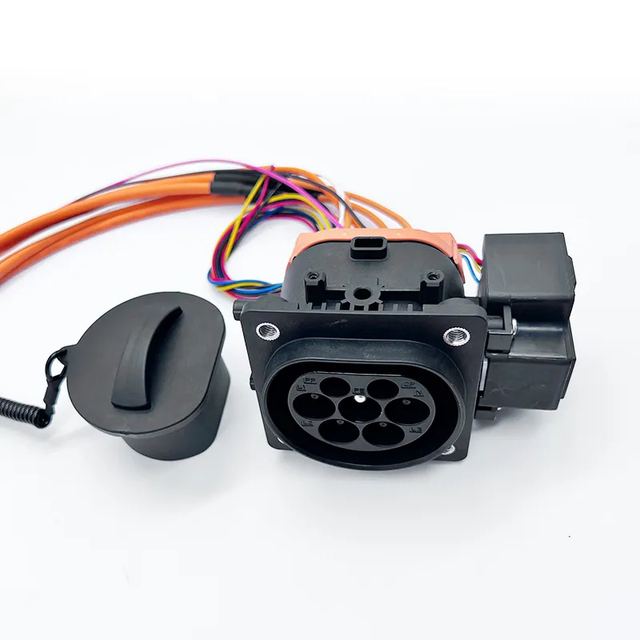
Type 2 IEC 62196 32A EV Charging Socket Type 2 Electric Vehicle Cars Charging Evse Female Socket
 Foshan Maxgreen New Energy Technology Ltd.verified🇨🇳CN7 yrs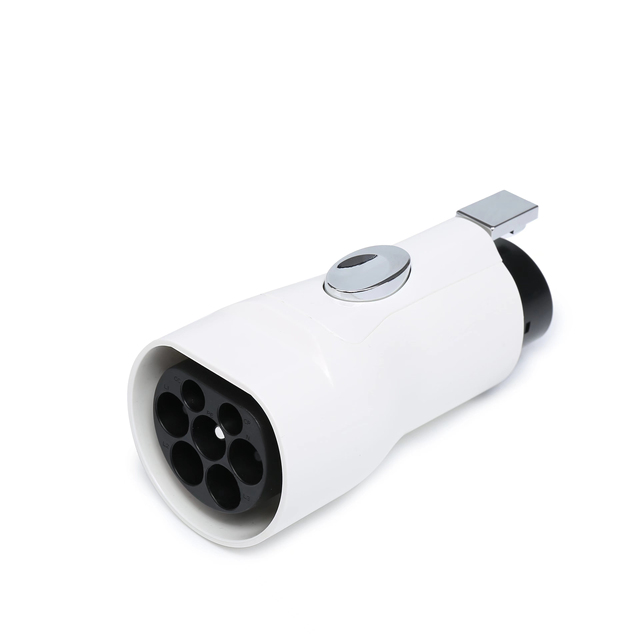
32A EVSE Charger Connector IEC 62196 Socket Type 2 to Type 1 EV Charger Adapter
 Anhui Karunte New Energy Technology Co., Ltd.🇨🇳CN4 yrs
EVSE Charging Connector16A 32A 3-Phase Type 2 to Type 2 Socket 7 Pins New Energy Car Charging Adapter
 Chengdu Natural Smart New Energy Co.,Ltd🇨🇳CN5 yrs
IEC 62196-2 EVSE Connector Type 2 EV Charger Holder Socket
 Nanjing Shenqi Electronic Technology Co., Ltd.verified🇨🇳CN9 yrs
High precision Pcb 30Kw 40Kw GBT CCS2 Charging Station Evse Controller Charger Dc EV Charger Module PCBA ODM OEM
 Shenzhen Boshengyuan Technology Co., Ltd.🇨🇳CN5 yrs
High precision Pcb 30Kw 40Kw GBT CCS2 Charging Station Evse Controller Charger Dc EV Charger Module PCBA ODM OEM
Related Searches
Explore more sourcing topics & related categories
Sources & References
27 sources cited · Verified industry data & reports
Charging Device - an overview | ScienceDirect Topics
www.sciencedirect.com
The infrastructures supplying electric energy for the recharging of PEVs are charging stations. These stations can be categorized into three types, namely residential, public and ultra-fast charging stations. The residential charging stations, installed at household areas, enable PEVs to be charged during night when the energy tariff is low and the peak hour demand can be avoided. An important issue of EVCS is the electrical structure design. Generally, the structure of EVCS can either be based on an AC micro-grid system or based on a DC micro-grid system [49], as shown in Fig. 4. In a DC micro-grid type of EV charging station, several DC chargers are connected to a common DC bus, and a high power AC/DC converter is used as the interlinking power converter between the DC system and the main AC grid. Charging devices provide the link between electricity grid and EVs by converting AC power into DC power, which can charge a battery. They can be on-board or off-board, depending on the type of charging. Generally, most PEVs have electric storage devices, and charging technologies are important on the way to commercializing the PEVs so that the range anxiety of the customers can be alleviated. There are two charging methods including inductive charging and conductive charging.
Electrostatic generator - Wikipedia
en.wikipedia.org
Oleg D. Jefimenko, "Electrostatic Motors: Their History, Types, and Principles of Operation". Electret Scientific, Star City, 1973. G. W. Francis (author) and Oleg D. Jefimenko (editor), "Electrostatic Experiments: An Encyclopedia of Early Electrostatic Experiments, Demonstrations, Devices, and Apparatus". His instrument was described as "an instrument which by turning a winch produces the two states of electricity without friction or communication with the earth". (Phil. Trans., 1788, p. 403) Nicholson later described a "spinning condenser" apparatus, as a better instrument for measurements. This apparatus was reinvented several times, by C. F. Varley, that patented a high power version in 1860, by Lord Kelvin (the "replenisher") 1868, and by A. D. Moore (the "dirod"), more recently. Lord Kelvin also devised a combined influence machine and electromagnetic machine, commonly called a mouse mill, for electrifying the ink in connection with his siphon recorder, and a water-drop electrostatic generator (1867), which he called the "water-dropping condenser". Francis Ronalds automated the generation process in 1816 by adapting a pendulum bob as one of the plates, driven by clockwork or a steam engine – he created the device to power his electric telegraph. Others, including T. Cavallo (who developed the "Cavallo multiplier", a charge multiplier using simple addition, in 1795), John Read, Charles Bernard Desormes, and Jean Nicolas Pierre Hachette, developed further various forms of rotating doublers. In 1798, the German scientist and preacher Gottlieb Christoph Bohnenberger, described the Bohnenberger machine, along with several other doublers of Bennet and Nicholson types in a book. A Pidgeon machine possesses fixed electrostatic inductors arranged in a manner that increases the electrostatic induction effect (and its electrical output is at least double that of typical machines of this type [except when it is overtaxed]). The essential features of the Pidgeon machine are, one, the combination of the rotating support and the fixed support for inducing charge, and, two, the improved insulation of all parts of the machine (but more especially of the generator's carriers).
TOPIC: ELECTRIC CHARGES→ Production, Types, Distribution and ...
fctemis.org
TOPIC: ELECTRIC CHARGES→ Production, Types, Distribution and Storage ... Electrostatics is the study of charges at rest. It is a type of electricity that does not move from · one point to another in the substance in which it is produced. ... There are two types of charges – positive and negative charges. The law states that like charges repel, unlike charges attract. ... Conductors are materials that allow electrons to pass through them easily. Insulators are materials that do not allow electrons to pass through them easily. Examples · of insulators are plastic, polythene, Bakelite, ebonite, paper, dry hair, silk, oils, glass, sulphur ... Experimental works have shown that charges are distributed where there is a sharp curve. area of a charged surface is called surface density. Fig. 2.3 Charge Distribution is greater at the edge (sharp edge) ... The electrophorus is a device for transferring and storing charges.
Charging station - Wikipedia
en.wikipedia.org
NEC-1999 also defined the term "electric vehicle supply equipment" as the entire unit "installed specifically for the purpose of delivering energy from the premises wiring to the electric vehicle", including "conductors ... electric vehicle connectors, attachment plugs, and all other fittings, devices, power outlets, or apparatuses". Tesla, Inc. uses the term charging station as the location of a group of chargers, and the term connector for an individual EVSE. A charging station, also known as a charge point, chargepoint, or electric vehicle supply equipment (EVSE), is a power supply device that supplies electrical power for recharging the onboard battery packs of plug-in electric vehicles (including battery electric vehicles, electric trucks, electric buses, neighborhood electric vehicles, and plug-in hybrid vehicles). There are two main types of EV chargers: alternating current (AC) charging stations and direct current (DC) charging stations. The Society of Automotive Engineers (SAE International) defines the general physical, electrical, communication, and performance requirements for EV charging systems used in North America, as part of standard SAE J1772, initially developed in 2001. SAE J1772 defines four levels of charging, two levels each for AC and DC supplies; the differences between levels are based upon the power distribution type, standards and maximum power. Charge rates vary from residential rates for electricity to many times higher. The premium is usually for the convenience of faster charging. Vehicles can typically be charged without the owner present, allowing the owner to partake in other activities. Sites include malls, freeway rest areas, transit stations, and government offices. Typically, AC Type 1/Type 2 plugs are used. Additional standards released by SAE for charging include SAE J3068 (three-phase AC charging, using the Type 2 connector defined in IEC 62196-2) and SAE J3105 (automated connection of DC charging devices). In 2003, the International Electrotechnical Commission (IEC) adopted a majority of the SAE J1772 standard under IEC 62196-1 for international implementation.
Charging Equipment - an overview | ScienceDirect Topics
www.sciencedirect.com
In order to ensure that the routine tests specified for subsequent units are satisfactory and can be performed without serious problems arising, they are carried out on the type-tested unit. Any difficulties arising can then be resolved before the further production units become available, resulting in a saving of time and space in a test bay. On completion of erection, each charger is subjected to a series of tests designed to ensure that it has been correctly assembled, that the correct components have been used and that the equipment functions correctly. These tests comprise: ... Testing of electronic equipment in accordance with routine tests listed in CEGB General Specification for Electronic Equipment, EES 1980. Battery swapping station (BSS) also known as battery switching station is a place where electric vehicle owners can rapidly exchange their empty battery with a fully charged one (see Fig. 17). This concept has been proposed as a new method to handle the obstacles regarding to the aforementioned traditional charging methods [272,273]. There are currently three battery swap types on the industry: chassis power swap, sub-box power swap, and side power swap [274]. The general outline of battery swap systems is given by the IEC 62840-1,-2 [275,276], and NB/T 33006-2013, NB/T 33020-2015 with a maximal voltage up to 1 000 V AC and up to 1 500 V DC. The Electric Power Research Institute (EPRI), Society of Automotive Engineers (SAE), and the International Electrotechnical Commission (IEC) have a substantial role to play in categorizing charging modes and levels in each country as well as managing the differences in safety standards. Various charging types are outlined in established standards, including alternating current (AC) Level-1, alternating current (AC) Level-2, and direct current fast charging (DCFC). According to a study published in Schroeder and Traber (2012), residential charging infrastructure is the most common method for charging EVs, with Level-1 and Level-2 as the most popular There are many types of charging techniques, as shown in Table 1. Table 1. An overview of charging techniques. Level 1 (L1) charge cables are included with every EV. The device is universally compatible, does not require installation fees, and is pluggable into any standard grounding 120-V outlet. Depending on the price of electricity and the efficiency rating of your EV, L1 charging can cost anywhere from two to six dollars per mile.
Charger Types and Speeds | US Department of Transportation
www.transportation.gov
If you are deaf, hard of hearing, or have a speech disability, please dial 7-1-1 to access telecommunications relay services. EVs can be charged using electric vehicle service equipment (EVSE) operating at different charging speeds. Level 2 equipment offers higher-rate AC charging through 240V (in residential applications) or 208V (in commercial applications) electrical service, and is common for home, workplace, and public charging. Level 2 chargers (left) are common in home, workplace, and public settings and can charge a BEV from empty in 4-10 hours. Direct current fast chargers (right) are common as public chargers and along highway corridors and can charge a BEV to 80 percent in under an hour. These new standards aim to ensure that charging is a predictable and reliable experience for EV drivers. This includes ensuring that drivers can easily find a charger, do not need multiple apps and/or accounts to charge, chargers work when drivers need them to, and are designed to be compatible in the future with forward-looking charging capabilities.