Eye Tracking Devices

Overview
Product sourcing insights & recommendations
The eye-tracking device market is entering a phase of exponential growth, with the global market projected to reach approximately $3.33–$3.77 billion by 2026 MarketdataforecastThebusinessresearchcompany. This surge is driven by a shift from niche laboratory research to mass-market applications in automotive safety, healthcare diagnostics, and immersive gaming.
Market Trends & Insights
* Technological Shift: The industry is moving toward hardware-agnostic solutions. For 2026, innovations like blink-powered eye tracking and AI-predictive gaze allow standard webcams to function as high-accuracy trackers, reducing the need for expensive infrared hardware PrecedenceresearchMarketdataforecast.
* XR Integration: Eye tracking is becoming a standard feature in AR/VR headsets to enable foveated rendering, which optimizes battery and processing power by focusing high resolution only where the user is looking GlobalgrowthinsightsMedium.
* Healthcare Breakthroughs: New AI models are achieving over 90% accuracy in diagnosing neurological conditions like Autism and Alzheimer's through gaze pattern analysis PrecedenceresearchBusinessresearchinsights.
Product Analysis & Sourcing
Sourcing options are currently bifurcated between high-end assistive devices and low-cost integration modules.
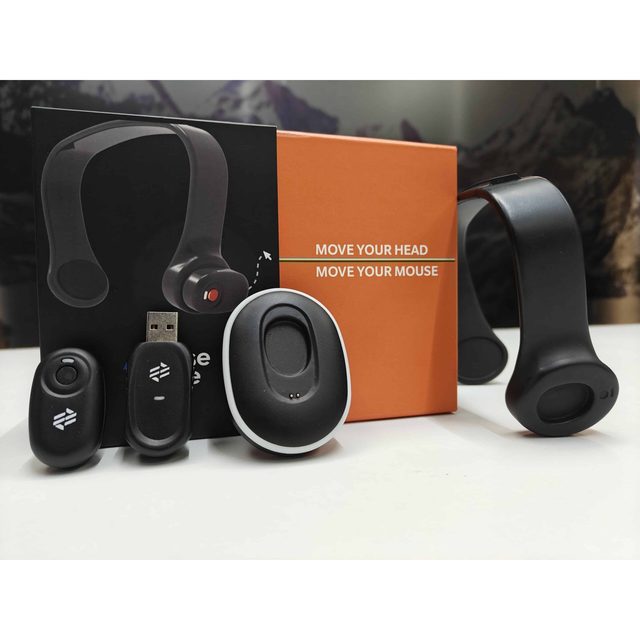
* Assistive Technology: Wearable head devices for hands-free computer control and rehabilitation are priced around $499/unit, targeting the healthcare and accessibility sectors .
* Driver Monitoring Systems (DMS): Infrared-based eye-tracking cameras for vehicle safety are widely available from $27–$40/unit. These modules detect fatigue, distraction, and "microsleep" events in real-time .
* Component Modules: High-speed camera sensors (up to 330fps) for VR/AR SLAM and eye-tracking integration are being offered at competitive prices between $12–$25/unit, primarily by suppliers in Shenzhen, China .
Eye Tracking Devices Wearable Mobile Remote
Products · 3 lists

Related Searches
Explore more sourcing topics & related categories
Sources & References
25 sources cited · Verified industry data & reports
Eye Tracking Market Size, Growth Report 2026-2030
www.thebusinessresearchcompany.com
Global Outlook – By Type (Eye Attached Tracking, Optical Tracking, Electrooculography), By Component (Hardware, Software), By Location (Remote, Mobile), By Application (Healthcare, Retail, Research, Automotive, Consumer Electronics, Other Application) - Market Size, Trends, Strategies, and Forecast to 2030 · Purchase This ReportDownload Sample PDFAdd to Cart · Home>Reports Store>Healthcare Services>Global Eye Tracking Market Report 2026 Major trends in the forecast period include increasing use in behavioral and cognitive research, growing adoption in automotive safety systems, expansion of wearable eye tracking devices, rising application in healthcare diagnostics, integration with virtual and augmented reality. The eye tracking market research report is one of a series of new reports from The Business Research Company that provides market statistics, including industry global market size, regional shares, competitors with the market share, detailed market segments, market trends and opportunities, and any further data you may need to thrive in the eye tracking industry. The eye tracking market size has grown exponentially in recent years. It will grow from $2.52 billion in 2025 to $3.33 billion in 2026 at a compound annual growth rate (CAGR) of 31.9%. The growth in the historic period can be attributed to growth in human-computer interaction studies, rising research funding, expansion of usability testing, advancements in sensor technologies, increased academic adoption.
Eye Tracking Market Size, Share & Growth Report, 2034
www.marketdataforecast.com
Global Eye Tracking Market Size, Share, Trends & Growth Forecast Report By Component (Hardware and Software), Product Type (Remote Eye Tracking and Mobile Eye Tracking), Application, Vertical & Region (North America, Europe, Asia Pacific, Latin America, Middle East & Africa), Industry Forecast (2026 to 2034) The global eye tracking market was valued at USD 2.96 billion in 2025 and is projected to grow from USD 3.77 billion in 2026 to USD 26.17 billion by 2034, registering a remarkable CAGR of 27.4% from 2026 to 2034. Market growth is driven by increasing adoption of eye-tracking technologies across healthcare, automotive, consumer electronics, gaming, and research applications. The size of the global eye-tracking market was valued at USD 2.96 billion in 2025. The global market is further estimated to grow at a remarkable CAGR of 27.4% from 2026 to 2034 and be worth USD 26.17 billion by 2034 from USD 3.77 billion in 2026. Recent strategic actions include licensing iris recognition intellectual property from Fingerprint Cards to enable multimodal in-cabin authentication for premium vehicle segments. The company's participation in CES 2026 to demonstrate the latest driver monitoring and alcohol impairment detection technologies reinforces its commitment to automotive safety innovation.
Eye Tracking Devices Market Growth Driven by 44.9% CAGR by 2035
www.globalgrowthinsights.com
Market Size: Global Eye Tracking Devices Market valued at USD 1.5 billion in 2025, reaching USD 2.17 billion in 2026 and USD 3.14 billion by 2035, growing at 44.9% CAGR. Growth Drivers: Over 65% adoption in usability studies, 58% usage in healthcare assessments, 55% integration in behavioral analytics applications. Trends: More than 60% VR developers, 50% accessibility providers, and 45% automotive programs increasingly utilize eye tracking technologies. Global Eye Tracking Devices Market size was valued at USD 1.5 billion in 2025 and is projected to reach USD 2.17 billion in 2026. The market is further expected to reach USD 3.14 billion by 2035, exhibiting a CAGR of 44.9% during the forecast period from 2026 to 2035. The Eye Tracking Devices Market is segmented by type and application, with both segments contributing to the expansion of eye movement analysis technologies across multiple industries. The global market was valued at USD 1.5 Billion in 2025 and is projected to reach USD 2.17 Billion in 2026 and USD 3.14 Billion by 2035, growing at a CAGR of 44.9% during the forecast period. The Eye Tracking Devices Market demonstrates strong regional growth patterns driven by advancements in healthcare technology, immersive digital platforms, research activities, and human-machine interaction systems. The global market was valued at USD 1.5 Billion in 2025 and is projected to reach USD 2.17 Billion in 2026 and USD 3.14 Billion by 2035, expanding at a CAGR of 44.9%. North America accounts for 38% of the market share, followed by Europe with 29%, Asia-Pacific with 24%, and Middle East & Africa with 9%. Growing investments in eye tracking research, accessibility solutions, and smart technologies continue to support market expansion across all regions.
Eye Tracking Devices Market Outlook 2026- 2035 | Expanding to $5.53 Bn
www.businessresearchinsights.com
With detailed studies done, it also offers a comprehensive analysis by inspecting the factors like segmentation, opportunities, industrial developments, trends, growth, size, share, and restraints. This analysis is subject to alteration if the key players and probable analysis of market dynamics change. What is the expected market size of the global Eye Tracking Devices Market in 2026? + The global Eye Tracking Devices Market is projected to reach USD 1.09 billion in 2026. What is the market prediction for Eye Tracking Devices Market till 2035? Eye Tracking Devices Market projected to reach USD 1.09 Billion in 2026 and USD 5.53 Billion by 2035, at 19.5% CAGR. Key Market Driver: Healthcare adoption contributes approximately 30% to overall market growth, as eye tracking devices are increasingly used for diagnostics, rehabilitation, and assistive communication technologies. Major Market Restraint: High costs and technical complexity limit adoption in smaller businesses and emerging regions, accounting for around 20% of potential market restriction. Emerging Trends: Integration into wearable devices, including VR/AR headsets, is influencing roughly 25% of current innovation trends, enhancing mobility and real-time eye tracking applications. What are the major restraints affecting the Eye Tracking Devices Market? + High costs and technical complexity restrict adoption in smaller businesses and emerging markets, accounting for about 20% of potential market limitations. What are the latest trends in the Eye Tracking Devices Market?
Eye Tracking Market Companies, Size & Trends 2026-2035
www.precedenceresearch.com
Eye Tracking Market (By Type: Remote Eye Trackers, Wearable Eye Trackers, Mobile Eye Trackers, Screen-based Eye Trackers, Integrated Eye Trackers; By Component: Hardware, Cameras, Sensors, Processing Units, Display Systems, Software; By Technology: Electrooculography, Video-based Eye Tracking, Optical Tracking, Screen-based Eye Tracking, Wearable Eye Trackers; By Application: Healthcare, Gaming, Advertising, Automotive; By End Use: Consumer Electronics, Healthcare Devices, Automotive Systems, Research Institutions, Virtual Reality) - Global Industry Analysis, Size, Trends, Leading Companies, R Theia is an AI-enabled predictive eye-tracking device designed to enhance contextual intelligence. Innovations: Several researchers are engaged in innovating advanced eye tracking solutions to address health issues in humans. For instance, in January 2026, the researchers of China innovated a new blink powered eye tracking device. By application, the gaming segment is expected to grow at the highest CAGR between 2026 and 2035. By end use, the consumer electronics segment led the market in 2025. By end use, the education segment is expected to expand with the fastest CAGR during the forecast period. The eye tracking market comprises companies developing advanced technologies to measure gaze points, eye positions, and movements to determine a person's viewpoint. An eye tracking device uses advanced sensors and high quality cameras to analyze a wide range of applications. Partnerships: Numerous eye tracking device companies are partnering with tech providers to develop high quality eye tracking solutions. For instance, in January 2026, Pupil Labs partnered with NIL Technology.
Eye Tracking Systems Market Size, Share 2035 | CAGR 19.5%
www.globalgrowthinsights.com
The Eye Tracking Systems Market was valued at USD 1.33 billion in 2025 and is expected to grow to USD 1.59 billion in 2026 and USD 1.90 billion in 2027, reaching around USD 7.88 billion by 2035 at a CAGR of 19.5% during 2026–2035. Consumer electronics account for about 39% of demand, while healthcare applications contribute nearly 24%. Gaming and AR/VR usage holds around 28% share. North America leads with about 38% market share, while Asia-Pacific holds nearly 31%. Adoption in research and usability testing has increased by around 36%, and integration in smart devices has grown by about 33%, supporting strong market growth. Around 35% of new launches in 2024 focused on lightweight wearable devices with cloud-based data tracking. Nearly 40% of R&D is dedicated to enhancing VR/AR systems with embedded gaze sensors, while 25% of developments target automotive driver monitoring systems for premium vehicles. Companies are also releasing eye tracking systems tailored for healthcare, with applications in neurological research and patient therapy. The trend toward personalized experiences is accelerating product upgrades, with several leading firms introducing multi-sensor devices capable of integrating facial recognition and biometrics for advanced analytics. Trends: Over 42% integration in VR/AR devices and 40% in retail analytics reflect expanding cross-industry adoption. The Eye Tracking Systems market is undergoing a transformative shift with wide adoption in industries ranging from healthcare to automotive. Around 42% of global manufacturers are now embedding eye tracking sensors in virtual reality and augmented reality devices, enabling immersive experiences.