F6 Batteries

Overview
Product sourcing insights & recommendations
The "f6 battery" market is a specialized niche split between vintage audio restoration (gumstick batteries) and professional photography (Nikon F6 accessories). Modern trends for 2026 show a significant shift toward USB-C integrated lithium gumsticks to replace rare vintage chargers. While demand is stable among retro-tech enthusiasts, sourcing remains fragmented due to significant retail price markups, creating a clear opportunity for B2B wholesale entry. The detailed report below provides a complete breakdown of market demand, sourcing options, and consumer pain points.
I've analyzed the F6 battery market. You can continue with:
Usb C Rechargeable Gumstick Battery F6 Lithium
Products · 3 lists

1.2V 2/3 F6 Ni-MH Gumstick Rechargeable Battery for CD Player
 Huizhou Winpow Electronic Co., Ltd.verified🇨🇳CN14 yrs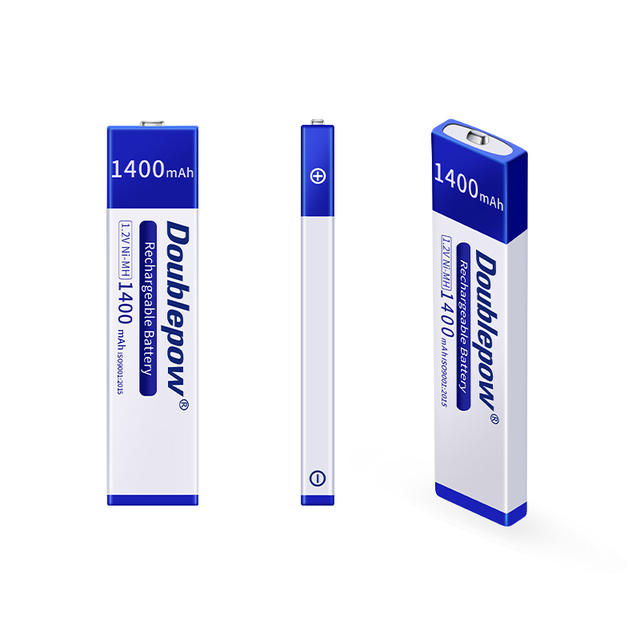
Bulk 1.2V 1400mAh 7/5 F6 Size Prismatic Ni-MH NiMH Rechargeable Chewing Gum Battery for Walkman CD Player
 Shenzhen Doublepow Energy Technology Co., Ltd.verified🇨🇳CN9 yrs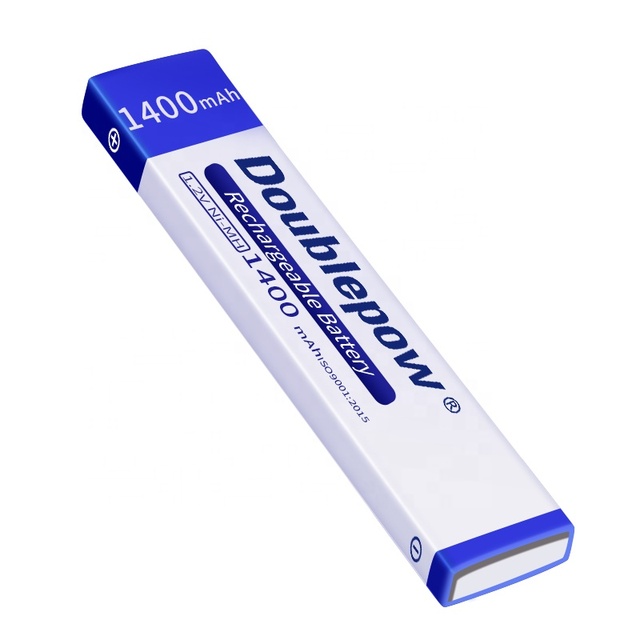
New Arrivals 1.2V 1400mAh Rechargeable Battery Prismatic 7/5 F6 NIMH Chewing Gum Gumstick Battery for CD Play
 Shenzhen Doublepow Energy Technology Co., Ltd.verified🇨🇳CN9 yrs
JINTION 3/5F6 500mAh 1.2V Ni-MH Rechargeable Chewing Gum Battery for Electronics
 Quanzhou Jintion Electronics Co., Ltd.🇨🇳CN21 yrs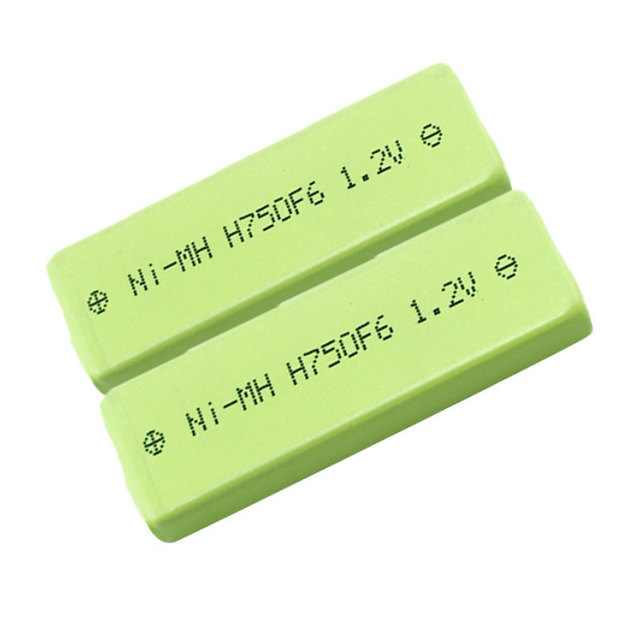
Factory Price Ni-MH Rechargeable Batteries Size F6 Chewing Gum Battery 1450MAH 1.2V Electronic Dictionary Battery
 Shenzhen Xinglong Electronics Co., Ltd.🇨🇳CN7 yrs
Deep Dive · Full Report
Full Market Report
1 document · Live-fetched from source
Related Searches
Explore more sourcing topics & related categories
Sources & References
28 sources cited · Verified industry data & reports
Battery Options for the Nikon F6 | Nikon F6 Project
f6project.com
One of the consistently erroneous pieces of information I find on the internet centers around the type of batteries the F6 uses. One web site claimed the F6 requires a special, proprietary battery. I thought I’d set the record straight here. One of the many truly great things about the F6 is the number of battery options available. In the standard configuration it’s true: two 3-volt lithium CR123’s are recommended. The F6 also has a backup battery that retains the camera’s settings and clock. It’s not possible to replace or service this internal battery without sending the camera to Nikon. If depleted, it should fully recharge within 48 hours when new batteries are inserted. Running AA batteries in the F6 is easy with the optional MB-40 battery grip · Double A batteries are available pretty much anywhere and therefore are a solid, reliable source for powering your camera no matter where you travel. Given the F6’s complete dependence on electronics this is an important operating consideration, especially if your out of range of retail stores likely to carry them. Battery life will vary, but the F6 brochure reports as follows: AA-type alkaline-manganese, approximately 10-55 rolls (notice this is less than the standard configuration CR-123’s). AA-type Ni-MH, approximately 30-55 rolls. AA-type lithium, approximately 45(!) rolls. 45-93 rolls on 8 lithium batteries. Plus, Lithium batteries are considerably lighter than Alkaline batteries.
12V 45Ah Sealed Lead Acid Battery with F6 Terminals - TLV12450F6
www.upsbatterycenter.com
Use of third party part or model numbers are solely for identification purposes only. UPS Battery Center is in no way implying that any of its products are original equipment manufacturer replacement batteries. Specifications are subject to change without notice. Our batteries deliver performance and peace of mind and are used in medical devices, alarm systems, fire panels, mobility devices, solar technologies, Uninterrupted Power Supply (UPS) systems, recreational vehicles, and many other industrial and recreational applications. • UPS Standby Power Applications • Data Centers • Emergency 911 Centers • Hospitals & Medical Applications • Military Power Equipment • Emergency Lighting • Fire Detection and Alarm Devices · Product Specifications Dimensions Terminal Type: F6 Length (mm/inch): 197/7.76 Width (mm/inch): 165/6.50 Height (mm/inch): 175/6.89 Total Height (mm/inch): 182/7.17 Approx.
Zoom F6
www.soundonsound.com
It’s hard to work out where there’s space for the electronics amongst the connectors and batteries, and I know of nothing else this small that is able to match the F6’s remarkable capabilities. Given the unit’s design and features, it would be reasonable to assume the F6 is designed primarily with video cameras and DSLR users in mind, its compact proportions making it ideal for fixing between a tripod and camera baseplate, or onto the base of a DSLR (and it comes with a suitable mounting plate for precisely that application). The unit comes with a 14‑page ‘Quick Start Guide’ which is enough to get going with the machine, but the F6’s capabilities are extensive and complex and there’s a lot of flexibility, so it’s well worth reading the full 202‑page operational manual, which is available online, to familiarise yourself with all the features and implications. The F6 caters for both AA batteries and Sony L‑series battery packs, and when the latter runs out of power will switch seamlessly to the former. Menu options cater for alkaline, NiMH, or Lithium chemistries to enable accurate run‑time calculations and to shut the unit down before cells are damaged. The unit’s core power consumption is remarkably low (around 1W) so the AA batteries alone can provide quite a decent recording duration, especially if you keep the display brightness down and don’t use phantom power. However, the F6 is clearly intended to use a Sony L6 rechargeable battery pack as the primary power source, clipped onto the rear of the unit. However, the F6 can be employed equally well in a ‘gadget bag’ for traditional location sound‑recordist applications, or on a desktop for podcast panel recordings. Its compact size also makes it ideal for hiding ‘on set’ for local recording, or even for placing in a waterproof bag for remote unattended field recording! This is a very versatile little product. The F6’s construction appears pretty rugged and it certainly feels robust, and although the (very few) controls are necessarily tightly packed I didn’t have any difficulty operating this recorder.
POCO F6 - Specifications
www.devicespecifications.com
Specifications of the POCO F6. Dimensions: 74.4 x 160.5 x 7.8 mm, Weight: 179 g, SoC: Qualcomm Snapdragon 8s Gen 3 (SM8635), CPU: 1x 3.0 GHz Cortex-X4, 4x 2.8 GHz Cortex-A720, 3x 2.0 GHz Cortex-A520, GPU: Qualcomm Adreno 735, RAM: 12 GB, 16 GB, 4266 MHz, Storage: 256 GB, 512 GB, 1024 GB, Display: 6.67 in, AMOLED, 1220 x 2712 pixels, 30 bit, Battery: 5000 mAh, Li-Polymer, OS: Xiaomi HyperOS (Android 14).
Zoom F6 Multi-Track Field Recorder ZF6 B&H Photo Video
www.bhphotovideo.com
To keep up with the pace of on-location production, the F6 offers several methods of powering. Operate it via four AA batteries or a Sony L-Series type battery (available separately), power it through a USB Type-C connection, or plug it into a wall outlet with the Zoom AD-17 AC adapter (available separately). With up to 16.5 hours of battery life (AA lithium batteries, 16-bit / 48 kHz, 2-channel recording to SD card), you can rely on the F6 hour after hour. If there's a jack for timecode input on the camera, I assume it will work by connecting with the appropriate wire and setting both devices to communicate with that timecode marker. One thing I do know is that the datetime on the device doesn't always hold if you turn the F6 off for a while or remove the batteries. Since source levels can change unexpectedly, you need a system that can capture everything from pin-drop quiet to roaring loud without compromise or clipping. With 32-bit float resolution and dual-path A/D converters, the F6 delivers immense dynamic range to cover the audible spectrum with ease.
Battery 6F22 - what is it and what is it used for? - Botland.store
botland.store
Key players in the global zinc-carbon battery market include 555BF, Energizer Batteries, Spectrum Brands, Sonluk and Panasonic. The world’s top five manufacturers hold a share of more than 40%. The Middle East and Africa is the largest market, with a share of more than 20%, followed by North America and Europe – both continents/regions have a share of more than 30%. In terms of product, AA size is the largest segment, with a share of more than 40%. In terms of applications, flashlights are the largest segment, followed by broad entertainment. How much can you say about a nine-volt battery? It turns out that quite a lot. It’s hard to imagine today’s electronic devices without its contribution. Zinc-carbon 6F22 9V and similar batteries remain an important source of power around the world. The new version of the standard used since 1990 uses “R” and “P” shape designations, where P includes the earlier F and S, but the designation of the 9-volt 6F22 battery is still encountered, used, searched on the web and… sometimes causes considerable confusion. Non-dischargeable 9-volt lithium batteries are often still labeled as 6F22 batteries, even though they are based on lithium-manganese chemistry, which offers good capacity and allows for strong discharge currents, sometimes up to or even more than 1 A. Zinc-carbon 6F22 9V batteries is, however, the oldest type of battery, which sets certain standards for this size of battery, including a nominal output voltage of 9.0V. The first digit (6) determines the number of cells – in this case it is six flatcells, which is what the designation with the letter (F), from flat, tells us.