Filter Amplifier

Overview
Product sourcing insights & recommendations


The filter amplifier market is experiencing significant growth, driven by the expansion of 5G infrastructure and the increasing demand for high-fidelity audio and medical instrumentation. The global electronic filters market is projected to reach $45.65 billion by 2034, growing at a 10% CAGR Straitsresearch. A key trend is the shift from passive to active filtering in low-frequency applications where signal gain is required, whereas passive technologies (BAW/SAW) remain dominant in the RF domain due to their superior performance in the GHz range Persistencemarketresearch.
Key Market Insights
* 5G & RF Dominance: RF filters are the fastest-growing segment with a 15.7% CAGR, essential for 5G spectrum management and interference mitigation Persistencemarketresearch.
* Miniaturization: There is a strong movement towards integrated System-on-Chip (SoC) solutions to reduce component footprints in smartphones and wearables Persistencemarketresearch.
* Technological Shift: Bulk Acoustic Wave (BAW) technology is surpassing SAW for 5G applications above 3GHz due to its higher power handling and better thermal stability Persistencemarketresearch.
* AI Integration: Design automation using AI is significantly reducing development cycles for custom filter modules Persistencemarketresearch.
Product Trends & Specifications
Current B2B offerings highlight a clear divide between low-cost analog modules and high-end digital signal processing (DSP) units:
* Analog Active Filters: Popular NE5532-based modules are widely used for audio and subwoofer applications, offering dual operational amplification at low prices ($3–$15/unit) and low MOQs (~10 pieces).
* Programmable DSP Modules: Advanced modules featuring FIR filters and parametric EQ are trending for professional audio systems, typically priced between $35 and $100 depending on the number of output channels and processing power.
Programmable Digital Filter Amplifier Module
Products · 2 lists
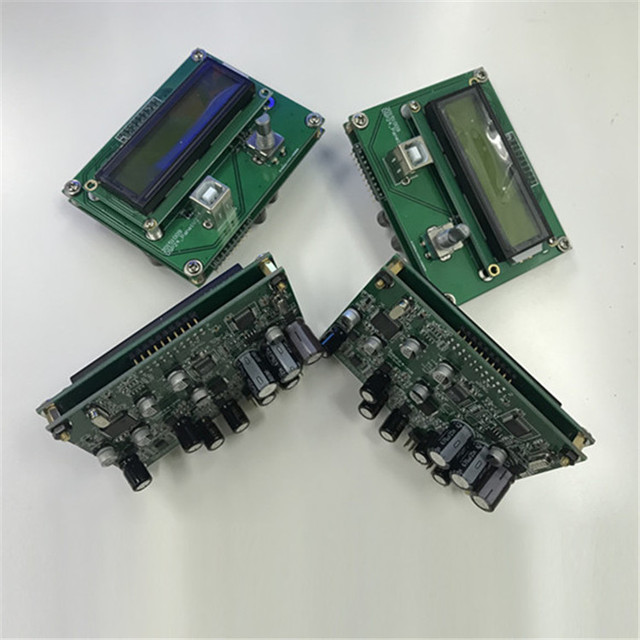
2ins*4outs Audio Sound Line Array Amplifier Dsp Modules With Fir Filter
 Guangzhou Cinow Electronic Technology Co., Ltd.🇨🇳CN11 yrs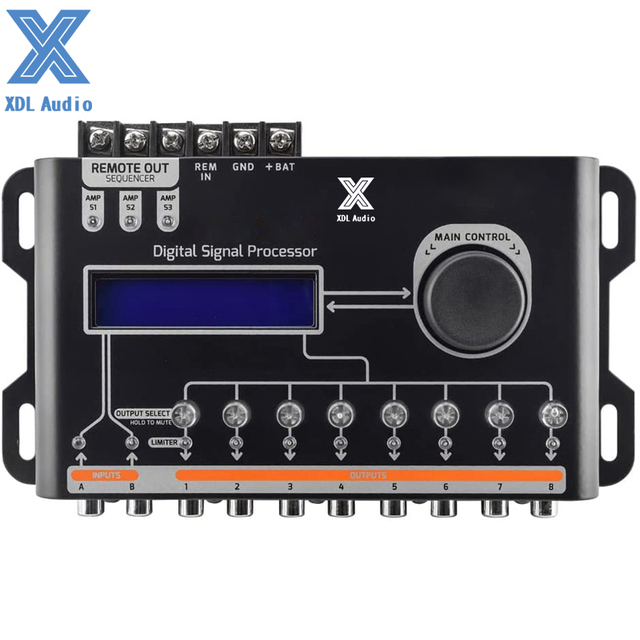
Digital Signal Processor DSP-2.8X Hi-Volt PRE AMP 10 Digital Crossover Filters 8-Way Independent Output Parametric EQ Limiter
 Guangzhou Xideli Technology Electronics Co., Ltd.🇨🇳CN2 yrs
Related Searches
Explore more sourcing topics & related categories
Sources & References
21 sources cited · Verified industry data & reports
Class D Audio Amplifier Market - Industry,Size, Share, Growth ...
transparencymarketresearch.com
Class D Audio Amplifier Market - Global Industry Analysis, Size, Share, Growth, Trends, and Forecast 2016 - 2026 · North America (U.S. and Canada) · Latin America ...
RF Filters Market to Grow by USD 7.10 Billion from 2022 to ...
everything RF
2022-2026 expects the RF filter market to grow by $7.1 Billion over the forecast period. The analysts at Technavio have categorized the global radio frequency ...

High pass Electronic Filter Market Outlook 2026-2033
The High pass Electronic Filter market is expected to grow at an CAGR of 11% from 2026 to 2033. This detailed High pass Electronic Filter Market ...

Cmos Power Amplifier Market Trends & Forecast, 2026-2033
Coherent Market Insights
Cmos Power Amplifier Market is estimated to be valued at USD 6.16 Bn in 2026 and is expected to expand at CAGR of 8.3% reaching USD 10.77 Bn ...

Current Sense Amplifier Market Size to Hit USD 3.62 Billion ...
Precedence Research
By product type, the resistor-based current sense amplifiers segment is expected to grow at a solid CAGR between 2026 and 2035. By application, ...

RF Filter Market Size, Trends & Industry Statistics, 2032
Persistence Market Research
The global RF filter market will grow from US$16.2B in 2025 to US$44.9B by 2032 (15.7% CAGR), driven by 5G expansion, rising IoT use, and complex spectrum ...