Fm Radio Forms

Overview
Product sourcing insights & recommendations
The FM radio market is experiencing a "digital fusion" renaissance in 2026, with the global market valued at $3.4 billion and projected to grow at a CAGR of 3.8% through 2035 Businessresearchinsights. Today’s "FM radio forms" transcend simple tuners, evolving into hybrid audio hubs that combine nostalgia with modern resilience.
Core Product Forms & Trends
* Retro-Modern Hybrids: A dominant category characterized by vintage aesthetics—such as walnut wood cases and rotary dials—integrated with Bluetooth 5.3, USB-C charging, and high-fidelity 20W speakers AlibabaAlibaba.
* Emergency & Survival Gear: There is a significant surge in demand for solar-powered, hand-crank radios that include NOAA weather bands and emergency power bank capabilities (e.g., 2000mAh) for disaster preparedness BusinessresearchinsightsAlibaba.
* AI-Integrated Stations: On the broadcasting side, 2026 marks the operational shift where AI DJs and automated news aggregators are becoming standard for local FM stations Radiocontentpro.
Market Insights for 2026
* Digital Fatigue: Consumers are increasingly seeking "permissionless" audio—hardware that works without app logins, subscriptions, or data buffering—driving a revival in portable analog units Alibaba.
* Hyper-Localism: Local content is seeing a resurgence, with 63% of consumers reacting more positively to localized advertising than national digital streams Radiocontentpro.
* Region-Specific Growth: The United States leads the traditional radio market with projected revenues of $12.2 billion, followed by Germany at $3.8 billion Facebook.
Retro Bluetooth Fm Radio Walnut Case Usb C
Products · 3 lists
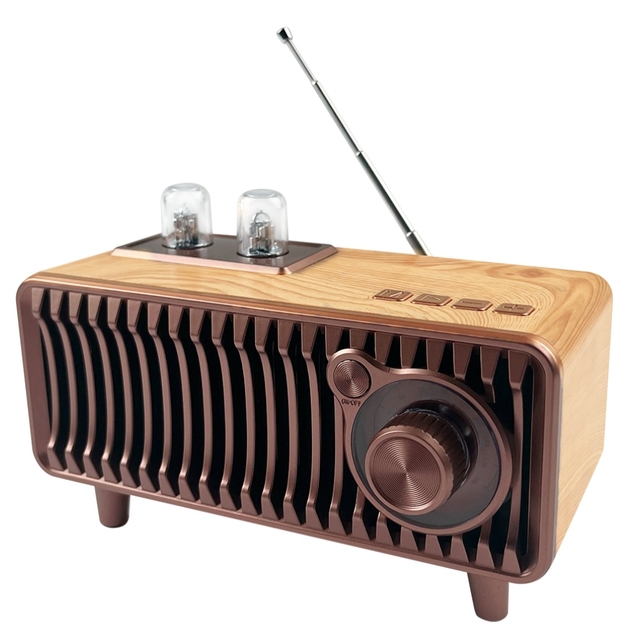
Retro Wireless Speaker Vintage Radio Walnut Wood Rotary FM Radio 20W with U Disk/TF Card/Aux Music Player Function
 Shenzhen Haisaite Technology Co., Ltd.verified🇨🇳CN7 yrs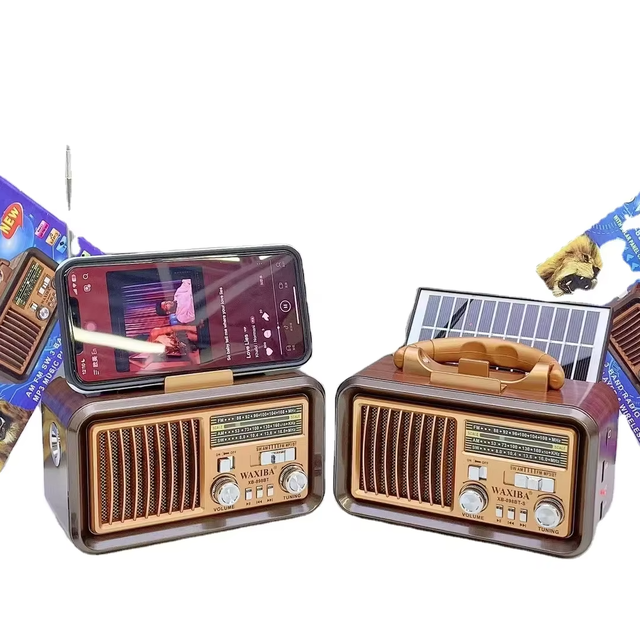
Am Fm Sw Radio With Mp3 Player Multiband World Radio Portable Wooden Style Classic Vintage Radio Retro Solar Bluetooth Speaker
 Shenzhen Baoend Electronics Co., Ltd.🇨🇳CN8 yrs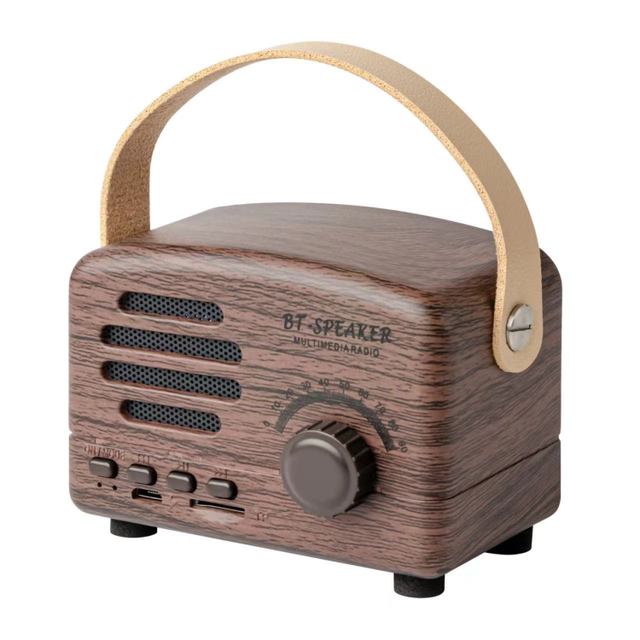
Best Sale Vintage Good Quality Retro FM/AM//wooden Radio Receiver with USB/TF/BT Function
 Shenzhen Weijia Industry Co., Ltd.🇨🇳CN8 yrs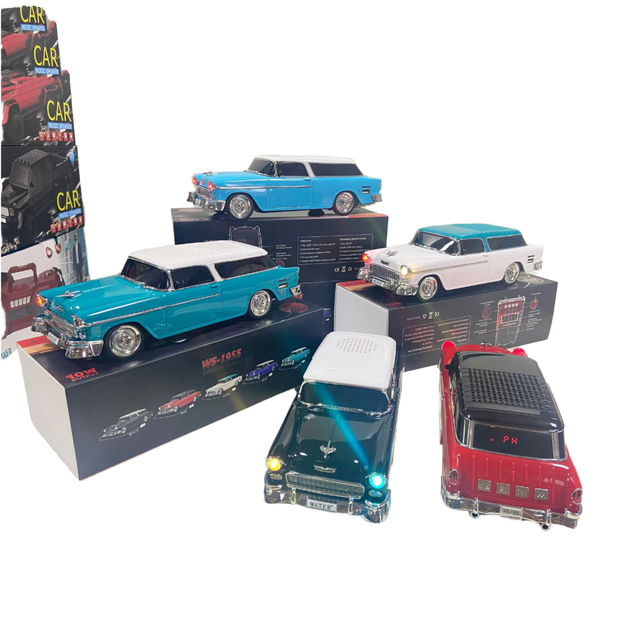
WS-1955 10W Classic Vintage MS-538 Car Design Wireless Desktop Party BT Portable FM Radio TF FM AUX USB BT Blue Tooth Speaker
 Dongguan Shengyu Technology Co., Ltd.🇨🇳CN5 yrs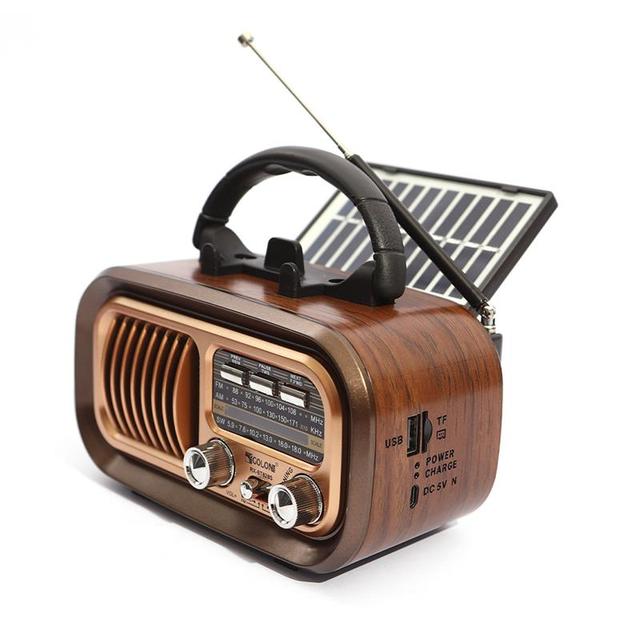
Solar Powered Bluetooth AM/FM Radio Speaker with ABS Material 1200mAh Battery-Portable Outdoor Use
 Shenzhen Update Electronics Co., Ltd.verified🇨🇳CN23 yrs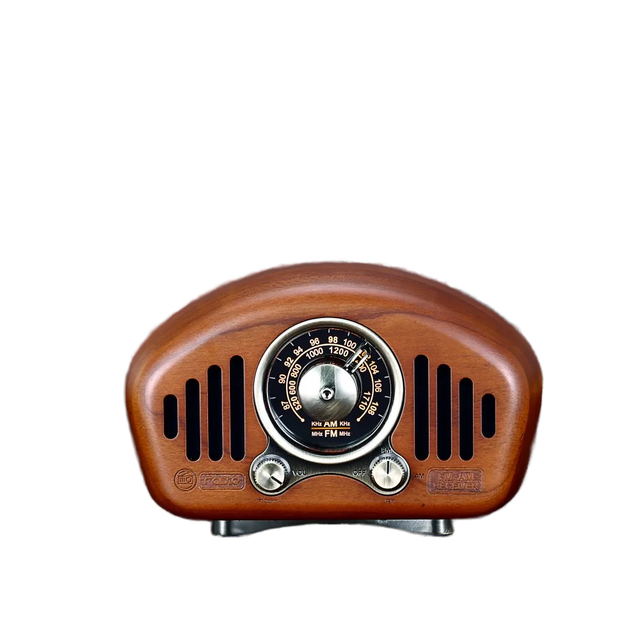
Retro Bluetooth Speaker FM Vintage Radio Wireless Connection Player with Loud Volume, Strong Bass Enhancement, Bluetooth 5.0 5V
 Shenzhen Mei Ding Technology Co., Ltd.verified🇨🇳CN3 yrs
Retro Outdoor Wooden FM/AM/SW1-2 4 Band Radio with for Bluetooth & Music Player for Home Theatre Consumers
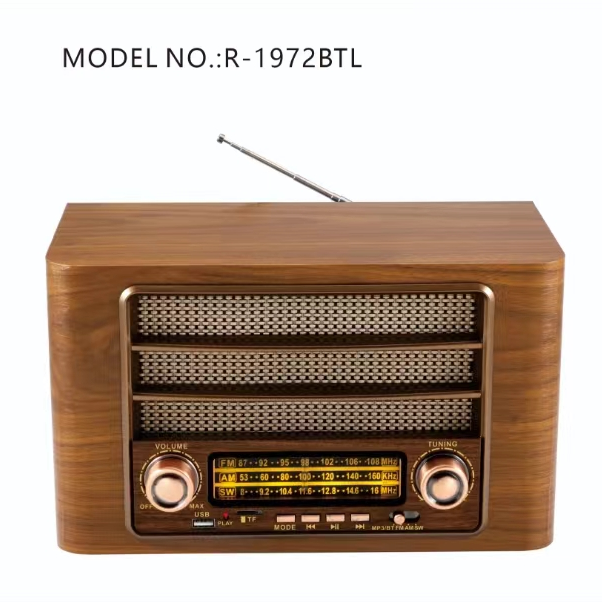
Retro Bluetooth Multi in One Home Radio, Capable of Quickly Connecting to Mobile Phones with Stable signal & clear Sound
WS-1955 10W Classic Vintage Car Design Wireless Desktop Party BT Portable FM Radio TF FM AUX USB BT Blue Tooth Speaker
Solar Powered Bluetooth AM/FM Radio Speaker with ABS Material 1200mAh Battery-Portable Outdoor Use
Retro Bluetooth Speaker FM Vintage Radio Wireless Connection Player with Loud Volume, Strong Bass Enhancement, Bluetooth 5.0 5V
Related Searches
Explore more sourcing topics & related categories
Sources & References
27 sources cited · Verified industry data & reports
FM broadcasting - Wikipedia
en.wikipedia.org
Throughout the world, the FM broadcast band falls within the VHF part of the radio spectrum. Usually 87.0 to 108.0 MHz is used, or some portion of it, with few exceptions: 87.0 to 87.5 is not available in ITU region 1 (Africa, Europe and Russia). In the former Soviet republics, and some former Eastern Bloc countries, the older 65.8–74 MHz band is also used. Assigned frequencies are at intervals of 30 kHz. In 1961 WEFM (in the Chicago area) and WGFM (in Schenectady, New York) were reported as the first stereo stations. By the late 1960s, FM had been adopted for broadcast of stereo "A.O.R.—'Album Oriented Rock' Format", but it was not until 1978 that listenership to FM stations exceeded that of AM stations in North America. In most of the 70s, FM was seen as highbrow radio associated with educational programming and classical music, which changed during the 1980s and 1990s when Top 40 music stations and later even country music stations largely abandoned AM for FM. Today, as elsewhere in the developed world, most urban Australian broadcasting is on FM, although AM talk stations are still very popular. Regional broadcasters still commonly operate AM stations due to the additional range the broadcasting method offers. Some stations in major regional centres simulcast on AM and FM bands. Digital radio using the DAB+ standard has been rolled out to capital cities. Like Australia, New Zealand adopted the FM format relatively late. In some countries, small-scale (Part 15 in United States terms) transmitters are available that can transmit a signal from an audio device (usually an MP3 player or similar) to a standard FM radio receiver; such devices range from small units built to carry audio to a car radio with no audio-in capability (often formerly provided by special adapters for audio cassette decks, which are no longer common on car radio designs) up to full-sized, near-professional-grade broadcasting systems that can be used to transmit audio throughout a property, including systems that synchronize holiday decorative lighting with music. FM broadcasting is a radio broadcasting method that uses frequency modulation (FM) transmissions. In November 1919, Hans Idzerda began broadcasts, using narrow-band FM, over station PCGG, located at The Hague in the Netherlands. However, most early broadcasting stations instead employed Amplitude ...
FM Radio | Federal Communications Commission
www.fcc.gov
FM is short for frequency modulation, which refers to the means of encoding the audio signal on the carrier frequency. FM full power, low power, translator and booster stations operate in the 88 – 108 MHz band. There are many classes of radio stations. The smallest provide service to areas within three or four miles of a transmitter site; the largest provide service to locations more than 60 miles from a transmitter site.
What Different Types of Radio Technology Exist?
www.crunchreviews.com
This form of broadcasting encompasses various types, including AM, FM, digital, and satellite radio, each utilizing distinct technologies and frequency bands to operate effectively. At its core, radio broadcasting involves the transmission of radio signals, which are a type of electromagnetic radiation with frequencies ranging from 3 kHz to 300 GHz. Satellite radio is one of the newest forms of radio broadcasting and is becoming the most common form of broadcasting rapidly. Satellite radio stations are a unique type of radio service that transmits signals via satellite, allowing for extensive coverage and superior sound quality. It’s a commercial, subscription-based service which uses a network of satellites as a way to transmit signals. Unlike the more traditional radio types like AM or FM, the satellite radio is digitally encoded and uses special receivers. HD radio is the standard form of digital radio broadcasting in North America. Hybrid Digital Radio is used by either an AM radio station and/or an FM radio station. HDR transmits a digital version of the analog broadcast and provides a second digital channel for alternate radio programming, such as weather reports, car navigation updates, etc. Digital radios are becoming increasingly in demand, therefore, most places use them as their standard broadcasting method, which gives us a peek at what the future of radio looks like. People usually categorize radios depending on their use and function. The most used today are AM, FM, Shortwave, Longwave, Satellite, Ham, DAB, Walkie-Talkie, and HD radio. Community radio stations, owned and operated by their communities, play a vital role in local broadcasting and remain relevant during the transition from analogue to digital broadcasting.
Frequency modulation - Wikipedia
en.wikipedia.org
In its simplest form, binary FSK, two frequencies represent binary symbols 0 and 1. FSK is widely used in low to moderate data-rate applications because of its simplicity and robustness. Common uses include early computer modems (such as fax modems), telephone caller-ID systems, garage-door openers, remote keyless entry systems, and radioteletype. Frequency modulation is widely used for FM broadcasting. In radio transmission, an advantage of frequency modulation is that it has a larger signal-to-noise ratio and therefore rejects radio frequency interference better than an equal power amplitude modulation (AM) signal. For this reason, most music is broadcast over FM radio. Frequency modulation and phase modulation are the two complementary principal methods of angle modulation; phase modulation is often used as an intermediate step to achieve frequency modulation. For example, narrowband FM (NFM) is used for two-way radio systems such as Family Radio Service, in which the carrier is allowed to deviate only 2.5 kHz above and below the center frequency with speech signals of no more than 3.5 kHz bandwidth. Wideband FM is used for FM broadcasting, in which music and speech are transmitted with up to 75 kHz deviation from the center frequency and carry audio with up to a 20 kHz bandwidth and subcarriers up to 92 kHz. A high-efficiency radio-frequency switching amplifier can be used to transmit FM signals (and other constant-amplitude signals). For a given signal strength (measured at the receiver antenna), switching amplifiers use less battery power and typically cost less than a linear amplifier. This gives FM another advantage over other modulation methods requiring linear amplifiers, such as AM and QAM. There are reports that on October 5, 1924, Professor Mikhail A. A continuous pilot-tone, if added to the signal – as was done on V2000 and many Hi-band formats – can keep mechanical jitter under control and assist timebase correction. These FM systems are unusual, in that they have a ratio of carrier to maximum modulation frequency of less than two; contrast this with FM audio broadcasting, where the ratio is around 10,000.
AM vs FM - Difference and Comparison | Diffen
www.diffen.com
AM (or Amplitude Modulation) and FM (or Frequency Modulation) are ways of broadcasting radio signals. Both transmit the information in the form of electromagnetic waves. AM works by modulating (varying) the amplitude of the signal or carrier transmitted according to the information being sent, while the frequency remains constant. Today, speech broadcasting (such as talk and news channels) still prefers to use AM, while music channels are solely FM. A signal may be carried by an AM or FM radio wave. AM was initially developed for telephone communication. For radio communication, a continuous wave radio signal called double sideband amplitude modulation (DSB-AM) was produced. A sideband is a band of frequencies higher (called upper sideband) or lower (called lower sideband) than the carrier frequencies which is a result of modulation. All forms of modulations produce sidebands. Pre-emphasis and de-emphasis are processes that require boosting and reducing certain frequencies. This is done to reduce noise at high frequencies. Stereophonic FM radio was developed and formally approved in 1961 in the USA. This uses two or more audio channels independently to produce sound heard from various directions. The International Telecommunication Union (ITU) designated different types of amplitude modulation in 1982 which include A3E, double sideband full–carrier; R3E, single-sideband reduced-carrier; H3E, single-sideband full-carrier; J3E, single-sideband suppressed-carrier; B8E, independent-sideband emission; C3F, vestigial-sideband and Lincompex, linked compressor and expander. FM radio characteristics and services include pre-emphasis and de-emphasis, stereophonic FM sound, Quadraphonic sound, Dolby FM and other subcarrier services.
Types of Radio Explained: The Complete Guide | Radioguide.FM
www.radioguide.fm
What’s the difference between AM and FM? AM varies amplitude (longer range), while FM varies frequency (better sound). Are radios still relevant today? Absolutely, they’ve simply evolved into streaming, podcasting, and digital formats. As explained by BeOnAir, the main difference is that AM varies amplitude to transmit sound, while FM changes frequency, a subtle shift that transformed the sound of radio forever. Fast-forward to the digital era, and internet radio has taken the classic format into a new dimension. No matter the form, analog or digital, personal or broadcast. Radio continues to thrive because it’s more than technology. It’s a voice, a story, a connection. From HAM operators saving lives to late-night FM DJs spinning love songs, the airwaves remain alive and endlessly diverse. ... Internet radio is the newest version of the traditional radio, but the concept of transmitting radio signals has not changed. When most people think of radio, AM and FM broadcasting come to mind. These traditional forms of radio have been the backbone of audio communication for over 100 years.