Gain Amp

Overview
Product sourcing insights & recommendations
I have completed a comprehensive research and analysis of the 'gain amp' market and product trends for 2026. The findings indicate a significant shift toward Class D efficiency and automotive integration, with the total amplifier market projected to reach approximately $44.08 billion by 2026.
The detailed report below covers:
- Technical Definitions: Explaining the critical difference between gain and volume.
- 2026 Market Outlook: Growth projections for Gain Blocks (CAGR 9.2%) and RF Power Amps (CAGR 11.2%).
- Emerging Trends: The rise of GaN/SiC materials and AI-enhanced signal processing.
- Consumer Preferences: Demand for immersive audio and miniaturized professional gear.
- Sourcing Insights: A curated list of B2B products ranging from RF modules to Hi-Fi tube amplifiers.
Please review the attached report for the full strategic analysis and recommended product categories.
The market report is ready. Would you like to:
Rf Gain Block Amplifier Bulk
Products · 3 lists
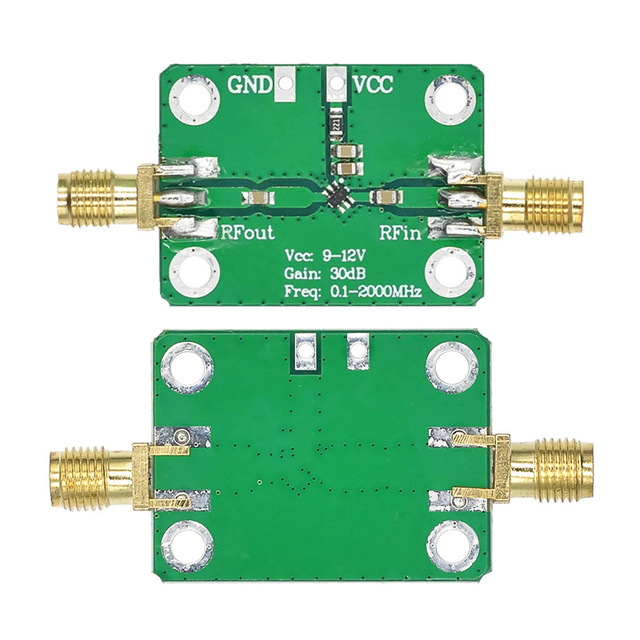
RF broadband amplifier low-noise amplifier medium power LNA (0.1-2000MHz gain 30dB)
 Shenzhen Jingmaoyuan Electronics Co., Ltd.🇨🇳CN3 yrs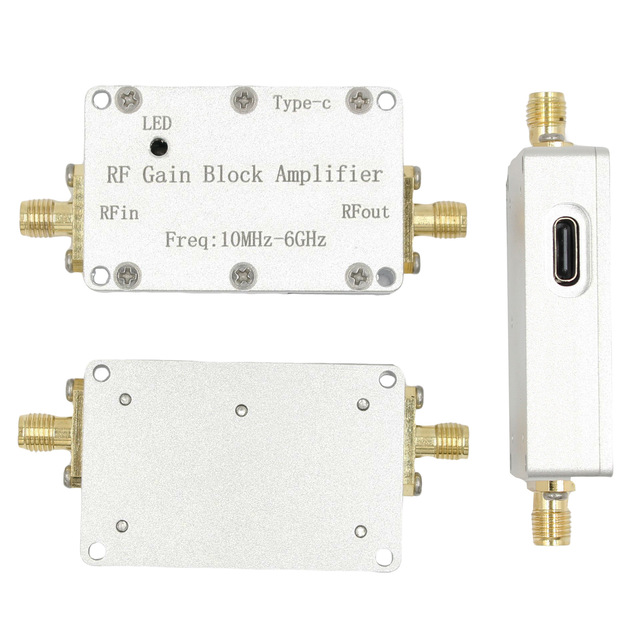
50M-6GHz RF Low Noise Amplifier 20dB 30dB High Gain Pre LNA Signal Receiving OEM Brand 90-Day Warranty
 Shenzhen Jiaxinjie Technology Co., Ltd.🇨🇳CN9 yrs
50M-6GHz RF Low Noise Amplifier 20dB 30dB High Gain Pre LNA Signal Receiving Amplifier
Deep Dive · Full Report
Full Market Report
1 document · Live-fetched from source
Related Searches
Explore more sourcing topics & related categories
Sources & References
28 sources cited · Verified industry data & reports
Ampliphonix and Gain - Amplified Nation
amplifiednation.com
Modded Plexi meets Ultraphonix cleans EL34 powered 50 or 100w 6V6 powered 22w Two independent channels Ampliphonix/Gain Tube powered spring reverb 4/4/8/16 ohm speaker output Effects loop and clean boost switch Two-button footswitch with locking DIN cable Size: 21″ W x 11″ T x 10″ D Weight: 24lbs 22w, 30lbs 50w, 33lbs 100w [button title="Watch Video Demo" link="https://www.youtube.com/watch?v=haqfX-YtHX4" target="lightbox" icon="icon-play" icon_position="right" color="theme" font_color="" size="2" full_width="" class="prettyphoto" download="" onclick=""] [button title="Download Manual" link="https://amplifiednation.com/wp-content/uploads/2024/01/Amplified-Nation-Manual_Ampliphonix-and-Gain.pdf" target="_blank" icon="icon-doc-text" icon_position="right" color="theme" font_color="" size="2" full_width="" class="" download="Amplified-Nation-Manual_Ampliphonix-and-Gain.pdf" onclick=""] The Ampliphonix and Gain is a unique offering in our product line. This amp has two independent channels and an output section of EL34 tubes. This unique amplifier is built with both Ultraphonix Plexi high-gain and Ultraphonix Fender cleans in the same package. The tones are astounding when laying down heavy gain tracks, or when you’re looking for shimmer and clarity. The Ampliphonix channel is the clean side of the amp. It’s based off of an original Dumble Ultraphonix that we had in the shop for about a year. Its got a very unique sound with a beautiful swirl that sounds like the amp is actually breathing notes from your guitar. Its high gain preamp rocks hard but can also be dialed back for great classic rock sounds. This channel is extremely fun to play and it it is a remarkable experience to be able to switch from such great cleans to this powerful blanket of overdrive. The Ampliphonix and Gain has reverb on both channels.
Amplifier Gain | Amplifiers and Active Devices | Electronics Textbook
www.allaboutcircuits.com
If multiple amplifiers are staged, their respective gains form an overall gain equal to the product (multiplication) of the individual gains. The gain of a chain of cascaded amplifiers is the product of the individual gains. For example, if an amplifier with an AC current gain of 3.5 is given an AC input signal of 28 mA RMS, the output will be 3.5 times 28 mA or 98 mA: In the last two examples, I specifically identified the gains and signal magnitudes in terms of “AC”. This was intentional, and illustrates an important concept: electronic amplifiers often respond differently to AC and DC input signals and may amplify them to different extents. Another way of saying this is that amplifiers often amplify changes or variations in input signal magnitude (AC) at a different ratio than steady input signal magnitudes (DC). The specific reasons for this are too complex to explain at this time, but the fact of the matter is worth mentioning. If gain calculations are to be carried out, it must first be understood what type of signals and gains are being dealt with, AC or DC.
On Amplifier Gain – JDS Labs Blog
blog.jdslabs.com
Max output may vary with headphone impedance, so it’s useful to review an amp’s output rating specs not just in terms of power, but in terms of Voutput. When an amplifier’s current (I) supply is abundant, its Power vs. Resistance curve will appear linear on a logarithmic scale. Conversely, if output current is limited by the amplifier’s design, the Power curve will appear non-linear. For example, the difference between a 1W Atom Amp+ and a 2.6W Atom Amp 2 is due to a large increase in I, and a small increase in Voltage Gain: Amplifier gain remains one of the more common points of confusion, despite the apparent simplicity: press the button and the amp gets louder. Newcomers tend to misunderstand the basics, leading to a myriad of wrong assumptions centered around gain. Gain is the ratio of the output voltage level to the input voltage level, typically expressed in a unitless form (i.e., 3x), or in decibels (i.e., +9 dB). In simpler terms, gain determines how much amplification is performed. Setting the proper gain level is crucial for optimizing the noise floor or reaching extreme listening volumes. Too much gain can lead to excessive noise, while too little gain can result in insufficient volume, as we’ll explain in more detail below. One common reason to invest in an amplifier is to overcome weak volume.
Gain Amplifier - an overview | ScienceDirect Topics
www.sciencedirect.com
A gain amplifier is defined as a device that increases the amplitude of a signal, which can include types such as instrumentation amplifiers, programmable-gain amplifiers, and isolation amplifiers, each serving specific purposes in enhancing low-level signals while minimizing noise and providing electrical isolation when necessary. Switching time between gain settings is determined by the multiplexer switching time and the op amp settling time. The resistor ladder as shown uses three different resistor values: R1, R2, and R3. The step attenuation in dB is given by ... If R1 = R3, then R2 = 2 × R1. In this case, the R-2R network provides 6 dB step attenuation. To determine the resistor values for a specific step attenuation and input resistance, use the formulas as follows: At a gain of 500, two switches are used in parallel, but their resistance causes a 10% gain error in the absence of adjustment. Figure 2-89:. Single-supply instrumentation amp PGA · Certain ΣΔ ADCs (e.g., AD7710, AD7711, AD7712, and AD7713) have built-in PGAs. Circuit design is much easier because an external PGA and its control logic are not needed. Furthermore, all the errors of the PGA are included in the specifications of the ADC, making error calculations simple. In many cases the gain, noise, and bandwidth cannot be optimized simultaneously. There are trade-offs among them. It is sometimes preferable to design for less than the maximum obtainable gain to improve bandwidth, or to obtain a specific value of amplifier noise performance.
What Is Gain On an Amp: A Clear Explanation - Gearank - Music Gear ...
gearank.com
But as explained above, gain has a specific function, and is used differently from volume and distortion. The similarity is mostly due to how gain impacts volume and distortion levels. So in order to get a good amp sound, you need to know how gain, volume, and distortion functions. And you also have to be aware of how they interact, specifically how gain interacts with distortion and volume. Some older guitar amps with just gain and volume can produce distortion by simply raising the gain levels, so gain are sometimes thought of as the distortion control. Guitar Amps: Guitarists use gain controls on amplifiers to shape their tone. Higher gain settings add distortion, creating a gritty sound suitable for playing rock, metal, and similar genres. Lower gain settings result in cleaner tones, which is great for blues, classic rock, funk, and the like. Bassists use gain controls similarly to achieve specific distortion levels. For example, higher gain settings, particularly in guitar amplifiers, can introduce distortion. This adds a unique edge suitable for genres like rock or metal, while a lower gain setting provides a cleaner tone. Overall, gain proves to be a versatile feature that significantly influences audio signal quality.
Audio Interface Pre-Amp gain specs (list) - Gearspace
gearspace.com
Audio Interface Pre-Amp gain specs (list) Links · Mark Forums Read · Open Contacts Popup · Networking · Contacts · User Control Panel · Edit Avatar · Edit Your Details · Edit Options · More · Instagram · YouTube · Tips & Techniques · Support Us · Login or Join · Home · Forums · Today's Posts · Hot Threads · New Product Alert · Featured Content · FWIW here is what I've found to date on various models in the lower price area as I shopped around (numbers in decibels of course): Behringer Uphoria 204: 56 Steinberg UR22: 60 M Audio MTrack 2x2M: 55 Mackie Onyx Producer: 45 Zoom UAC-2: 60 Audient ID4: 5 Presonus 1824c : 80 dB Cheaper than Ultralite or Crimson It says gain range though...hard to say if it's 60dB max gain with 20db pad or actual +80db max gain If I had to take a guess it is the first. ... I'm curious where you came up with the 45 dB number for the Mackie Onyx Producer. I have one, and while the manual and spec sheet doesn't list it like their products usually do, I asked Mackie support and they told me it was the same as the Onyx preamps in their other products, with 60 dB of available gain. $299 of a 16X8 Tascam US 2x2 and 4x4 have up to 57 db gain in the preamps, and I don't think they have Burr Brown preamps- Tascam's UH-7000 does have Burr Brown converters. ... And the 16 one has 56db, FYI: Product: US-16x08 | TASCAM Too bad - 68db would be most excellent!