Game Stick

Overview
Product sourcing insights & recommendations
The global retro gaming console market is projected to reach $4.18 billion by the end of 2026, driven by a 10% annual growth rate that significantly outpaces the broader gaming hardware industry Icon-EraRetrohandheldconsole. North America currently leads this surge, accounting for 38% of total revenue, with a strong seasonal peak in December Icon-EraQuantumrun.
Wholesale price benchmarks for 4K retro game sticks range from $3.90 to $15.00 per unit Alibaba. High-performance 4K models (such as the M8 and X2 Plus) typically sit between $8.70 and $15.00, retailing for $30 to $65 AlibabaRetrohandheldconsole. To clear customs and ensure market access, dual certification is the functional minimum: FCC Part 15 for the U.S. and CE (LVD, EMC, RED, RoHS) for the EU AlibabaJjrlab.
I have identified several top-selling 4K retro game stick options on Alibaba.com, including models with preloaded libraries of 20,000+ games and 2.4G wireless controllers. Detailed specifications and pricing are provided in the file below.
Based on these market findings, you can continue with:
Best Selling Wholesale 4k Retro Game Stick Consoles Wireless Controller Fcc Ce Alibaba.com
Products · 2 lists
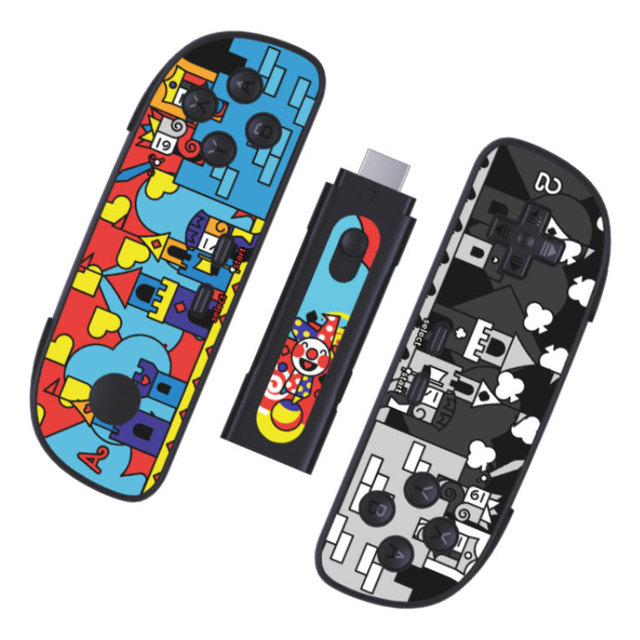
Best Selling Products Portable Controller Gamepad Digital Game Player Wireless 4K TV Game Stick Console
 Shenzhen Cheertone Technology Co., Ltd.verified🇨🇳CN21 yrs
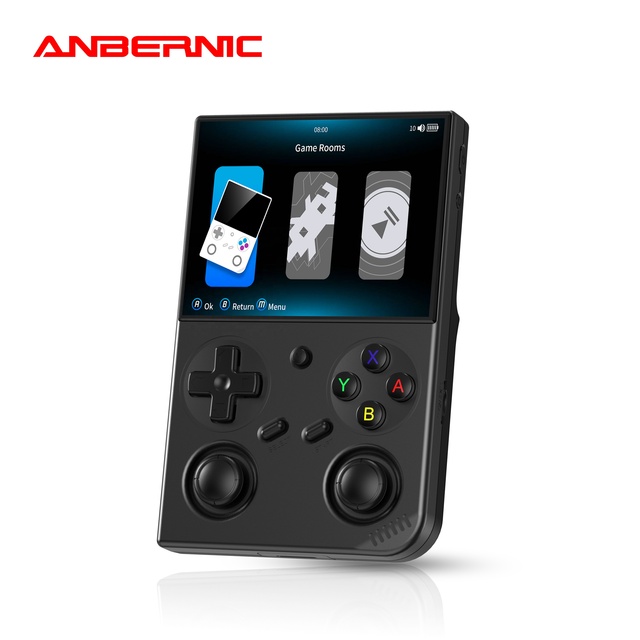
ANBERNIC RG35XXPro Hand Held Game Consoles 3.5" IPS Screen 64GB Videogames Device with WiFi Linux System for PSP Games Play
 Shenzhen Yangliming Electronic Technology Co., Ltd.verified🇨🇳CN18 yrs
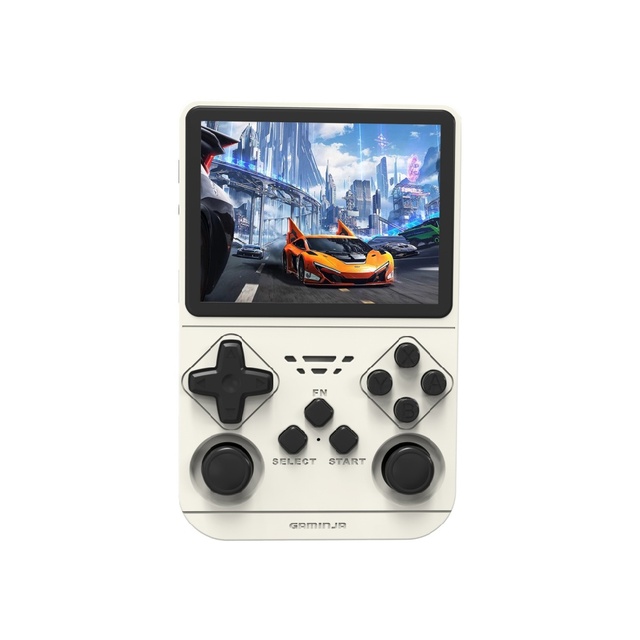
R36S Wireless Retro Video Game Console with 10000+ Built-in Games Rechargeable Battery
 Shenzhen Ylw Technology Co., Ltd.verified🇨🇳CN9 yrs
Deep Dive · Full Report
Full Market Report
1 document · Live-fetched from source
Related Searches
Explore more sourcing topics & related categories
Sources & References
27 sources cited · Verified industry data & reports
Retro Gaming Console Sales Statistics (2026) - Icon Era - Statistics
icon-era.com
The global retro gaming console market reached $3.8 billion in 2025 and is projected to grow to $4.18 billion in 2026, according to market research data. This 10% compound annual growth rate outpaces the broader gaming console market’s 3-5% growth, driven by nostalgia among millennials and Generation X consumers with increasing disposable income. Retro handheld manufacturers shipped approximately 3.825 million units between 2020 and 2024, with demand for classic gaming experiences continuing to accelerate through 2025. The retro gaming console market is projected to reach $4.18 billion in 2026, representing 10% growth from the 2025 valuation of $3.8 billion. Which manufacturer leads retro handheld console sales? Anbernic leads with 1.25 million units sold between 2020-2024, capturing approximately 32.7% market share among dedicated retro handheld manufacturers. What regions show strongest retro gaming console demand? North America leads the global retro gaming console market with 38% of total revenue, valued at approximately $1.19 billion in 2024. Europe represents 29% of the market at $0.90 billion, while the Asia-Pacific region contributes 23% at $0.72 billion. These regional patterns reflect different gaming cultures and purchasing behaviors. North American consumers demonstrate strong seasonal purchasing trends, with December emerging as the peak sales period. Google Trends data reveals significant consumer engagement with retro gaming topics throughout 2024 and 2025. Search interest for “retro gaming console” reached 89 on the normalized index in December 2024.
Retro Gaming Console Sales Statistics 2026
www.quantumrun.com
This post covers the latest retro gaming console sales statistics for 2026, including market size projections, manufacturer breakdowns, regional revenue splits, mini console sales history, demographic data, and pricing trends across the retro hardware space. The retro gaming console market is projected to reach $4.18 billion in 2026, up from $3.8 billion in 2025. Retro handheld manufacturers shipped a combined 3.825 million units between 2020 and 2024. Market researchers valued the retro gaming console segment at $3.12 billion in 2024. That figure grew to $3.8 billion in 2025, a 21.8% year-over-year jump. The 2026 projection of $4.18 billion maintains the 10% compound annual growth rate that analysts expect to hold through 2033, when the market should approach $8.5 billion. The retro gaming console market is projected to reach $4.18 billion in 2026, growing at a 10% compound annual growth rate from its 2025 valuation of $3.8 billion. Which company sells the most retro handheld consoles? Anbernic leads with 1.25 million units sold between 2020 and 2024, capturing 32.7% market share among dedicated retro handheld manufacturers. North America generated the most retro console revenue in 2024 at $1.19 billion, representing 38% of the global total. Europe followed at $0.90 billion (29%), and Asia-Pacific contributed $0.72 billion (23%). The remaining 10% came from Latin America, the Middle East, and Africa combined. Asia-Pacific leads the broader video game market overall, accounting for 46% of total gaming console revenue. But North America dominates specifically in retro hardware purchasing, where strong holiday-season demand and collector culture push spending higher per capita.
Retro Gaming Statistics 2026: Market Size & Player Data
www.shanethegamer.com
Anbernic leads retro handheld sales with roughly 1.25 million units and a 32.7% market share across 2020–2024, per the same tracking. Powkiddy ranks second at an estimated 900,000 units (23.5%), and Retroid Pocket recorded around 730,000 units (19.1%), with the remaining ~945,000 units (24.7%) spread across smaller brands. Affordable hardware that runs classic NES, SNES, Game Boy and PlayStation libraries continues to drive purchase decisions across all three leaders. Demand indicators point upward heading into 2026. Per Rec0ded’s mid-2026 preservation tracking, the US Copyright Office denied the latest remote-access petition on 25 October 2024, which would have let libraries and archives share out-of-print games with researchers remotely, reportedly the fourth rejection of such a request since 2015. That preservation gap is precisely where emulation, fan communities and the collector market operate, sustaining much of the demand that shows up in retro hardware and reissue sales. Anbernic leads: Anbernic captured an estimated 32.7% of the retro handheld market with ~1.25M units (2020–2024). PS2 still #1: the PlayStation 2 remains the best-selling console ever at 160M+ units as of mid-2026, per SellCell. According to Icon Era’s analysis, the global retro gaming console market reached $3.8 billion in 2025 and is projected to grow to $4.18 billion in 2026, a roughly 10% year-over-year increase. Quantumrun’s compilation traces the trajectory back further, noting the segment was valued at $3.12 billion in 2024 before jumping about 21.8% to $3.8 billion in 2025.
Retro Gaming Console Sales Resurgence Statistics 2026
rec0ded88.com
Search data from Google Trends shows “retro gaming console” reached a normalized score of 89 in December 2024, its highest recorded point. Search interest for that term grew 134% between July and December 2024, aligned with the holiday shopping period. On Amazon, retro handheld search volume peaked at 542.1 in October 2025, with sales counts maintaining an upward trajectory into early 2026, according to Accio. Analysts project the market will reach $8.5 billion by 2033 if current demand patterns hold. For comparison, the global video game industry generated $188.8 billion in 2025, which means retro consoles currently account for roughly 2% of total gaming revenue — small in share, but fast-growing in absolute terms. Source: Icon Era – Retro Gaming Console Sales Statistics (2025–2026) Community-sourced data tracked roughly 3.825 million retro handheld units sold globally between 2020 and 2024. On PC, 37% of all Steam playtime in 2024 went to games eight or more years old, reinforcing broad demand for legacy content across all platforms. Remakes and remasters attracted 72.4 million players between January 2024 and September 2025, generating $1.4 billion in consumer spending across 42 titles — additional evidence that appetite for classic gaming extends well beyond digital storefronts to physical retro hardware. How big is the retro gaming console market in 2026? The global retro gaming console market reached $3.8 billion in 2025 and is on pace to hit $4.18 billion by the end of 2026. Back Market reported 32% more retro consoles sold in the first part of 2025 than in all of 2024. Retro handheld manufacturers collectively shipped 3.825 million units between 2020 and 2024.
Retro Gaming Console Sale Statistics (2025)
coopboardgames.com
The retro gaming console market is experiencing unprecedented growth in 2025, transforming from a niche collector’s interest into a multi-billion-dollar industry. This comprehensive analysis reveals the remarkable statistics behind retro gaming console sales, market trends, and future projections that are reshaping the gaming landscape. Cloud gaming integration represents an emerging trend that bridges retro and modern gaming experiences.
Best retro games Statistics 2026
coopboardgames.com
North America leads the global retro gaming console market, accounting for 38% of total revenue at approximately $1.19 billion in 2024. The region demonstrates strong seasonal purchasing trends, with December emerging as peak sales period. Search interest data indicates retro gaming console searches increased 134% from July 2024 to December 2024, demonstrating accelerating consumer interest. Google Trends data reveals significant spikes in search interest for retro gaming consoles throughout 2024 and 2025. Retro console sales increased 32% in 2025 compared to all of 2024 · The retro gaming console market demonstrates remarkable resilience with sustained growth through 2033. Market analysts project the sector will expand from its current $3.8 billion valuation to $4.18 billion in 2026. Anbernic dominates the retro handheld console market with 1.25 million units sold between 2020-2024, capturing 32.7% market share.