Gps Tracker Car Watch

Overview
Product sourcing insights & recommendations
The market for GPS tracker car watches is a high-growth sector valued at $37.90 billion in 2026, driven by a convergence of vehicle security and personal safety wearables BusinessresearchinsightsCoherentmarketinsights. Key trends include the integration of AI for predictive health and driver behavior (up 31%) and the rise of solar-powered devices to mitigate battery life concerns, which remains the primary user pain point for 39% of consumers BusinessresearchinsightsCoherentmarketinsights.
Product offerings now include hybrid 2-in-1 systems that combine health monitoring with automotive functions like engine start/stop and car finding Alibaba. Detailed market data, technological shifts, and a competitive breakdown are provided in the comprehensive report below.
I have compiled the market insights for you. Would you like to:
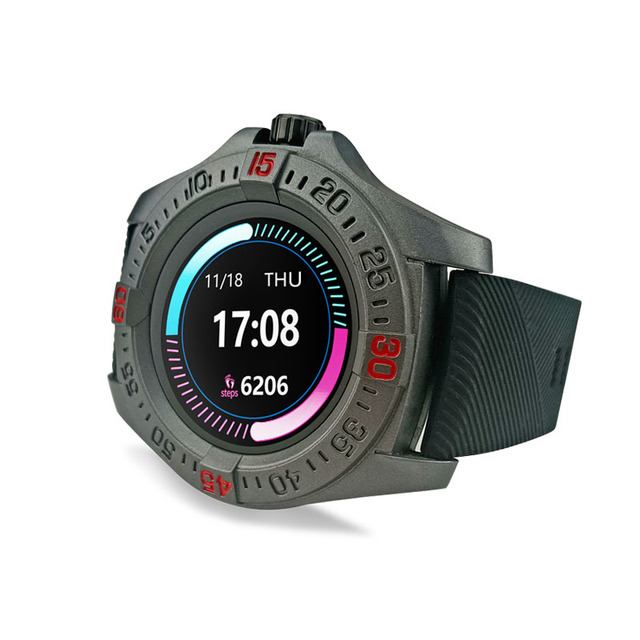
2 In 1 Car Tracker And Watch Monitoring System
Products · 2 lists

Deep Dive · Full Report
Full Market Report
1 document · Live-fetched from source
Related Searches
Explore more sourcing topics & related categories
Sources & References
25 sources cited · Verified industry data & reports
Global GPS Watch Tracker Market Size, Share, and Industry Trends ...
markwideresearch.com
The Global GPS Watch Tracker Market valued at $4.8 Billion in 2026 is forecast to scale to $11.04 Billion by 2035, progressing at a 9.70% CAGR throughout the forecast period. Sports watches attract rising demand from professional athletes and amateur fitness communities. Demand concentrates among corporate wellness programs in the United States where employers subsidize fleet deployments for workforce cardiovascular monitoring and location-based safety protocols. Fitness Trackers:Stripped-down devices prioritize step counting, sleep staging, and basic GPS logging within constrained battery envelopes. Bluetooth:Low-energy protocols enable smartphone-tethered data sync with minimal power draw. Remains dominant in Japan's senior monitoring applications where paired caregiver apps reduce cellular subscription burdens on fixed-income users. GPS:Single- or dual-frequency satellite receivers provide location fixes without network assistance. RF engineering talent clusters in Shenzhen, Seoul, and Dallas anchor the GPS watch tracker's hardware development geography. These concentrations shape where multi-constellation receiver silicon gets qualified for wrist-worn thermal constraints. Enterprise wellness program subsidies from self-insured employers drive fleet procurement for workforce cardiovascular monitoring.
Gps Tracker Market Size to Hit USD 2.75 billion by 2033
www.coherentmarketinsights.com
Microeconomic indicators point to consumer preference shifting towards miniaturized and multi-functional trackers, with sales of wearable GPS devices increasing by 26% globally in 2026, particularly for personal safety applications. Nano-scale trends show a surge in GPS tracker deployments in emerging markets, with countries like India and Brazil experiencing a 31% increase in device adoption due to expanding automotive ownership and government-backed smart city projects. The GPS Tracker market size is projected to grow from USD 6.13 billion in 2026 to USD 14.98 billion by 2033, reflecting a CAGR of 13.6% during this period. The transportation and logistics industry offers the most substantial growth opportunity due to increasing demand for fleet management solutions and stringent vehicle tracking regulations. Market trends will increasingly focus on AI integration, solar-powered devices, and blockchain for secure GPS tracking, reshaping the competitive landscape and enhancing operational efficiencies. The Global GPS Tracker Market size is estimated to be valued at USD 6.13 billion in 2026 and is expected to reach USD 14.98 billion by 2033, exhibiting a compound annual growth rate (CAGR) of 13.6% from 2026 to 2033. The USA leads the GPS Tracker Market revenue, accounting for nearly 28% of global market revenue in 2026. Fleet management and personal tracking applications dominate, supported by federal regulation and investments in intelligent transportation systems (ITS).
GPS Watch Tracker Market Size & Competitive Analysis 2035
www.globalgrowthinsights.com
Market Size: The market is expected to rise from $2280.82 Billion in 2025 to $4263.53 Billion in 2026, reaching $7969.81 Billion by 2035, showing a CAGR of 86.93%. Growth Drivers: 68% demand for safety wearables, 54% adoption in family tracking, 47% fitness usage growth, 51% preference for smart connectivity. Trends: 62% shift toward multi-feature devices, 49% integration of real-time alerts, 57% mobile app connectivity usage, 43% focus on battery efficiency. The Global GPS Watch Tracker Market size was valued at USD 2280.82 billion in 2025 and is expected to reach USD 4263.53 billion in 2026, further expanding to USD 7969.81 billion in 2027 and projected to hit USD 1188325.75 billion by 2035, registering a CAGR of 86.93% during the forecast period 2026–2035. In 2025, the GPS Watch Tracker Market value stood at USD 4263.53 Billion. This report was authored by the Consumer Goods Research Team at Global Growth Insights. The team specializes in consumer products, retail, e-commerce, household goods, personal care, beauty products, and lifestyle markets. Their expertise includes consumer behavior analysis, market sizing, competitive benchmarking, and trend forecasting across global consumer industries. Small Household Appliances Market Cycling Gloves Market Coffee Filter Paper Market CBD Skin Care Market Music Festival Market Smart Textile Market ... Market Size Key Findings Market Trends Market Dynamics Segmentation Analysis Regional Outlook Top Companies Report Coverage Frequently Asked Questions
GPS Tracking Device Market Size, Share, Growth, Analysis, 2034
straitsresearch.com
The global gps tracking device market size was valued at USD 4.07 billion in 2025 and is projected to grow from USD 4.55 billion in 2026 to USD 11.21 billion by 2034, registering a CAGR of 11.91% during the forecast period from 2026 to 2034. Asia Pacific dominated the gps tracking device market with a market share of 37.5% in 2025. The global positioning system (GPS) is a cluster of satellites that enables highly accurate positioning, navigation, and timing (PNT) measurements worldwide. As one of the earliest satellite positioning systems, GPS has become an indispensable component of international work. GPS provides precise location data of a car, piece of equipment, or person. For instance, in February 2026, Geotab launched its next-generation GO and GO Plus telematics devices, featuring faster processing and high-precision data capabilities to improve fleet visibility and operational intelligence. Last Updated: September 03, 2026 | Author: Tejas Zamde | Format: Growing use of telematics, IoT connectivity, fleet optimization platforms, and asset-monitoring systems across transportation, automotive, logistics, and industrial applications continues to accelerate the adoption of advanced GPS trackers. Data Pushers Dominated the Market with 58.6% Share in 2025 · The data pushers segment accounted for the largest share of the global GPS tracking device market at 58.6% in 2025, driven by their ability to continuously transmit location and operational information to centralized tracking platforms. These devices enable organizations to monitor vehicles, assets, cargo, and equipment in near real time, supporting faster operational decisions and improved visibility.
GPS Tracker Market Size, Share | Industry Report, 2024-2030
www.marketresearchfuture.com
Real-Time GPS Trackers dominate the market, while the Transportation and Logistics sector accounts for over 40% of market revenue in 2023. North America leads the market with a 40% share, followed by Asia-Pacific, which is expected to become the largest market by 2030. Key trends driving the GPS Tracker market include advancements in technology and increasing demand across various sectors. Figure 1: GPS Tracker Market Overview, 2022 & 2030 (USD Billion) Source: Secondary Research, Primary Research, Market Research Future Database and Analyst Review · Fleet management has seen significant growth in recent years, and this trend is expected to continue. The market of GPS Tracker for BFSI was valued at USD 1.47 Billion in 2022 and is expected to grow at a CAGR of 12.9% through the forecast period. The increasing demand for real-time GPS trackers can be attributed to a variety of factors. One of the main drivers of this trend is the growing need for location-based services across industries. The rise of e-commerce and last-mile delivery also proliferate GPS trackers demand. As more consumers turn to online shopping, there is a growing demand for faster and more reliable delivery services. This has led to an increase in the number of delivery vehicles on the road, which requires effective fleet management to ensure timely and efficient deliveries. In addition, the growing focus on sustainability and reducing carbon emissions has led many companies to adopt electric and hybrid vehicles, which require specialized fleet management solutions.
GPS Tracking Device Market Size, Share Analysis Report 2026
www.thebusinessresearchcompany.com
Global Outlook – By Type (Standalone Trackers, OBD Devices, Advance Trackers), By Deployment (Commercial Vehicles, Cargo And Containers), By Application (Automotive, Aerospace And Defense, Healthcare, Transportation) – Market Size, Trends, Strategies, and Forecast to 2035 · Purchase This ReportDownload Sample PDFAdd to Cart · Home>Reports Store>Information Technology>Global GPS Tracking Device Market Report 2026 The GPS Tracking Device market size is expected to reach $7.34 billion in 2030 at a CAGR of 15.4%, driven by expanding tourism and travel activities. Major trends in the forecast period include real time fleet tracking, geofencing based monitoring, fuel and driver behavior analytics, integration with fleet management systems, miniaturization of gps devices. Book your 30 minutes free consultation with our research expertsContact Us · 1) By Type: Standalone Trackers, OBD Devices, Advance Trackers 2) By Deployment: Commercial Vehicles, Cargo And Containers 3) By Application: Automotive, Aerospace And Defense, Healthcare, Transportation Subsegments: 1) By Standalone Trackers: Personal GPS Trackers, Pet GPS Trackers, Asset GPS Trackers 2) By OBD Devices: OBD-II Plug-And-Play Trackers, OBD Devices With Diagnostics Features 3) By Advance Trackers: Real-Time Tracking Devices, Fleet Management Trackers, GPS Tracking Devices With Geofencing Features, GPS Trackers With Fuel Monitoring A standalone tracker is a separate unit or device used for GPS tracking operations. The various deployments are commercial vehicles, and cargo and containers applied in automotive, aerospace and defense, healthcare, and transportation. ... The gps tracking device market size has grown rapidly in recent years. It will grow from $3.6 billion in 2025 to $4.14 billion in 2026 at a compound annual growth rate (CAGR) of 15.0%. The growth in the historic period can be attributed to growth of commercial vehicle fleets, rising demand for asset tracking, need for route optimization, increasing fuel cost concerns, adoption of fleet safety solutions.