Gpu Aio Cooling

Overview
Product sourcing insights & recommendations


The GPU AIO (All-in-One) cooling market is currently undergoing a significant transition, driven by the extreme thermal demands of next-generation hardware and the AI boom. While traditional air cooling remains the volume leader, AIO liquid solutions are rapidly becoming the standard for high-performance GPUs (TDP >450W).
Key Market Insights
* Market Growth: The consumer AIO GPU cooling sector is projected to reach $2.5 billion by 2033, supported by a 9.1% CAGR Alibaba. The enterprise direct-to-chip segment is growing even faster at 19.7% CAGR, fueled by AI data center needs Grandviewresearch.
* Thermal Drivers: Flagship GPUs like the RTX 4090 and upcoming 50-series have pushed TDP limits to 450W–500W+, where AIOs provide 8–15°C lower temperatures and significantly quieter operation than air coolers AlibabaGrandviewresearch.
* Efficiency Mandates: Beyond performance, liquid cooling is being adopted to meet sustainability goals, reducing energy consumption by up to 50% compared to traditional air-cooled setups Gminsights.
Product & Sourcing Landscape
The B2B market offers a spectrum of solutions ranging from high-end workstation kits to mass-market components:
* Workstation Kits: Premium AIO systems for dual-GPU or high-end RTX 4090/5090 setups are priced between $270 and $845 AlibabaAlibaba.
* Mass Market Components: Universal water blocks for older or mid-range GPUs (e.g., RX 580) are available at high volumes for as low as $0.71–$2.47 Alibaba.
* Technological Shift: There is a notable move toward Two-Phase cooling for ultra-high density AI applications, while Immersion cooling is transitioning from crypto-mining to mainstream data center use GrandviewresearchGminsights.
The attached findings file provides a detailed breakdown of market statistics, technical drivers, and a shortlist of available B2B product options.
Here is the comprehensive report on GPU AIO cooling. You can continue with:
Gpu Aio Liquid Cooling Kit
Products · 3 lists
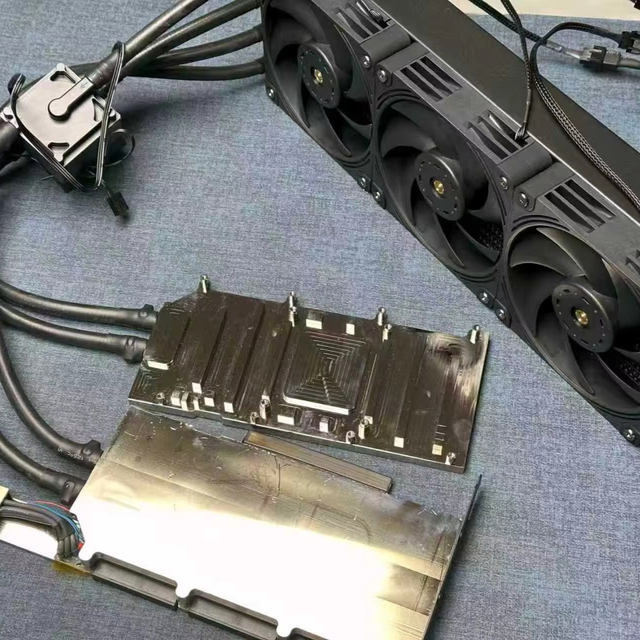
One to One Graphics Card Water Cooling Kit for Pro 6000 Liquid Cooler
 Shenzhen Huateng Technology Intelligence Information Co., Ltd.🇨🇳CN9 yrs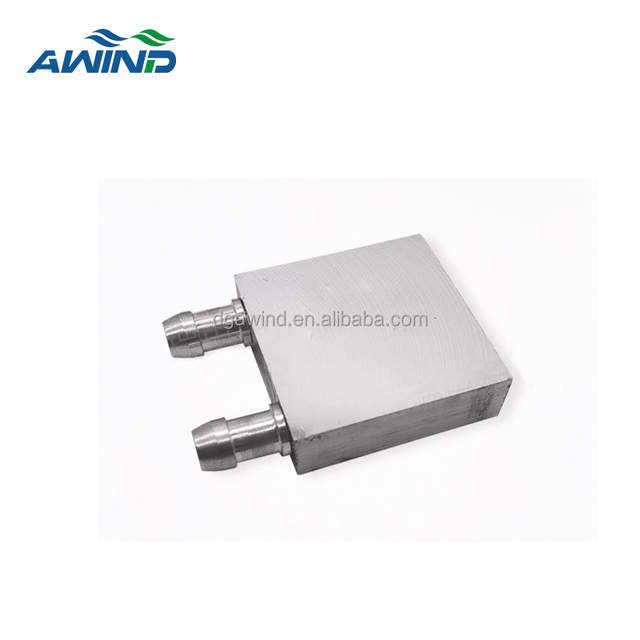
Aluminum Water Cooling Block Liquid Cooler Heatsink 80 X 80 Waterblock Kit for Cpu Gpu Semiconductor
 Dongguan Awind Electronic Technology Co., Ltd.verified🇨🇳CN13 yrs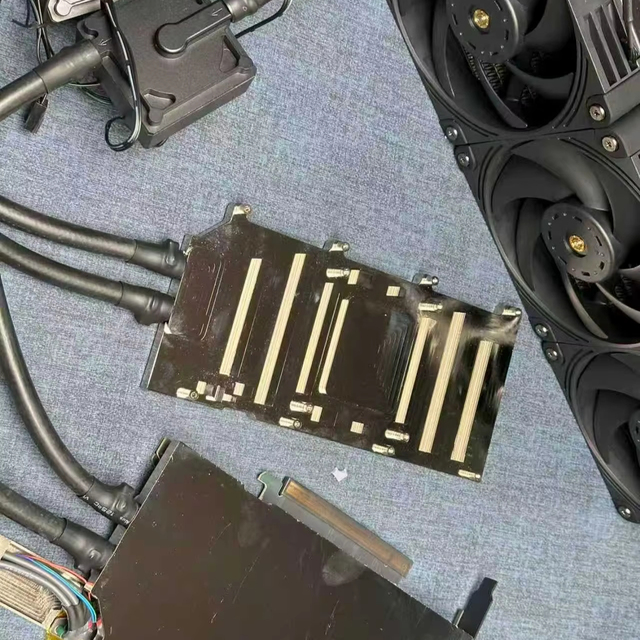
One-to-Two Graphics Card Water Cooling Kit for L20 Liquid Cooler with 3-Fan Radiator
Aluminum Water Cooling Block Liquid Cooler Heatsink 80 X 80 Waterblock Kit for Cpu Gpu Semiconductor
Deep Dive · Full Report
Full Market Report
1 document · Live-fetched from source
Related Searches
Explore more sourcing topics & related categories
Sources & References
25 sources cited · Verified industry data & reports
Direct-to-chip Liquid Cooling Market Size, Share Report ...
Grand View Research
The global direct-to-chip liquid cooling market size was estimated at USD 1.96 billion in 2024 and is anticipated to reach USD 5.62 billion by 2030, growing at ...
Data Center Liquid Cooling Market Size & Share 2026-2035
Global Market Insights Inc.
The data center liquid cooling market size was valued at USD 4.8 billion in 2025 and is expected to grow at a CAGR of 18.2% between 2026 and 2035, driven by ...

Data Center Liquid Cooling Market Report 2026-2033 [260 ...
MarketsandMarkets
The global data center liquid cooling market is projected to grow from USD 4.07 billion in 2026 to USD 27.65 billion by 2033, at a CAGR of 31.5% from 2026 to ...

Direct-to-Chip Liquid Cooling Market Size | CAGR of 25.8%
Market.us
The global direct-to-chip liquid cooling market is expected to reach USD 24.8 billion by 2034, expanding at a rapid CAGR of 25.8% from 2025 to 2034. In 2024, ...

AIO GPU Cooler Guide: How to Choose the Right One in ...
Alibaba
The broader liquid cooling industry is projected to reach $2.5 billion by 2033, growing at a 9.1% CAGR 2 . Two forces explain the trend:.

Thermal Management For Data Centers 2026-2036
IDTechEx
IDTechEx anticipates rapid growth in the adoption of liquid cooling, driven by factors such as the increasing power of data centers, the rise of hyperscale data ...