Gs1 Databar Barcode Scanner

Overview
Product sourcing insights & recommendations
I have analyzed the current market trends and product insights for GS1 DataBar barcode scanners for the 2024–2034 period. The market is currently driven by the global Sunrise 2027 transition, which mandates a shift from 1D to 2D-capable scanning hardware at retail points of sale.
Key findings include:
- Market Growth: The sector is projected to reach US$ 15.9 billion by 2033, with 2D imagers accounting for the majority of new demand.
- Symbology Shifts: GS1 DataBar variants like Expanded (for weight/expiry) and Omnidirectional (for fresh produce) are becoming critical for retail automation and healthcare traceability.
- Technological Advancements: Integration of AI-assisted decoding and a shift toward rugged, wireless handhelds are the leading product trends in warehouse and logistics sectors.
Detailed market data, technical variant breakdowns, and B2B sourcing recommendations are provided in the comprehensive report below.
Here are the GS1 DataBar market and product insights. You can continue with:
Rugged Gs1 Databar Scanner For Warehouse Logistics
Products · 3 lists
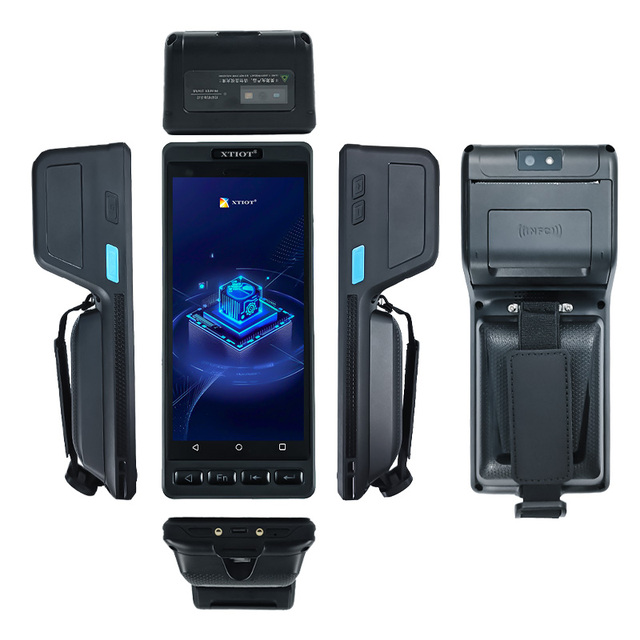
XT8980B New Warehouse Barcode Scanner Data Collector PDA Android Device with Barcode Labels Printer
 Shenzhen Xingtong IOT Technology Co., Ltd.🇨🇳CN9 yrs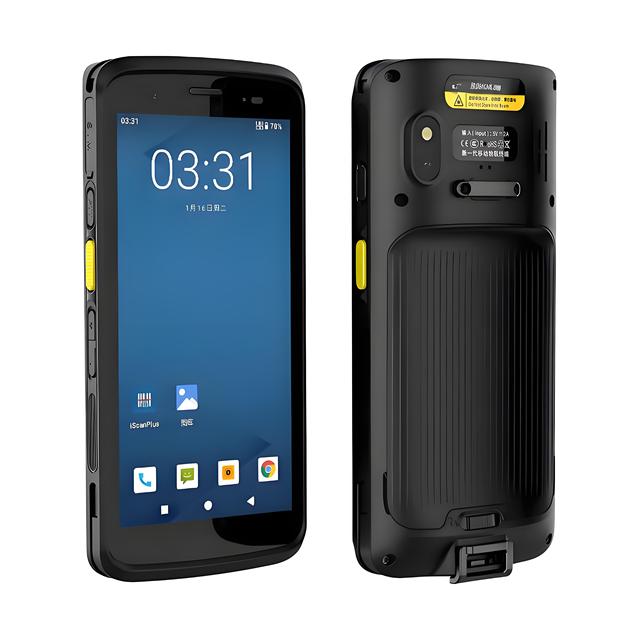
Industrial Android 14 Rugged Handheld Barcode Scanner 5.5" Display 5000mAh Battery-1D/2D Scanning for Warehouse Inventory Stock
 Svoton Technology Co., Ltd.🇨🇳CN7 yrs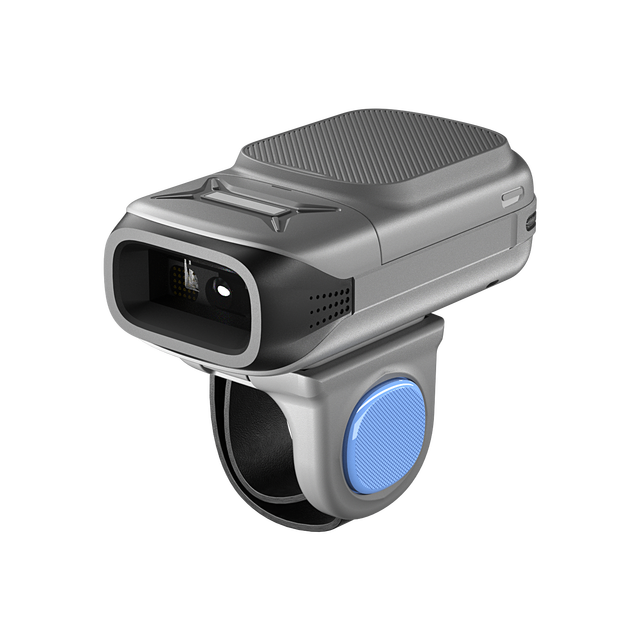
NETUM Industrial Long Range Rugged Portable QR Bar Code Reader 1D 2D Wireless Barcode Scanner for Warehouse High Picking
 Guangzhou Netum Electronic Technology Co., Ltd.verified🇨🇳CN15 yrs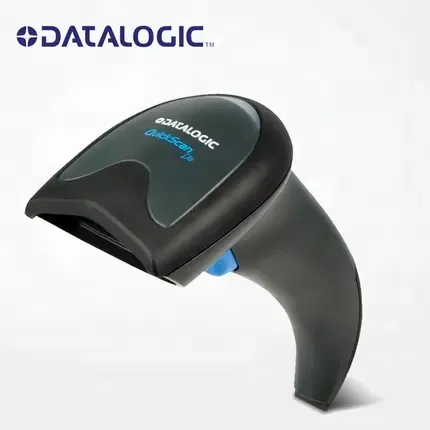
Datalogic QuickScan Lite QW2100 - Affordable Linear Imager With Outstanding 1D Reading Performance
 Hubei Xtnu Protective Products Co., Ltd.🇨🇳CN6 yrs
Deep Dive · Full Report
Full Market Report
1 document · Live-fetched from source
Related Searches
Explore more sourcing topics & related categories
Sources & References
28 sources cited · Verified industry data & reports
Barcode Scanner Market Size, Share & Future Scope, 2033
www.persistencemarketresearch.com
In June 2023, the government mandated that all National Health Service (NHS) trusts in England adopt barcode scanning of high-risk medical devices by March 2024. It was a part of a broad push to digitally transform the NHS and improve patient safety. This is a significant procurement trigger. Every NHS trust now requires GS1-compliant scanning hardware and workflows in place. With full enforcement now in effect as of November 27, 2024, all pharmaceutical trading partners must comply with improved serialization, interoperability, and verification mandates. This has triggered a wave of scanner procurement across pharmacies, hospitals, and distribution centers that had previously been running on outdated systems. Asia Pacific is anticipated to be the fastest-growing market in 2026 with a share of nearly 30.8%, fueled by ongoing expansion in e-commerce, warehousing, and manufacturing across the region. Leading Region: North America, with about a 41.2% share in 2026, owing to early adoption of retail automation and high deployment of warehouse scanning systems. Fast-growing Region: Asia Pacific, backed by rising investments in logistics infrastructure and increasing adoption of automation by regional e-commerce players. New Product: In January 2025, Datalogic introduced its AI Loss Prevention Suite for the Magellan scanner platform. China is anticipated to account for a share of around 33.7% in 2026, supported by its expansion in manufacturing, cross-border e-commerce, and government-driven automation policy. Its key market drivers also include its booming e-commerce sector, extensive logistics networks, and large-scale manufacturing sector. The government's industrial policy plays a key role. Government initiatives promoting digitalization and smart manufacturing, such as Made in China 2025, provide additional tailwinds, and the country is also a major production hub for scanner components and finished goods.
Global Barcode Scanners Market - Analysis of Key Trends, Regional ...
www.futuremarketinsights.com
GS1 released retail scanner guidance in May 2026 for the 2D transition. The USA Census Bureau reported that seasonally adjusted retail e-commerce sales in the first quarter of 2026 were 9.8% above the first quarter of 2025, supporting continued fulfillment and parcel data-capture activity alongside store demand. The USA Census Bureau reported that seasonally adjusted retail e-commerce sales reached USD 326.7 billion in the first quarter of 2026 and were 9.8% above the same quarter of 2025. China reported 216.5 billion postal delivery items in 2025, showing the scale of physical flows that require reliable identification across sorting and delivery networks. Integration remains a practical restraint because a scanner fleet sits inside a wider transaction system. GS1 guidance for the retail 2D transition notes that software updates may be required and equipment can need replacement when existing scanners are not imager-based. Japan: Barcode-scanner demand is projected to advance at 9.0% CAGR from 2026 to 2036 as healthcare and manufacturing workflows require dependable reading of small or directly marked codes. GS1 Healthcare Japan published its September 2025 guidance on direct marking for medical devices, covering GS1 DataMatrix and scanning technologies used for traceability in medical institutions. GS1 Brasil stated in February 2026 that the GS1 QR Code can extend conventional product identification with interoperable data accessible through modern scanning devices. China: Demand for barcode scanners is forecast to grow at 6.2% CAGR from 2026 to 2036 as parcel and retail networks require repeated identification across sorting and dispatch points. China reported 216.5 billion postal delivery items in 2025, including 199 billion express parcels, which keeps scan throughput relevant across logistics nodes.
Barcode Scanner Market Analysis Report By Size, Share, ...
www.theinsightpartners.com
Europe customers prefer ergonomics, ease of repair, data security, and GS1-compliant 2D barcode decoding. Growth is expected to be modest relative to Asia-Pacific due to mature installations; however, constant replacement demand continues with newer imaging scanners and wireless fleet solutions. Asia-Pacific accounts for 29-33% market share in 2025 and is expected to witness growth at the rate of CAGR between 6.5% and 7.1% during 2026-2034. Historic Data: 2021-2024 | Base Year: 2025 | Forecast Period: 2026-2034 It is forecasted to grow at a CAGR between 5.4% and 5.9% over the period from 2026 to 2034 on account of the adoption of wireless terminals, 2D imagers, and fixed tunnel scanners to replace laser readers. North America: The region accounts for 31–35% share in 2025 and grows at a CAGR range of 5.4–5.9% during 2026–2034, led by retail modernization, warehouse automation, healthcare labeling, and logistics traceability investment. Europe accounts for 24–28% of the share in 2025 and is estimated to record a CAGR in the range of 5.1–5.6% for the period of 2026–2034. This region is led by Germany owing to the automation in industries, automotive component tracking, and effective logistics infrastructure.
Barcode Scanner Market Growth Analysis - Size and Forecast 2025-2029 ...
www.technavio.com
These technologies enable the scanning of various barcode symbologies, including 1D and 2D barcodes, QR codes, and Data Matrix, as well as RFID tags. The integration of GS1 standards and API integration further enhances the functionality of barcode scanners, allowing for real-time data capture and analysis. The retail sector in North America is a significant driver of the market, with businesses leveraging barcode scanners for efficient inventory management and product tracking. Advancements in OCR technology and the integration of GS1 standards have expanded the capabilities of barcode scanners, enabling them to read multiple barcode symbologies and QR codes. Barcode scanning technology, encompassing OCR technology and diverse barcode symbologies, underpins efficient supply chain management. GS1 standards ensure universal compatibility, enabling seamless integration of barcode readers into mobile workforces and imaging scanners. In January 2024, Honeywell Intelligrated launched its new CT40 handheld rugged computer, integrating advanced barcode scanning technology and contactless temperature screening capabilities, addressing the evolving needs of businesses in the wake of the pandemic (Honeywell Press Release).
Barcode Scanner Market Size, Share, Trends and Growth Report 2035
www.marketresearchfuture.com
As per Market Research Future analysis, the Barcode Scanner Market Size was estimated at 10.38 USD Billion in 2024. The Barcode Scanner industry is projected to grow from USD 11.1 Billion in 2025 to USD 21.64 Billion by 2035, exhibiting a compound annual growth rate (CAGR) of 6.9% during the forecast period 2025 - 2035 The Barcode Scanner Market is valued at approximately 10.38 USD Billion in 2024. What is the projected market size for the Barcode Scanner Market by 2035? The market is projected to reach approximately 21.64 USD Billion by 2035. What is the expected CAGR for the Barcode Scanner Market during the forecast period? The expected CAGR for the Barcode Scanner Market from 2025 to 2035 is 6.9%. Key sources included the International Organization for Standardization (ISO) for barcode symbology standards (ISO/IEC 15415, ISO/IEC 15416), GS1 Global (global barcode standards and healthcare data), American National Standards Institute (ANSI) for data capture standards, Automatic Identification and Mobility (AIM) Global, IEEE Standards Association for RFID and wireless scanning protocols, U.S. The Barcode Scanner Market is projected to grow at a 6.9% CAGR from 2025 to 2035, driven by advancements in automation, e-commerce growth, and increased demand for inventory management solutions.
Barcode Scanner Market Analysis 2026
www.cognitivemarketresearch.com
Global Barcode Scanner market size 2021 was recorded $8405.93 Million whereas by the end of 2025 it will reach $11128.4 Million. According to the author, by 2033 Barcode Scanner market size will become $19504.3. Barcode Scanner market will be growing at a CAGR of 7.266% during 2025 to 2033. Author Name: Kalyani Raje | Report ID: CMR129911 | The base year for the calculation is 2024. The historical will be 2021 to 2024. The year 2025 will be estimated one while the forecasted data will be from year 2025 to 2033. When we deliver the report that time we updated report data till the purchase date. You can purchase only the Executive Summary of Global Market (2019 vs 2024 vs 2031) 1.19 Executive Summary Global Market (2021 vs 2025 vs 2033) Global Barcode Scanner Market Report 2025 Edition talks about crucial market insights with the help of segments and sub-segments analysis. In this section, we reveal an in-depth analysis of the key factors influencing Barcode Scanner Industry growth. Barcode Scanner market has been segmented with the help of its Type, Technology Supported Type , and others.