H265 Decoder Board

Overview
Product sourcing insights & recommendations
The H.265 (HEVC) decoder board market is currently defined by a rapid transition toward 8K resolution, 10-bit color (Main 10 profile), and ultra-low latency protocols like SRT AntmediaAntmedia. While H.265 remains the industry workhorse due to its 50% bandwidth efficiency over H.264, the ecosystem is navigating a complex licensing landscape and preparing for the eventual arrival of H.266 (VVC) AntmediaWikipedia.
Core Product Trends (2024–2026)
* Resolution & Color Evolution: Boards are shifting from standard 4K/60fps to 8K support Antmedia. Support for HDR10+ and 10-bit color (Main 10 profile) is now a requirement for high-end medical, broadcast, and surveillance applications Antmedia.
* Protocol Diversification: Demand is surging for "IP decoder" boards that natively support SRT (Secure Reliable Transport), RTSP, and Enhanced RTMP to ensure stable, low-latency transmission over unpredictable networks Antmedia.
* Parallel Processing: Modern hardware uses Wavefront Parallel Processing (WPP) to optimize multi-core decoding, significantly reducing "glass-to-glass" latency to sub-500ms levels Antmedia.
Market Dynamics & Insights
* Licensing Complexity: H.265 adoption faces hurdles due to fragmented patent pools (MPEG LA, Access Advance, and Velos Media), with royalties reaching $0.20–$1.50 per unit AntmediaAntmedia.
* Browser Fragmentation: Since Chrome and Firefox lack native HEVC support (relying on hardware-accelerated pass-through), the market is adopting dual-codec strategies—H.265 for apps/TVs and H.264 for browsers AntmediaRed5.
* Next-Gen Outlook: H.266 (VVC) promises another 50% bitrate reduction but requires 6–10x more processing power. Consumer-grade VVC hardware decoders are not expected until 2028 AntmediaBitmovin.
Sourcing Landscape
B2B offerings are bifurcating into two segments:
- 1Professional/Industrial Cards: High-cost ($900+) specialized cards for video walls and broadcast (e.g., Novastar H series) Alibaba.
- 2Embedded AI/Development Boards: Integrated SBCs (Single Board Computers) using chipsets like RK3588, which offer native 8K H.265 decoding for edge AI and industrial IoT Alibaba.
H265 Decoder Board 4k 8k Hdr 10 Bit Color Main 10 Profile Low Latency Srt Rtsp Rtmp Ip Decoder Board
Products · 2 lists
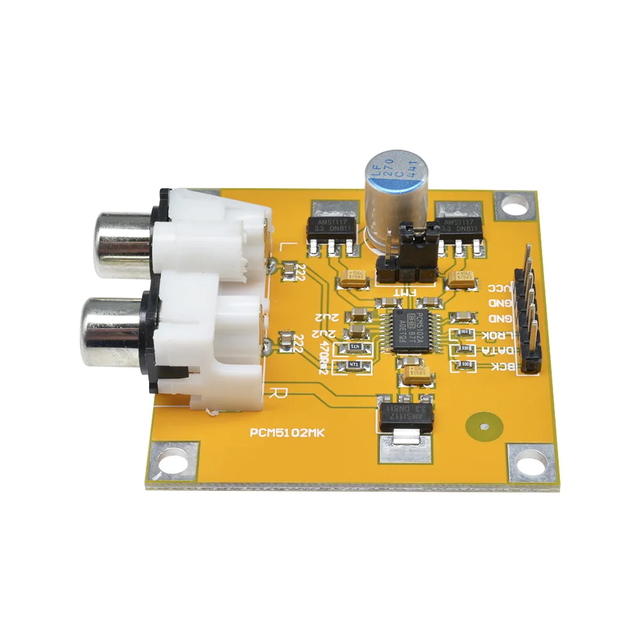
PCM5102/PCM5102A DAC Decoder I2S Player Assembled Board 32Bit 384K Beyond ES9023 Decoder Board Module
 Shenzhen Lingxinhui Technology Co., Ltd.🇨🇳CN2 yrs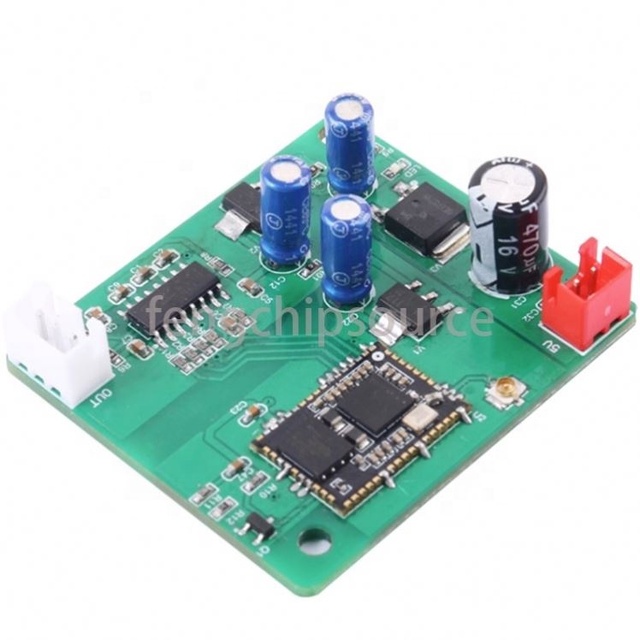
Qcc5125 Lossless BT Decoding Board Receiving Tws High Fidelity Aptxhd Car Hifi Lossless Decoder
 Shenzhen Feng Chipsource Electronic Co., Ltd.🇨🇳CN10 yrs
High Performance Low-cost MP3 Decoder Board
 Shenzhen Vire Silicon & Technology Co., Ltd.verified🇨🇳CN16 yrs
Related Searches
Explore more sourcing topics & related categories
Sources & References
26 sources cited · Verified industry data & reports
H265 Decoder Board: Key Standards, Physical Properties, and ...
www.alibaba.com
Video Codecs Explained: H.264, H.265, AV1 & VP9 [2026 Update]
antmedia.io
The Alliance for Open Media plans AV2 release by Q4 2025 with production deployment in 2027. Hardware encoding support arrived in consumer devices after 2015, with hardware-accelerated HEVC decoding standard in smartphones, tablets, and streaming boxes manufactured since 2017 — though Chrome and Firefox require dual-codec fallback strategies that increase infrastructure complexity for browser-targeted deployments. VVC’s 128×128 CTU block size — doubled from H.265’s 64×64 maximum — enables superior compression of uniform background regions in 4K and 8K content, while the increased encoding complexity of 6–10x versus H.265 restricts VVC to pre-encoded VOD workflows and broadcast contribution circuits rather than real-time live streaming ingest. Consumer devices with VVC hardware decoders are not expected before 2028 based on typical silicon development cycles. The server accepts RTMP, WebRTC, and HLS inputs with automatic format negotiation through multi-codec transcoding workflows that convert source streams to target output formats based on viewer device decoder capabilities and connection bandwidth.
Best IPTV Encoders for 4K H.265 Streaming
electronics.alibaba.com
It will grow from $2.59 billion in 2025 to $2.74 billion in 2026 at a compound annual growth ... Video Encoder Market Size Share Trend & Analysis Report ... ... Standalone Encoders to Grow at the Fastest CAGR of 7.63% from 2024 to 2032, due to the rising demand for portable, cost-effective, and flexible ... Av Over IP Encoder Market Size, Trends, 2026-2033 ... ... Market size was valued at USD 2.5 Billion in 2024 and is poised to grow from USD 2.8 Billion in 2025 to USD 7.2 Billion by 2033, ... The global video encoder market size was valued at USD 2.81 billion in 2025 and is predicted to increase from USD 2.96 billion in 2026 to approximately USD 4. ... Encoder Market Size, Share, and Trends Analysis 2032 ... The global Encoder market size was estimated at USD 3.10 Billion in 2024 and is estimated to grow at a CAGR of 10.50% from 2025 to 2032.Show all 24 sources
H.265 Codec: Complete Guide to High Efficiency Video Coding (HEVC)
antmedia.io
For live streaming infrastructure requiring ultra-low latency with 4K resolution, H.265 with GPU-accelerated encoding remains the production-grade choice in 2025. AV1 will replace H.265 for on-demand content delivery as hardware encoder availability expands through 2026-2028. Mobile streaming optimization. Cellular networks in emerging markets average 8-15 Mbps download speeds according to Ookla Speedtest Intelligence data from 2024. HEVC delivers 1080p quality at 2,500 kbps, consuming 17-31% of available bandwidth. The Chrome browser limitation restricts HEVC-only delivery strategies for web-based platforms because Chrome represents approximately 65% of global desktop browser market share according to StatCounter data from 2025. A dual-codec strategy combining H.265 for compatible devices and H.264 fallback for incompatible browsers delivers maximum audience reach. For live streaming infrastructure, H.265 occupies the optimal position in 2025: mature hardware support across all major GPU and mobile chipset vendors, proven compression efficiency at production scale, and real-time encoding capability that AV1 lacks without dedicated hardware.
AV1 vs H.264 vs VP9 vs VP8 | Video Codec Guide 2026
www.digitalsamba.com
Safari: AV1 decode on Apple Silicon M3 and later Macs, and iPhone 15 Pro and later. Older Apple devices have no AV1 support at all. AV1 WebRTC encoding in Safari is still marked experimental. Tsahi Levent-Levi's assessment, from his December 2025 session with WebRTC.ventures, is the clearest public statement of where AV1 stands for conferencing: 'AV1 will not be the dominant codec in 2026, and may need until around 2028 to reach that status, while VP8 and H.264 stay strong.' The patent licensing situation is fragmented: three separate patent pools (MPEG LA via Via Licensing Alliance, HEVC Advance, and Velos Media) each claim royalties, which is a significant commercial risk and has historically kept H.265 out of Chrome and Firefox. Chrome 136 (mid-2025) did add H.265 WebRTC support by default on Windows, macOS, and Android, subject to hardware availability, so H.265 is no longer a Safari-only story for WebRTC. The most credible current estimate is around 2028, not 2026. Tsahi Levent-Levi made this specific call in his December 2025 session with WebRTC.ventures: 'If AV1 becomes dominant, it will probably be around 2028, not 2026.' The constraint is hardware encoder availability on the client side, particularly mobile. GetStream.io. (2025).
High Efficiency Video Coding - Wikipedia
en.wikipedia.org
In November 2025, an estimated 92.29% of browsers in use on desktop and mobile systems were able to play HEVC videos in HTML5 webpages, based on data from Can I Use. Since November 2025, Dell and HP announced they will disable HEVC hardware decoding features in UEFI/BIOS level for some entry and middle-end laptops, due to HEVC license fee increases. High Efficiency Video Coding (HEVC), also known as H.265 and MPEG-H Part 2, is a patent-encumbered video compression standard designed as part of the MPEG-H project as a successor to the widely used Advanced Video Coding (AVC, H.264, or MPEG-4 Part 10). The standard was published in 2013.