Handheld Inventory Management

Overview
Product sourcing insights & recommendations
The global inventory management market is shifting from simple stock tracking to AI-driven, cloud-integrated ecosystems. By 2026, the software market is projected to reach approximately $3.93 billion Grandviewresearch, with handheld devices evolving into rugged, multi-functional mobile computers that support real-time omnichannel synchronization.
Market Trends & Projections (2026)
- Market Growth: The sector is expanding at a CAGR of 8.9% to 13.1%, driven by the rise of e-commerce and third-party logistics (3PL) GrandviewresearchFuturemarketinsights.
- Tech Integration: Widespread adoption of Android 13 platforms, RFID, and UHF readers is replacing standard barcode scanners to support rapid cycle counting and traceability Tera-DigitalGminsights.
- Strategic Shifts: Businesses are moving toward "Just-in-Case" inventory models, increasing safety stock to ensure resilience against supply chain disruptions Unleashedsoftware.
- Automation: The rise of Autonomous Mobile Robots (AMRs) and predictive picking software is streamlining warehouse operations Netsuite.
Handheld Product Highlights
The current market features specialized devices ranging from budget wireless scanners to high-performance industrial PDAs.
Industrial PDAs (Android 13 & RFID)
These devices are the modern standard for warehouse management, featuring high durability and integrated 2D/RFID capabilities.
Rugged Industrial Handheld Mobile Computer For Warehouse Inventory Management
Products · 3 lists

Android 11 Barcode Scanner Handheld Mobile Computer for Warehouse Delivery Retail Inventory Management System, IP65 Rugged PDA
 Shenzhen Chenxiang Intelligent Technology Co., Ltd.🇨🇳CN7 yrs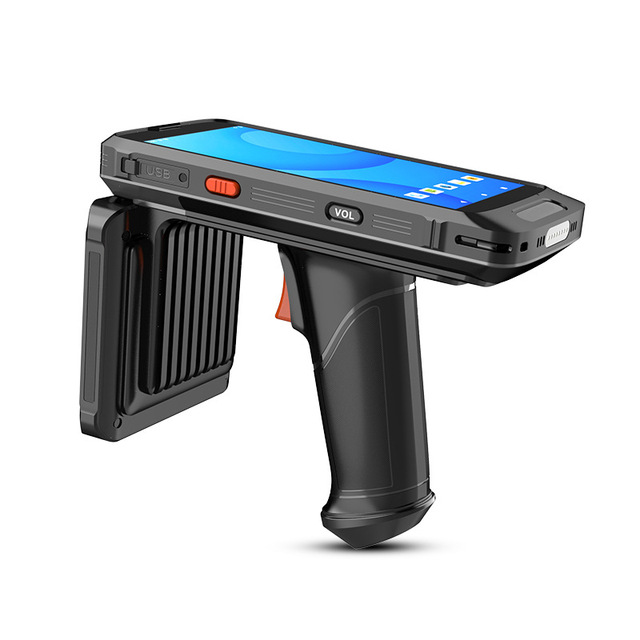
High Quality Handheld Rugged Handheld Waterproof Computer Mobile Computer PDA for Industrial Logistics
 Shenzhen Xingtong IOT Technology Co., Ltd.🇨🇳CN9 yrs
Hot Selling Inventory Handheld Industrial Pda Android 11 Rugged Barcode Scanner Logistic Nfc Pdas with Camera Price
 Shanghai Senraise Intelligence Technology Co., Ltd.verified🇨🇳CN4 yrs
Hot Selling Inventory Handheld Industrial Pda Android 11 Rugged Barcode Scanner Logistic Nfc Pdas with Camera Price
Related Searches
Explore more sourcing topics & related categories
Sources & References
19 sources cited · Verified industry data & reports
Inventory Management Software Market Size Report, 2026-2033
www.grandviewresearch.com
Size, Share, & Trends Analysis Report By Component (Software, Services), By Application, By Deployment (On-Premises, Cloud), By Enterprise Size, By End Use, By Region, And Segment Forecasts ... The global inventory management software market size was valued at USD 3.7 billion in 2025 and is projected to grow from USD 3.9 billion in 2026 to USD 7.1 billion by 2033, at a CAGR of 8.9% from 2026 to 2033 driven by the rise in drop shipping and third-party logistics (3PL), which is driving the growth of the market. These enterprises typically require sophisticated applications that can handle extensive product lines, multiple warehouses, and global supply chains. Large enterprises prioritize efficiency gains and cost reductions, and the demand for comprehensive, customizable inventory management applications continues to grow, fostering innovation and competition within the market. The small & medium enterprises segment is projected to be the fastest-growing segment from 2026 to 2033. Advanced inventory management software helps manufacturers reduce waste, lower costs, and improve production efficiency by providing precise demand forecasting and automated reordering. The integration of technologies such as IoT and AI enhances visibility and predictive maintenance, ensuring smoother operations. The e-commerce segment is projected to be the fastest-growing segment from 2026 to 2033. The integration of 3D printing (additive manufacturing) technologies with cloud platforms is driving market growth. Inventory management software provides the computational power and storage capacity needed for complex design files, real-time rendering, and remote access to 3D printing resources. Furthermore, regulatory requirements such as SOX and HIPAA ensure compliance and drive businesses to adopt advanced inventory management systems. The strong economic environment and the trend towards digital transformation across various industries also fuel growth in this region. The inventory management software industry in the U.S. is expected to grow significantly from 2026 to 2033.
Retail Inventory Management Software Global Market Report 2026
www.giiresearch.com
Retail Inventory Management Software Global Market Report 2026 - Retail inventory management software serves as a digital solution for businesses to efficiently track and oversee their inventory levels. It encompasses features such as inventory tracking, stock monitoring, order management, and integration with other business systems. It does not include revenues from resales along the supply chain, either further along the supply chain or as part of other products. Retail Inventory Management Software Market Global Report 2026 from The Business Research Company provides strategists, marketers and senior management with the critical information they need to assess the market. This report focuses retail inventory management software market which is experiencing strong growth. The report gives a guide to the trends which will be shaping the market over the next ten years and beyond. Inventory Management Software Market by Deployment Model, Enterprise Size, Pricing Model, Application, End User - Global Forecast 2026-2032 ... Inventory Management Software Market Size, Share, & Trends Analysis Report By Component, By Deployment, By Enterprise Size, By End Use, By Region, And Segment Forecasts, 2025 - 2033 Its applications span order management, asset tracking, service management, product differentiation, and inventory optimization. End-users of retail inventory management software include traditional retailers and off-price retailers alike. Tariffs have affected the retail inventory management software market by increasing the cost of imported hardware components such as barcode scanners, rfid tags, and handheld devices, leading to higher overall solution prices.
Inventory Management Software Market Growth 2026-2036
www.futuremarketinsights.com
Automotive Consumer Product Food & Beverage Chemicals and Materials Healthcare Travel & Tourism Process Automation · Technology Industrial Automation Services & Utilities Oil & Gas Packaging Testing Equipment ... The inventory management software market is projected to grow from USD 2.7 billion in 2026 to USD 9.4 billion by 2036, expanding at a CAGR of 13.1% during the forecast period. The inventory management software market, valued at USD 2.7 billion in 2026 and expected to reach USD 9.4 billion by 2036 at a CAGR of 13.1%, is expanding rapidly as businesses look for smarter ways to control stock, cut losses, and improve visibility across warehouses, stores, and supply chains. The shift from manual tracking to automated, cloud-based systems is accelerating as companies manage more sales channels, larger product portfolios, and rising expectations for fast order fulfillment. Features such as barcode scanning, demand forecasting, automated reordering, and integration with ERP and accounting systems make these platforms essential for daily operations. Industries like retail, manufacturing, healthcare, and food services rely on inventory software to track product movement, maintain compliance, and improve profitability. Inventory Management Software Market Value (2026): USD 2.7 billion Real-time synchronization helps avoid stockouts during peak seasons while reducing excess inventory that erodes margins. Integration with RFID, barcode systems, and mobile scanning tools supports rapid cycle counting and efficient replenishment. Retail organizations also use insights from transaction histories, loyalty data, and regional sales trends to tailor assortments and promotions. As fulfillment timelines accelerate and omnichannel expectations grow, retail-led adoption remains a cornerstone of market expansion.
Top 20 Companies in Global Handheld Point of Sale Market
www.sphericalinsights.com
According to a research report published by Spherical Insights & Consulting, the Global Handheld Point of Sale Market Size is projected to grow from USD 33.2 Billion in 2025 to USD 90.3 Billion by 2035, at a CAGR of 10.52% during the forecast period 2026–2035. AI-enabled handheld POS systems help businesses analyze customer behavior, optimize inventory management, predict sales trends, and improve personalized marketing strategies, enhancing profitability and customer satisfaction levels globally. The Market is Going to Expand at a CAGR of 10.52 % between 2026 and 2035. The handheld point of sale market is about the wider global industry, where portable payment processing devices get used by retailers, restaurants, hospitality providers, and basically service businesses that want smoother transactions and better customer management. In these setups, the devices merge payment processing with inventory tracking, customer engagement, and billing features, all packed into a compact mobile system that can go almost anywhere.
Inventory Management Software Market Trends | Growth [2034]
www.fortunebusinessinsights.com
Access 74+ Detailed Reports Featuring Market Insights, Trends, Forecasts, & Competitive Analysis Across Sectors: The global inventory management software market is projected to be worth $2.75 billion in 2026 and reach $5.52 billion by 2034, exhibiting a CAGR of 9.13% The global inventory management software market was valued at USD 2.51 billion in 2025 and is projected to be worth USD 2.75 billion in 2026 and reach USD 5.52 billion by 2034, exhibiting a CAGR of 9.13% during the forecast period. North America dominated the global market with a share of 35.01% in 2025. Inventory management software automates inventory management, simplifies the tasks required to track inventory effectively, manages reorders, and updates accounting data. Companies use this software to minimize product overstocks and interruptions. Moreover, inventory management in such a way so as to ensure that the products are not out of stock or unavailable is essential. The development of this software is being encouraged by large enterprises to respond to the growing and unique needs of customers. The Large Enterprises segment is forecast to represent 54.77% of total market share in 2026. Inventory management is an essential part of modern production to guarantee the timely manufacturing of goods and help businesses properly forecast their inventory levels. The data derived from the inventory management software informs a company on its purchase, production, and sales decisions. The Manufacturing segment is poised to account for 25.58% of the market share in 2026.
Top Inventory Management Trends to Watch for in 2026
www.unleashedsoftware.com
It’s no surprise, then, that as a cloud-based technology BI is growing, with its market size expected to reach $37.96 billion in 2026 to $72.21 billion by 2030, at a CAGR of 8.4%. It’s also a trend that has reached the world of inventory management. With a digitised supply chain - and managers connected to the metrics that matter, companies are now able to access business-critical data that was previously unavailable. Being able to track figures like product margins by warehouse, or production waste by location – and all in real time – empowers managers to make better decisions, faster. Here’s our pick of the 10 most important inventory management trends of 2026. Global supply chains have been reshaped by geopolitical tensions, trade barriers and lessons during the pandemic. Rather then replying on a small number of distant suppliers and centralised warehouses, many companies are bringing production and inventory closer to their core markets through reshoring, nearshoring and regionalisation strategies. Automated replenishments by adjusting reorder points and order quantities based on demand trends and service-level targets. Optimise inventory mix across channels and warehouses, shifting stock to where it will be most needed. Identify slow-moving products earlier, reducing waste and freeing up capacity