Hard Disk Casting

Overview
Product sourcing insights & recommendations

Hard Disk Casting: Product and Market Analysis
The phrase 'hard disk casting' primarily refers to the base plate casting or HDD chassis, the structural foundation that houses high-precision components like platters and heads. Wordpress
#### 1. Product Specifications & Manufacturing
* Core Material: High-purity aluminium alloy (typically with 4-5% magnesium) is the standard for its lightweight and thermal properties. Techradar
* The Casting Process: The base is typically manufactured using high-pressure die casting (HPDC) to achieve complex geometries with thin walls. Rapiddirect
* Precision Requirements: Unlike standard castings, HDD bases require extreme cleanliness and smoothness. Mydatarecoverylab Since raw aluminium is too porous to polish, it undergoes Electroless Nickel-Phosphorus (NiP) plating to create a hard surface that can be ground to sub-micron tolerances. Techradar
#### 2. Market Trends & Insights (2026 Forecast)
* Enterprise Dominance: The market is shifting heavily toward hyperscale data centers and AI infrastructure. Fusionww High-capacity drives (enterprise-grade) are the primary growth drivers, while consumer HDD sales continue to decline in favor of SSDs. Wikipedia
* Supply Constraints: Major manufacturers (Western Digital, Seagate) have reported that 2026 production capacity is already largely sold out due to long-term agreements with tech giants. Fusionww
* Market Valuation: The global HDD market is projected to reach approximately $44.3B - $51.8B in 2026, growing steadily as data volume needs outpace the cost-per-GB of flash storage. PersistencemarketresearchMordorintelligence
* Regional Trends: Hyperscale demand is highest in North America, while production remains concentrated in hubs like Thailand and Malaysia. WikipediaFusionww
#### 3. Sourcing Opportunities
While specific HDD-only base plates are rarely sold as off-the-shelf products, precision die casting manufacturers specialized in electronics provide the necessary OEM/ODM services.
For a detailed list of products and manufacturers matching these technical requirements, please refer to the files below.
I can help you with:
Hard Disk Drive Base Casting Plate Aluminium Alloy Die Casting
Products · Top picks & verified manufacturers

DM HD002 SATA 3.0 6Gbps Type C 3.1 Gen2 2.5 Inch Aluminum Alloy HDD/SSD Enclosure with 4TB Capacity 1 Year Warranty
 Dm Life Technology Co., Ltd.🇨🇳CN8 yrs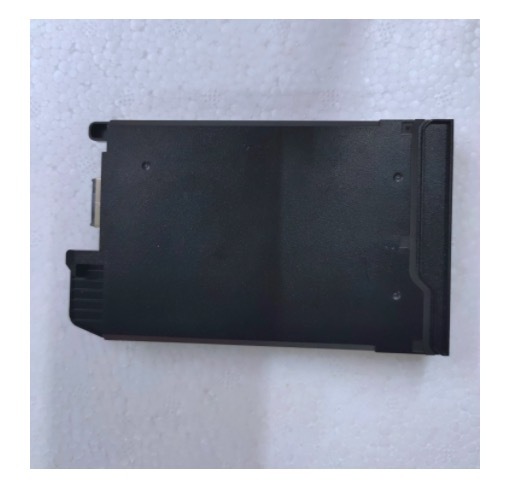
HDD SSD Hard Disk Drive Case Base Caddy SATA with Connector for Getac S410 410
Related Searches
Explore more sourcing topics & related categories
Sources & References
28 sources cited · Verified industry data & reports
How the humble hard drive is made | TechRadar
www.techradar.com
Obtaining pure platinum involves separating it from the iron, copper, gold, nickel, iridium, palladium, rhodium, ruthenium and osmium that it's invariably found with. Let's just say it's a complicated multistage chemical process that can take up to six months to complete. Fortuitously, though, the ruthenium that's also needed in disk manufacture is a by-product of the process. The manufacture of a hard disk platter starts with the fabrication of aluminium blanks, which are disks of aluminium alloy onto which the magnetic recording layer will eventually be deposited. High-purity alloy that contains four to five per cent magnesium plus small amounts of silicon, copper, iron and zinc to give it the necessary properties is cast into an ingot weighing seven tonnes. The hard disk's high speeds of rotation and the close proximity of the head to the platter means that the processes must be carried out with the ultimate in precision and cleanliness. ... Add to this the strange properties of magnetic media and the techniques required to achieve the optimum capacity, and the story of how disks are made becomes one that encompasses the fields of mining, metallurgy, chemistry, physics and involves the pinnacle of engineering and manufacturing technology. As a whole, a hard disk is an amazing feat of electronic and mechanical engineering, but two parts – the heads and the platter – stand out for their sheer manufacturing complexity.
Chapter 5A – Hard Disk Drive Manufacturing Process HDA Assembly ...
ment0smintz.wordpress.com
Parts of the HDD Hard Disk Assmble electromechnaical parts PCB Assemble electronics components HDA - Top View 2 main component - Disk and Head the rest of the components are the motor, disk clamp, the recirculating filter, crash stop, (flex circuit that houses the head pre-amp), the head stack assembly HSA and the HGA. Parts of the HDD Hard Disk Assmble electromechnaical parts PCB Assemble electronics components HDA – Top View 2 main component – Disk and Head the rest of the components are the motor, … the rest of the components are the motor, disk clamp, the recirculating filter, crash stop, (flex circuit that houses the head pre-amp), the head stack assembly HSA and the HGA. All components are housed inside the base casting. The base casting is clamp onto a fixture to prepare for installation of other components ( Motor and HSA).
Hard disk drive manufacturing process - My Data Recovery Lab
mydatarecoverylab.com
Hard disk drive manufacturing process takes place in clean rooms, where the amount of dust in the atmosphere is kept very low, and is strictly controlled and monitored. Manufacturing process is done in several factories around the world. In most cases the platters are made in one plant, and yet prepared to store data in another. The reading head is produced some place else, while the final drive is assembled in yet another factory half way around the world. This way the production cost is kept low as we explained in several articles about consolidation of hard disk drive makers. Like stated above the hard disk drive manufacturing process takes place in clean rooms, where the amount of dust in the atmosphere is kept very low, and is strictly controlled and monitored. Previously assembled components are placed inside the disk chamber using fully automated robotic production line. Sputtering is perhaps the most critical in the whole process of creating a recording media. Head stack assembly (HSA) holds all the components necessary to safely fly the heads over the surface while Voice Coil Motor is designed to place the head over the specific track.
Solid State Drives: Manufacturing at Kingston Technology - Kingston ...
www.kingston.com
After this testing, the design hardware and software are put into mass production for assembly, testing, and packaging. Kingston’s 59 manufacturing lines around the world can produce hundreds of millions of products a year. The production process features its own rigorous and multi-stage testing regimen to ensure quality. These lines are the beating heart of the Kingston manufacturing process and assemble thousands of products an hour. First comes the screen printer, spreading solder paste over a stencil of the approved SSD design that is transferred onto the circuit board. This goes through the AOI (automated optical inspection) station, and with this inspection complete, proceeds to surface mounting of passive components. The reflow oven then cures the solder paste to precise specifications, depending on the exact layout of the circuit board. The first stage of this process, Incoming Quality Control (IQC), happens while Kingston sources the raw materials necessary for the fabrication of its storage products from the world’s leading suppliers. The Material Kitting stage happens next. Necessary components are loaded on the line, ready for assembly. The most crucial stage of manufacturing occurs next: Surface Mount Technology (SMT). Here they are put through an automatic labeling system that can individually label a thousand SSDs an hour. Labels tag the product part number and help identify genuine Kingston products, so it is an important stage in the production process. The next stage of the manufacturing process is depaneling.
Prospects Concerning Hard-disk Manufacturing Equipment
www.hitachihyoron.com
Prospects Concerning Hard-disk Manufacturing Equipment 78 · fabrication process for an aluminum substrate is · presented, and the fabrication and inspection · equipment for this process are described. The aluminum-alloy raw material (called a “blank”) is formed into a substrate by the following processes: grinding, cleaning, nickel-phosphorous coating, polishing, cleaning and inspection. At Hitachi High-Technologies Corporation, these · production processes are performed by equipment such · 1979 and now works at the Hard Disk System · Department, the Fine Technology Products Business · Group, Hitachi High-Technologies Corporation. He · is currently engaged in the development of HDD- manufacturing equipment. contribute to improving the efficiency of the production · processes related to HDDs and to further develop this · Basic technologies for high-precision disk inspection are shown. Fig. 11—Forecasted Trends in · Specific Technologies. Fig. 4—Substrate and Disk-fabrication Processing.
Hard Drives — Design Life-Cycle
www.designlife-cycle.com
These are only some of the raw materials used, and these have major energy impacts in the production of hard disk drives. Following raw material acquisition and processing, it must next be transported. After mining and processing, materials are transported to different manufacturing facilities by plane, ship, or trucks across global supply chains. According to Western Digital’s Environmental, Social, and Governance Report, during the 2020 fiscal year the total electricity consumption of every development and manufacturing facility was around 6716 trillion joules, with only about 522.4 trillion joules coming from renewable sources (“Western Digital ESG Data Download”). This value accounts for the manufacturing of all products made by Western Digital, not just hard drives. According to both PC Plus and Lamelot, the most notable manufacturing processes for a hard drive are the production of the magnetic disk platters and the read/write heads because of their complexity (PC Plus 1; Lamelot 1). The manufacture of hard drive disk platters therefore uses many other elements beyond aluminum or glass-ceramic, and each of these requires another energy-consuming process for incorporation into the disk platters. The process of manufacturing the read/write heads is highly complex and comparable to the manufacture of silicon chips or semiconductors. According to Lamelot, the production of these heads begins with wafers made of slices of a “high-performance ceramic called aluminum titanium carbide (AlTiC)” instead of silicon. For example, Seagate’s Momentus HDD (Hard Drive Disk) generates a total of 7.34 kg of carbon dioxide equivalent emissions (CO2e) per product. Acquiring raw materials and pre-processing contributes the most to the total compared to the other life cycle stages - standing at 42% of the Momentus HDD’s total climate change contribution. Along with the acquisition of raw materials being a main contributor to the wastes and emissions of a hard drive, the manufacturing, processing, and formulation of hard drives also involves carbon dioxide emissions.