Id Making Equipment

Overview
Product sourcing insights & recommendations
The ID making equipment market is undergoing a significant transition from a hardware-centric model to a solutions-driven ecosystem. The global market is projected to reach approximately $2.1 billion to $3.06 billion by 2033–2035, growing at a CAGR of 4.2% to 8.1% PersistencemarketresearchMarketresearchfutureIndexbox.
Key Market Trends & Insights
* Technological Shift: While Direct-to-Card (DTC) printing currently holds a 52% share due to its cost-effectiveness, Retransfer Technology is the fastest-growing segment Persistencemarketresearch. It is preferred for its high-resolution, borderless printing on uneven surfaces and its essential role in producing durable polycarbonate cards PersistencemarketresearchIndexbox.
* Security Integration: Modern equipment is evolving to incorporate biometric data capture (fingerprints/facial scans) and smart chip encoding (RFID/NFC) to create multi-functional credentials for access, payments, and IT logins MarketresearchfutureIndexbox.
* High-Growth Segments:
* Education: The fastest-growing sector as institutions shift to "One Card" systems for security and convenience Persistencemarketresearch.
* Corporate Security: The largest segment (35-38% share) focusing on unified physical and digital access Persistencemarketresearch.
* Government: Driven by national eID programs and regulatory mandates like the REAL ID Act PersistencemarketresearchIntelmarketresearch.
Product Opportunities & Pricing
* Premium Segment: High-resolution (600dpi) retransfer printers like the Evolis Agilia or Dascom DC-7600 are trending for high-security needs, with prices ranging from $2,200 to over $8,000 per unit AlibabaAlibaba.
* Small Business Solutions: Compact, entry-level models such as the Seaory S26 or Hiti CS200e offer cost-effective direct-to-card printing starting around $680-$900 AlibabaAlibaba.
Detailed B2B product listings and supplier options for these technologies can be found in the attached files.
You can refine these findings further by:
Id Card Printer Retransfer Machine
Products · 2 lists
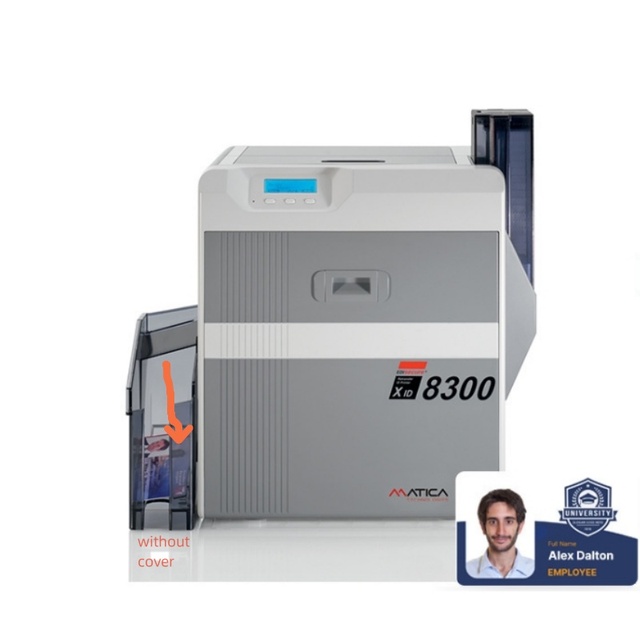
Used for XID8300 Single/Dual-Sided Retransfer ID Card Printer Over-the-edge printing PVC ID Card Printer
 Foshan Shunfeng Office Equipment Co., Ltd.🇨🇳CN6 yrs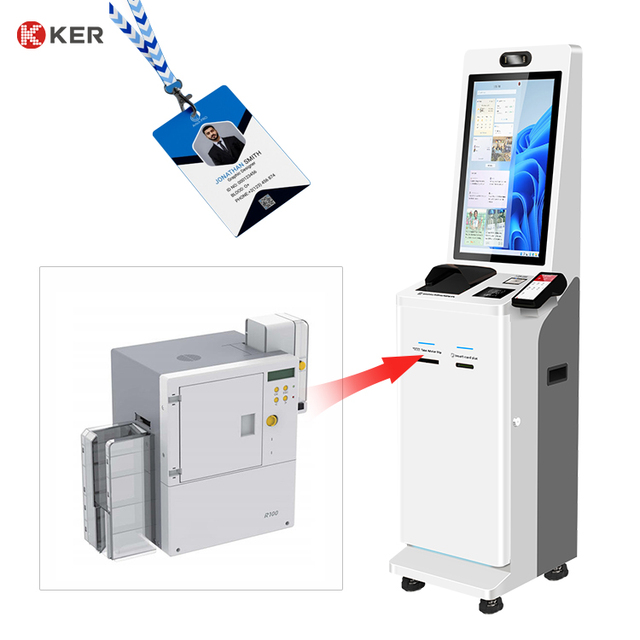
Evolis Dual-Sided Retransfer Card Printer with USB Interface in Stock for High-Security Corporate ID Badges Membership Cards
 Guangzhou Chujie Information Technology Co., Ltd.verified🇨🇳CN6 yrs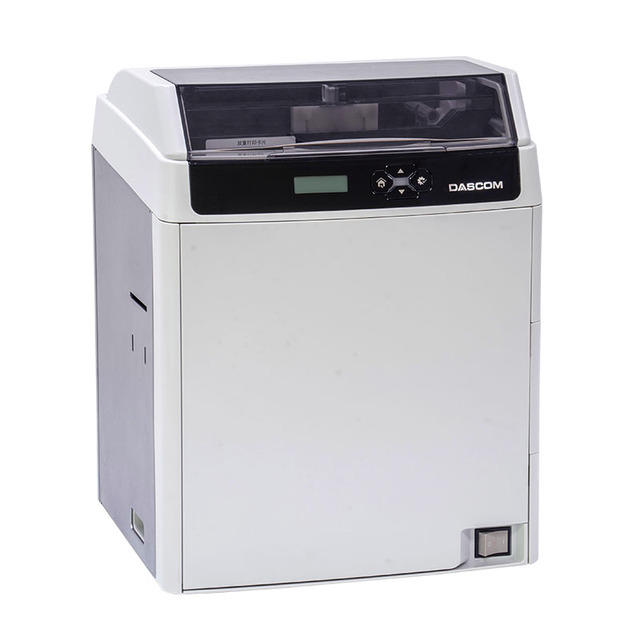
Dascom DC-7600 600dpi Color Retransfer High-Duty Smart Card Printer for ID Card Production in Universities Offices and Financial
 Nanjing Juyi Internet Of Things Technology Co., Ltd.🇨🇳CN2 yrs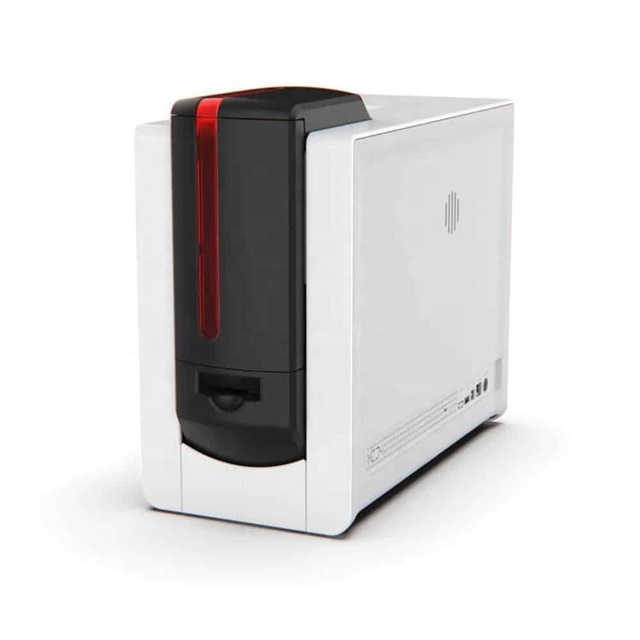
Agilia Retransfer Card Printer 600dpi Resolution Expert Dual Sided Retransfer ID Card Printer
 Dongguan Qiaoji Technology Co., Ltd.🇨🇳CN5 yrs
Evolis Agilia Retransfer Card Printer 600dpi Resolution Expert Dual Sided Retransfer ID Card Printer
Related Searches
Explore more sourcing topics & related categories
Sources & References
28 sources cited · Verified industry data & reports
Industrial Machinery Market Size, Share Report 2026-2035
www.gminsights.com
The global industrial machinery market was estimated at USD 745.6 billion in 2025. The market is expected to grow from USD 790.4 billion in 2026 to USD 1.23 trillion in 2035, at a CAGR of 5.1% according to latest report published by Global Market Insights Inc. Data mining is a key part of our research process, contributing nearly 20% to the overall methodology. It involves analysing market structure, identifying industry trends, and assessing macroeconomic factors through revenue share analysis of major players. Relevant data is collected from both paid and unpaid sources to build a reliable database. The industrial machinery market in the U.S. is growing steadily as end users make capital investments in automation and advanced manufacturing technology, as well as energy-efficient equipment, to modernize their operations and satisfy the increasing productivity demands being placed on them. These trends are being further supported by the industry 4.0, as consumers will be able to run smart connected machines that will report real-time production data, performance, etc., and as such, consumers value equipment that has the ability to do predictive maintenance, remote monitoring, and energy optimization; being able to offer these will help them to decrease downtime and operating cost.
5 Non-Road Equipment Manufacturing Trends on the Horizon for 2026 ...
www.aem.org
After years of volatile commodity prices, input costs, and supply chain disruptions, many farmers are entering 2026 with a cautious mindset. Rather than making large-scale investments in new equipment, the prevailing trend is to maintain the status quo with cautious optimism as the year progresses, as farmers focus on cost control and incremental improvements. Beyond operational benefits, this trend also sets the stage for new business models. As some OEMs and technology providers push toward “equipment-as-a-service,” interoperability becomes the linchpin. Systems must speak the same language across mixed fleets, assets, and platforms to unlock the full potential. Data is no longer just numbers on a spreadsheet. It is a strategic asset, fueling insights to help contractors better prepare. As we move into 2026 and beyond, deeper integration and more seamless collaboration between hardware and software ecosystems will continue. This trend creates opportunities for manufacturers to develop retrofit kits, modular upgrades, and service programs that extend the life and functionality of equipment. Companies that can support farmers in this “optimize rather than replace” mindset will strengthen loyalty and position themselves for future growth when market conditions improve. Keeping that in mind, let’s take a look at the five key trends that AEM subject matter experts say are positioned to impact equipment manufacturers in 2026:
10 Industrial Machinery Industry Trends to Know | NetSuite
www.netsuite.com
See which technologies, market shifts, and strategies are shaping industrial machinery manufacturing and how businesses can respond. The rise of powerful technologies like AI and cobots has the potential to make manufacturers more productive and efficient than ever, though these companies must also navigate the challenges of growing supply chain complexity and an ever-widening skills gap. By staying one step ahead of the latest trends and investing in the right technologies to support them, industrial machinery manufacturers can create sustainable growth for the long term. What are the industrial manufacturing trends in 2026? This article breaks down the top trends manufacturers should be mindful of and how businesses can capitalize on them to drive success. Powerful forces are transforming the industrial machinery sector. Technological change is among the primary drivers, with smart manufacturing practices, AI, and autonomous robots changing the way industrial machinery manufacturers conceive and build their equipment. In parallel, regulatory and market forces require manufacturers to operate more sustainably, be it by replacing old motors and systems with energy-efficient alternatives or by building machines with recyclable components. Industrial machinery makers are pursuing every measure possible to stay ahead of the game, with a particular focus on the 10 trends described below. To call AI the future of manufacturing is an understatement. According to Bain, 75% of advanced manufacturing companies say adopting AI ranks among their top priorities. Current use cases for AI in industrial machinery manufacturing include equipment assembly and maintenance, quality control for manufactured products, and manufacturing warehouse logistics.
2026 Manufacturing Industry Outlook | Deloitte Insights
www.deloitte.com
Despite the potential for these developments, manufacturers should prepare for multiple economic scenarios: continuation of current market conditions, possible contraction, or renewed growth.9 ... To help industry leaders gain agility, build resilience, and uncover new opportunities in the year ahead, Deloitte’s 2026 Manufacturing Industry Outlook explores the following trends: Dynamically adjust service-level agreements based on equipment usage and risk patterns. For example, AI agents could autonomously upgrade a heavily used bulldozer in a construction fleet to priority servicing. Evaluate telemetry data on industrial machinery, detect misuse, validate claims, and even approve or reject warranty submissions · To begin preparing for the agentic aftermarket in 2026, companies can: Identify aftermarket personas by breaking down the steps of their aftermarket services to identify where AI agents might be deployed, what their roles could be, and how they can best partner with humans to augment their capabilities while managing risk Capture institutional knowledge from retiring employees and make jobs more attractive to younger generations · Maximize production uptime with autonomously generated shift handover reports and work instructions · Improve customer experience by simplifying and accelerating equipment repair · Agentic AI also lays the foundation for physical AI—robots with more autonomy—which could attract additional investment from manufacturers in 2026. And if the trend toward reshoring accelerates—even if companies leverage existing US capacity—the supply of skilled workers could become increasingly strained. Shifting immigration policies may further impact the labor pool, since immigrant workers filled nearly one in four US manufacturing production jobs in 2024.41 · The potential for ongoing economic uncertainty in 2026 could compound these challenges.
Indexable Inserts Market Growth Driven by 4.32% CAGR by 2035
www.globalgrowthinsights.com
Strong demand from aerospace, automotive, and industrial equipment sectors continues to support market development across the United States. Market Size: Global Indexable Inserts Market valued at USD 5.12 billion in 2025, USD 5.34 billion in 2026, reaching USD 7.82 billion by 2035 at 4.32% CAGR. Growth Drivers: Over 68% automation adoption, 61% CNC utilization, 57% productivity improvement focus, and 49% demand for precision machining solutions. Trends: Nearly 72% coated insert adoption, 60% advanced tooling usage, 55% multi-edge insert preference, and 47% smart manufacturing integration. The Heavy Machinery segment accounted for USD 0.56 Billion in 2025, representing 11.0% of the total market. This segment is anticipated to grow at a CAGR of 4.0%, supported by ongoing industrial equipment manufacturing demand. The Indexable Inserts Market was valued at USD 5.12 Billion in 2025 and reached USD 5.34 Billion in 2026. The Global Indexable Inserts Market was valued at USD 5.12 billion in 2025 and is projected to reach USD 5.34 billion in 2026. The market is further expected to grow to USD 5.58 billion in 2027 and reach USD 7.82 billion by 2035, registering a CAGR of 4.32% during the forecast period from 2026 to 2035. The Indexable Inserts Market is segmented by type and application, with each segment serving specific machining needs across industrial sectors. The market was valued at USD 5.12 Billion in 2025 and reached USD 5.34 Billion in 2026. It is projected to reach USD 7.82 Billion by 2035, expanding at a CAGR of 4.32% during the forecast period.
From traditional operations to connected intelligence: Equipment ...
annata.net
At Annata, we’ve spent decades shoulder to shoulder with equipment businesses, OEMs, dealers, rental providers, learning your language, your pain points, and the realities of your industry. And in this article, we’ll walk through the equipment industry trends for 2026, and show how a platform like A365 is designed specifically to help you turn disruption into opportunity. The difference in 2026? These models are being digitally transformed: Rental contracts are automatically tied to machine telematics · Billing is automated based on actual usage, not estimates · Customers can log into self-service portals to track costs, schedules, and equipment availability in real time · The result: higher satisfaction, smoother revenue streams, and a business model that scales with customer demand. Equipment industry trends for 2026 – Trend 7: Seamless integrations with OEM brands The heavy equipment industry in 2026 is at a crossroads. The disruptions of the past few years have evolved. But so have the tools we use to face them. Having had a look at the equipment industry trends for 2026, AI, connectivity, and digital integration are practical, business-critical solutions that determine whether you can deliver uptime, control costs, and keep customers loyal. And with A365, Annata offers not just technology, but decades of industry understanding baked into every feature. We’re your trusted partner that knows what keeps you up at night and how to turn those pain points and the equipment industry trends for 2026 into competitive advantages.