Iem Drivers

Overview
Product sourcing insights & recommendations
The IEM driver market is poised for significant innovation in 2026, with the global market projected to reach $435.9 million. Key trends include the breakthrough of Gen3 MEMS drivers that no longer require external amplification, the rise of active digital architectures for precision tuning, and the increasing use of high-rigidity materials like titanium and graphene in dynamic drivers.
Dynamic drivers remain the most popular choice for their natural sound (33.1% share), while Balanced Armature (BA) market share is climbing toward 45% due to the demand for multi-driver high-resolution setups.
The comprehensive report below provides detailed market data, technological deep-dives into driver types (DD, BA, Planar, EST), and current B2B sourcing insights for professional driver components.
I can help you with:
10mm Dynamic Driver Unit Titanium Graphene Diaphragm For Iem Earphone Speaker Unit Diy Wholesale
Products · 4 lists

2021 New Arrival High-End 40mm 32ohm Dynamic Driver for High Quality Headphones and Speakers
 Shenzhen Xuanda Electronics Co., Ltd.verified🇨🇳CN12 yrs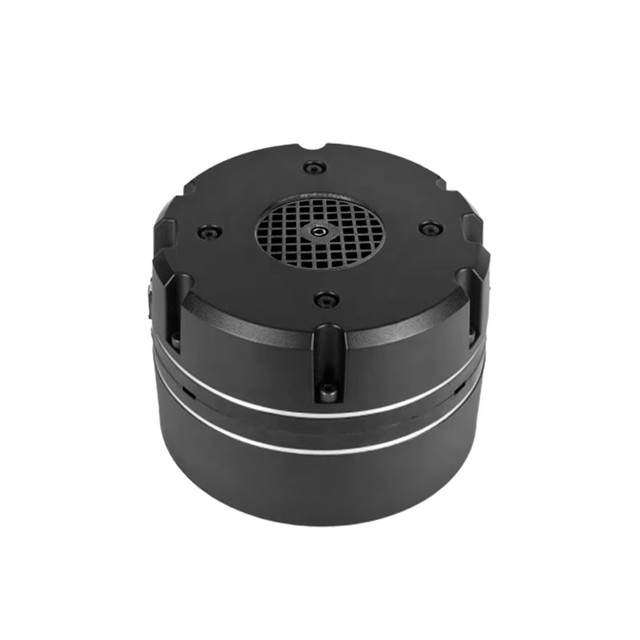
Top End 9092 Dual Diaphragm Driver HF Marine Audio Speaker for Tunnel Projects 8ohm Impedance with Neodymium Magnet Metal Shell
 Guangdong Huiyin Audio Co., Ltd.verified🇨🇳CN16 yrs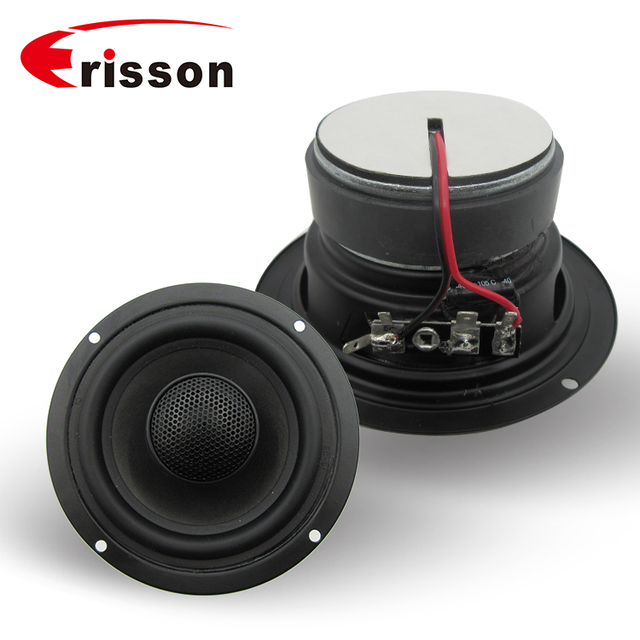
OEM 4 Inch 25W 4ohm 2-way Car Coaxial Loudspeaker Speakers Driver for Cars
 Dongguan Erisson Acoustics Technology Co., Ltd.verified🇨🇳CN14 yrs
Deep Dive · Full Report
Full Market Report
1 document · Live-fetched from source
Related Searches
Explore more sourcing topics & related categories
Sources & References
26 sources cited · Verified industry data & reports
Looking Forward: Trends Shaping High-End IEMs and Sources in 2026 ...
www.head-fi.org
Looking Forward: Trends Shaping High-End IEMs and Sources in 2026 NEW Drivers 2025 marked a turning point for driver innovation in the HiFi IEM space, and many of these technologies will become much more common in 2026. One notable development was the introduction of Knowles’ next-generation multi-way BA tweeters, unveiled in the second half of 2024. Beyond the mentioned technologies above, several other driver updates introduced in 2025 should be ready for 2026 releases, including next-gen versions of Sonion’s Gen3 ESTs, liquid-silicone dynamic drivers, titanium-dome dynamic drivers, and graphene-plated diaphragms. How each of these will contribute to the sound tuning of future IEMs remains to be seen (and heard), and we can’t wait to find out! NEW Design Structures Surprisingly, some of the most interesting progress isn’t coming from new drivers alone, but from entirely new structural design concepts. Aroma Audio Core, announced in 2025 and already available for purchase, certainly belongs to the new 2026 trend. Its in-line post-amplification system is the first of its kind. If we view the cable and IEM as a single, combined signal chain, this in-line post-amp in series with the source’s phone output represents a genuinely new structural direction for IEMs. Several IEMs released in 2025 have already used these drivers, delivering outstanding results, particularly in treble resolution and coherence. We expect them to appear in many more flagship and near-flagship designs in 2026 as manufacturers continue to refine their tuning. MEMS drivers, while not new, are also entering a new phase.
Looking Forward: Trends Shaping High-End IEMs and Sources in 2026 ...
shop.musicteck.com
Beyond the mentioned technologies above, several other driver updates introduced in 2025 should be ready for 2026 releases, including next-gen versions of Sonion’s Gen3 ESTs, liquid-silicone dynamic drivers, titanium-dome dynamic drivers, and graphene-plated diaphragms. How each of these will contribute to the sound tuning of future IEMs remains to be seen (and heard), and we can’t wait to find out! Surprisingly, some of the most interesting progress isn’t coming from new drivers alone, but from entirely new structural design concepts. Aroma Audio Core, announced in 2025 and already available for purchase, certainly belongs to the new 2026 trend. Its in-line post-amplification system is the first of its kind. If we view the cable and IEM as a single, combined signal chain, this in-line post-amp in series with the source’s phone output represents a genuinely new structural direction for IEMs. Several IEMs released in 2025 have already used these drivers, delivering outstanding results, particularly in treble resolution and coherence. We expect them to appear in many more flagship and near-flagship designs in 2026 as manufacturers continue to refine their tuning. MEMS drivers, while not new, are also entering a new phase. That limitation is beginning to fade. Unique Melody Umbral is a strong example, where its Gen3 MEMS implementation no longer requires a dedicated amp. This breakthrough opens the door for MEMS drivers to finally appear in more traditional IEM form factors in 2026 (lips sealed, for now).
Best IEMs of 2026: Future-Proof In-Ear Monitors Worth Buying
www.moon-audio.com
As we look at 2026's standout models, we've identified the IEMs with excellent sound quality, advanced technology, and thoughtful designs that will deliver incredible performance well into the new year. Whether you're drawn to planar magnetic precision, hybrid driver versatility, or the intimacy of a perfectly tuned single dynamic driver, these are the IEMs worth your investment in 2026 and beyond! Read Time: Approx. 11 min. The Best IEMs to Buy in 2026 (And Keep Loving) The In-Ear Monitor (IEM) market moves fast, with new releases flooding the scene every quarter promising to be better than the last. But while hype cycles come and go, truly exceptional IEMs transcend their launch date–they're the ones that audiophiles return to time and time again. Drawing on 64 Audio's patented Tia, Apex, and LID technologies alongside Astell&Kern's storied design philosophy, the XIO represents the very best of two audio giants working in perfect harmony. This partnership sets a bold new benchmark in the high-end IEM space, delivering a listening experience that is as technically impressive as it is emotionally captivating. The XIO has been masterfully engineered around a 10-driver hybrid system, featuring a TRUE ISOBARIC dual dynamic driver configuration for thunderous, controlled bass, six balanced armature drivers for lush midrange reproduction, and a tia high-frequency driver that eliminates traditional sound tubes to render airy, ultra-detailed highs all sculpted through a precise 4-way passive crossover. We recommend pairing the XIO with the Silver Dragon IEM Cable for an exceptional synergy. The Silver Dragon's ultra-pure signal transmission and smooth, fatigue-free character complement the XIO's expansive soundstage and precise imaging beautifully, making it an ideal match for long listening sessions and critical audio work alike. READ MORE: XIO Review ... Ushering in a new era of technological innovation, the 64 Audio Volür is a 10-driver hybrid Universal In-Ear Monitor, building on the heritage of the Audio Nio IEM.
Strategic Vision for IEM Drivers Market Expansion
www.datainsightsmarket.com
2024 (January): Apple's AirPods Pro (2nd generation) highlight the trend towards sophisticated driver integration for active noise cancellation and spatial audio. 2024 (June): Goertek reports increased production capacity for IEM drivers to meet the surging demand for TWS earbuds from major global brands. 2025 (Estimated): Expect further integration of AI-driven sound personalization features directly into driver technology. 2026 (Projected): Introduction of next-generation wireless codecs that further minimize audio latency and compression, impacting driver design. IEM Drivers by Application (Wired IEM, Wireless IEM), by Types (Balanced Armature Drivers, Dynamic Drivers), by North America (United States, Canada, Mexico), by South America (Brazil, Argentina, Rest of South America), by Europe (United Kingdom, Germany, France, Italy, Spain, Russia, Benelux, Nordics, Rest of Europe), by Middle East & Africa (Turkey, Israel, GCC, North Africa, South Africa, Rest of Middle East & Africa), by Asia Pacific (China, India, Japan, South Korea, ASEAN, Oceania, Rest of Asia Pacific) Forecast 2026-2034 ... We provide information on industries, companies, consumers, trends, countries, and politics, covering the latest and most important issues in a condensed format.Go to reports The shift from wired to wireless audio continues to be a dominant trend, fueling innovation in compact, low-power, and high-performance drivers. Wireless IEMs, which constituted approximately 60% of the market in 2024, are projected to command an even larger share, exceeding 75% by 2033. This surge is propelled by advancements in Bluetooth technology, including improved codecs like aptX Adaptive and LDAC, which minimize audio compression and latency. Technological Obsolescence: Rapid advancements can quickly make existing driver technologies less competitive. Environmental Regulations: Increasing scrutiny on materials and manufacturing processes could lead to higher compliance costs. The IEM drivers landscape is continuously evolving with exciting new trends:
In-Ear-Monitors (IEMs) Market Size & Forecast, 2026-2033
www.coherentmarketinsights.com
Additionally, dynamic drivers are more affordable than other driver technologies, further fueling their sales. Major brands have also focused their design and marketing efforts around dynamic driver models, boosting their reach. Age Group Insights – Teens (13-19) Remain the Largest User Owing to Portability and Style of IEMs · By age group, the teens (13-19) segment is estimated to contribute the highest share in the global in-ear-monitors (IEMs) market with 25.2% in 2026. In-Ear-Monitors (IEMs) Market size is growing with a CAGR of 5.5% in the prediction period & it crosses USD 601.1 Million by 2033 from USD 435.9 Mn in 2026. North America In-Ear-Monitors (IEMs) Market Trends · North America’s dominance in the in-ear-monitors (IEMs) market with a share of 32.3% in 2026 can be attributed to the region’s strong music industry presence and growing demand for high-fidelity audio solutions among professional musicians and audiophiles. The Asia Pacific region is expected to exhibit the fastest growth with a share of 26.4% in 2026 fueled by the large population, emerging middle class, government support for local music industries, and trade relationships within the region. Leading the Asian market are companies like Roadio and DUNU that offer affordable custom-fit designs and collaborate with regional artists. In-Ear-Monitors (IEMs) Market Outlook for Key Countries: U.S. In-Ear-Monitors (IEMs) Market Trends
Complete IEM Technology Guide: Deep Analysis of Six Driver ...
en.pifferia.com
The working principle of in-ear monitors (IEMs) is built upon precise acoustic transduction technology. When electrical signals enter the driver unit, they generate magnetic field variations that drive the diaphragm to produce air vibrations, ultimately converting into audible sound waves. However, due to sealed IEM design, they cannot provide the wide soundstage of open electrostatic headphones, but can achieve excellent isolation and more precise sound positioning. Most modern marketed as "EST drivers," such as BGVP models, actually employ electret technology. IEMs typically use electret drivers for high frequencies while combining with dynamic or BA drivers in hybrid systems, maintaining easy drive ability while enhancing high-frequency resolution and extension. Traditional electrostatic technology usually excels in sound purity and resolution but requires dedicated drive systems, making it expensive and limiting portability. In hybrid applications for IEMs, bone conduction drivers typically handle extreme low frequencies (like 20-100Hz), while traditional dynamic or BA drivers process other frequency ranges. BGVP has models like this and the combination can create listening experiences with both precise sound positioning and intense low-frequency tactile sensation. For electronic music, EDM, or genres requiring strong rhythmic impact, this technology provides immersion levels traditional earphones cannot achieve.