Intel Wifi

Overview
Product sourcing insights & recommendations
The market for Intel Wi-Fi products is currently undergoing a major transition to Wi-Fi 7 (802.11be), with Intel maintaining a strong 14-18% global market share in the wireless connectivity space Futuremarketinsights. While currently dominated by Wi-Fi 6 solutions (over 65% revenue share in 2024), the sector is projected to grow to $80.9 billion by 2030, driven by the rollout of 6GHz spectrum GrandviewresearchMordorintelligence.
Key Market Trends
* Wi-Fi 7 Adoption Cycle: Intel launched its flagship BE200 and value-tier BE202 modules in 2024 to lead the PC replacement cycle. Wi-Fi 7 is expected to be the fastest-growing segment through 2033, offering theoretical speeds up to 46 Gbps MarketsandmarketsScribd.
* Regional Growth: North America holds the largest revenue share (37.7%), but the Asia-Pacific region is the fastest-growing market due to rapid smartphone and fiber penetration in China and India MordorintelligenceGrandviewresearch.
* Competitive Landscape: Intel primarily competes with Broadcom (22-26% share) and MediaTek (18-22% share). Intel’s core strength remains its deep integration with the PC/Laptop ecosystem Futuremarketinsights.
Product Insight: Intel BE200 vs. BE202
Intel's recent Wi-Fi 7 offerings target different market segments with distinct performance profiles:
* Intel BE200 (Gale Peak): The premium choice, supporting 320 MHz channels and peak speeds of 5.8 Gbps. It is considered the gold standard for high-end laptop upgrades Hometoolhq.
* Intel BE202 (Misty Peak): A budget-friendly version capped at 160 MHz and 2.4 Gbps. Technical reviews suggest it performs similarly to older Wi-Fi 6E cards, acting as a "Wi-Fi 7 Lite" option Picclick.
* Compatibility Note: Both modules are optimized for Intel-based systems and frequently encounter compatibility issues with AMD motherboards Hometoolhq.
Wholesale & Sourcing Data
Sourcing for these modules is centered in Shenzhen, China, with bulk pricing for the BE200 typically ranging from $23.50 to $26.80 depending on volume.
I have detailed market insights and supplier lists for Intel Wi-Fi 7. Would you like to:
Intel Wi Fi 7 Be200 Be202 Ngff M.2 Wireless Card Wholesale
Products · Top picks & verified manufacturers
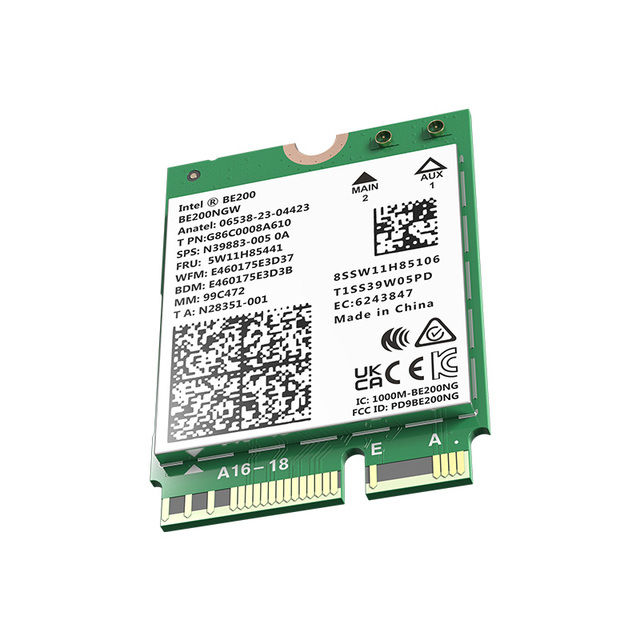
Intel BE200 WIFI 7 Wifi Card Wireless WiFi 6E BE200NGW 5.4 802.11AX Triband M.2 NGFF Network Adapter for Win10 / 11
 Shenzhen Four Seas Global Link Network Technology Co., Ltd.verified🇨🇳CN4 yrs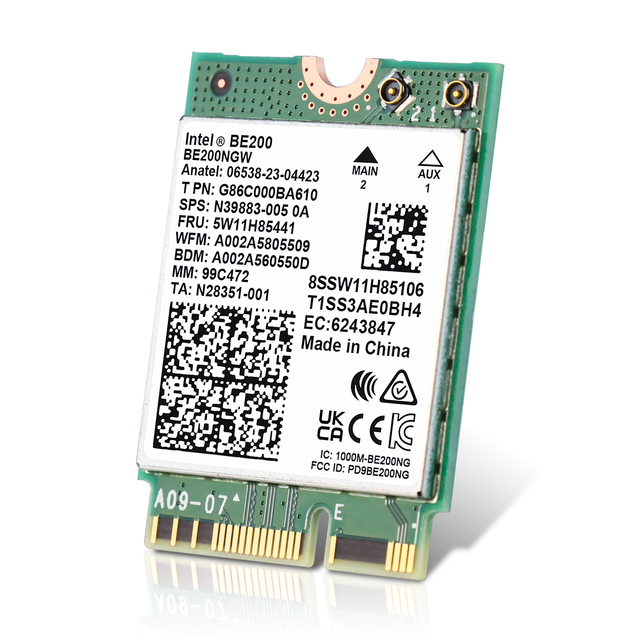
EDUP High Speed Wifi 7 BE200 Intel PCIe Wifi Card Express Server Network Card Wifi Bluetooth Pcie Card
 Shenzhen Edup Electronics Technology Co., Ltd.verified🇨🇳CN8 yrs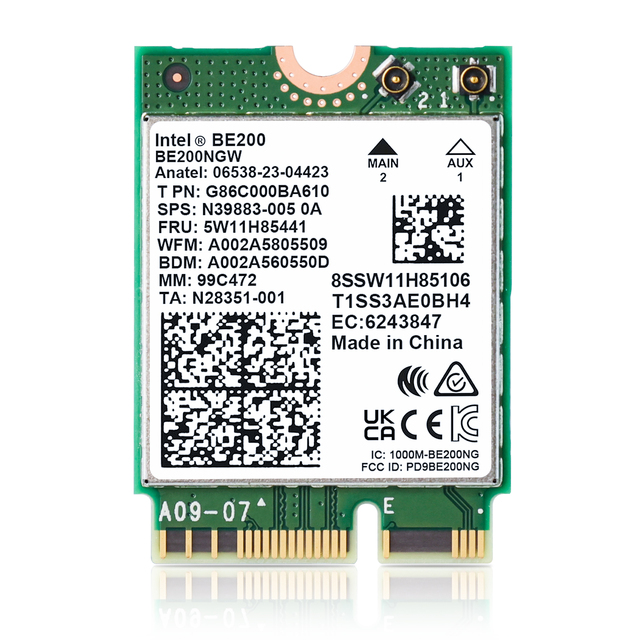
EDUP 8774Mbps Intel Wifi 7 BE200 Network Card Server 802.11be PCIe Wifi Key Riser Pcie Wifi Ethernet Network Adapter Card
 Shenzhen Edup Electronics Technology Co., Ltd.verified🇨🇳CN15 yrs
Comfast WiFi 7 Strong WiFi Signal BT5.4 PCI-E WiFi Module with M2 Port for PC Windows Linux OS
 Shenzhen Four Seas Global Link Network Technology Co., Ltd.verified🇨🇳CN15 yrs
Factory Customization 4G LTE Module IoT Module Universal Wifi Device Universal NGFF M.2 Interface 150M Wireless Module
 Huizhou Chuangjing Technology Co., Ltd.verified🇨🇳CN4 yrs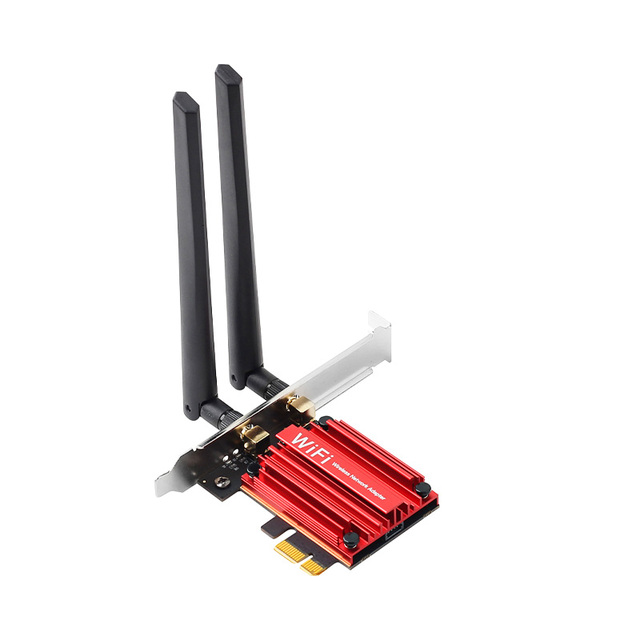
WiFi7 Wireless PCIE Adapter Tri Band 2.4G/5G/6Ghz Compatible BT5.3 Network WiFi Card for Win 10/11
 Shenzhen Gainstrong Technology Co., Ltd.verified🇨🇳CN9 yrs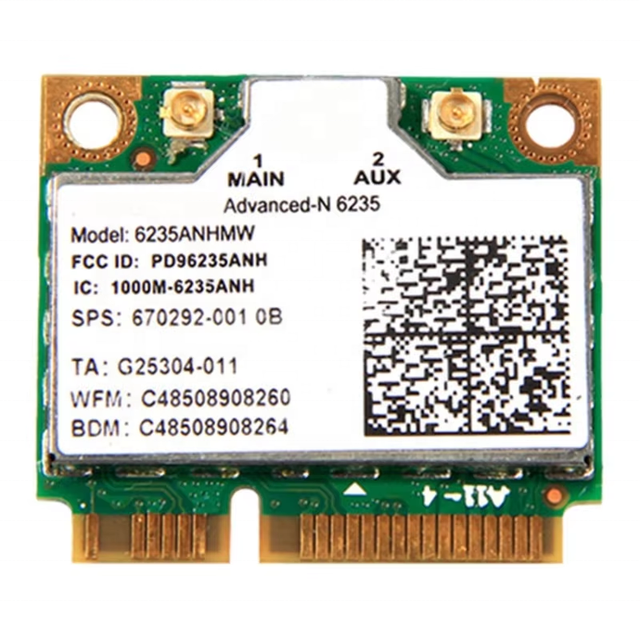
Dual Band WIFI Module Wireless Communication Card 300M 2.4G 5.0G AC 6235 6205 7260 Mini PCIE M.2 WIFI&BT 2in1 Adapter
 Shenzhen Innovative Cloud Computer Co., Ltdverified🇨🇳CN15 yrs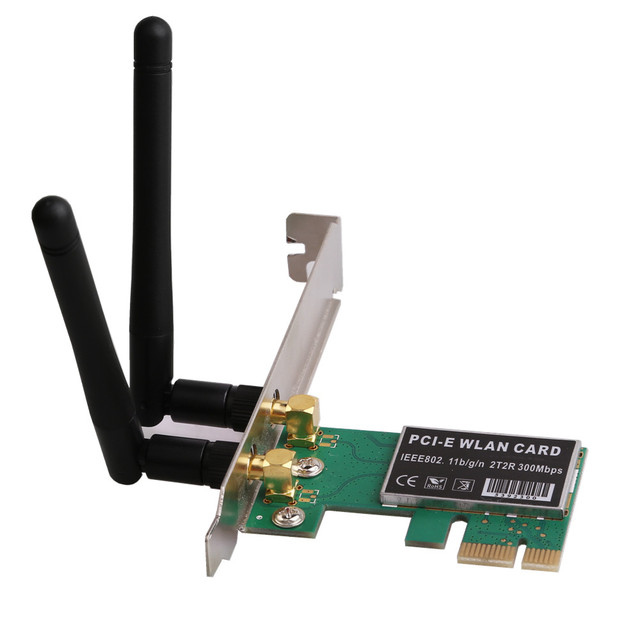
Pci-e Wireless Network Card 300M Wireless Wifi Receiver Desktop Built-in Card Pcie Wireless 2T2R PCI-E Adapter
 Shenzhen Huasifei Technology Co., Ltd.verified🇨🇳CN7 yrs
Dual Frequency Drive-free 600m Wireless Network Card Portable Wireless Network Card Wifi Receiver Usb Wireless Network Card
 Shenzhen Just Link Tech Co., Ltd.verified🇨🇳CN4 yrs
Portable WiFi 6 PCB Assembly Device Removable Wireless WiFi Card Universal Access 6G/5G/4G Car Internet Customizable Brand
 Shenzhen Yongchangtai Electronics Co., Ltd.verified🇨🇳CN9 yrs
Deep Dive · Full Report
Full Market Report
1 document · Live-fetched from source
Related Searches
Explore more sourcing topics & related categories
Sources & References
28 sources cited · Verified industry data & reports
Wi-Fi 6, Wi-Fi 6E And Wi-Fi 7 Chipset Market Report, 2025-2030
www.grandviewresearch.com
Size, Share, & Trends Analysis Report By Chipset (Wi-Fi 6, Wi-Fi 6E, Wi-Fi 7), By Device (WLAN Infrastructure Devices, Consumer Devices, Wireless Cameras), By Application, By Region, And Segment Forecasts ... The global Wi-Fi 6, Wi-Fi 6e and Wi-Fi 7 chipset market size was valued at USD 36.3 billion in 2024 and is projected to grow from USD 45.8 billion in 2026 to USD 80.9 billion by 2030, at a CAGR of 14.6% from 2025 to 2030. The report forecasts revenue growth at global, regional, and country levels and provides an analysis of the latest industry trends in each of the sub-segments from 2019 to 2030. For this study, Grand View Research has segmented the Wi-Fi 6, Wi-Fi 6E And Wi-Fi 7 chipset market report based on chipset, device, application, and region. Chipset Outlook (Revenue, USD Million; 2019 - 2030) ... The global Wi-Fi 6, Wi-Fi 6E, and Wi-Fi 7 Chipset market size was estimated at USD 39.03 billion in 2024 and is expected to reach USD 47.19 billion in 2025. North America dominated the Wi-Fi 6, Wi-Fi 6E, and Wi-Fi 7 Chipset market in 2024. This is attributable to the substantial rise in the investments in developing wi-fi 6 and wi-fi 6E-enabled smartphones, routers, and laptops, among others. Who are the key players in Wi-Fi 6, Wi-Fi 6E, and Wi-Fi 7 Chipset market? Some key players operating in the Wi-Fi 6, Wi-Fi 6E, and Wi-Fi 7 Chipset market include Broadcom, Qualcomm, ON Semiconductor, Intel, Celeno, MediaTek Inc., Texas Instruments Incorporated, Cypress Semiconductor Corporation, STMICROELECTRONICS, NXP SEMICONDUCTORS These companies collectively hold the largest market share and dictate industry trends. Broadcom Inc. Qualcomm Technologies, Inc. ON Semiconductor Connectivity Solutions, Inc. ... MediaTek Inc. ... STMICROELECTRONICS N.V. NXP SEMICONDUCTORS N.V. In October 2024, Silicon Labs launched the SiWx917 Wi-Fi 6 chipset platform, specifically designed for IoT applications.
WiFi Chipsets Market Outlook 2025-2032
www.intelmarketresearch.com
The global Wi-Fi chipsets market size was valued at USD 18,430 million in 2024. The market is projected to grow from USD 19,150 million in 2025 to USD 23,930 million by 2032, exhibiting a CAGR of 3.9% during the forecast period. A Wi-Fi chipset is a piece of internal hardware designed to allow a device to communicate with other wireless-enabled devices. These chipsets are integral components found in a wide array of products, including computers (notebooks and desktop PCs), smartphones, smart home devices like routers and IoT gadgets, and any other equipment that transmits or receives a wireless signal. Global Wi-Fi Chipsets Production Capacity (K Units), 2020-2032 Figure 54. The Percentage of Production Wi-Fi Chipsets by Region, 2025 VS 2032 Figure 55. Wi-Fi Chipsets Industry Value Chain Figure 56. Marketing Channels · Advanced analytics and multi-layered validation for credible intelligence. -> Global Wi-Fi Chipsets market was valued at USD 18430 million in 2024 and is projected to reach USD 23930 million by 2032, at a CAGR of 3.9% during the forecast period. -> Key players include Broadcom, Qualcomm Atheros, MediaTek, Intel, Marvell, Texas Instruments, Realtek, Quantenna Communications, Cypress Semiconductor, and Microchip, among others. The global Wi-Fi Chipsets market is on a trajectory of consistent expansion, with its valuation projected to rise from US$ 18,430 million in 2024 to US$ 23,930 million by 2032, representing a Compound Annual Growth Rate (CAGR) of 3.9%. This sustained growth is fundamentally driven by the increasing integration of wireless connectivity across a vast and expanding range of devices.
Wireless Connectivity Chipset Market Size & Share Analysis - Industry ...
www.mordorintelligence.com
The Wireless Connectivity Chipset Market is expected to reach USD 9.23 billion in 2025 and grow at a CAGR of 8.36% to reach USD 13.79 billion by 2030. Broadcom Inc., Qualcomm Incorporated, Intel Corporation, Texas Instruments Incorporated and MediaTek Inc. are the major companies operating in this market. The report covers the Wireless Connectivity Chipset Market historical market size for years: 2019, 2020, 2021, 2022, 2023 and 2024. The report also forecasts the Wireless Connectivity Chipset Market size for years: 2025, 2026, 2027, 2028, 2029 and 2030. ... Images must be attributed to Mordor Intelligence. In 2025, the Asia-Pacific accounts for the largest market share in Wireless Connectivity Chipset Market. What years does this Wireless Connectivity Chipset Market cover, and what was the market size in 2024? The Wireless Connectivity Chipset Market report segments the industry into By Type (Wi-Fi Standalone, Bluetooth Standalone, Wifi and Bluetooth Combo, Low-power Wireless IC), By End-user Application (Consumer, Enterprise, Mobile Handsets, Automotive, Industrial, Other End-user Applications), and By Geography (North America, Europe, Asia, Australia and New Zealand, Latin America, Middle East and Africa). ... Image © Mordor Intelligence. Reuse requires attribution under CC BY 4.0. The Wireless Connectivity Chipset Market size is estimated at USD 9.23 billion in 2025, and is expected to reach USD 13.79 billion by 2030, at a CAGR of 8.36% during the forecast period (2025-2030).
Wi Fi Chipset Market Report: Size, Growth, Trends & Forecast ...
www.verifiedmarketresearch.com
Report ID: 1495 | Last Updated: Oct 2025 | No. of Pages: 150 | Base Year for Estimate: 2024 | Format: Wi-Fi Chipset Market was valued at USD 20.53 Billion in 2024 and is projected to reach USD 29.32 Billion by 2032, growing at a CAGR of 4.56% from 2026 to 2032. Advancement in Wi-Fi Standards (Wi-Fi 6 / 6E / 7 etc.), Rising Demand for Faster Data Transfer and Higher Bandwidth Applications, and Proliferation of IoT Devices and Smart Ecosystems are the factors driving the growth of the Wi-Fi Chipset Market. The Major Players in the Wi-Fi Chipset Market are Qualcomm, Broadcom, Intel, MediaTek, Marvell Technology Group, Texas Instruments, Cypress Semiconductor, Realtek Semiconductor, STMicroelectronics, and NXP Semiconductors Based on IEEE Standard, the Wi-Fi Chipset Market is segmented into 11ax (Wi-Fi 6), 11ac (Wi-Fi 5), 11n (Wi-Fi 4), and 11be (Wi-Fi 7). At VMR, we observe that 11ax (Wi-Fi 6) is currently the dominant subsegment, capturing the largest revenue share, estimated at over 65% in 2024, driven by a confluence of critical market factors. Smart Home / Smart City / Connected Infrastructure Initiatives: Large-scale government and municipal initiatives, coupled with private investment in intelligent urban and residential environments, are creating significant market opportunities.
Wi-Fi Chipset Market - Share, Manufacturers & Analysis
www.mordorintelligence.com
By geography, Asia-Pacific commanded 43.05% of 2025 shipments and continues to be the fastest-growing region at a 7.46% CAGR through 2031. Note: Market size and forecast figures in this report are generated using Mordor Intelligence’s proprietary estimation framework, updated with the latest available data and insights as of 2026. ... Corporate campus upgrades began moving from pilot to full-scale rollouts in 2024, pushed by the 1,200 MHz of 6 GHz spectrum released by the FCC. Asia-Pacific generated 43.05% of Wi-Fi chipset market shipments in 2025, with China, Japan, and South Korea anchoring both manufacturing and consumption. Government fiber investments across Tier-2 and Tier-3 Chinese cities stimulate demand for tri-radio gateways, although current limitations on indoor 6 GHz operation delay full-scale Wi-Fi 6E adoption. Japan’s regulatory green light for 6 GHz WLAN in 2024 sparked local OEM activity around Wi-Fi 7 routers that support 320 MHz channels, while Korean operators deploy carrier-grade Wi-Fi 6E access points inside 5G-enabled smart-city corridors. Image © Mordor Intelligence. Reuse requires attribution under CC BY 4.0. The Wi-Fi chipset market size is expected to grow from USD 21.90 billion in 2025 to USD 23.24 billion in 2026 and is forecast to reach USD 31.27 billion by 2031 at 6.12% CAGR over 2026-2031. Image © Mordor Intelligence. Reuse requires attribution under CC BY 4.0. By MIMO Configuration: MU-MIMO Dominance Driven by Density Requirements · MU-MIMO solutions generated 60.65% of 2025 sales and registered a 6.61% CAGR through 2031. Eight-stream access points push simultaneous downlink and uplink data to dozens of devices, a capability vital for lecture halls and transportation hubs that often peak above 500 concurrent users.
Global Wi-Fi Chipset Market Size,Share, Growth & Trends Chart by 2033
straitsresearch.com
As per Straits Research, the wi-fi chipset market was valued at USD 22.93 billion in 2024. What growth rate is the wi-fi chipset market expected to record from 2025 to 2033? The market is projected to grow at a compound annual growth rate (CAGR) of 5.6% during the forecast period 2025–2033. Which companies in wi-fi chipset market are shaping the competitive landscape? Leading market participants include Qualcomm Incorporated, Broadcom, Intel Corporation, Media Tek, SAMSUNG, STMicroelectronics, Cypress (Infineon Technologies), On Semiconductor, Peraso Technologies, Dialog Semiconductor along with regional competitors. The global Wi-Fi chipset market size was valued at approximately USD 22.93 billion in 2024 and is projected to reach from USD 24.21 billion in 2025 to USD 37.44 billion by 2033, growing at a CAGR of 5.6% during the forecast period (2025-2033). The last few years have seen significant growth in investments for smart and connected infrastructures among enterprises and governments to enhance connectivity. The availability of low-cost sensors, intelligent systems, and other technologies enables higher investments in connected infrastructure, allowing organizations to generate real-time feedback. Today’s applications are more interactive and bandwidth-intensive, generating massive amounts of data that support real-time analytics and problem-solving. This digital transformation requires more distributed and intelligent edge networking capabilities with constantly evolving security.