Iphone 7 Plus Optical Zoom

Overview
Product sourcing insights & recommendations
The iPhone 7 Plus significantly impacted the smartphone market as the first iPhone to feature a dual-camera system, introducing a dedicated 2x optical zoom WikipediaDxomark. While it set a new standard for mobile photography in 2016, its 2x telephoto lens has since evolved into the high-magnification periscope systems found in modern flagships Tomsguide.
Key Product Insights
* Dual-Lens Architecture: The device utilized a 28mm wide-angle (f/1.8) and a 56mm telephoto (f/2.8) lens to achieve 2x magnification DpreviewEphotozine.
* Performance Variability: While excellent in bright daylight, the telephoto lens lacked Optical Image Stabilization (OIS), causing the software to default to a digital crop of the main lens in low-light conditions to maintain brightness DpreviewYoutube.
* Legacy Value: The 7 Plus remains a point of reference for the introduction of Portrait Mode, which used depth mapping between both lenses to create professional-looking bokeh effects DxomarkMacworld.
Market Trends
* From 2x to Periscope: Market trends have shifted from basic 2x zoom to advanced periscope lenses offering 5x to 10x optical zoom in premium devices like the Galaxy S24 Ultra and iPhone 15/16 Pro series Tomsguide.
* Sourcing Shift: In the current B2B landscape, mid-range smartphones often replace dedicated telephoto lenses with high-resolution main sensors (e.g., 50MP-108MP) to simulate zoom through "in-sensor" cropping, as dedicated zoom hardware remains a high-cost component.
Detailed technical comparisons and consumer reception findings are documented in the attached file.
Based on these insights, you can continue with:
Smartphone With 2x Optical Zoom Camera
Products · 2 lists

Realme GT7 5G Smartphone 6.8" 144Hz AMOLED 7200mAh Battery 100W SuperCharge NFC Octa Core Dimensity 9400+ CPU Android 15
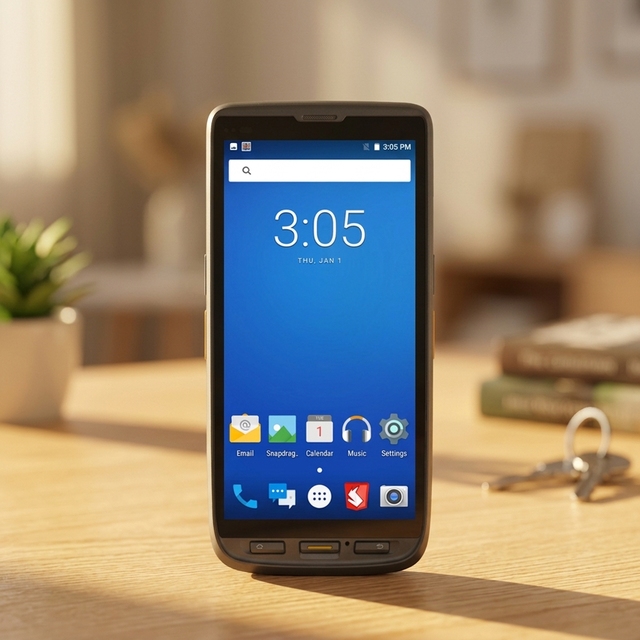
Handheld Pda Android 13 Wifi Bt 4g Data Collector 2d Qr Code Reader Nfc Smart Mobile Phone 1d 2d Barcode Scanner
 Shenzhen Weitaisi Communication Equipment Co., Ltd.🇨🇳CN1 yr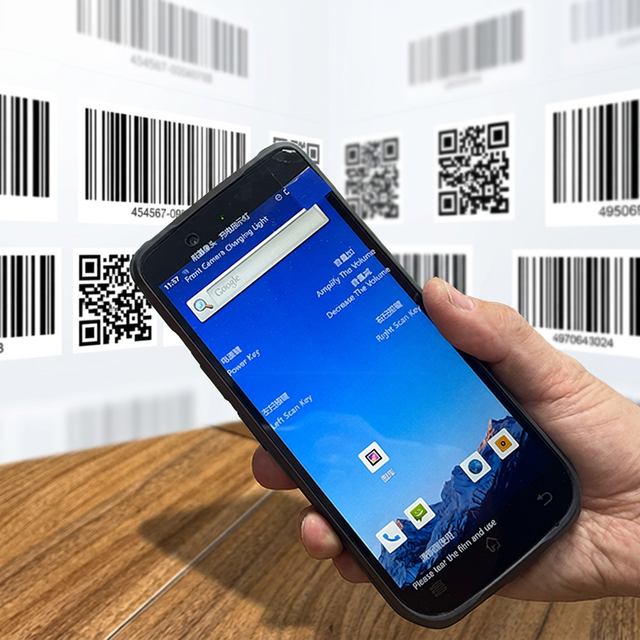
6 Inches Handheld Terminal Android 12 Rugged Octa-core WiFi Barcode Scanner with IP67 Sealing for Wholesale Management in Stock
 Shenzhen C-Reader Technology Co., Ltd.🇨🇳CN1 yr
Deep Dive · Full Report
Full Market Report
1 document · Live-fetched from source
Related Searches
Explore more sourcing topics & related categories
Sources & References
25 sources cited · Verified industry data & reports
iPhone 7 Plus vs Galaxy S7: The Power of Optical Zoom | Tom's Guide
www.tomsguide.com
To show you the benefits of the iPhone 7 Plus' 2x optical zoom versus the usual digital enhancement you get on most other handsets, we put the iPhone 7 Plus head to head against the top smartphone camera on the market: Samsung's Galaxy S7 Edge. Apple's implementation of two cameras to provide both a standard and zoomed in field of view is pretty impressive. More than any other phone with dual rear cams, the iPhone 7 Plus is one of the best demonstration of how two cameras can be better than one. ... Sam is a Senior Writer at Engadget and previously worked at Gizmodo as a Senior Reporter. Before that, he worked at Tom's Guide and Laptop Mag as a Staff Writer and Senior Product Review Analyst, overseeing benchmarks and testing for countless product reviews. When you hit the zoom button on the iPhone 7 Plus' camera app, that's when Apple's tech begins to flex its muscles. Instead of using the standard 28mm f/1.8 camera, the app switches over to the second 56mm f/2.8 camera. This gives the iPhone a true 2x optical enhancement. The Samsung Galaxy S27 Ultra could ditch the 'redundant' 3x zoom for this much bigger camera upgrade · However, it's hard to see the real advantages of the 2x optical until you blow the photos up to 100 percent. When you do, it's quite apparent that when you look at the spire on the ESB, the iPhone 7 Plus' shot is significantly more detailed.
Shoot-out: Apple iPhone 7 versus the Apple iPhone 7 Plus using ...
www.dxomark.com
With our new DxOMark Mobile protocol, we can now test and score the additional features enabled by the dual-camera system of the Apple iPhone 7 Plus, and compare it fairly to the iPhone 7 and other flagship mobile devices. We published a review of the iPhone 7 Plus using our new protocol, and re-tested the [...] While not technically a zoom lens, the longer focal length of its second lens gives the iPhone 7 Plus the ability to capture native images at a 2x zoom (56mm full-frame equivalent as opposed to 28mm). This implementation provides some important benefits. Using optics for tighter composition typically produces a more detailed image than can be obtained by digitally zooming, which simply crops the image from the wide-angle camera. The image – shot under bright light at 2x zoom – also shows that the iPhone 7 Plus captures more details than either the iPhone 7 or the Google Pixel. We’ve seen that the longer focal length of the lens on the 7 Plus provides more details in telephoto images captured in bright light. However, there are trade-offs inherent in Apple’s dual-camera design, because the secondary camera has a smaller sensor and slower lens (smaller aperture) than the primary camera. It also lacks Optical Image Stabilization — a design decision that was likely made to accommodate the longer focal length 56mm (full-frame equivalent) lens that has to fit within the shallow depth of the iPhone. We compare zooms by setting the camera zoom to a 50mm and 85mm full-frame equivalent field of view by using whatever zoom method the camera supports (optical, digital, or hybrid) so that the full target is framed. We then evaluate how a specific area of the target is rendered by each camera by measuring sharpness in object space.
Apple iPhone 7 Plus Review | ePHOTOzine
www.ephotozine.com
The iPhone 7 Plus is the latest iOS smartphone from Apple. It features two 12MP sensor cameras, with each having a different focal length lens. This means that you effectively have a 2x optical zoom, compared with the single fixed lens of the standard iPhone 7. One of the cameras is the same as found on the iPhone 7, that is to say it is 12 megapixels and has a fixed lens of 28mm, with a maximum aperture of f/1.8. The second lens is also 12 megapixels, but the lens is 56mm (twice the focal length) and has a maximum aperture of f/2.8. You can also use a digital zoom up to 10x. There’s also lots of other features which are likely to be of interest to photographers. Those include a display which is capable of showing a wider colour gamut, 4K video recording, optical image stabilisation (on the wide-angle lens), and the ability to capture panoramic images. If you’re in the normal Photo shooting mode, you’ll also see a small 1x in a circle on screen. Tap this and it will then display 2x. This essentially is switching between the two different lenses, rather than zooming as we may ordinarily think of it. From the 2x screen you can also digitally zoom up to 10x.
Apple iPhone 7 Plus' optical zoom vs iPhone 7's digital zoom: here's ...
www.phonearena.com
Being the first dual-camera warrior in Apple's portfolio, the iPhone 7 Plus is undoubtedly an intriguing beast that introduced Apple's new dual-camera setup. One of the cameras is a 'regular' wide-angle one, whereas the other is a telephoto one. Unlike other smartphones that use their dual cameras to capture depth information and blur the background or capture monochrome image info for better clarity, the iPhone 7 Plus uses its second 12MP camera to deliver lossless, up to 2x optical zoom. So, what did we do? Long story short, we took an iPhone 7 and an iPhone 7 Plus out on a stroll and shot some pics. We zoomed in on all scenes -- on the iPhone 7, we utilized 2x digital zoom, while the iPhone 7 Plus snapped pictures at 2x optical zoom. Although both photos seem pretty similar, zooming in clearly shows that the iPhone 7 Plus has done a much better job at retaining the general detail of the house's wooden wall as well as in the foliage to the left of the house. ... Moving along, we happened to stumble upon a river and a family of jolly geese. Phones out, ready, set, go... and the iPhone 7 Plus once again proves the superiority of optical zoom. However, before we succumb to 'smartphoning' and chill, we simply couldn't resist snapping a picture of our patio seating. Again, upon a closer inspection it became clear that the optical zoom of the iPhone 7 Plus simply can't be beaten -- zooming in on the iPhone 7 picture reveals that something blurry and quite washed-out has happened to the leaves and the grass details.
Does the iPhone 7 Plus camera really "zoom"? - Ask Different
apple.stackexchange.com
Apple is not necessarily incorrect when it states that 2x is optical zoom, since at that point the image is entirely "zoomed" through physical lenses and not in software. That said, there is no lens on the device that is independently capable of optical zoom, so the term is also not really being used in its traditional meaning. Beyond 2x, zoom is entirely digital. ... That's quite marketing-speakey for developer docs! As near as I can tell, just as has been the case on all previous models, there's no optical zoom at all. There's the usual digital zoom (cropping) and what's been added a second lens with a longer focal length, that is switched to (under favorable conditions) when the zoom level goes over 2x. Apple states the iPhone 7 Plus has "optical zoom at 2x" and digital zoom up to 10x (versus the iPhone 7 having digital zoom only, and up to 5x). The Dual camera's defining feature is its ability to smoothly transition between wide and tele cameras, acting like a single lens camera with optical zoom at 2x.
iPhone 7 Plus (2016) Review: An Impressive Phablet | Macworld
www.macworld.com
The dual-lens camera offers a number of potential benefits, many of which will emerge across the coming months as app developers and Apple itself come up with new software features. The most important are optical zoom up to 2x and Portrait Mode, an arty photo mode added in the iOS 10.1 update a month after the iPhone 7 Plus’s launch. The iPhone 7 Plus features two different lenses, one of them a telephoto; this is what enables the 7 Plus to offer an optical zoom by switching from one lens to the other. It also has 10x digital zoom, compared to the 5x digital zoom on the iPhone 7 and on the previous generation. You’ll probably know that digital zoom isn’t up to much: essentially the phone is cropping into the picture and using software to simulate the additional detail that’s required, so photos taken with digital zoom will be that much noisier and more pixellated than a photo taken at normal 1x ‘magnification’. Optical zoom, achieved through use of the glassware, should have no such problems. It doesn’t quite work out that way – some reviewers have speculated that in fact some element of digital zoom is combined with optical zoom before you reach 2x magnification – but the effect is noticeably better than the 2x zoom on an iPhone 6s Plus.