Karaoke Av Receiver

Overview
Product sourcing insights & recommendations
The karaoke AV receiver market in 2026 has evolved into a sophisticated sector focused on AI-driven vocal enhancement, 8K/4K high-bandwidth integration, and cloud-based streaming. The global market is projected to reach $0.64 billion this year, with a strong consumer preference (over 68%) for interactive and social entertainment formats Businessresearchinsights.
Key product trends highlight a shift toward "hybrid" systems—receivers that function as high-end home theater hubs while providing professional-grade karaoke features like real-time pitch correction and zero-latency wireless microphone support DatainsightsreportsCnet. Leading manufacturers such as Winner and Tonewinner are setting benchmarks with 11.2 channel systems and professional vocal processing units, while budget-friendly options increasingly include multi-function wireless tuning AlibabaAlibabaAlibaba.
For optimal performance, experts recommend using eARC for digital audio return and external analog mixers to minimize the "vocal lag" often found in standard AV processing CnetYoutube. Detailed market metrics, technology shifts, and a curated product shortlist are available in the comprehensive report below.
Based on these trends, would you like to:
Home Theater Karaoke System Receiver With Ai Vocal Effects
Products · 3 lists
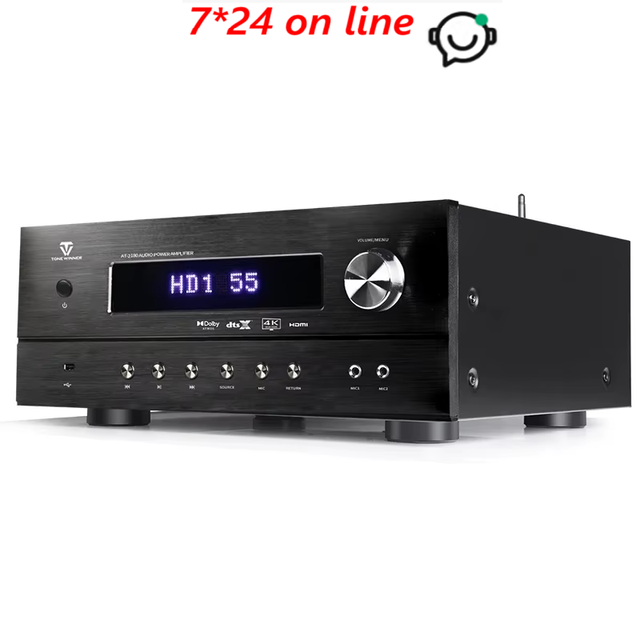
Winner AT-2180 High-Power 5.1.2 Channel AV Amplifier, Bt Home Theater & Karaoke Receiver for Immersive Audio
 Dongguan Queenway Century Technology Co., Ltd.🇨🇳CN8 yrs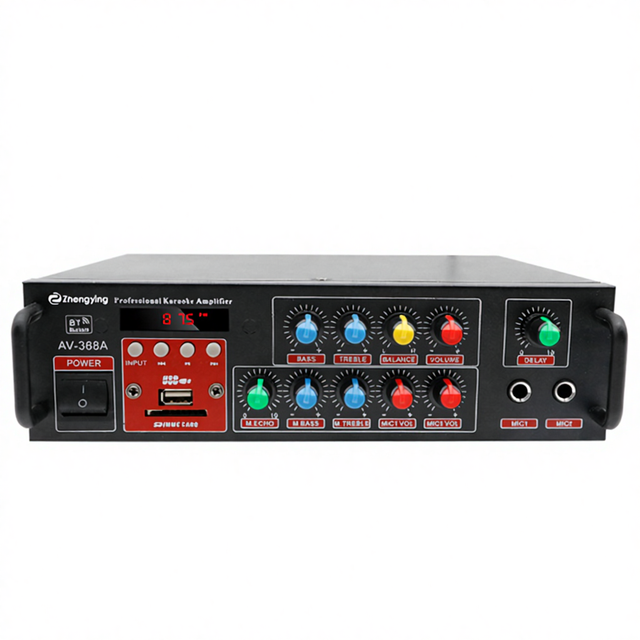
AV-368A Brand Other High-power Wireless Karaoke 2.0 Channel Home Theater Amplifier with Multifunction Tuning Made in China
 Shenzhen Zhiku Iot Intelligent Technology Co., Ltd.🇨🇳CN4 yrs
Deep Dive · Full Report
Full Market Report
1 document · Live-fetched from source
Related Searches
Explore more sourcing topics & related categories
Sources & References
28 sources cited · Verified industry data & reports
The 5 Best Karaoke Machines for 2026 | Reviews by Wirecutter
www.nytimes.com
If you already have a home audio setup that you’re happy with and don’t want to deal with storing an entirely new speaker setup, the Rybozen K201 Portable Karaoke Microphone Mixer is a compact and affordable alternative. It’s essentially a microphone receiver that you can insert between your primary audio source (such as a smart TV on which you’d be watching YouTube lyric videos) and your usual speakers (such as a soundbar). The VocoPro WiFi-Oke Wireless Karaoke Machine was the first model we ever found with a built-in touchscreen. But the battery life was terrible, the tablet was useless, and the microphones were practically useless. Don’t bother. Like the Rybozen, the VocoPro SmartTVOke is a pass-through receiver that you can connect to your existing home audio setup to add a pair of wireless mics into the mix. This small, portable karaoke cube doesn’t sound quite as good as our other picks, but it has lots of fun lighting and sound effects to keep you entertained. Buying options: Buy from Amazon, opens in a new tab ... If you already have a home stereo setup that you like, the Rybozen is an easy and affordable way to add a pair of wireless mics to your speakers. Buying options: $106 from Amazon, opens in a new tab ... You don’t have to be an AV expert to set these up. If you want to have the best home karaoke experience, we recommend the Ikarao Shell S1 10.1-inch Smart Karaoke Machine because it has everything you need to make your pop star pipe dreams come true, all in one convenient carrying case.
Karaoke Market Size, Growth | Global Report [2035]
www.businessresearchinsights.com
It grows at a compound annual growth rate (CAGR) of around 3.7% from 2026 to 2035. I need the full data tables, segment breakdown, and competitive landscape for detailed regional analysis and revenue estimates. Download Free Sample · The Karaoke Market Report highlights that over 62% of entertainment venues globally integrated karaoke systems, with more than 48 million karaoke machines installed worldwide. The global Karaoke Market is valued at approximately USD 0.64 Billion in 2026 and is projected to reach USD 0.98 Billion by 2035. The Karaoke market is expected to reach USD 0.64 billion in 2026. Key Market Driver: Over 68% of global consumers prefer interactive entertainment formats, while 57% of millennials engage in social singing activities, and 49% of hospitality venues report increased foot traffic due to karaoke integration, with 33% of users participating weekly. Major Market Restraint: Approximately 41% of small venues face high installation costs, while 37% of users cite sound quality issues, 29% report licensing restrictions, and 24% experience limited song availability affecting adoption rates. Emerging Trends: Nearly 61% of karaoke users adopt mobile-based platforms, 44% prefer AI-powered vocal enhancement, 38% use cloud-based song libraries, and 27% engage in virtual karaoke competitions through online platforms.
Karaoke Statistics and Facts (2026)
www.news.market.us
The global karaoke market has exhibited a steady growth trajectory, with revenue figures increasing progressively from $5.3 billion in 2022 at a CAGR of 2.60%. In 2023, the market revenue slightly increased to $5.4 billion, followed by $5.6 billion in 2024. The upward trend continued, with revenues reaching $5.7 billion in 2025 and further rising to $5.9 billion by 2026. By the late 1970s, major Japanese corporations began producing karaoke machines, fostering its popularity across the country. The trend reached the Philippines, where Roberto del Rosario patented his version of the karaoke machine in 1983, further advancing the technology. The global karaoke market size, categorized by device type, has shown incremental growth across both portable devices and fixed systems from 2022 to 2032. In 2022, the total market revenue was $5.3 billion, of which portable devices accounted for $3.76 billion and fixed systems contributed $1.54 billion. The market revenue increased to $5.4 billion in 2023, with portable devices generating $3.83 billion and fixed systems $1.57 billion. This upward trend continued in subsequent years, with portable devices gradually increasing their revenue from $3.98 billion in 2024 to $4.83 billion by 2032, while fixed systems saw a rise from $1.62 billion in 2024 to $1.97 billion in 2032. The karaoke user market in Japan experienced significant fluctuations in market size from fiscal year 2015 to 2023, measured in billion Japanese yen. Initially, the market size was at its peak in 2015 with a value of 616.5 billion yen, followed by a gradual decline over the next few years—602.9 billion yen in 2016, 595.3 billion yen in 2017, 585.3 billion yen in 2018, and 576.7 billion yen in 2019, indicating a slow but steady downward trend in the pre-pandemic period.
Karaoke Systems Market Size, Industry Trends & Forecast
www.verifiedmarketreports.com
Global Karaoke Systems Market Size By Product Type (Standalone Karaoke Machines, Smartphone Karaoke Apps), By User Type (Home Users, Professional Users (Karaoke Bars, Event Planners)), By Distribution Channel (Online Retailers, Physical Retail Stores), By Audio Output Type (Mono Output, Stereo Output), By Price Range (Budget (< $100), Mid-Range ($100 - $500)), By Geographic Scope And Forecast · Author By: Sameer Tope | Edition : 7th Edition 2026 | Editor : Elijah Lewis Furthermore, the hospitality industry is investing in sophisticated karaoke systems that integrate with their existing AV infrastructure, enabling tailored branding and interactive experiences. The rise of themed entertainment venues and karaoke bars in emerging markets like Southeast Asia and Latin America exemplifies this trend. Strategic partnerships between hardware vendors and content providers are also expanding the available music catalogs and licensing options, thus fueling further growth. The forecast logic hinges on several key factors continued technological innovation, regulatory support for digital licensing, and the expansion of high-speed connectivity. The deployment of 5G networks is expected to significantly enhance real-time, cloud-based karaoke experiences, especially in densely populated urban centers. Transitioning from one-time hardware sales to subscription-based revenue models offers a sustainable growth avenue for karaoke system providers. Cloud streaming services enable access to expansive, constantly updated song libraries without the need for physical media or firmware updates.
karaoke market Size, Trends, Share, Growth 2032
www.precisionbusinessinsights.com
The karaoke market report provides granular level information about the market size, regional market share, historic market (2021-2025), and forecast (2026-2032) The report covers in-detail insights about the competitors overview, company share analysis, key market developments, and key strategies · The report outlines drivers, restraints, unmet needs, and trends that are currently affecting the market Karaoke Market size was valued at US$ 6,047.5 million in 2025 and is expected to reach US$ 7,287.3 million by 2032, growing at a significant CAGR of 2.7% from 2026-2032. It has been estimated with significant growth with the help of key drivers, karaoke players are the best way to boost confidence in children to speak and sing in public. The karaoke market size was valued at US$ 6,047.5 million in 2025 and is expected to reach US$ 7,287.3 million by 2032, growing at a significant CAGR of 2.7% from 2026-2032 There are few restrains that hung the growth, due to the weight of some players, you cannot shift from one place to another and all karaoke players have a good sound quality. Providing a forum for non-professional performers to highlight their talents leads to multiple opportunities for the global market. This report studies dynamics elaborately to identify the current trends & drivers, future opportunities, and possible challenges to the key stakeholders operating in the market.
Karaoke Systems Market Evolution: Trends to 2033, $925.7M Proj.
www.datainsightsreports.com
The Karaoke Systems Market is continually evolving with strategic innovations and partnerships aimed at enhancing user experience and expanding market reach. March 2026: A leading Asian manufacturer announced the launch of its new AI-powered karaoke system, integrating advanced vocal coaching and real-time pitch correction algorithms, setting new standards for home entertainment systems. January 2026: A major content provider partnered with several karaoke hardware manufacturers to offer a unified cloud-based song subscription service, significantly expanding the accessible music library across various platforms and strengthening the Audio Streaming Services Market. Karaoke Systems by Application (Home, For Venue (Bar/Restaurant/KTV), Outdoors), by Types (Fixed System, Portable System), by North America (United States, Canada, Mexico), by South America (Brazil, Argentina, Rest of South America), by Europe (United Kingdom, Germany, France, Italy, Spain, Russia, Benelux, Nordics, Rest of Europe), by Middle East & Africa (Turkey, Israel, GCC, North Africa, South Africa, Rest of Middle East & Africa), by Asia Pacific (China, India, Japan, South Korea, ASEAN, Oceania, Rest of Asia Pacific) Forecast 2026-2034 ... Access in-depth insights on industries, companies, trends, and global markets. The high initial investment required for professional, multi-room karaoke setups can be a barrier for smaller commercial establishments. These systems often involve substantial capital outlay for hardware, installation, and ongoing maintenance. Another critical constraint is intellectual property and music licensing complexities. Securing rights for a comprehensive and up-to-date song library across different regions can be costly and challenging, impacting content availability and increasing operational expenses for both manufacturers and venue operators.